Tag: cars

  • Baywatch 2021 campaign: Tackling disabled parking abuse

    Baywatch 2021 campaign: Tackling disabled parking abuse

    In this guest blog by Disabled Motoring UK, we learn about their excellent campaign to stop the misuse and abuse of disabled parking spaces, Baywatch 2021. Baywatch is supported by Baroness Grey-Thompson. 

    The issue of disabled bay enforcement

    A common problem for many disabled motorists is not being able to park at their desired destination. The major complaint is that the disabled bays are all occupied with cars not displaying a Blue Badge. Last year Disabled Motoring UK (DMUK) changed the format of the parking survey so that participants could fill it in at home. This allowed the charity to also expand the scope of the survey to gauge your opinions of other aspects of parking and the Blue Badge Scheme.

    The results are calculated and published when the survey closes. The charity presents this data to the parking industry and encourages it to take the parking problems of disabled motorists more seriously and manage their parking provision correctly. The Baywatch campaign also aims to change public attitudes by highlighting the impact of disabled bay abuse.

    Baywatch 2021 – improving disabled parking provision and enforcement

    The only way to keep the pressure on the parking industry is to run the DMUK Baywatch Campaign annually and this year it takes place in August and you’ll  be able to participate online by visiting the DMUK website.

    We hope to make this year bigger and better than ever before. We have a number of organisations supporting Baywatch 2021.

    The campaign has support from Baroness Tanni Grey-Thompson. She commented: “It’s so sad that Disabled Motoring UK has to run its Baywatch Campaign. Disabled bay enforcement should be an imperative, especially for the major supermarkets that can afford to invest in policing their car parks. I see disabled parking abuse regularly, There is a real lack of understanding about how essential these bays are to disabled people and I applaud DMUK’s Baywatch Campaign as it plays a vital role in highlighting the issue of disabled parking abuse at supermarkets.”

    Graham Footer, Chief Executive, at DMUK, said: “Baywatch is one of the charity’s longest running campaigns and is really important to draw attention to the parking problems that disabled people face when just trying to go about their daily lives. It is now an annual campaign for the charity. We hope this will allow us to gather momentum and keep the pressure on the supermarkets and other car park owners to do more to support their disabled customers. It’s fantastic that the campaign has support from Baroness Grey-Thompson again this year. This campaign relies on public participation and we hope her support will encourage others to get involved.”

    Supporting organisations

    These organisations support DMUK/s Baywatch campaign:

    We’d like to get as many organisations involved as possible to spread awareness of the campaign. There is still time to get involved and we welcome all support with this vital campaign.

  • How Motability Cars Cater for Drivers and Passengers with Disabilities

    How Motability Cars Cater for Drivers and Passengers with Disabilities

    This is a sponsored post written by Stoneacre Motor Group.

    The Motability scheme is relatively unknown to many in Britain, but for more than 600,000 of us, a Motability vehicle is life changing. You probably already see Motability vehicles every day even if you may not realise so and you may certainly know someone who already benefits from the use of one.

    Motability is an extensive collaboration between the charity sector, the Government and the automotive industry. As a charity-led organisation, Motability that has helped millions of people across the country gain access to a car, mobility scooter, or motorised wheelchair. And they continue to do so with more than half a million people currently on the scheme.

    The scheme is open to any citizen who receives one of four higher rate mobility allowances from the Government, who are able to exchange their benefits with the Motability charity to lease mobility equipment that can help improve their independence and standard of living.

    How Does Motability Work?

    Anyone who currently receives any of the four higher rate mobility allowances are eligible to apply for the scheme and lease a vehicle. These rates include disability living allowances, personal independence payments, and other supplements for war pensioners and Veterans.

    The scheme is simple in how it runs. Claimants are able to exchange their cash allowances with the Motability charity who in turn provide a lease vehicle of their choice. Motability are then paid every month by the Department for Work and Pensions who deduct the cost of the lease from the mobility allowances of the claimant.

    The cost of the lease includes all tax, insurance, breakdown and servicing costs, which are taken care of by the charity at limited expense to the claimant. Its effectively a ‘just add fuel and drive’ kind of deal, which typically last anywhere between 3 to 5 years before the equipment must be returned or the lease extended.

    Claimants are able to choose what to spend their allowances on, whether that be a mobility scooter, motorised wheelchair or a Motability car. Those that only travel short distances tend to favour a scooter or wheelchair, with others who need to travel longer distances opting for a car that has special adaptations for disabled drivers and passengers.

    What Cars are Available on the Motability Scheme?

    The majority of major car brands all offer some of their models on Motability, which means there’s a great choice of cars on offer. From compact SUVs and 7 seater family cars, to chic city-cars and hot hatchbacks, there’s plenty to look out for.

    Motability cars come available with a whole range of adaptations that can be made to improve the utility of the vehicle for disabled drivers and passengers.

    You can apply through a Motability dealer who are registered dealers for the charity. Motability dealers help claimants with their application for their scheme as well with their search for a car.

    Adaptations are made to the vehicle to improve the general use of the car and for some people it can mean they don’t require any assistance to travel. For others, adaptations can simply just make a car much more feasible to use, especially for wheelchair users or paraplegics.

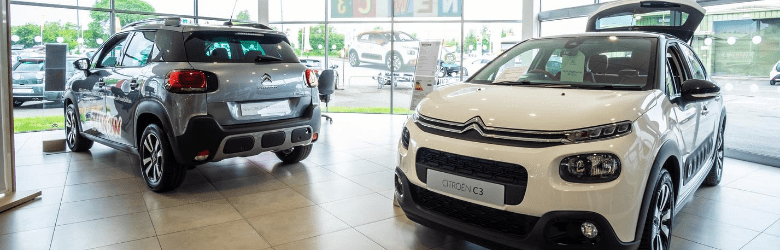
    motability accessible vehicles in the showroom

    What Adaptations are Available to Disabled Drivers or Passengers?

    A Motability car can be driven by a nominated driver, which is especially the case for disabled children or for other people who are unable to drive. This means that some may require adaptations as a passenger and others require adaptations as a driver. Both are available on Motability.

    The three categories for Motability adaptations are seating & stowage, driving controls, and access. Driving controls change how the vehicle is driven to cater for drivers who may have limited or no use of their legs and feet. Adapted driving controls include hand controls for braking and acceleration, pedal modification and steering aids, which are all more than often fitted to an automatic car.

    Changes to the seating and stowage of the vehicle can be made to cater for both drivers and passengers who use the vehicle on a daily basis. Motability cars commonly feature altered boot space and storage facilities to carry personal mobility equipment, plus mechanical hoists to load wheelchairs or scooters into the boot or roof-rack facility.

    The third category of adaptation is for access. Adapted access help disabled people enter and exit the car through the front or back doors. Motability cars can be fitted with manual and electric lifts to load people and equipment in and out of the cars. Adapted access can fit transfer plates, electrical hoists and swivel seating to the car.

    All adaptations are made available when applying for a Motability car. The Motability dealer will assess your position and they will be able recommend the necessary adaptations to the car you’ve chosen. What’s more, Motability provide more than 500 different adaptations and many of them are available at no extra cost. You can check your eligibility online now.

    If you would like to feature on Disabled Living’s blog please get in touch with us via email: info@disabledliving.co.uk

Disabled Living