Tag: exercise

  • How to Combat Stress During Unprecedented Times

    How to Combat Stress During Unprecedented Times

    This is an article written by Jayne Watson, an Occupational Therapist at Disabled Living.

    Due to unprecedented times, is stress causing you to feel lethargic, emotional, motivationless with minimal interest to do anything?

    During our lives, we all experience some form of depression, low mood and fatigue. However how we deal with it may be different for every individual. Let’s look at to some of the facts that cause depression and anxiety:

    • Does your job require you to meet deadlines?
    • Does your family require a lot of your attention?
    • Daily chores of running a home and getting the children off to school on time can be tiring
    • Have you lost a partner or a loved one?
    • Do you spend lots of time on the road and struggle to get to your destination on time due to heavy traffic and road works?
    • Have you been made redundant recently?

    https://www.verywellmind.com/depression-facts-you-should-know-1067617

    How can we help ourselves combat stress? Making some small adjustments to your daily routine can improve your thought and increase energy to carry out every tasks. Have you spoken to your GP about the way you feel or may be a therapist who can help you put a treatment plan together?

    Exercise

    By introducing exercise into your daily routine, you may improve energy levels which can promote better sleep patterns and lower feelings of fatigue. It can also improve brain function and good concentration. You don’t necessarily have to go to a gym to feel good, why not try to find a nice local walk? Find out what’s in your area and plan various routes to add a touch of scenery. Swimming and aerobics are also good forms of exercise. It is all about finding that balance that works for you.

    What are your eating habits like, have they spiralled out of control?

    Plan a stable diet by introducing plenty of fruit and vegetables into meals that fuel you with lots of energy. Carbohydrates can stimulate the mind, making you more alert. Try to balance your diet so that you are getting plenty of nutrients. Vitamin D supplements are great when there is no natural sunlight, which is one of the leading causes of depression (SAD).

    Practice good sleeping patterns

    Having the right amount of sleep can reduce fatigue and feelings of depression. Some tips for practicing good sleeping patterns include:

    • Maintaining a regular routine.
    • Having a black out blind in the bedroom if your bedroom is too light.
    • Do not exercise before bed, as exercise will overstimulate you.
    • Do not have the bedroom too hot or too cold.
    • Avoid eating late at night.
    • Do not drink alcohol.
    • Avoid sleeping during the day.
    • Do not play games or go on your smart phones.

    If you are still struggling once you have tried these helpful tips, it may be that your GP will prescribe you with some medication or recommend natural remedies to help reduce stress.

    To speak to our occupational therapists via our Equipz helpline, please give us a call on 0161 214 4590.

    If you have a teenager who is experiencing mental health problems, advice for parents can be found here: https://www.mytutor.co.uk/blog/teen-mental-health-a-guide-for-parents/ 

  • Staying Fit with a Disability

    Staying Fit with a Disability

    This is a sponsored blog post written by Jorvik Tricycles for Disabled Living.

    If you have from a disability, you may wonder and worry how you can exercise and stay fit. Fortunately, there are lots of ways that you can get out and about or stay healthy from the comfort of your own home. In our guide, we’ll show you the best ways you can stay fit and healthy and feel good about yourself.

    Head outdoors

    It’s important you don’t let your disability get in your way of getting out and about into the great outdoors. If you have a powered wheelchair, you can move around with ease on paths and footways. They are powered electrically so you can move along independently without the need of help from others.

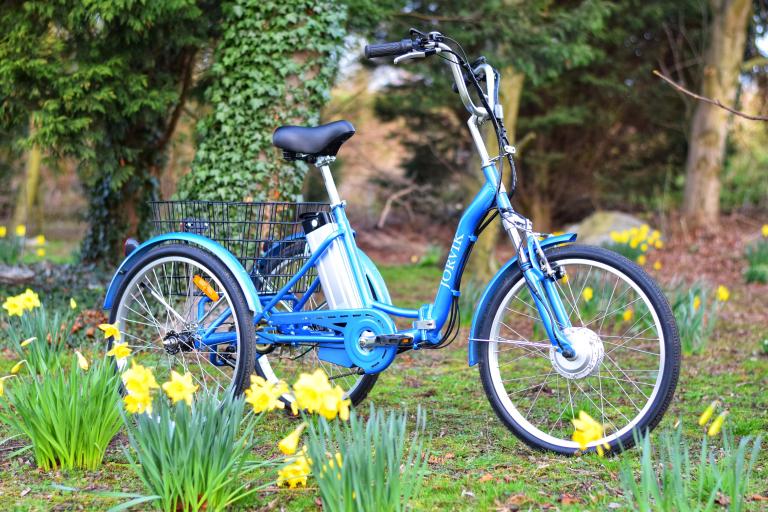
    Another alternative, are tricycles. If you have confidence in the use of your legs, then you can propel yourself along on a tricycle. The great thing about them is that they are on three wheels (two at the back and one at the front). This gives you greater stability and makes you feel a bit safer when you’re riding around. There is a great range of tricycles from Jorvik Tricycles so check them out.

    Jorvik Tricycle

    Exercise from home

    There are some great exercises you can do from your home, and even the comfort of your chair. Here are some of the best exercises you can do, taken from a great article by Invacare:

    • Shoulder Movements – Moving your shoulders in a circular motion helps to keep them strong. You’d be amazed how often you use your shoulders so it’s important to keep them mobile and strong.
    • Balloon Squeeze – Find a ball or if possible, a medicine ball and place it on your chest. Start to squeeze the ball as hard as you can. The more you squeeze the ball, the more it works your chest and you will feel the pinch!
    • The Zombie Twist – No, not a Halloween dance. This exercise derives its name from the way you look whilst doing it. Sit up straight in your chair and hold your arms out in front of you (like a zombie). Start to twist slowly from right to left keeping your arms out straight. Repeat 10 times (or less if you’re struggling).
    • The Jazz Toes – If you enjoy bopping along to a song whilst exercising, you will enjoy this one. Sit up straight in your chair or wheelchair and place your feet flat on the ground. All you need to do is point your feet up towards the ceiling and then point them to the floor. You should feel a slight twinge at the back of your foot.
    • Higher Knees – Again, sit up straight in your chair or wheelchair and put your feet flat on the ground or on your footplate. Lift your leg slowly to a manageable point and start to bend your knee in towards you. Hold for 5 seconds and then start to lower your foot down. Try and repeat the exercise around 10 times if you can.

    So, there you have our top tips for keeping fit from home or in the great outdoors. Get in touch with us if you need any more advice. It is incredibly important to stay fit and hopefully this post has helped you see just how easy it is.

  • Is Sport Really So Important?

    Is Sport Really So Important?

    Deborah Bell, Enablement Manager at Disabled Living talks about the importance of sport and how it can help you to stay active during the Covid-19 lockdown.

    Yes, sport really is so important because it can develop from exercise! Having been in lockdown for the last few weeks, with one of the few reasons we can venture out, being for exercise, Deborah Bell, Disabled Living’s Enablement Team Manager, has reflected on her involvement in sport as a child, and that of her now adult children.

    Sports England’s Active Lives Research

    According to Sports England, Active Lives Children and Young People provides a world-leading approach to gathering data on how children engage with sport and physical activity. The aim is to enable “children and young people to feel more motivated, confident and able to get active”.

    I thought about my attitude towards sport as a child, my bike was my life, every day in the holidays and after school I could be found freewheeling down the steepest hill I could find, with the scars to prove it. I wasn’t very competitive at school although I was on the hockey team as I was a fast runner.

    As an adult running was my choice of sport, I could lose myself for hours running miles around the town I lived in. It all stopped when I developed an injury as a direct result of my running. I now do no sport and am feeling the consequences. But enough about me. How would I have felt as a child if I couldn’t ride my bike because there wasn’t one adapted for my disability?

    There is an abundance of research proving the various benefits of sport on physical, and emotional health, social value and economic benefits. See the Sports England Active Lives survey: https://www.sportengland.org/research/active-lives-survey/active-lives-children-and-young-people/

    What I am interested in is how we can help to motivate children who are disabled to become more active, it needn’t be a classical sport, it could be gardening or playing outside in the garden. Disabled children often have additional challenges when it comes to things the rest of us take for granted and whilst the range of disability sports has improved massively it can still prove difficult if you have a physical or psychological disability to find the right activity for you.

    How Can We Encourage Our Children to Get Involved With Others Playing Sport?

    We can involve them in what we are doing. We did things as a family so they could learn what motivated us, if we were going somewhere, we talked about it, we read about it. We invited friends so the kids were with their peers.

    When my children were young, I tended to lean towards the things I was interested in, I remember the moans as I made them walk up Ben Nevis one summer. It is only now they are grown up that I hear the pride in their voices if they are talking about it.

    I don’t think it matters particularly what your children are interested in doing, it may not be what you are interested in, but we should encourage and support them as much as possible. I wanted both my children to choose what they wanted to do. My son showed an interest in rugby as a young lad so I rang the local club and duly turned up on a cold Sunday morning so he could run about an extremely muddy field with lads just like him. It caused much amusement for the parents that they were all more interested in the ladybirds under a log at one end of the field than they were in the rugby ball, but hey ho.

    My son likes routines, A LOT so we turned up come rain or shine for the next 7 years, we went in convoy to play neighbouring teams and ate enough bacon butties to feed an army. My son hardly ever touched the ball but that didn’t matter, to him or to me. I encouraged him every game.  He kept all his teeth intact and more importantly built a group of friends he still has today. The teamwork and camaraderie did wonders for his self-confidence, having to stand up for himself in a group of peers was immensely influential  to him becoming a rounded confident adult. He developed a habit of wanting to be fit, now he goes to the gym and boxes, (his teeth are yet again in danger).

    My daughter watched a lot of rugby games, kudos to her for putting up with the rain and snow every week, she was more interested in music than sport but the habits of the family and our attitude to being healthy has impacted on her keep fit routines as an adult, she goes walking , sometimes in the hills and sometimes around the shops  but she is very active.

    A number of Disabled Living’s blogs have concentrated in young disabled people who have overcome whatever challenges they have faced to do a sport they love. You may find a tip on how to motivate your child (or yourself). Sports activities and companies who exhibit at our Kidz to Adultz exhibitions have some great ideas and solutions for you to help your child become involved in sport.

    Have a look at the sensory section of our Supplier Directory for companies who provide toys and outside play equipment. The charities on our Supplier Directory can link you up to organisations in your area who can support you and your child with sport.

    Good luck in your endeavours to introducing sport to your family life, no matter how small it will only be a good thing.

    Get in Touch with Disabled Living

    Our helpline is open if you need to contact us on 0161 214 4590 or email: info@disabledliving.co.uk. You can also join our #DisabledLivingAgainstCorona campaign on Facebook and Twitter.

Disabled Living