Tag: home

  • Living Changes to Help People Stay Safe and Independent at Home

    Living Changes to Help People Stay Safe and Independent at Home

    This is a sponsored post written on behalf of Agincare.

    As we get older, some of the daily tasks we used to find easy to carry out and take for granted may not be as straightforward anymore. Whether it’s reaching up to find something in a cupboard or making a cup of tea, it’s inevitable that as we grow older in age, our mobility and health can be affected. Although this is something a large number of people are faced with, it doesn’t mean you’re no longer able to live independently and safely.

    Being independent is something we all appreciate, no matter how young or old we are. It’s inevitable that having our independence taken away from us can negatively affect our lifestyles, so it’s important to prevent this. In later life, health issues such as hearing impairments and more severe problems like Alzheimer’s disease become more common, but there are a number of ways individuals who have these problems can still live independently.

    As part of their latest campaign, Agincare wanted to share some simple changes which can be made around the home, for people with some of the most common health issues in later life. Five floor plans have been created and outline how it’s still possible to live independently and safely, even if you have issues such as frailty and Dementia.

    Below are a few examples from the Agincare campaign.

    Dementia

    For someone living with Dementia, their own home is a place of safety and comfort. It’s widely known that Dementia affects people’s memory, so it’s important to take this into consideration if a family member has the illness and wants to live alone.

    To begin with, as Dementia can make people forgetful, it’s important you make sure they can come to no accidental harm. It’s a good idea to fit overflow plugs wherever there are taps, such as in the kitchen and bathroom; which will prevent the risk of flooding. If your friend or relative often tries to leave their home, then sensor alarms are a great way to alert you when this is happening, which then means you can check if they’re ok and need any assistance.

    Visual impairment

    When having a visual impairment, living alone can be challenging, but this doesn’t mean it can’t be done. A number of simple changes around the home can go a long way in this case and they don’t have to come at a price.

    It’s important that during the day, as much natural light is brought into the home as possible. Using different textures for items of furniture and other commonly used products will allow people to easily distinguish where they are and how to safely move around. Bright colours can often help individuals with visual impairments, so opting for contrasting colours when it comes to furniture can make objects become clearer.

    Frailty

    As we grow older, frailty is something we will all experience, but again, simple changes around the home can ensure we live safely and independently.

    Falls are a lot more common for people in later life, so it’s important to minimise any risks as much as possible. Making sure furniture is spaced out means there are no narrow gaps you need to manoeuvre through. Reaching up to find things in cupboards can also result in falling or other types of injury, so it’s wise to put storage boxes on top of units to make life that little bit easier.

    After looking at Agincare’s floor plans and the changes they have suggested, you can start to see that people with health issues can live safely and independently. Whether it’s fitting sensor alarms or making sure furniture is spaced out as much as possible, a number of simple changes can make someone’s life more safe and secure.

    We want to know what you thought of the points mentioned and the floor plans Agincare have created. Join in the conversation on social, using #HomeForTheElderly.


    If you would like to feature on Disabled Living’s blog please send an email to: info@disabledliving.co.uk

  • New Micro WashPod Will Help People Stay Safe at Home

    New Micro WashPod Will Help People Stay Safe at Home

    This is a guest blog by WashPod who feature in Disabled Living’s Supplier Directory.

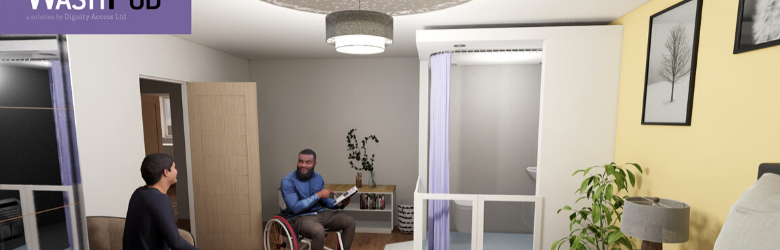
    The new Micro WashPod mobile, disabled wetroom has been launched as the smallest to join the range of WashPod models that offer bathing solutions to hire for those who have mobility issues but wish to stay in their own home, be they elderly or disabled.

    The Micro WashPod is a unique solution to bathing and has been specially designed for limited spaces, fitting internally into a reception room or bedroom. It’s fabulously quick to install and can be fitted in less than a day. It will be the answer for many people needing at-home, disabled bathing where space is at a premium and where extra room for carers, hoists and trollies may not be needed.

    Benefits include:

    • Absolute minimum space required
    • Versatile and quick to install (less than a day)
    • Plug and play, no need for existing plumbing connections
    • Minimum disruption
    • Hired or bought direct or through our distributors

    The Micro WashPod has great versatility. By adding a platform, the Micro WashPod can gain a wheelchair turning circle. With tight installations, the ramp can also be removed on one side to give extra space. In addition, the panels can be configured to accommodate different orientations.

    parent and child using micro washpod

    Notes

    If access to the bathroom is now impossible, the WashPod range of disabled washrooms is the perfect interim solution saving the option of prolonged hospital care or an early move to an expensive care home. There is nothing like it on the market.

    In addition to the Micro, there is a standard External WashPod that can be installed in the garden or on a patio and two other internal models – the Standard and the Mini – that can be erected in a spare reception room or garage.

    Additional applications are numerous from Housing Associations and Local Authorities who may wish to buy them and lease them out to residents as needed, or hospitals during building works, and commercial enterprises wishing to provide accessible washrooms.

    The WashPods are plug ‘n play and fully fitted to comply with the highest specification of part M of the building regulations. They have been devised by architects who specialise in the designing for disability and endorsed by occupational therapists and case managers.

    Typical facilities include accessible shower facility, basin and WC. External units include underfloor heating. Hoisting for transfer purposes can also be provided where needed.

    Both internal (with a mini version too) and external options give a disabled person dignity until more suitable arrangements can be made, without significant disruption and stress to the family home.

    External Washpods are usually erected within 2 to 3 days and can include a covered link to an external patio or back door. Internal Washpods can take only a day to install. The units are constructed off site and re-assembled in the home by an expert team.

    woman using micro washpod

    Benefits

    • Out of hospital faster (thus releasing a hospital bed)
    • Immediate return to (or ability to remain in) family/familiar surrounding
    • No permanent alteration to the property
    • Pods can be removed easily and the property reinstated very quickly
    • Short period from order to installation
    • Independence and dignity for user
    • No reduction in house value
    • Minimum disruption
    • Fraction of the cost compared to care home provision.

    The WashPod range is being manufactured and marketed by Dignity Access which is a sister company to Cowan Architects, specialists in disability adaptations and inclusive living design.

    More information

    For more information, please contact Joanna Sale in Marketing, on 07717 425694, email: joannasale@cowan-architects.co.uk or visit the Dignity Access website.


    Did you know… Disabled Living are featured in the Top 10 UK Disability Blogs? For the chance to have your news/story published on our blog please send an email to: info@disabledliving.co.uk

Disabled Living