Tag: Lifestyle

  • From Local Club Swimmer to Paralympic Champion

    From Local Club Swimmer to Paralympic Champion

    This Story of the Month features a 23-year-old European and Paralympic Champion Swimmer, Ollie Hynd MBE. We recently came across Ollie on Twitter and found out more about him on his website. 

    His passion for swimming began when he joined a local swimming club as a young boy. And since then all he’s ever wanted to do is achieve bigger things. Ollie has a condition called Neuro Muscular Myopathy, which weakens his muscles. Activities such as walking can be a huge struggle for people like Ollie with this condition. However, he believes that training in the pool helps to keep his muscles strong.

    Ollie was inspired by his brother, Sam Hynd in 2008 when he performed at the Beijing Paralympic Games and won a gold medal.

    It was in 2011 that Ollie achieved one of his biggest triumphs – breaking the European record in the 200m individual medley. And it doesn’t end there. In the six years that he has represented Great Britain in his Paralympic swimming journey, he has inspired many across the globe. He was awarded an MBE in 2013. In addition he’s won over 10 gold medals and achieved recognition for ‘Disabled Sportsperson of the Year’ in 2015!

    Ollie says: I hope to inspire others particularly young people, to dream because dreams can come true. We all need a dream to inspire and motivate us to push forward. Life will throw us lots of challenges and obstacles, but I believe they are meant to be overcome so we can grow. http://www.oliverhynd.co.uk/

    Ollie has inspired us to believe that no matter what challenges you face, you can always carry on to chase your dreams. Keep up to date with his latest news events Twitter.

    You might like to read another Story of the Month about the importance of an active lifestyle for disabled people.

    If you have a story that you would like to share please get in touch with us. You can send an email to: info@disabledliving.co.uk

  • The Importance of an Active Lifestyle for Disabled People

    The Importance of an Active Lifestyle for Disabled People

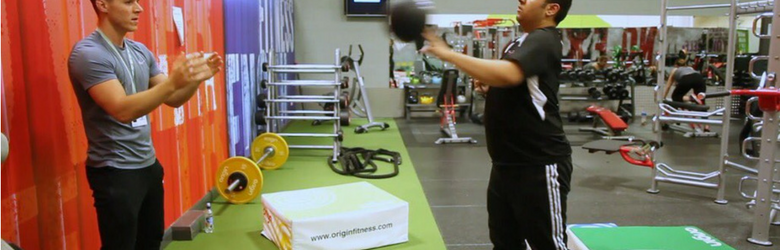
    At the end of October we introduced Ben Andrews to you and told you why we thought he was deserving of our Story of the Month. Since then, Ben has started a whole new project which involves his series of videos, ‘Breaking Barriers’. These look at topics such as, transport as a barrier to an active lifestyle for disabled people and supporting disabled people with exercise. We thought this would be a worthwhile opportunity for Disabled Living to talk to Ben about his story and what it means to help disabled adapt a more active lifestyle.

    Can you tell us about Empower’s story?

    I started working on Empower when I was 17-years-old. I gained my Level 2 Gym Instructor qualification and started supporting family members with visual impairments at the local gym. I often thought that, there’s got to be more people in this position with a disability who could benefit from increasing their fitness but might need some support to do so.

    So I started volunteering around Salford, delivering health lifestyle sessions for people with a range of disabilities; wheelchair users, people with learning disabilities, deaf people and people with hearing impairments and got a real feel, and buzz, for adapting sessions to meets people’s needs. I also assessed what was available for disabled people to keep active and found there to be a real lack of opportunities.

    library bookshelf

    I tried to put a report together at about 19-years-old to state a case for a disability specific gym instructor. I’d never written a report. It had no rationale, no evidence base, and I wasn’t really sure what to do with it so unsurprisingly it didn’t go anywhere. But I knew what I wanted to do and why, so I didn’t give up on it.

    Knowing I’d need more knowledge and experience to make this work I approached Salford University and explained my plans and was granted access onto an Exercise and Health Sciences degree. I used my time at Salford University to research my field, with a particular emphasis on disability, exercise and the heightened prevalence of long term conditions for this demographic.

    By the time I left University I was able to articulate a clear case as to the importance of disabled people leading healthy, active lifestyles. Luckily enough, NHS Salford CCG had just released an Innovation fund to pilot new ideas to improve the health of Salford residents with one of there target groups disabled people. Being right up my street, I compiled all of my personal and professional experience along with my academic learning into a bid and submitted it. Since 2015 NHS Salford CCG has funded the Empower project, with the aim to support disabled people to lead more active lifestyles.

    Gordon - Empower Health

    What does working for Empower Health mean to you?

    Even though I’ve only been contracted to deliver it over the last 2 years, it’s been a massive part of my life for coming up to 9 years now. So it means a lot to be able to do something I’ve wanted to do for so long and worked so hard towards. This is something I’m passionate about; I couldn’t imagine doing anything that doesn’t support disabled people to lead healthier lifestyles in some way so I’m very grateful for the opportunity.

    I’m grateful that NHS Salford CCG has been innovative enough to see the benefits of this type of initiative and that Unlimited Potential have supported the project through incubation to allow me to secure funding and deliver Empower whilst ensuring that the project grows and develops in the way that it should.

    What inspired you to get into this area of work?

    I suppose first off growing up around disability has given me a bit of a different mindset and perspective on what disability is and the barrier society presents. It’s something that families have always overcome and I’d hope to support others to do so.

    Mike and Ben - Empower Health

    Secondly, I don’t think its right that anybody should be at any worse odds health wise based on something they have no control over. Disabled people face massive health inequalities and in many cases it’s not down to the actual disability but due to the barriers disabled people face when trying to manage their health. For example, there is no physiological reason that people who are blind should be overweight or obese, but they are at increased risk of being, due to the lack of opportunities they have to maintain a healthy weight through activity.

    Finally, and from my point of view the most important, I hope to change perceptions from both non-disabled people and disabled people. From my experience, both in many cases don’t acknowledge that disabled people can keep active and lead healthy lifestyles. It feels like there’s an expectation that disabled people cannot be healthy or active, so there’s no planning in place for them to do so. I’d hope that by creating a platform to showcase disabled people keeping active and exposing both groups to this, that over time, this perception will change and it’ll no longer be an afterthought.

    What advice do you have for people with disabilities that want to get more active?

    I’d say look for local opportunities, not always disability specific, mainstream integrated groups, activities and venues. Services have a duty to make reasonable adjustments to accommodate your needs and it’s important that you exercise this to support a healthy lifestyles.

    There are loads of barriers, which will affect this which I’m happy to talk about and give my tips and experience on overcoming these.


    Contact Ben

    Email: ben.andrews@unlimitedpotentail.org.uk

    Twitter
    Instagram
    Facebook

  • Health Information Week – 5 Steps to a Healthy Lifestyle

    Health Information Week – 5 Steps to a Healthy Lifestyle

    Throughout this week we have been sharing some questions on social media to help you think about your healthy or unhealthy lifestyle. As Health Information Week is 3 – 9 July, we are going to share our top 5 steps to a healthy lifestyle. It’s not just a healthy diet and exercise that’s involved, which is what some people believe it to be.

    It is essential that quality information is provided to people to enable them to better manage their health and wellbeing and make fully informed decisions about their treatment and care. Library and Knowledge specialists are uniquely positioned to underpin this vital agenda, working in partnership with clinical staff and other information providers.

    Patrick Mitchell, Regional Director – South of England, Health Education England (HEE)

    Stay hydrated

    Whether you’re at home, in education, work, on a day out, or wherever, it is so important to stay hydrated. Think about all of the brain fuel you’re using, especially if you’re concentrating on a project or you’re busy with work. Fluids in our body help to maintain many functions such as the heart, brain, and muscles. Click here to see what the NHS recommends on the types of fluid intakes and amounts.

    Have a balanced diet

    A balanced diet, it can mean one thing to one person, and something completely different to another. Today, we live in a world where there’s so much controversy as to what’s actually healthy for us. However, we can eat the foods we enjoy as long as we don’t over indulge. Do you have a diet which includes nutrients from all of the food groups?

    Sometimes, it’s worth considering if you really need that snack! Many of us mistake thirst for hunger at times too.

    Exercise and keep active

    The thought of exercise might seem like a lot of effort, however the after effect is known to boost your happiness levels. Many of us can feel accomplished when we reach goals we never knew our strength could reach. Keeping active can boost our metabolism and reduce many health risks such as heart disease. Advice from the NHS about how to stay healthy as a disabled person can be found here.

    Think positively

    All of the above can give you a boost to help you to approach life with more energy and enthusiasm. Thinking positively enables you to do more of the things you love and think less about the things that are worrying you. If something is on your mind, you could: find someone to talk to, explore different remedies, or find a hobby to occupy you.

    Have enough sleep

    You may be wondering what ‘enough’ sleep is. Some of us need the standard 8 hours of sleep while others need more, or even less. If you are constantly waking up tired especially knowing you have a long, busy day ahead, you may need to get some more sleep. Sleep can help to boost your mental wellbeing and help you to concentrate with whatever the day throws at you.

    If there’s one thing you do this week, evaluate how healthy your lifestyle is, and if improvements can be made, make a start with one of these steps to see how it can make an impact on your health.

  • Seating and Posture with Phil Moore

    Seating and Posture with Phil Moore

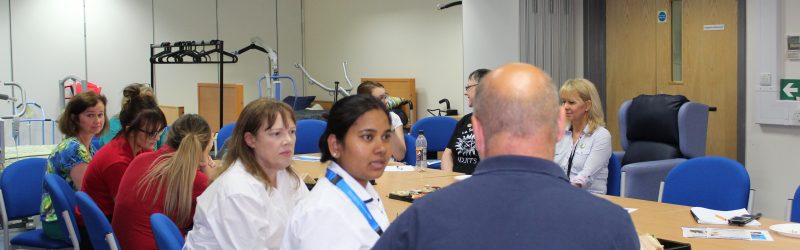
    This post has been written by Deborah Bell, Enablement team manager at Disabled Living. Our latest Lunch and Learn session was full to the brim. Therapists from all over Manchester attended the Seating and Posture session.

    17 therapists at our Disabled Living Training room were joined by Phil Moore. He talked about the importance of seating. In his discussion of seating in the past, he developed his presentation taking us into the relevant and accurate assessment of our clients.

    We learnt that this enables them to have the best chair for their purpose.Phil Moore delivering Lunch and Learn

    Phil seemed concerned about people over prescribing. But the reasons for that may be a whole other blog topic around positive risk taking and legislation. Elaborating on this, he shared his experiences of assessing people who had poor posture due to the direction their chair was in.

    People will always position their posture due to the thing most focused on whether it’s the TV, a conversation with someone, or looking out of a window, without moving their chair. This can then lead to the person sitting asymmetrical for no good reason.

    The group was very interactive and included a discussion where we asked Phil questions about issues he had come across. We also had an interesting discussion around seating and dementia. This could have carried on for a couple of hours if there was more time.

    All in all it was a very interesting two hours which, concluded positively with ideas that small things can often make a huge difference. Not only this but that, the importance of finding the right chair, can help an individual improve their posture in the future.
    Lunch and Learn food

    Phil provided a fantastic lunch of sandwiches, sushi, fruit and doughnuts which was enjoyed by all of us who attended.

    The networking was great and Phil introduced Graham who looks after the Chair Doctor, a service which provides specialist repair and refurbishment of posture, nursing and riser/recliner chairs. This seems like a very useful and popular service in days when we have to look after every penny.

    The Care Team look forward to delivering more sessions and are working closely with Disabled Living. So, stay posted for more information about these events coming soon.

    Keep up to date with our latest news on Twitter @disabledliving.

Disabled Living