Tag: travelling

  • Accessible Iceland: Chris’ Holiday Blog

    Accessible Iceland: Chris’ Holiday Blog

    This blog was written by Chris Cammiss, Disability Trainer and Advisor at Disabled Living.

    I thought I’d push the envelope a little bit this time, so instead of heading for some late season sun in Lanzarote or the Seychelles I planned a trip to Iceland. 

    Of course, my expectations were of snow drifts, misty breath, icy pavements and multiple layers of clothing, so I went fully prepared. 

    How wrong can you be?

    Although we were travelling in late September last year, I encountered hot – yes, hot sun and generally comfortable T-shirt weather. In fact, I only wore a light coat on one evening. 

    The Accessible Hotel

    We booked a four-night weekend break based in the capital of Iceland, Reykjavik. We’d done our research in advance and my partner had found a holiday company which specialised in disability. The owner, who had already worked for a holiday company became seriously disabled after a car accident and decided to start up his own specialised organisation. They were able to book a suitable hotel, plan a couple of day-long excursions and advise on restaurants, activities and attractions. Alternating with free time in the city, this made for a busy but comfortable break. 

    The hotel was superbly located at the edge of the city centre, the hotel room was spacious and very comfortable, and the bathroom had a bigger than average shower room.  

    The concept of accessibility is very well understood in Iceland, but some practical interpretations differ to ours, so the shower room had only one tiny grab rail and an emergency cord but no shower seat. There was no foot recess under the sink at all. 

    The toilet was low with no support rails at all. Remember to contact the hotel and ask specific questions. 

    Exploring Reykjavik

    I loved the atmosphere of the city – a very hippy/indie/multi-cultural vibe – not a big city feel at all. Great mix of old and new. The new, often large buildings were fully accessible, older ones usually had ramps so were a delight to explore. Being the capital city, there were the usual huge cultural buildings, but many of the original, quaint streets were still intact. 

    During the day the whole scene was overlooked by the impressive modern cathedral, shining white at the top of the hill, in the evening you look for the food and the jazz. 

    The countryside is extremely mountainous – dramatic and atmospheric. Lots of lakes, glaciers and fiercely flowing water. There is a lot of green but most of that is lichen. 

    Our tours took us to spectacular spouting geysers, hot, boiling mud pools and dramatic waterfalls. You can see why Iceland is such a popular country for filmmakers  it’s perfect for any Lord of the Rings or Game of Thrones spin-offs! We were very well looked after by Siggy – our personal guide/driver for two full days, with his fully accessible vehicle. 

    The Blue Lagoon

    have to mention the Blue Lagoon. This is a very famous tourist attraction built around pools filled by natural hot springs where you can swim, sit or float in salty water at close to body temperature. So, I arrive in my expensive wheelchair and ask how I can get in? Well, we will transfer you to our special plastic wheelchair, which they did in their fully accessible changing room with the help of two lifeguards. At the poolside they indicated where my ramp descended into the water. I realised immediately that it was quite steep and I would have difficulty maintaining control –no problem said two female lifeguards we will help, we have swimsuits! Off they went to change and away we went 

    Iceland Blue Lagoon

    The Food

    I had certain expectations of the food available – I’d been told about marinated, buried, foul smelling lamb dishes for instance. I knew there would be excellent fish but expected very little meat and vegetables. The reality is very different. Lots of fresh local fish – the best fish and chips – great lamb stewsplenty of vegetables and fancy salads. Many local specialities as well, such as puffin, shark and (unexpectedly) horse meat, which were all extremely delicious and a complete surprise.  

    The Aurora Borealis

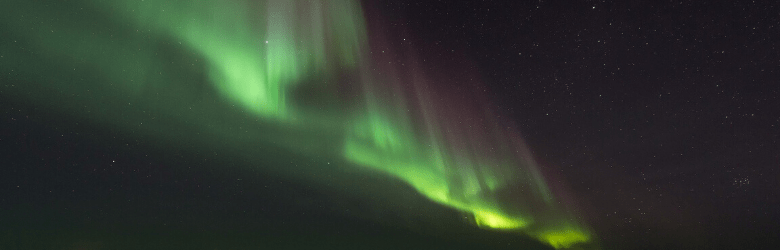
    The Aurora Borealis (Northern Lights) of course should be the highlight (!) of any trip, and here we were very lucky. You should go in the winter months to give yourself a good chance but there are absolutely no guarantees. For us the very high quality, detailed weather reports (low cloud, medium cloud and high cloud levels) suggested two of our nights gave a very high probability of a spectacular show and one of those nights really delivered. Everyone moved down to the bay – nearby street lights switched off – and watched. The show was tremendous with colours, swirls, movement and drama – breathtaking display moving across the whole sky. The best vantage point was around the “Sun Voyager” a huge, stylised Viking longboat sculpture jutting out into the sea. You chose your spot and just marvelled. 

    The second, highly recommended night – absolutely nothing. You can’t ever be sure. 

    This trip more than ticked all the boxes and I will definitely go back to Iceland. I’ll make sure it’s in winter so there’s the best chance of seeing the lights, and, as always, I’ll do my research. 

    Happy travelling, 

    Chris 

  • 6 Accessible Travel Hacks for Wheelchair Users

    6 Accessible Travel Hacks for Wheelchair Users

    This blog post has been written by Stuart on behalf of My Baggage for Disabled Living.

    Finding accessible travel options as a wheelchair user can sometimes be frustrating and difficult. It’s impossible to prepare for every situation. All you can do is try and prepare as much as possible and give yourself a break, this is your holiday after all! We’ve put together six accessible travel tips to help ensure your trip goes as smoothly as possible.

    Before you book your flight

    It’s important to ensure that the airline you are travelling with has comprehensive information for passengers who are wheelchair users. Each airline policy will differ and if you are flying outside the EU you may not be covered by disability laws. Some airlines will have restrictions on the size of electric wheelchairs, so when in doubt always contact their customer services.

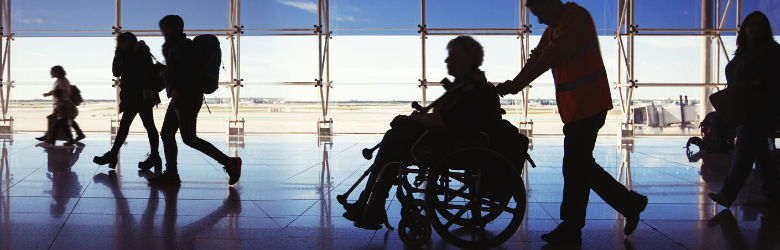
    If you need assistance both on and off the aircraft when you are booking your flight, tick the airport assistance checkbox. Every airport will have this service available, but the service will differ. When choosing your seat, some wheelchair users prefer the window seat to the aisle, as anyone requesting special assistance is boarded first onto the plane. Remember that this also means you will be the last to leave the plane as you will have to wait for airport assistance. This is important if you have an onward flight to catch, so always allow for this delay when booking long-haul or connecting flights.

    Avoiding wheelchair damage

    Your wheelchair is an important part of your mobility and the last thing you want is to discover it has been damaged in transit. One way to try and protect your wheelchair is to include written instructions attached to it, explaining how to break it down and how the chair lifts and tilts. A fragile sticker also goes a long way. Before you hand your wheelchair over, remember to remove any parts that can be removed such as the seat pad, footrest or wheels. You will be able to carry these items on board the plane and they will not count towards your hand luggage.

    To always protect yourself, take photographs of your wheelchair prior to handing it over to airport staff. This way, in the rare occasion that your chair is damaged, you have before images. If the worst does happen and your wheelchair is damaged, take images immediately and include them, alongside the before journey images and contact your airline’s customer service team as soon as possible.

    Accessible bathroom issues

    This is a real problem for wheelchair users when flying. Most domestic, short-haul flights will not have an accessible toilet available or an aisle wide enough to accommodate a wheelchair. Before booking a flight, confirm whether they have an on-board wheelchair or an accessible bathroom. This will usually only be available on long-haul flights or on bigger aircraft, but every airline will have its own policy. It’s important to remember that air stewards will not assist in transferring you into the bathroom but will be able to push your wheelchair. When in doubt confirm with your airline or with special assistance at the airport prior to departure. Accessing accessible bathrooms is a real struggle for wheelchair users no matter what mode of transport. To learn more about this, there is a great blog called Wheelchair Travel, which outlines what airlines cater to wheelchair users.

    Luggage shipping

    Travelling through the terminal with your luggage whilst in your wheelchair can be incredibly stressful. A popular way to combat this is through shipping your luggage directly to your destination. This will mean you will not have to navigate the airport with your suitcase in tow or worry about making it in time to the arrival’s carousel. Luggage shipping is very easy, all you have to do is arrange for a courier company to collect your items from your home and ship it to your forwarding address where you will spend your holiday, leaving you one less thing to worry about. One concern is the cost, but luggage shipping can often work out cheaper than the cost to store your luggage in the hold.

    Finding accessible accommodation

    Finding accessible accommodation has gotten a lot easier thanks to many hotel comparison sites like booking.com and hotels.com. These websites give wheelchair users the option to search for a place that is wheelchair friendly. Enable this option so you can ensure that the room you pick is entirely accessible. When in doubt you can contact the hotel directly or when booking via a comparison website, you can add this request in the booking requests option.

    Accessible activities

    Once you arrive at your destination and check into your accessible hotel, the next hurdle can be finding accessible activities to enjoy. Many destinations will have a dedicated tourist website which will cover facilities and tourist sites that are fully accessible. They will also provide information on accessible transport to reach these sites and any further information you may require to put your mind at ease. Websites like VisitEngland and Accessible Travel Netherlands offer advice and information for wheelchair users.

    If you don’t want to go on an independent holiday, there are plenty of tours, cruises and package holidays that cater and provide accessible activities. An example is a Responsible Travel, who offer responsible adventure holidays which are also accessible. You can go on a trip to explore the wonders of Ancient Egypt, enjoy an island resort stay on the luxurious Maldives or even go in search of mountain gorillas in Rwanda. The world is your oyster and there are many destinations and tour operators out there who will cater to a variety of needs and ensure you have the holiday of your dreams.

    Destinations that are wheelchair accessible

    When deciding where to go, you might wonder what destination will even be able to cater for you and your wheelchair. To help inspire you, the following destinations are wheelchair accessible; Lisbon, Amsterdam, Krakow, Israel, Ecuador, Morocco, South Africa, Slovenia, Barbados and Dubai.

    Although there may currently be extra travel restrictions due to COVID-19, travelling is still possible. Make sure to check how to travel responsibly before you set off in Love Holidays’ COVID-19 Tourism Travel Guide.

Disabled Living