Category: General

  • Installation of the High Sheriff of Greater Manchester

    Installation of the High Sheriff of Greater Manchester

    This post has been written by Nina Rios, Business Development & Marketing Coordinator at Disabled Living. Last week I was delighted be invited to the ceremony for the Installation of Kui Man Gerry Yeung OBE, DL as The High Sheriff of Greater Manchester. Gerry, has been Disabled Living’s President for the last 10 years and has brought a wealth of knowledge and expertise to our Management Board.

    Gerry was born in China and came to Manchester as a teenager with his family. He completed his education in the UK and joined the family business, Yang Sing Restaurant at its inception. The success of the restaurant and its great popularity gave him an opportunity to become part of the community of Manchester.

    Gerry Yeung and Debra Evans
    Debra Evans, Chief Executive with Gerry Yeung OBE.

    Gerry has been actively involved in the commercial, educational, charitable and cultural life of the city of Manchester for many years and was President of the Manchester Chamber of Commerce and Industry. Gerry’s networks are vast and over the years he has introduced me to a wide range of influential people to assist me to develop services and support the long term strategic vision I have for Disabled Living.

    Gerry very kindly hosts Disabled Living’s Annual General meetings at the Yang Sing Cathay in the Trafford Centre, Manchester. And I am sure those of you who have attended our AGM will agree the food is of the finest quality – a little like Gerry!

    Share your thoughts with us via Twitter @disabledliving.

  • The Revolutionary Bionic Eye Is Changing a Woman’s Life

    Rhian Lewis, a 49 year old woman who has suffered from retinitis pigmentosa an inherited disorder since she was five, talks to Disabled Living about her condition.

    The condition causes gradual deterioration of the light-detecting cells within the eye; this can eventually lead to blindness. One in 3,000 people in the UK have the disease, for which there is no cure.

    Rhian has marked a significant moment in history by being the first person fitted with a ‘bionic eye’. Mrs Lewis was given a retinal implant as part of an ongoing trail at the Oxford’s John Radcliffe hospital. Surgeons at the Oxford Eye Hospital have implanted a chip that will help her see. She is completely blind in her right eye and has virtually no vision in her left.

    Rhian has this surgery in June last year; the operation lasted around 6-8 hours. During the follow up tests it became clear that she could see for the first time in 16 years. She was asked to tell the time and once she realised the time she said ‘It felt like Christmas Day!’

    The implant is an amazing piece of technology which sends pulsed electrical signals to the nerve cells, from the outside it just looks like a hearing aid. The brain eventually learns to convert the flashing images into meaningful shapes and objects, this technology has the power to transform lives.

    When the bionic eye is first switched on, patients see flashes of light, but over a few weeks the brain learns to convert those flashes into meaningful shapes and objects.

    The images can be black and white and grainy but still have the power to transform lives. This specific bionic eye is being tested as a treatment for retinitis pigmentosa since 2012. Rhian is the first patient to be fitted with the device outside Germany.

    The lead researcher at Oxford, Professor Robert MacLaren, said “It’s an amazing process because what Rhian and others are trying to do is reactivate a part of the brain that hasn’t been doing anything for the last 10 years or so,” he said. “There is a lot of rehabilitation because basically they are learning to see again.”

    A wireless hand held power supply means that Rhian can adjust the contrast and frequency to suit her needs and in different conditions as she is continuing her practise and regaining her confidence and independence.

    If the rest of Prof Robert MacLaren’s trial is successful the team hopes that one day the implant could be available on the NHS. It could also be applied to other eye diseases, such as age-related macular degeneration.

  • A Young Boy Named Jacob with Autism and His Support Dog Minta

    A Young Boy Named Jacob with Autism and His Support Dog Minta

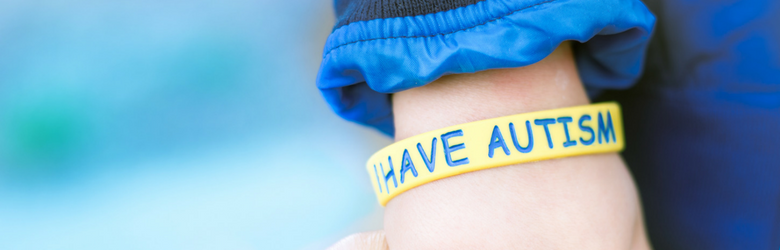
    Jacob is 8 years old and suffers from severe autism. This means that Jacob struggles with expressing himself and communicating with others. His mother described the moment that Minta entered their lives and she immediately saw a change in Jacob.

    Support dog Minta was first introduced to the family in 2013, before then Susan, Jacob’s mother, says Jacob was a lonely boy who had no friends. She described him as isolated and lonely which was heartbreaking for her to see.

    Jacob’s everyday life was a struggle, he would become upset even going to the shops.
    When Minta was introduced to Jacob his life changed forever. The stress that used to come with his everyday tasks are reduced. His mother describes that when they need to do something she just explains to Jacob that Minta wants to do it too and he does not become stressed at all. He will now happily chat to strangers which would have been impossible before because he is proud of Minta.

    Jacob and his support dog Minta

    Susan is so proud of Jacob now, she describes the difference in him as phenomenal and incredible and we agree! Life before Minta saw Jacob wanting to become invisible and now he is just growing in confidence. Autism Assistance Dogs are training to provide safety and to help facilitate a increasingly independent and socially inclusive life for both the child with autism and their family. Just like in Jacob’s case a support dog can provide comfort and reassurance like nothing else can.

    Support dogs is a charity that provides help with everyday tasks and mobility for people with physical disabilities, give advance warning of seizures for people with epilepsy and provide safety and support for children with autism and their families.

    Support dogs autism assistance programme can be life changing for both the child and their whole family. The dogs are specially trained to increase the child’s quality of life. The clients of Support Dogs are often children who are unable to communicate or express their feelings in a way that is understood by others and have little sense of danger including the consequences of their actions. Around 1 in 100 children in the UK are diagnosed with Autism. Support Dogs are a brilliant charity that provides excellent respite for the child and the family too.

    If you want to find out more information on Support Dogs, please visit their website.

    Written by Amy Rowland.

Disabled Living