Category: General

  • What Have We Learnt from Our Community Curation Training?

    What Have We Learnt from Our Community Curation Training?

    As many of you will already know, Disabled Living are celebrating 120 years of providing services. As part of our Heritage Lottery Funded project, Disabled Living has received training in different areas. An interesting section has included two community curation sessions delivered by Catherine O’Donnell from the People’s History Museum.

    We understand the importance of the planning process in our Donkeys To Innovators project. We have learnt many things including the Ekarv text style for an exhibition along with guidelines for handling objects. We had the opportunity to fill out a document for our archive material, which lists key information such as: object name, type, condition, creator etc. Learning about Ekarv writing was very interesting. It sounds easy enough to do but there’s more to it than you think.

    Ekarv writing style

    Imagine you’re writing a paragraph of text – with Ekarv you need to ensure that the lines of the sentences aren’t too long. It’s important to get your sentences straight to the point and include the key points.

    ekarv text

    I was advised that I took quite a journalistic approach to my wording at first. But once I repeated the writing with Catherine’s advice, she said that I created a good example. It actually felt like I was writing a piece of poetry due to the strict amount of points per line. – Natasha, Marketing Coordinator & Content Writer for Disabled Living

    The People’s History Museum advises the following:

    • One idea expressed per line
    • Line breaks placed at natural pauses in a sentence
    • No more than 3 lines per sentence
    • Simple sentence structures, no complex clauses
    • Use active forms of the verb where possible
    • Conversational rhythms, easily spoken out loud
    • Maximum 52 characters per line (including spaces)
    • Maximum 8 lines per paragraph

    Community Curation collage

    Themes and timelines

    We also created several mind maps in order to have an insight of the possible themes that could run through our project. With Catherine’s training techniques we were able to see the many ideas that can stem out from one theme alone. It was also useful to put these into a timeline of dates as well as arranging them thematically. This put us to the test of remembering key dates in our heritage!

    Catherine’s main message to us:

    Less is more and editing is key! Clarity and consistency is also key. Think about how you’re going to write dates and numbers.

    It’s essential for us to pick out the events and memories that people will be able to reflect on the most. We would like people to identify and perhaps familiarise themselves with our services.

    We now know the importance of getting people to try out the exhibition before it’s live. For example, having people of different heights look at the area where our exhibition will be presented. And of course, thinking about different disabilities and the best positioning to accommodate this. Seeing examples of other exhibitions has made us realise that we need to consider colours, fonts, and sizes to ensure these are readable by all of our audience. Relating to our key audience throughout the exhibiting is what it’s all about.

    Thank you to Catherine O’Donnell for your wonderful training. It’s been very insightful and we can’t wait to move things further.

    Would you like to be part of our Donkeys To Innovators project? See more information here.

  • Were You Involved with One of Manchester’s Oldest Charities?

    Were You Involved with One of Manchester’s Oldest Charities?

    Disabled Living, one of Manchester’s oldest charities, is calling for people to get in touch who have memories, materials and/or photographs about their links with the charity. Hundreds of thousands of people across the North West have been involved with the organisation in its 120 year history as service users, volunteers, staff and trustees.

    Alan Norton

    White Heather
    For example, Alan Norton, one of Disabled Living’s current Trustees, went on a three week holiday as a child to Disabled Living’s White Heather holiday accommodation in North Wales and received one of the Christmas hampers that were donated to disabled children across Manchester and Salford.

    At the age of 7 I vaguely remember my mum sending me to a holiday home run by the ‘Cripples Help Society’ now known as Disabled Living Manchester, it was the first time I had been away from home and I had to dress myself which I had never done before. I remembered I had a fantastic time going on walks, playing various games especially enjoyed the swings at the local park. It was my first taste of independence and gave me the inspiration to do more for myself, which has led to me having a full and complete life,” states Alan.

    Since losing the majority of its records in 2009 due to a fire, the charity has been working towards rebuilding its heritage. As part of its birthday celebrations Disabled Living is delivering a project, From Donkeys to Innovators, supported by the Heritage Lottery Fund, that recognises the many services the charity provided and the people involved with the organisation.

    holiday

    Marple children's hospital

    Most importantly, the voices of disabled people will be recognised, preserved and celebrated, documenting unique stories about disability heritage. People’s contributions to the history of Disabled Living may be included in a permanent exhibition in the charity’s Redbank House in Cheetham Hill that launches in 2018, and all will be preserved in its new archive that will be safely maintained in Manchester Central Library’s Archives+.

    Many people remain unaware that the activities they were involved with were part of the present day charity. These activities included the first wheelchair loans service in Greater Manchester; the establishment of the Children’s Orthopaedic Hospital in Marple; the provision of holidays for thousands of disabled children and adults to Blackpool, North Wales and overseas; a residential provision for disabled adults at Tan Y Bryn in Abergele, North Wales; advice and support about the use of innovative equipment to enable disabled people to live more independently; and a Style Centre providing advice and training for disabled teenagers and adults.

    Over the years, a myriad of organisations have also been involved with the charity from The Guardian and Manchester Evening News, the Disabled Drivers’ Association, Manchester Art Gallery, the Jewish Ex-Servicemen, Derbyshire Miners, Manchester United Football Club, the British Red Cross Society, and Greater Manchester Police, indicating the charity’s important place in the social history of Greater Manchester.

    Debra Evans, Disabled Living’s Chief Executive said:

    The history of Disabled Living are the stories of the people who were involved with the charity from the disabled people who used its services to the volunteers who packed the Christmas hampers and the nurses who worked at the Marple hospital. People’s memories are what bring the charity to life and we want to have a chance to celebrate and thank the individuals who helped to create the charity that we have today.

    disabled equipment

    People who are prepared to share their stories, or any photographs or materials they might have about Disabled Living’s heritage, are asked to contact Natasha Bolger at Disabled Living on 0161 214 5959 or email Natasha.bolger@disabledliving.co.uk. No stories or images will be included in any of the public materials without the express permission of the individual involved.

  • Debra’s Visit To Facts & Fun Day in Marple

    Debra’s Visit To Facts & Fun Day in Marple

    On Sunday 3 September Debra, Chief Executive of Disabled Living, went along to The Roman Lakes and Mellor Mill for a Facts & Fun Day.

    This was a fundraising and awareness day for the Mellor Archaeological Trust and Friends of Our Valley. Marple Local History Society displayed photographs and archive material from the Children’s Orthopaedic Hospital and later the Hospital School.

    Debra spent around an hour and half exploring the location, displays, and meeting with other people. Debra was particularly happy to see that there were a lot of people coming to the stand who remembered the hospital. Ann Hearle and Hilary Atkinson were there, with Ann being in the immediate area of the display to interact with interested people.

    Debra would like to give a big thank you to Ann and Hilary:

    I want to thank Ann and Hilary and the rest of the members of Marple Local History Society for supporting Disabled Living (formerly The Cripples Help Society) to raise awareness of the work the charity undertook from the beginning of the 1900’s until well into the 1970’s. It was interesting listening to the local people who remembered the building as Treetops Child Development Centre but did not realise the history.

    The event took place from 11.00am until 5.00pm. There were a variety of activities taking place throughout the day including: Mellor Mill tours, historical lectures, guest talks, and workshops.

    Other attractions included:

    • A pop-up museum with a 3D model of Mellor Mill and its mechanics
    • Visual timeline of Our Valley through the centuries
    • Vintage finds and salvage stalls
    • Wet plate collodion photographer
    • Rural craft & opportunities to get involved
    • Plant sales & locally grown produce
    • Beer tent with locally crafted produce
    • Interactive display of Yoruba women’s headgear

    …and many more!

    We look forward to discovering more about Manchester’s heritage and learning more about any links to Disabled Living’s heritage too.

  • Raising Awareness for Alzheimer’s and Dementia

    Raising Awareness for Alzheimer’s and Dementia

    Dementia and Alzheimer’s are affecting more people each year which is why more awareness needs to be made. The confusion of mental processes causes memory disorders and changes in personality. 

    Disabled Living’s Dementia Tea Dance

    We organised our very own 1940’s Dementia Tea Dance to kick-start our celebrations for providing 120 years of service. The day made us realise how important your memory is. All of the precious memories that our brains can store is amazing.

    However, it’s heartbreaking to see some of these taken away from dementia and Alzheimer’s. We are looking forward to welcoming more guests to our next tea dance in December. We hope to raise further awareness and give them a day full of happiness and joy.

    How research and awareness helps

    Raising awareness of dementia and Alzheimer’s can help people recognise the early signs. Without the research from organisations such as Dementia UK and Alzheimer’s Society developments with helping the conditions wouldn’t be able to move forward. Awareness also helps to educate families and carers to understand the different stages and medication procedures to expect.

    Dementia is usually diagnosed by health specialists such as: psychiatrists, geriatricians, and neurologists. Assessments are made and patients will be made aware of the next steps if necessary. There are several research strategies and projects that are implemented within dementia and Alzheimer’s related organisations.

    Take a look at the video below by Alzheimer’s Society.

    The more awareness you raise, the more attention there is to how you can help someone with these conditions. Diagnosis can be challenging and without the awareness there would be less dementia friendly communities. We are proud to see so many wonderful ones in Manchester.

    Memory Walks are taking place across the UK

    Many cities across the UK are participating in the Memory Walk. You can see where your nearest Memory Walk is taking place by visiting: www.memorywalk.org.uk/find-a-walk/

  • Why Lee Kingsberry Is Our Story of the Month

    Why Lee Kingsberry Is Our Story of the Month

    Did you read our previous Story of the Month? For August’s feature, we are sharing a story about Lee Kingsberry who has caught our eye this month. Lee is a man with cerebral palsy who wants to make a change. He doesn’t believe in a world where people should be stared at because they’re a wheelchair user.

    Lee’s creation of a mobile disco

    His wheelchair is no ordinary wheelchair as it’s now complete with neon flashing lights and speakers to play his booming music.

    Lee Kingsberry

    Rather than giving people a negative reason to stare, he transformed his wheelchair to have a positive impact on others. He simply wants to give others a positive reason to look at him. In July Lee stated on twitter that:

    Everyone has their own way of dealing with how society portrays disabilities, so let’s bring the fun into awareness about disabilities.

    About Cerebral Palsy

    Cerebral palsy is the term used for a group of conditions that affect movement and coordination. There are several symptoms of the condition including: weak arms or legs and uncontrolled movements. The NHS explains that cerebral palsy is usually recognised within the first two to three year’s of a child’s life.

    Lee Kingsberry

    Lee plays a range genre of music from his wheelchair from classical to rock. He has gained a positive reaction from those who have passed by so far in the Salford Quays area.

    We asked Lee if there is a message he would like to send out and he replied:

    Don’t let society change or stop you from living your life.

    Disabled Living love to be inspired

    As Disabled Living want people with disabilities and additional needs to live a life as independent as possible, Lee has inspired the whole team. We hope to see Lee continue to inspire wheelchair users not only within Greater Manchester but all over the UK.

    Read more about his story here.

  • The Importance of Disseminating Information to Your Service Users

    The Importance of Disseminating Information to Your Service Users

    This blog is written by Jayne Watson, one of our Occupational Therapists.

    Disabled Living host 5 of the largest exhibitions for kids and adults with disabilities. The exhibitions are a great way of finding information on equipment relevant for the individual to remain as independent as possible throughout the different stages of their lives.

    Not only do we look at equipment, but we also have a wide variety of funding organisations, mobility vehicles companies, solicitors, employment agencies, colleges, and charitable organisations. There are also fun activities to occupy the children during the day, with a good variety of catering services available if feeling hungry.

    These events are also a great way for professionals to network with other professionals and update their continuing professional development (CPD); presentations cover a wide variety of topics. These seminars are also open to families and carers of children with disabilities and special needs. Entry to these events is free on a first come, first served basis.

    Now here is the gripe

    A professional reported to one of my colleagues that they aren’t disseminating information because they can’t provide a specific piece of equipment. However, I can’t specify how important it is to inform families of these events as it gives them the choice on whether to attend or not.

    For years now I have been part of the Kidz to Adultz exhibitions, however part of my role working for a charity is that we receive numerous enquiries from parents all over the country in search of equipment for their disabled children, as well as funding and various other requests.

    On asking do you have any professionals involved it appears that the majority depending on their locality who attend our events are not informed by professionals, and that the tickets clearly state that it is for parents and the professionals working with them.

    I feel that families are missing out on vital opportunities to provide their children with the best quality of life knowing there is a wealth of information, choice and support that their children deserve. In addition, it improves the health and well-being of all families.

    I find it difficult to imagine that all those professionals who are involved clearly don’t disseminate this information. Informing families will reduce an immense amount of stress knowing that they are not alone and that there is support out there.

    Why not share this information?

    For all those professionals who read this blog and attend our Kidz to Adultz events please kindly share this information down to your service users or request extra tickets for disseminating information about the events to your network. Families are missing out on so much information when they don’t need to.

    For more blog posts like this please visit: www.disabledliving.co.uk/blog

  • Attainability UK Have Equipment for People with Parkinson’s Disease

    Attainability UK Have Equipment for People with Parkinson’s Disease

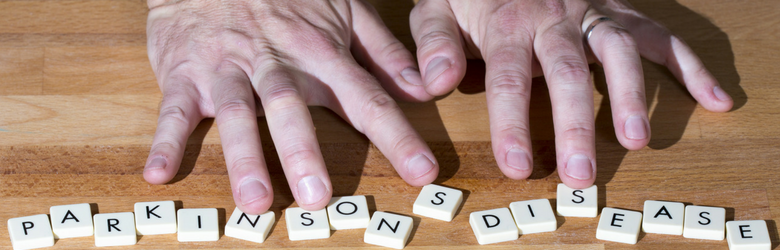
    The NHS describes Parkinson’s as a condition in which parts of the brain become progressively damaged over many years. View source here.

    Do you know what products are available to support those with Parkinson’s disease? Attainability UK could have the equipment you’ve been looking for.

    Attainability UK has a team of specialists, based in Shrewsbury, West Midlands. They aim to help people overcome mobility issues caused by particular diseases such as Parkinson’s.

    As the disease can cause a tremor (shakes) throughout different parts of the body, it is important to find the right equipment to help those who suffer from the condition. We would like to share the following pieces of equipment which is available at Attainability UK that could be useful for you or someone you know/care for.

    man with hand on walking stick

    Laser Cane

    The great thing about this product is that, it is lightweight. So it is ideal for not putting too much weight on the user, especially with their strength being weaker than it used to be before they had Parkinson’s. The laser crane projects a bright red line across your path. The crane is also useful for Ataxia and stroke rehabilitation. The adjustability and power which can last over a couple of months has benefited many people for walking support.

    The laser on the mobility aids, assists with a freezing gait often seen in Parkinson’s Disease.

    U-Step 2 Walking Stabiliser

    This is a UK product with Attainability UK which is useful for people with Parkinson’s and other neurological conditions such as: Multiple Sclerosis (MS) and Progressive Supranuclear Palsy (PSP). The stabiliser comes with a reversed braking system, rolling resistance control, and a spring loaded front wheel. Benefits include correcting posture, helping the user to be kept upright.

    The U-Step 2 is now available with additional weights and gutter arms. These increase stability and help those who have weak grip strength.

    All of Attainability UK’s products are available to purchase via their website: https://attainability.co.uk/shop/.

    You may also want to visit Disabled Living’s online shop for more equipment and products: https://www.disabledliving.co.uk/online-shop/ 

  • Why Motor Neurone Disease Doesn’t Stop Jason

    Why Motor Neurone Disease Doesn’t Stop Jason

    This Story of the Month to Jason Liversidge. Jason has Motor Neurone Disease (MND) but doesn’t let anything stop him from accomplishing new challenges.

    When you’re diagnosed with MND, you become aware of the many affects the disease can have on your body. It affects the nerves in brain and spinal cord. Some people can experience mental and physical difficulties, both of which affect an individual differently to another.

    Some of the symptoms can include:

    • Muscle weakness
    • Emotional problems
    • Difficulty swallowing
    • Breathing problems

    Laboratory medical

    The disease affects up to 55,000 adults in the UK – Motor Neurone Disease Association

    Further statistics can be found here.

    On Tuesday 18th July, Jason reached 3560 feet as he travelled to the summit of Mount Snowdon in his wheelchair. That’s impressive to say the least. He has inspired many people across the UK and we found his accomplishment to be our most inspired story this month.

    Source: Graham Satchell, BBC Health

    Visit BBC Health to watch his story.

    As he reaches new heights we wonder what challenge Jason with face next…

    If you have felt inspired by Jason’s story, let us know on Facebook or Twitter.

    We are always looking for people to share their stories with us, so feel free to get in contact with us.

  • Why We Love Ravenglass and Muncaster (And You Should Too!)

    Why We Love Ravenglass and Muncaster (And You Should Too!)

    Cumbria might not sound the ideal place for easy walks and accessible venues. There are challenging peaks, extensive lakes and frequent rivers leaving very few level spaces. But the coastal strip is a different matter with several little gems well worth a visit. And Ravenglass is my favourite!

    It’s a tiny fishing port with a huge enclosed natural harbor which originally attracted the Romans with its shelter for their galleys en route to the Scottish wars.

    The village is tiny. There’s one wide street with quaint cottages either side, many signed – Post Office, Reading Room, Station House and so on. They have relics of the past like the ancient petrol pump.

    There’s a large central car park, well disguised, with plenty of blue badge parking, from which there are smooth paths to all parts of the village which you can explore to your hearts content.

    Driving to the car park you will have already seen the boats at anchor in the bay and now you can actually access the beach at the end of the village down the concrete slope provided for the boats. The beach here is rough but hard with sand and stones giving a decent level surface for a little exploration to admire the scenery check the tides and spot the abundant wildlife.

    Café

    After your exertions there are plenty of accessible cafes, pubs and restaurants to suit all tastes.

    Another path from the car park will take you to the miniature railway only minutes away. Admittedly this path is a bit of a push as it goes over the “proper” railway. So, you could drive round to the Station car park where you will find more blue badge parking.

    Now you can easily explore the Station, the trains, the shop, the cafe, and the museum. All of which are accessible with toilets. This used to be a proper working line taking miners a few miles inland to their work. It’s now a tourist route all the way with accessible carriages on the trains.

    Get a ticket then enjoy the beautiful scenic route which has several stops you can explore, particularly at the end of the line where you have to get off while they swap the locomotive from one end to the other before the return trip. You can explore for as long as you want and catch a later train. If you’re lucky you will see foxes, badgers and rabbits together with a wealth of bird life along the route.

    As if that’s not enough, back at base another smooth, flat path will take you to the remains of the old Roman Bath House once standing alongside the huge Roman fort (since demolished). This is a lovely undemanding walk with plenty of shade from the trees with views through to fields and to the sea. The remains are just alongside the path and can be reached on hard grass. Apparently these are the tallest Roman wall ruins in England.

    Muncaster Castle

    If you want to make a weekend of it then visit Muncaster Castle only a minutes drive away.

    They are very accessibly minded here. So, you can have fancy afternoon tea in the sumptuous castle, walk through the woods, around the gardens, see a falconry display, join in with the heron feeding maybe catch a medieval fayre. There’s something here for everyone. You can even rent an accessible cottage onsite.

    I can thoroughly recommend Ravenglass and Muncaster for any disabled person wanting a cracking day out (family optional).

    If this has whetted your appetite, you’ll need an accessible vehicle to get you there in the first place and to move around once there so why not contact Mobility Nationwide to find the perfect second-hand mobility vehicle for your needs.

    You can also view their infographic below:

    Mobility Nationwide

    Would you like to share your favourite accessible attractions on our blog? Send an email to: info@disabledliving.co.uk

  • How to Use Art Therapy as a Coping Mechanism

    How to Use Art Therapy as a Coping Mechanism

    This guest blog is by Patrick Samuel, an artist with Asperger’s Syndrome, who discusses Art Therapy.

    As a child I was hyperactive, and I think my mom recognized that early on. It was her who showed me how peaceful and rewarding drawing and painting could be.

    We did a lot of arts and crafts sessions together. There was a lot of cutting and sticking, making decorations and things to hang around the house.

    Unfortunately, between 1996 and 2016, I didn’t draw or paint at all. I forgot how. As hard as I tried to ignore the limitations Asperger’s placed on me, I was simply becoming less and less able to cope with the demands and pressures of adulthood. As a result, 2016 was the worst year of my life. It became much worse in September when I started teacher training. It eventually became clear that I was not getting the right support.

    I let matters get worse and by December I was in hospital with an overdose, having attempted suicide for the second time in my life. My diagnosis, care plan, treatment plan, assessments and psychiatric evaluations followed. It’s all been very helpful, but I would not have gotten it if it I wasn’t willing to take responsibility for my actions. I had to face up to my limitations, accept my difference and not blindly ignore it.

    The thing that played a big part in this turnaround of my destructive life was the start of my daily art therapy, which began one evening in December 2016.

    On that first day, my carer placed an empty A3 drawing pad on my lap, perhaps frustrated at my endless silence. There was the complete inability to put my thoughts into words, or express my emotions and the lack of social imagination to be able to communicate precisely what I was thinking. I just didn’t want to talk anymore.

    He told me to just draw what I was feeling. I hadn’t drawn in 20 years because I’d forgotten how… 40 minutes later I finished a self-portrait. Half of my face with rotting flesh and bone protruding, it reflected everything I was feeling, or rather not feeling. I was dead from the inside out and fed up of trying to hide it. This is who I was. In that moment, I actually felt something – a little feeling of release. And I was done for the day.

    The next day I drew again. And so it went. Day after day. Slowly at first. Each day I’d complete a picture. Eventually they weren’t self-portraits anymore as I started to look beyond myself. I started to draw my dog and other animals. Forests and fields. Then other portraits. Then the moon, the stars, planets, galaxies, other universes, dimensions, portals. I was traveling, exploring…

    The point is, Art Therapy is helping me to stop focusing on myself and looking inward.

    It’s enabling me to look up and beyond. It’s given me the power to dream again, to envision a future me who could use these experiences to build something of a life that could help and inspire others. Art Therapy is a chance to use my Asperger’s for good, rather than the harm I’d been causing to myself and others.

    Art Therapy is also helping me build social skills. I don’t just want to create art, I want to share it and I want to keep doing it for as long as I live now. In a short space of time I’ve secured over a dozen sponsors. I’ve also reached out to other artists and they’ve kindly donated many of their materials!

    And they’re all keen to see how I’m developing as an artist and learning for the first time to manage my Asperger’s. It’s given me a topic to talk about that others can relate to and for the first time as well, I’m conversing with my neighbours.

    Art - flower

    My art is now taking me to festivals where I exhibit my work and can put into practice the social skills and coping mechanisms I’d been learning during my counselling with Mind. I now have my first solo exhibition coming up in November at the Dugdale Centre, titled ‘Escape and Return’.

    What Art Therapy has also done is help me get to the bottom of problems and identify issues that I’ve been unable to access in other ways. There were a lot of questions about myself and my behaviour that I couldn’t understand or answer until I was first able to draw those pictures because that’s how my brain works – in pictures – not words.

    People ask me what they should do and how they can get started because they don’t have the skills and abilities to create anything that can compare to other people’s work. I tell them what my carer said to me, “Draw what you feel”. Abilities, skills, technical know-how, none of these matters in that moment.

    Draw what you feel and what comes from that is an honest representation of what you’re thinking and feeling. It’s all the things you couldn’t say before. It’s all the thoughts that were rustling through your head that wouldn’t settle before. It’s all the pain and hurt you couldn’t let go of. It’s all the anger you’ve been holding onto. It’s all the joy that comes with that sense of release.

    Lastly, Art Therapy helps me go from strength to strength and blossom with skills I forgot I had, and learn new ones too; social skills, and technical skills. And coping mechanisms. I’m still awkward and nervous in conversations, I still find eye contact painful and fidget while talking, but at least I’m talking again.

    Art for an autism exhibition

    I never thought I’d be doing festivals or setting up an art stall somewhere or preparing exhibitions at galleries, but they’re social exercises as well and I’m meeting so many wonderful people and am able to put forward something positive and inspiring about autism and Asperger’s with my art and the story of my journey so far.

    I used to say to an autistic girl I worked with for two years that I was there to help her find her super powers. Along the way I realized she was already amazing as she was, but watching her bloom with the benefits of Art Therapy, acquire so much confidence in herself and master so many social skills…the irony was that it took me so long to discover it in myself; that art and Asperger’s were my super powers all along.

    To hear more about Patrick please visit his website.

Disabled Living