Tag: Heritage Lottery Fund

  • Were You Involved with the Tan Y Bryn Residential and Holiday Home in Abergele?

    Were You Involved with the Tan Y Bryn Residential and Holiday Home in Abergele?

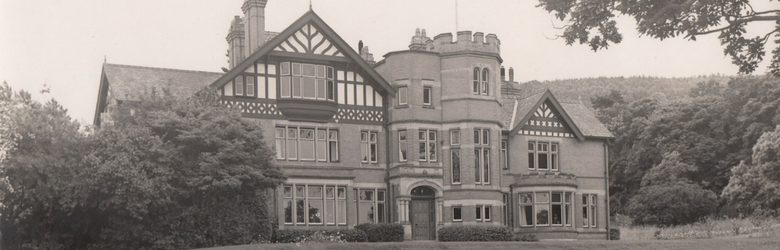
    On Saturday 9 June from 11.00am – 3.00pm at Gwyrch Castle, Abergele the public is invited to an afternoon of fascinating free heritage exploring the links between Tan Y Bryn residential and holiday home in Abergele, North Wales and the 120 year old charity Disabled Living, formerly the Cripples Help Society.

    From the late 1940s until the early 1980s, the Manchester based charity ran holidays and residential care for disabled people, working closely with the businesses and community of North Wales. Wales: Tan Y Bryn was a residential and holiday home for disabled adults in Abergele and White Heather in Old Colwyn provided convalescence holidays for disabled children. Trips were also made to Llandudno and Rhyl for groups of adults.

    Individuals, community groups and businesses from North Wales helped to raise funds, gave their time through volunteer support for day trips and entertainment, worked as staff or provided essential services for the charity.

    Such organisations included the Abergele Women’s Institute Choir, the Red Cross, Round Table, Lions Clubs, Sun Valley Camp, the Ladies Circle, James & Beardmore Auctioneers, Williams’s Boot Stores (Abergele) and Norwest Heating (Colwyn Bay). The local Mothers Union, Young Wives and the Licenses Victuallers Association helped to set up a shop in Tan Y Bryn for the residents.

    Since losing the majority of its records in a recent fire, the charity has been working towards rebuilding its heritage and is keen to hear from people in North Wales who remember Tan-Y-Bryn or White Heather or other holidays.

    People outside White Heather
    People outside White Heather

    The charity invites people to come along, share a panad, chat about their memories of this heritage or simply enjoy the images of North Wales from previous days.

    Debra Evans, Disabled Living’s Chief Executive said:

    The story of Disabled Living is the story of the people who were involved with the charity from the disabled people who used its services to the volunteers who helped to ensure that the holidays created special memories for both children and adults. People’s memories are what bring the charity to life and we want to have a chance to celebrate and thank the communities in North Wales who helped the charity deliver its services.

    Diane Woodrow, Education Officer at Gwyrch Castle said:

    It’s wonderful to bring part of Abergele heritage into the castle, states. The links between Disabled Living and the local area go back a long way and capturing those stories is an important part of the locations histories.

    The day is part of a larger project supported by the Heritage Lottery Fund

    People who are prepared to share their stories, or any photographs or materials they might have about Disabled Living’s heritage, are asked to contact Debra Evans at Disabled Living on 0161 214 5959 or email debra.evans@disabledliving.co.uk. No stories or images will put into the public domain without the written permission of the individual involved.

  • From Donkeys to Innovators: 120 Years of Disabled Living

    From Donkeys to Innovators: 120 Years of Disabled Living

    We are delighted to announce that our ‘From Donkeys to Innovators: 120 Years of Disabled Living’ exhibition is officially open at Redbank House. We would like to invite you to come along to our public open days for From Donkeys to Innovators on Friday 13th April, Monday 16th April and Tuesday 17th April, 10.00am until 3.00pm. 

    A project discovering independence and innovation

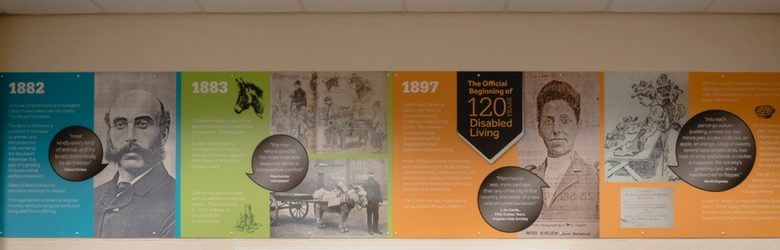
    With the support of a Heritage Lottery Fund grant, we embarked on a number of projects to capture the charity’s heritage, ensure our archive material will be safe for future years and raise the profile of the organisation. The Lord Mayor of Manchester and the Ceremonial Mayor of the City of Salford raised a toast to Disabled Living in officially opening the launch of our exhibition.

    exhibition cabinet at disabled living

    akilah placing leaf on innovation tree

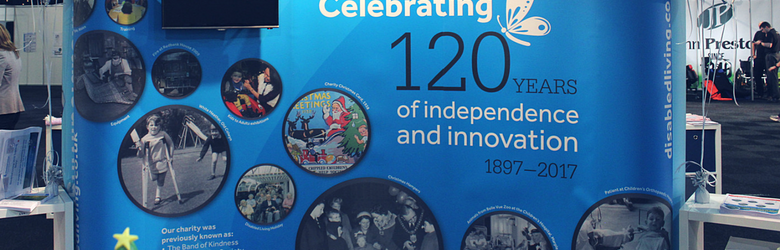
    The exhibition comprises a timeline highlighting our heritage, together with the opportunity to view some of our archived materials. It celebrates 120 years of independence and innovation by our charity. Ana Osborne from the Heritage Lottery Fund and Kui Man Gerry Yeung OBE DL, President of Disabled Living, also gave a speech.

    We encouraged people to write their ideas for the future on our Innovation Tree. It was great to see many guests adding their ideas on the colourful leaves.

    From Donkeys to Innovators film

    Throughout the year, we’ve made a series of short films primarily about the services we have provided. Another film was produced by young people with disabilities and additional needs. They interviewed older people and discussed their aspirations for the future.

    Chief Executive, Debra Evans: There are incredible stories from individuals both past and present, which up until now have remained untold or largely unheard.

    Cherylee Houston from Coronation Street worked with the young people during their filming adventure.

    See links below for our From Donkeys to Innovators films

    Building on early ideas

    Expanding and innovating

    How it all began

    Young people’s film

    Oral history interviews

    We also interviewed a number of people who shared their memories of our charity. These oral history interviews are available to listen to and share via our SoundCloud. The interviewees include Selma Fielding, Karen Mercer, June Stanbridge, Dr Peter Mohr FRCP, Barbara St John and our Chief Executive Debra Evans.

    Thank you to everyone who has played a part in our heritage project, it wouldn’t have been possible without you! For further information and open days please contact Redbank House on 0161 214 5959. 

    More information about our history can be found here.

  • 4 Reasons Why We Love Discovering Our Heritage

    4 Reasons Why We Love Discovering Our Heritage

    As it’s Heritage Treasures Day, we thought this would be a great opportunity to share the reasons as to why we love our heritage at Disabled Living. As you may already know, Disabled Living has had several name changes over the years and there have been many special memories shared.

    Throughout 2017 we shared our wonderful celebrations and projects with you. We’re excited to continue these in 2018. So far we’ve had a 1940’s theme tea dance, lots of fun activities at Kidz to Adultz North, filming, community curation planning, oral history interviews, radio and television coverage, and much more. As our project, Donkeys to Innovators, funded by the Heritage Lottery Fund has developed in more ways than we ever imagined, we want to share what discovering our heritage means to us.

    There’s an endless amount of history to discover

    Disabled Living heritage collections of photographs at Redbank House
    Just one of many tables we had when organising our archive into categories

    A date, a photo, a quote, and other small pieces of information can lead to a greater insight than you think. When we dig deeper into our research, we learn so much more about traditions and the context of a particular era. But the most important of all being that, we have had the chance to see the development of our services and products over 120 years. We have discovered some very talented artists, special achievements and milestones in our charity.

    It helps others to learn more about us

    community curation planning
    Community curation planning workshop

    We’ve had staff members, community curators, designers, printers, oral history experts, film makers, archivist, Heather Roberts, and creative cultural consultant, Claire Turner involved in the project. And we’ve also had members of the public, social media tweeters, and new volunteers that have been amazed by the facts we’ve discovered. Through our marketing, events, and word of mouth, we’ve really generated a lot of engagement with our history. And there’s still more to come!

    You can see a timeline of our history here.

    Debra Evans, Chief Executive of Disabled Living said: I’ve enjoyed meeting new people and hearing their stories. It’s amazing to see how one story leads onto another story. There’s so many fascinating facts I’ve come across throughout this project.

    You have more archive to work with than you originally thought

    Disabled Living archive
    Placing our archive into categories

    As a result of a major fire in 2009, Disabled Living lost all its older archived material. However, a totally unexpected phone call a couple of years ago changed all that. We were delighted to hear from the son of an ex employee who had worked for Disabled Living in the 1960’s. Unfortunately, his mother had recently passed away and while he was sorting out her house, he found a number of boxes in the attic of photographs and memorabilia relating to Disabled Living. We are very thankful to Mr Valentine who realised the importance of what he had discovered. Our heritage project wouldn’t have been possible without his mother.

    It’s really fun

    Disabled Living's Dementia Tea Dance
    Kick-start to our celebrations at our 1940’s tea dance

    Both the research and the practical side is so enjoyable. It’s always exciting when you discover or learn something new. Throughout our training in different elements of the project, we’ve been able to gain new knowledge whilst learning new skills at the same time. At first we didn’t know where to start, but once we had Claire on board with us, who is managing the project, we were introduced to new contacts and built new relationships along the way.

    There’s always something to love about discovering your heritage. What do you love about it? Tweet @HLFNorthWest with #HeritageTreasures and #LoveHeritage. Thank you to everybody who has made #DonkeysToInnovators a huge success.

  • What Have We Learnt from Our Community Curation Training?

    What Have We Learnt from Our Community Curation Training?

    As many of you will already know, Disabled Living are celebrating 120 years of providing services. As part of our Heritage Lottery Funded project, Disabled Living has received training in different areas. An interesting section has included two community curation sessions delivered by Catherine O’Donnell from the People’s History Museum.

    We understand the importance of the planning process in our Donkeys To Innovators project. We have learnt many things including the Ekarv text style for an exhibition along with guidelines for handling objects. We had the opportunity to fill out a document for our archive material, which lists key information such as: object name, type, condition, creator etc. Learning about Ekarv writing was very interesting. It sounds easy enough to do but there’s more to it than you think.

    Ekarv writing style

    Imagine you’re writing a paragraph of text – with Ekarv you need to ensure that the lines of the sentences aren’t too long. It’s important to get your sentences straight to the point and include the key points.

    ekarv text

    I was advised that I took quite a journalistic approach to my wording at first. But once I repeated the writing with Catherine’s advice, she said that I created a good example. It actually felt like I was writing a piece of poetry due to the strict amount of points per line. – Natasha, Marketing Coordinator & Content Writer for Disabled Living

    The People’s History Museum advises the following:

    • One idea expressed per line
    • Line breaks placed at natural pauses in a sentence
    • No more than 3 lines per sentence
    • Simple sentence structures, no complex clauses
    • Use active forms of the verb where possible
    • Conversational rhythms, easily spoken out loud
    • Maximum 52 characters per line (including spaces)
    • Maximum 8 lines per paragraph

    Community Curation collage

    Themes and timelines

    We also created several mind maps in order to have an insight of the possible themes that could run through our project. With Catherine’s training techniques we were able to see the many ideas that can stem out from one theme alone. It was also useful to put these into a timeline of dates as well as arranging them thematically. This put us to the test of remembering key dates in our heritage!

    Catherine’s main message to us:

    Less is more and editing is key! Clarity and consistency is also key. Think about how you’re going to write dates and numbers.

    It’s essential for us to pick out the events and memories that people will be able to reflect on the most. We would like people to identify and perhaps familiarise themselves with our services.

    We now know the importance of getting people to try out the exhibition before it’s live. For example, having people of different heights look at the area where our exhibition will be presented. And of course, thinking about different disabilities and the best positioning to accommodate this. Seeing examples of other exhibitions has made us realise that we need to consider colours, fonts, and sizes to ensure these are readable by all of our audience. Relating to our key audience throughout the exhibiting is what it’s all about.

    Thank you to Catherine O’Donnell for your wonderful training. It’s been very insightful and we can’t wait to move things further.

    Would you like to be part of our Donkeys To Innovators project? See more information here.

  • Disabled Living are Celebrating! Would You Like to Help Us?

    Disabled Living are Celebrating! Would You Like to Help Us?

    Disabled Living has been awarded £58,400 from the Heritage Lottery Fund (HLF) for an exciting project From Donkeys to Innovators that celebrates its rich and unique 120 year history.

    Made possible by money raised by National Lottery players, the project focuses on the charity’s history from its establishment as an organisation teaching children to be kind to animals into its current day role working with disabled people to provide innovative advice and information.

    Disabled Living's Heritage

    From Donkeys to Innovators celebrates the lives of the people involved with Disabled Living sharing their stories and contribution to the charity’s past. It also provides an opportunity for the public to learn more about Manchester’s social history as the charity has links with the city’s economic, cultural and health heritage, involving diverse community organisations and institutions.

    Importantly, the voices of disabled people will be recognised, preserved and celebrated, documenting an important part of disability heritage.

    Having nearly lost all of its archive in a fire in recent years, one key element of the project will be to ensure that the charity’s stories are preserved for the future by digitising all materials. This will also mean that the rich and vibrant stories can be viewed and shared with the general public.

    Filming studio

    Young disabled people will be involved in making their own film reflecting on being disabled in the past compared to their own experiences today. They will use Disabled Living’s archives to gain an understanding of how disabled people lived years ago.

    This is where we would like to hear from you…

    We would like to talk to young people (14-25 years) who have a disability or additional needs who would like to be involved in making a film by interviewing older disabled people about their experiences when they were children. We are looking for six young people who live, ideally in the North West of England who could travel to Manchester for filming.

    This project is funded by the Heritage Lottery Fund.

    For further information about any of the above please contact Disabled Living on 0161 214 4590 or email; debra.evans@disabledliving.co.uk

Disabled Living