Tag: Heritage

  • Were You Involved with the Tan Y Bryn Residential and Holiday Home in Abergele?

    Were You Involved with the Tan Y Bryn Residential and Holiday Home in Abergele?

    On Saturday 9 June from 11.00am – 3.00pm at Gwyrch Castle, Abergele the public is invited to an afternoon of fascinating free heritage exploring the links between Tan Y Bryn residential and holiday home in Abergele, North Wales and the 120 year old charity Disabled Living, formerly the Cripples Help Society.

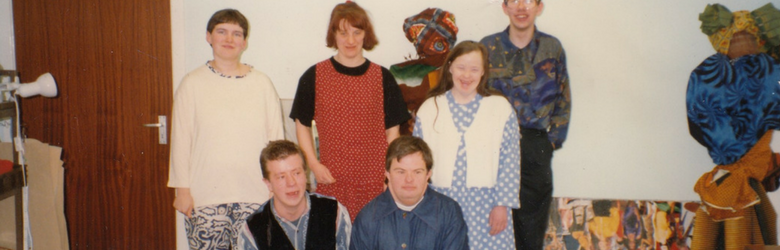
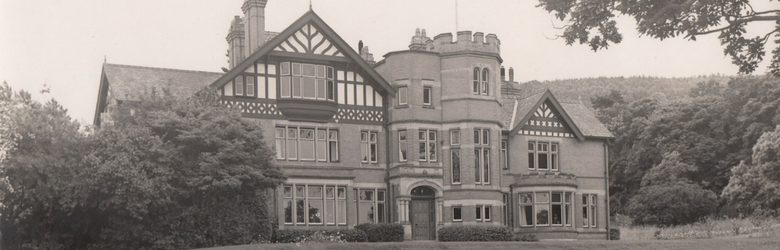
    From the late 1940s until the early 1980s, the Manchester based charity ran holidays and residential care for disabled people, working closely with the businesses and community of North Wales. Wales: Tan Y Bryn was a residential and holiday home for disabled adults in Abergele and White Heather in Old Colwyn provided convalescence holidays for disabled children. Trips were also made to Llandudno and Rhyl for groups of adults.

    Individuals, community groups and businesses from North Wales helped to raise funds, gave their time through volunteer support for day trips and entertainment, worked as staff or provided essential services for the charity.

    Such organisations included the Abergele Women’s Institute Choir, the Red Cross, Round Table, Lions Clubs, Sun Valley Camp, the Ladies Circle, James & Beardmore Auctioneers, Williams’s Boot Stores (Abergele) and Norwest Heating (Colwyn Bay). The local Mothers Union, Young Wives and the Licenses Victuallers Association helped to set up a shop in Tan Y Bryn for the residents.

    Since losing the majority of its records in a recent fire, the charity has been working towards rebuilding its heritage and is keen to hear from people in North Wales who remember Tan-Y-Bryn or White Heather or other holidays.

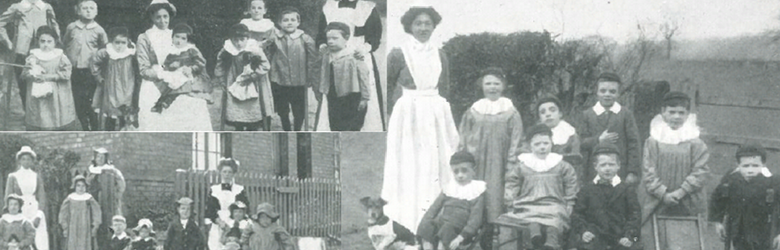
    People outside White Heather
    People outside White Heather

    The charity invites people to come along, share a panad, chat about their memories of this heritage or simply enjoy the images of North Wales from previous days.

    Debra Evans, Disabled Living’s Chief Executive said:

    The story of Disabled Living is the story of the people who were involved with the charity from the disabled people who used its services to the volunteers who helped to ensure that the holidays created special memories for both children and adults. People’s memories are what bring the charity to life and we want to have a chance to celebrate and thank the communities in North Wales who helped the charity deliver its services.

    Diane Woodrow, Education Officer at Gwyrch Castle said:

    It’s wonderful to bring part of Abergele heritage into the castle, states. The links between Disabled Living and the local area go back a long way and capturing those stories is an important part of the locations histories.

    The day is part of a larger project supported by the Heritage Lottery Fund

    People who are prepared to share their stories, or any photographs or materials they might have about Disabled Living’s heritage, are asked to contact Debra Evans at Disabled Living on 0161 214 5959 or email debra.evans@disabledliving.co.uk. No stories or images will put into the public domain without the written permission of the individual involved.

  • 4 Reasons Why We Love Discovering Our Heritage

    4 Reasons Why We Love Discovering Our Heritage

    As it’s Heritage Treasures Day, we thought this would be a great opportunity to share the reasons as to why we love our heritage at Disabled Living. As you may already know, Disabled Living has had several name changes over the years and there have been many special memories shared.

    Throughout 2017 we shared our wonderful celebrations and projects with you. We’re excited to continue these in 2018. So far we’ve had a 1940’s theme tea dance, lots of fun activities at Kidz to Adultz North, filming, community curation planning, oral history interviews, radio and television coverage, and much more. As our project, Donkeys to Innovators, funded by the Heritage Lottery Fund has developed in more ways than we ever imagined, we want to share what discovering our heritage means to us.

    There’s an endless amount of history to discover

    Disabled Living heritage collections of photographs at Redbank House
    Just one of many tables we had when organising our archive into categories

    A date, a photo, a quote, and other small pieces of information can lead to a greater insight than you think. When we dig deeper into our research, we learn so much more about traditions and the context of a particular era. But the most important of all being that, we have had the chance to see the development of our services and products over 120 years. We have discovered some very talented artists, special achievements and milestones in our charity.

    It helps others to learn more about us

    community curation planning
    Community curation planning workshop

    We’ve had staff members, community curators, designers, printers, oral history experts, film makers, archivist, Heather Roberts, and creative cultural consultant, Claire Turner involved in the project. And we’ve also had members of the public, social media tweeters, and new volunteers that have been amazed by the facts we’ve discovered. Through our marketing, events, and word of mouth, we’ve really generated a lot of engagement with our history. And there’s still more to come!

    You can see a timeline of our history here.

    Debra Evans, Chief Executive of Disabled Living said: I’ve enjoyed meeting new people and hearing their stories. It’s amazing to see how one story leads onto another story. There’s so many fascinating facts I’ve come across throughout this project.

    You have more archive to work with than you originally thought

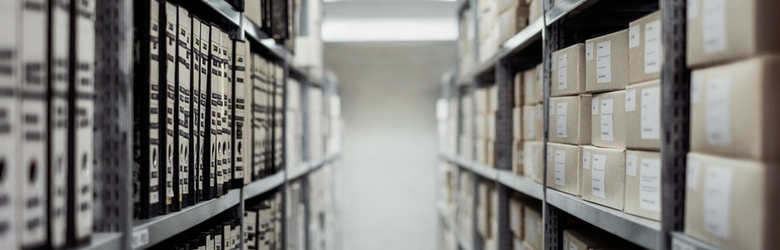
    Disabled Living archive
    Placing our archive into categories

    As a result of a major fire in 2009, Disabled Living lost all its older archived material. However, a totally unexpected phone call a couple of years ago changed all that. We were delighted to hear from the son of an ex employee who had worked for Disabled Living in the 1960’s. Unfortunately, his mother had recently passed away and while he was sorting out her house, he found a number of boxes in the attic of photographs and memorabilia relating to Disabled Living. We are very thankful to Mr Valentine who realised the importance of what he had discovered. Our heritage project wouldn’t have been possible without his mother.

    It’s really fun

    Disabled Living's Dementia Tea Dance
    Kick-start to our celebrations at our 1940’s tea dance

    Both the research and the practical side is so enjoyable. It’s always exciting when you discover or learn something new. Throughout our training in different elements of the project, we’ve been able to gain new knowledge whilst learning new skills at the same time. At first we didn’t know where to start, but once we had Claire on board with us, who is managing the project, we were introduced to new contacts and built new relationships along the way.

    There’s always something to love about discovering your heritage. What do you love about it? Tweet @HLFNorthWest with #HeritageTreasures and #LoveHeritage. Thank you to everybody who has made #DonkeysToInnovators a huge success.

  • Success at Peacefield Handicrafts

    Success at Peacefield Handicrafts

    This is a guest blog by Heather Roberts, who you might have seen featured in our other blog posts.

    It’s not just in Manchester and Salford that Disabled Living has operated. Way back in the late 1800s The Band of Kindness, as it was known back them, was implementing novel ideas all over the country. As well as organising the delivery of Christmas hampers for 300 children every December, it operated a sort of convalescent home for children who needed time away from the “dirty old town” to recover from illness or injury, or receive other treatment.

    This was called “Peacefield” and was situated on Cross Lane in Marple. The bottom of Cross Lane is now called Peacefield.

    Peacefield newspaper cutting

    Peacefield newspaper cutting

    An article in Disabled Living’s archive, kept in an absolutely stunning newspaper scrapbook, recognises that it is difficult enough to “struggle along in the slums of the city with health and limb” without having the added difficulty of illness or disability.

    An added need was that the Band of Kindness has so much work to do for children that a separate operation was needed to deliver the required help. The Crippled Children’s Help Society was therefore formed and founded Peacefield.

    First days at peacefield

    The convalescent home didn’t just treat illness, but taught children skills. An ethos that has run through Disabled Living for over a century is that of opportunity for independent living. Back then, this was manifested in teaching children under its care handicrafts. It’s praised as being “eminently useful”. This isn’t only due to benefits to mental health. But that if, disabled children learned a skill then they could earn some money and live independently.

    Women and basket weaving

    Initially women would come and teach basket weaving. But mind quickly turned to more effective crafts and expert craftspeople were consulted to:

    …extend the teaching of crafts more satisfactory, and to a larger extent more remunerative.

    Peacefield 1904

    Success stories were quick to come with two young women from Peacefield. They found a place in the Crippled Girls’ Industrial Home in London. Here, they were taught “the art of artificial flower making, and thus be enabled to earn their own living.”

    The article ends triumphantly stating that “this beneficent work speaks loudly for itself.”

    I love this story of success, attention, care and triumph and can’t wait to share more insights into the archive with Disabled Living’s “Donkeys To Innovators” archive and heritage project.

  • We’re Proud to be Celebrating International Volunteers Day

    We’re Proud to be Celebrating International Volunteers Day

    Today, Tuesday 5th December, celebrates a whole day dedicated to International Volunteer Day. For this day we would like to show recognition to our volunteers who have been supporting us on our #DonkeysToInnovators project so far. 

    Throughout our From Donkeys to Innovators project funded by the Heritage Lottery Fund, we’ve had volunteers help us with community curation, attending oral history workshops, participating in archiving and digitisation processes, plus contributing to blog posts. We spoke to two of these volunteers who have been over at Redbank House. They have been working with Archivist, Heather Roberts, and Claire Turner  who is managing our project.

    One of our longstanding volunteer, Avril

    Disabled Living archive
    Just a small amount of our photo archive

    We asked Avril what she enjoys about volunteering with Disabled Living. Avril is one of our longstanding volunteers, and has attended a number of workshops for our #DonkeysToInnovators heritage project.

    I came to the archiving project through my interest in many years of volunteering with the Kidz team. I have enjoyed the volunteering which supports giving people with physical problems the opportunity to be more equal. The archiving project is important for me. It shows the beginnings of the organisation and how far it has come today but still keeping the core ethos. Since I have the time it also allows me the opportunity to develop more skills and be hands on in a situation that needs more hands! I also enjoy the camaraderie of like-minded people.

    One of our new volunteers, Kezi

    Kezi working alongside Heather
    Kezi working alongside Heather

    Kezi has been involved in our archiving and selection process for what photos represent Disabled Living’s history the best. Straight from the get-go Kezi wanted to get involved and that’s exactly what she did on her first visit at Redbank House. We asked her what she enjoyed about her first experience volunteering with us.

    I loved helping out with Disabled Living’s archive. It gave me a really great chance to have some hands on experience with cataloging an archive for the first time. This is an area I would like to work in eventually. I loved looking through the photograph collection, which shows a wonderful range of day to day life at Disabled Living and how they have helped to enrich the lives of many different people over the years.

    Thank you to all of our volunteers. You’ve made us so proud and we wouldn’t have been able to get this far in the project without you.

    How are you celebrating Volunteers Day? Tell us on Twitter @disabledliving or Facebook.

  • Guidance on Choosing What to Keep in Your Archive

    Guidance on Choosing What to Keep in Your Archive

    This is the second blog from Heather Roberts (HerArchivist, archive consultant), explaining the process we undertook for appraising our photographs archive.

    Appraisal

    Appraisal is a term that archivists use a lot. It means “choosing what to keep”. Contrary to some beliefs, we are not “professional hoarders”. Well, most of us aren’t, I have my suspicions about some of us.

    An archive is:

    An archive is a collection of records (that are either physical or digital) that are the evidence of something or somebody in the past, which you keep so that others can remember it in the future.

    (HerArchivist, “Create your own archive” toolkit, p.5)

    Disabled Living photo archives

    When presented with loads of “stuff”, you therefore need to think about what fits the definition.

    Disabled Living’s Donkeys to Innovators project have hundreds of incredible photographs evidencing activities, staff, premises and so much more. We are not archiving them all. Many are duplicates and we don’t really need more than one of the same thing. We are going to appraise them.

    Here’s why…

    Duplicates

    Disabled Living photo archive Redbank House

    More than one of something is great. It beats having nothing. However, if you are keeping two or even three or more of something, you have to store it. A few hundred photographs take up enough space as it is. Add to that the special archive packaging and you’ve easily doubled the required space. If you have the space available then fab. Most organisations have to be very careful with storage space. The cost of it needs to be worth what you’re putting in it.

    Also, archival packaging isn’t cheap. Photography packaging in particular as it requires special materials to help preserve the photographs. It may not be financially sensible to spend money on more than packaging than you strictly need.

    The easiest way to reduce the volume of your archive and therefore space and money is to take out duplicates.

    Below are the two main things we have been considering when appraising duplicate photographs on the Donkeys to Innovators project.

    Information

    folders

    Two photographs may be the same. Same image, same angle, same size etc.

    If that’s the case, check the back. If one is blank and the other has a date, photographer’s stamp or scribble on the back which reveals some further information about where the photograph was took or who/what is in etc., that is the one you choose to keep.

    It’s frustrating when you have a great image but no information about it. Keep the one which has the most added information and you’ll have a richer archive.

    If both have the same information, then keep the one in the best condition.

    Condition

    Disabled Living photo archive

    Photographs are very delicate. They are the materials for which archivists insist on wearing cotton gloves, to protect the chemical surface of the image from the oils on people’s hands. Even freshly washed and thoroughly dried hands can easily damage a photograph.

    Photographs are also subject to light damage. This is when prolonged exposure to light has faded the photograph’s image and it is no longer as clear. Light damage is irreversible so if you have any photographs, be mindful of light exposure.

    Photographs can be torn, holes poked through where they’ve been pinned up, stained where Sellotape has held them in place and all sorts of similar damage.

    Choose the photograph that is in the best condition. Fewer stains, clearer image, least holes and tears etc.

    Information vs condition

    2b pencils

    Some decisions on the Donkeys to Innovators project have gone like this, “Well, this photograph is in the better condition, but this other photograph of the same image has more information on the back. Which do we keep?”

    The trick here is to choose the photograph which is in the best condition (and therefore easier to keep and use) and transfer the information from the other photograph onto this one. Either, write on the back of it with a soft pencil (2B or softer will do) or put it in a folder/envelope and write the information on that, again in a soft pencil.

    Soft pencils are the archivist’s weapon of choice because you don’t have to press very hard to a surface to write (hence reducing possible damage to the item) and because they are easy to rub out (in case of mistake), they don’t leak ink all over your invaluable archive either.

    We are looking forward to revealing some of our fabulous photographs to you on this project. We are certainly having an amazing time working with them.


    Heather’s free “Create your own archive” toolkit can be downloaded here.

  • A Rare Find: The Christmas Card Folio

    A Rare Find: The Christmas Card Folio

    Heather Roberts (HerArchivist, archive consultant), has put together this wonderful blog which discovers the meaning and significance of Disabled Living’s collection of heritage Christmas cards.

    The archive

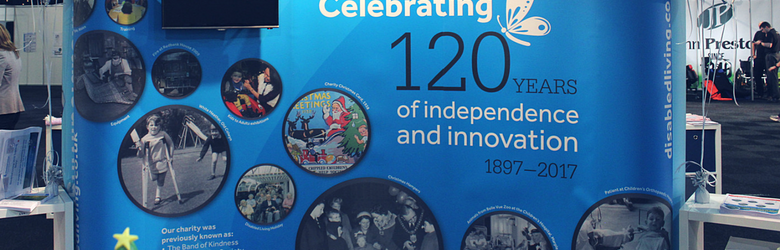
    Disabled Living have a fascinating history stretching 120 years. It’s a vital but little-know part of Manchester’s amazing past and present. On the Donkeys to Innovators project, we are hoping to organise the evidence of their history into an archive and share their journey.

    Explore the timeline for some of the key points of the history.

    There are some gorgeous archive items in their collection. Hundreds of photographs, decades of annual reports, files of letters, ye old property deeds. Nice, core archive material through which you can learn so much.

    Disabled Living also has something else. It’s an absolute treat and so unique. Not only does it say so much about the organisation but it’s also aesthetically delightful.

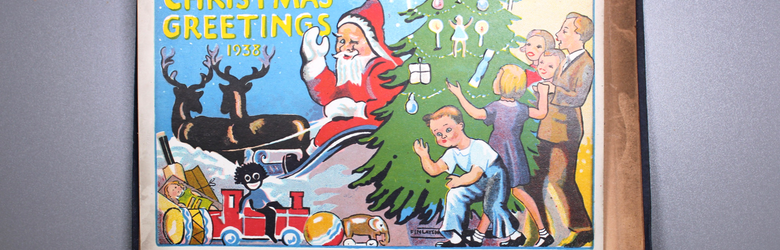
    Christmas card folio

    Christmas card crippled children's help society

    Christmas card crippled children's help society

    It’s the kind of thing that when you look at it, it makes you sigh and wish for childhood and Christmas markets. It’s colourful, full of beautiful vintage designs and interesting stories to tell.

    The folio is an old crumbling hardback volume. Within it are pasted the Christmas cards that the society (back then called The Crippled Children’s Help Society) used to send to children at Christmas who were either disabled or otherwise housebound for the season (recovering from illness etc.).

    Each card is gorgeously designed and very of its time, charting the way through a good chunk of the first half of the 20th century. There’s hints of classic Arts and Crafts style borders, flowing into Art Nouveau lines all the way through to the vintage bright bold colours of Santas gone by.

    They must have been an absolute treat to receive in the post. Many were accompanied by Christmas hampers for the children as a small gift of added kindness for the season.

    How this helps research and understanding

    This folio is important not only for its beauty and rarity (much of the original archive was lost in a fire). It is also key in understanding what the society really did.

    Much of any organisation’s is written down, in minutes and letters and reports. These are all highly valuable. They chart the progress of an organisation, what it had to think about, how it managed challenges, what was planned etc.

    However, this only tells one side of the story. It can tell us on the top-level of the organisation what went on. This is the material that is therefore most likely to be kept. It’s rare that much of the ground-level activity is kept. It’s everyday stuff. It’s not discussed by the Board or debated over at Annual General Meetings.

    These simple heritage Christmas cards on the other hand, tell a story about the ground-level kindness and activism of the society. You can see it in front of your face. You can hold it in your hands. It’s a beautiful piece of Manchester’s history and we are so looking forward to sharing it with you.

    Take care of the pennies

    english coins

    The adage, “Take care of the pennies, the pounds will take care of themselves” might apply here. Important records, top-level records and core activities are usually kept because they shout of inherent value.

    The grass-roots, ground-level, every day activities and initiatives are what the organisation actually does, though. So spare a little effort in making sure that this is evidenced, remembered and celebrated.


    Heather’s free “Create your own archive” toolkit can be downloaded here.

  • What Have We Learnt from Our Community Curation Training?

    What Have We Learnt from Our Community Curation Training?

    As many of you will already know, Disabled Living are celebrating 120 years of providing services. As part of our Heritage Lottery Funded project, Disabled Living has received training in different areas. An interesting section has included two community curation sessions delivered by Catherine O’Donnell from the People’s History Museum.

    We understand the importance of the planning process in our Donkeys To Innovators project. We have learnt many things including the Ekarv text style for an exhibition along with guidelines for handling objects. We had the opportunity to fill out a document for our archive material, which lists key information such as: object name, type, condition, creator etc. Learning about Ekarv writing was very interesting. It sounds easy enough to do but there’s more to it than you think.

    Ekarv writing style

    Imagine you’re writing a paragraph of text – with Ekarv you need to ensure that the lines of the sentences aren’t too long. It’s important to get your sentences straight to the point and include the key points.

    ekarv text

    I was advised that I took quite a journalistic approach to my wording at first. But once I repeated the writing with Catherine’s advice, she said that I created a good example. It actually felt like I was writing a piece of poetry due to the strict amount of points per line. – Natasha, Marketing Coordinator & Content Writer for Disabled Living

    The People’s History Museum advises the following:

    • One idea expressed per line
    • Line breaks placed at natural pauses in a sentence
    • No more than 3 lines per sentence
    • Simple sentence structures, no complex clauses
    • Use active forms of the verb where possible
    • Conversational rhythms, easily spoken out loud
    • Maximum 52 characters per line (including spaces)
    • Maximum 8 lines per paragraph

    Community Curation collage

    Themes and timelines

    We also created several mind maps in order to have an insight of the possible themes that could run through our project. With Catherine’s training techniques we were able to see the many ideas that can stem out from one theme alone. It was also useful to put these into a timeline of dates as well as arranging them thematically. This put us to the test of remembering key dates in our heritage!

    Catherine’s main message to us:

    Less is more and editing is key! Clarity and consistency is also key. Think about how you’re going to write dates and numbers.

    It’s essential for us to pick out the events and memories that people will be able to reflect on the most. We would like people to identify and perhaps familiarise themselves with our services.

    We now know the importance of getting people to try out the exhibition before it’s live. For example, having people of different heights look at the area where our exhibition will be presented. And of course, thinking about different disabilities and the best positioning to accommodate this. Seeing examples of other exhibitions has made us realise that we need to consider colours, fonts, and sizes to ensure these are readable by all of our audience. Relating to our key audience throughout the exhibiting is what it’s all about.

    Thank you to Catherine O’Donnell for your wonderful training. It’s been very insightful and we can’t wait to move things further.

    Would you like to be part of our Donkeys To Innovators project? See more information here.

  • Were You Involved with One of Manchester’s Oldest Charities?

    Were You Involved with One of Manchester’s Oldest Charities?

    Disabled Living, one of Manchester’s oldest charities, is calling for people to get in touch who have memories, materials and/or photographs about their links with the charity. Hundreds of thousands of people across the North West have been involved with the organisation in its 120 year history as service users, volunteers, staff and trustees.

    Alan Norton

    White Heather
    For example, Alan Norton, one of Disabled Living’s current Trustees, went on a three week holiday as a child to Disabled Living’s White Heather holiday accommodation in North Wales and received one of the Christmas hampers that were donated to disabled children across Manchester and Salford.

    At the age of 7 I vaguely remember my mum sending me to a holiday home run by the ‘Cripples Help Society’ now known as Disabled Living Manchester, it was the first time I had been away from home and I had to dress myself which I had never done before. I remembered I had a fantastic time going on walks, playing various games especially enjoyed the swings at the local park. It was my first taste of independence and gave me the inspiration to do more for myself, which has led to me having a full and complete life,” states Alan.

    Since losing the majority of its records in 2009 due to a fire, the charity has been working towards rebuilding its heritage. As part of its birthday celebrations Disabled Living is delivering a project, From Donkeys to Innovators, supported by the Heritage Lottery Fund, that recognises the many services the charity provided and the people involved with the organisation.

    holiday

    Marple children's hospital

    Most importantly, the voices of disabled people will be recognised, preserved and celebrated, documenting unique stories about disability heritage. People’s contributions to the history of Disabled Living may be included in a permanent exhibition in the charity’s Redbank House in Cheetham Hill that launches in 2018, and all will be preserved in its new archive that will be safely maintained in Manchester Central Library’s Archives+.

    Many people remain unaware that the activities they were involved with were part of the present day charity. These activities included the first wheelchair loans service in Greater Manchester; the establishment of the Children’s Orthopaedic Hospital in Marple; the provision of holidays for thousands of disabled children and adults to Blackpool, North Wales and overseas; a residential provision for disabled adults at Tan Y Bryn in Abergele, North Wales; advice and support about the use of innovative equipment to enable disabled people to live more independently; and a Style Centre providing advice and training for disabled teenagers and adults.

    Over the years, a myriad of organisations have also been involved with the charity from The Guardian and Manchester Evening News, the Disabled Drivers’ Association, Manchester Art Gallery, the Jewish Ex-Servicemen, Derbyshire Miners, Manchester United Football Club, the British Red Cross Society, and Greater Manchester Police, indicating the charity’s important place in the social history of Greater Manchester.

    Debra Evans, Disabled Living’s Chief Executive said:

    The history of Disabled Living are the stories of the people who were involved with the charity from the disabled people who used its services to the volunteers who packed the Christmas hampers and the nurses who worked at the Marple hospital. People’s memories are what bring the charity to life and we want to have a chance to celebrate and thank the individuals who helped to create the charity that we have today.

    disabled equipment

    People who are prepared to share their stories, or any photographs or materials they might have about Disabled Living’s heritage, are asked to contact Natasha Bolger at Disabled Living on 0161 214 5959 or email Natasha.bolger@disabledliving.co.uk. No stories or images will be included in any of the public materials without the express permission of the individual involved.

  • Disabled Living are Celebrating! Would You Like to Help Us?

    Disabled Living are Celebrating! Would You Like to Help Us?

    Disabled Living has been awarded £58,400 from the Heritage Lottery Fund (HLF) for an exciting project From Donkeys to Innovators that celebrates its rich and unique 120 year history.

    Made possible by money raised by National Lottery players, the project focuses on the charity’s history from its establishment as an organisation teaching children to be kind to animals into its current day role working with disabled people to provide innovative advice and information.

    Disabled Living's Heritage

    From Donkeys to Innovators celebrates the lives of the people involved with Disabled Living sharing their stories and contribution to the charity’s past. It also provides an opportunity for the public to learn more about Manchester’s social history as the charity has links with the city’s economic, cultural and health heritage, involving diverse community organisations and institutions.

    Importantly, the voices of disabled people will be recognised, preserved and celebrated, documenting an important part of disability heritage.

    Having nearly lost all of its archive in a fire in recent years, one key element of the project will be to ensure that the charity’s stories are preserved for the future by digitising all materials. This will also mean that the rich and vibrant stories can be viewed and shared with the general public.

    Filming studio

    Young disabled people will be involved in making their own film reflecting on being disabled in the past compared to their own experiences today. They will use Disabled Living’s archives to gain an understanding of how disabled people lived years ago.

    This is where we would like to hear from you…

    We would like to talk to young people (14-25 years) who have a disability or additional needs who would like to be involved in making a film by interviewing older disabled people about their experiences when they were children. We are looking for six young people who live, ideally in the North West of England who could travel to Manchester for filming.

    This project is funded by the Heritage Lottery Fund.

    For further information about any of the above please contact Disabled Living on 0161 214 4590 or email; debra.evans@disabledliving.co.uk

Disabled Living