Month: August 2019

  • Jonathan’s Story About Not Being Able to Speak to Communicate

    Jonathan’s Story About Not Being Able to Speak to Communicate

    Can you imagine not being able to speak to communicate? The silence, the loneliness, the pain. Inside you disappear to magical places, but most of the time remain imprisoned within the isolation. Waiting, longing, hoping. Until someone realises you potential and discovers your key, so your unlocking can begin. Now you are free, flying like a wild bird in the open sky. A voice for the voiceless. This is me, and this is my story.

    Entering the Education System

    When I entered the education system I was labelled as having Profound and Multiple Learning Disabilities (PMLD). I was enrolled at a Special School.

    At first I enjoyed my time, making new friends and having fun with my lovely teacher – who made lessons engaging, varied and entertaining. Once a week, I attended my local primary school where I joined in with my able bodied peers for the afternoon. That first academic year set a foundation of friendship, forming the basis for my self-esteem; and belief that I can meaningfully join in with peers, despite my physical disabilities.

    Entering year one I was looking forward to learning more, but instead I found my learning stagnate at a preschool level. For example, during literacy the teacher would read us an oversized toddler book with occasional flashes of the pictures, whilst we were given objects to feel.

    How was I going to learn to read without access to text? Outwardly I looked vacantly stupid (giving credence to the idea that academically there was very little going on for me); inwardly I was amusing myself lost in my own thoughts. Meanwhile, I was increasingly enjoying my afternoon at the local primary and the learning I was joining them for.

    During the summer of Year 2 Marion Stanton, an AAC literacy specialist, suggested to my mother that she should try to teach me, and so at the start of year 3, I was taken out of my Special School for an hour a day to be taught, by my mother, to read, write and do basic maths. During the previous summer I had done some work on basic phonics at home using an eye gaze computer. It was frustrating because the computer couldn’t read my eyes very well, but my mother and carers could using an etran frame – my access to learning was found! Initially, the progress was slow, but thankfully, the advice my mother was given, resulted in her making the lessons more challenging and I haven’t looked back since.

    English, Maths and Science

    By year 5, two years after I started literacy and numeracy lessons at home, I had caught up with my peers and went on the roll of my local primary school. Now I am entering year 9 at my local mainstream secondary school studying English, maths and science.

    Being able to read and write has totally transformed my life. As a non-verbal child, I can now communicate exactly what I want to say, my relationships have been renewed as I can hold conversations with family and friends, and there is new life in my free time!

    My story of learning to read and write should not be unique. For this reason, I have set up my charity, Teach Us Too envisaging a world where all children are taught to read and write regardless of their educational label. Because labels should help educational practitioners understand the kind of barriers to learning a pupil will face, and the interventions that will help to overcome those barriers; but labels should never be an excuse not to teach children to read and write.
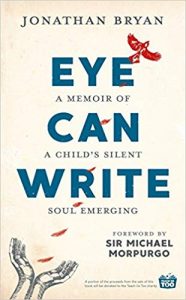
    eye can write front cover

    Whilst the vision behind Teach Us Too is my passion, my love is writing: prose and especially poetry. Last year these two amalgamated when my memoir Eye Can Write was published, with my share of the profits going to my charity. Sharing my story in the hope that it will change the stories of children like me.

    This post has been written by Jonathan Bryan at Eye Can Talk. Jonathan has a book which is available on Amazon and all good book stores. Find out more via: http://bit.ly/EyeCanWriteBook

    Facebook: Eye Can Talk
    Twitter: @eyecantalk

    If you would like to feature on Disabled Living’s blog please get in touch with us via email: info@disabledliving.co.uk

  • No Place like an Accessible Home!

    No Place like an Accessible Home!

    Many of us fondly remember the image of a young farm girl, clicking the heels of her sparkling, ruby red slippers and longingly chanting the words, “There’s no place like home, there’s no place like home…” Her tale isn’t a far cry away from most disabled people’s dream of wanting their own forever home.

    I believe, living independently is a huge factor to leading a happy life. I have a rare form of Muscular Dystrophy (a progressive muscle wasting disease) meaning I need my powered wheelchair to be able to move around, so having a home that has enough space is extremely important. I’m lucky enough to have my own accessible home however there are many disabled people that are still living in unsuitable conditions.

    According to the English Housing Survey, only 7% of homes in England have even the most basic access features. Furthermore, new figures published in June by Housing Association, Habinteg, reveal that outside of London, under a quarter of new homes due to be built by 2030 are planned to be accessible to a category 2 standard and only 1% are set to be suitable for wheelchair users. With there being 1.8 million people in the UK with an accessible housing requirement and 300,000 with an unmet need, this highlighted the crisis we’re in. The housing crisis has been described as ‘hidden’. Why? Is it really hidden? Shows like DIY SOS have been clearly illustrating how inaccessible people’s properties are for years. It’s clear today more than ever, that there is an accessible homes crisis.

    Having the appropriate housing can dramatically improve disabled people’s ability to live independently.

    Those whose homes do meet their accessibility needs have reported improved health and wellbeing. However, an accessible home is not only beneficial to the people living in it. Just having the right adaptations to the home can create significant savings to the public purse, reducing social care costs for local authorities and health costs for the NHS as the number of accidents at home will significantly reduce.

    So, why is my accessible home convenient for me?

    Firstly, all the doors are wide enough to ride my wheelchair through with ample space. I don’t have to worry about not being able to go into certain rooms or possibly damaging the door frame with my wheelchair. Secondly, the kitchen counters can be adjusted to the appropriate height for me to reach. In my previous property, the counters were too high so it was impossible for me to cook meals or even make a cup of tea. I also have a wet room which allows me to move around freely and not worry about how much water I spill. Some of these features may not sound like a big deal, but for a wheelchair user, these features are the difference between an independent and restricted life.

    Depressingly, it did take over 3 years for me to be in this position. I was on the social housing waiting list for years before I received the keys to my home. I didn’t meet the criteria for some accessible bungalows (I had to be 65 or over) but thankfully I was accepted by Habinteg and left my previous cramped flat. Living in my accessible bungalow for the last 7 years has drastically improved my wellbeing and mental health. It’s provided me with a new lease on life and I can do tasks I would’ve only dreamed of at my old home.

    Being a disabled person means you’ll constantly face mental and physical challenges. The housing crisis is one that should be taken off the table as soon as possible. It’s not a luxury to live in a suitable home and I believe everyone, old and young, disabled and non-disabled, deserves to have somewhere to live where they can feel at home.

    This post has been written by Kerry Thompson, tenant of Habinteg Housing Association. If you would like to feature on Disabled Living’s blog to write about topics such as accessible housing, please get in touch with us via email: info@disabledliving.co.uk.

  • One in Five Supermarket Disabled Parking Bays Being Abused

    One in Five Supermarket Disabled Parking Bays Being Abused

    Supported by Baroness Grey-Thompson.

    In June Disabled Motoring UK (DMUK) asked the public to help with their Baywatch Campaign by surveying their local supermarket car park for disabled parking abuse. The results have now been calculated.

    DMUK would like to thank everybody who participated in this year’s Baywatch Campaign. This year we had the biggest number of responses that we’ve ever seen which goes to show how important the problem of disabled parking abuse is at supermarkets. Our total number of responses was 723. We’d also like to thank all of our supporting organisations that promoted the campaign and encouraged their members/supporters to take part.

    General Findings

    The overall level of disabled parking abuse across all supermarkets was 16%. In 2017, when we last carried out the Baywatch Campaign it was 18.5% and therefore this year’s result do show some improvement.

    Across all of the supermarkets surveyed the average number of disabled bays provided (to the nearest whole bay) is 15 bays with 3 of them being abused, meaning that roughly 1 in 5 disabled bays at supermarkets are abused by somebody parking in a disabled bay without displaying a Blue Badge.

    Looking generally at enforcement signage, we can see that 60% of the supermarkets surveyed had visible signage or other evidence that enforcement took place. When you isolate these supermarkets levels of abuse remained at 16%. However, the 40% that had no visible indication of enforcement taking place the percentage of abuse increased dramatically to 36%. This shows that using enforcement does decrease the levels of disabled parking abuse.

    Supermarket Specifics

    We had a wide spread of different supermarkets included in this year’s Baywatch survey responses, including; Aldi, ASDA, Co-Op, Lidl, M&S, Morrisons, Sainsbury’s, Tesco and Waitrose. Even though this year we had an increase in responses for Aldi and Lidl which reflects the general market share growth these chains have experienced we felt it was unfair to directly compare these stores with the big four – Tesco, Sainsbury’s, Morrison’s and ASDA because we had many more surveys returned for these chains.

    Morrisons were this year’s winner with just 10% of disabled parking abuse in their car parks. We’d like to congratulate Morrisons for having the least amount of disabled parking abuse.

    League Table

    Supermarket 2019 level of abuse 2017 level of abuse
    Morrisons 10% 11%
    Sainsbury’s 15% 8%
    ASDA 22% 17%
    Tesco 24% 23%

    All of the supermarkets that were surveyed have been contacted with the Baywatch results. We’ve encouraged them to start a dialogue with the charity so that we can help them improve their parking facilities for disabled motorists.

    Enforcement

    Similarly to the statistics from the 2017 campaign we can once again show that enforcement works. Where we see no visible signs of enforcement taking place the levels of abuse dramatically increase.

    The table clearly highlights the effect that enforcement has on levels of abuse. Across all the supermarket chains surveyed there were car parks which had no signs of enforcement. We call on all supermarkets to rectify this and to use enforcement across all of their stores.

    Blue Badge Extension

    On the 30th of August the criteria for the Blue Badge will change in England and more people with hidden disabilities will be eligible for a Blue Badge. DMUK predicts that this change will see a dramatic increase in Blue Badge holders meaning that disabled parking will be more pressured. The Blue Badge scheme is largely adopted by the private parking industry so the effects of this change will be felt across the entire parking sector, including parking at supermarkets.

    Supermarkets can do three things to help their disabled customers, the first is to properly enforce their disabled bays so that only genuine Blue badge holders park there. We can see from the results of the Baywatch campaign that if the supermarkets eradicate this problem they could make available up to 20% more bays for their genuine disabled customers without having to do any structural changes to their car parks.

    The second thing they can do is monitor their disabled parking provision closely to understand whether or not they actually provide enough disabled bays to meet the demand of their customer base. The third is to adopt the Disabled Parking Accreditation in their car parks. This would provide consumer confidence that their car park is accessible and properly enforced, and show a real commitment to the independence of their local disabled community.

    Baywatch Continued

    We have contacted the supermarkets surveyed and will encourage them to do more to enforce their disabled parking bays and take up the Disabled Parking Accreditation if appropriate. Baywatch will return in 2021 and we hope to see a further decrease in the levels of disabled parking abuse in supermarkets.

    In the meantime the most effective way of creating change at the supermarkets is choose wisely where you spend your money. The spending power of the disabled community is huge and according to figures obtained by ‘The Purple Pound’, supermarkets’ lose £501million every month because they aren’t accessible. If you experience problems parking at your local supermarket, you could choose to spend your money elsewhere. If you do decide to make a change because disabled parking is not enforced do write to the Chief Executive of the supermarket chain and explain why you will no longer be shopping at their store. If enough people do this it can create change.

    Heidi Turner, Communications and Campaigns Director at DMUK, said: “DMUK is ecstatic with the level of support it has received for this year’s Baywatch campaign. The statistics show that one in five disabled bays is abused. Disabled parking is under immense pressure to meet the demand for it and if supermarkets enforced their disabled bays properly they can increase the volume of available disabled parking by 20%. It is time that the supermarkets take this issue seriously and support their disabled customers”

    Baywatch Appeal

    To help DMUK to continue campaigning on the issue of disabled parking abuse we have launched the Baywatch Appeal. This is a fundraising appeal which will help the charity raise vital funds to keep advocating the need for proper management of disabled parking bays. The charity encourages all supporters of the Baywatch campaign to donate if they are able. Please visit https://www.disabledmotoring.org/donate

    DMUK Baywatch Sponsor

    DMUK has worked for many years with the British Parking Association (BPA) to improve parking for disabled motorists. This year the BPA has further shown their commitment to the work of DMUK by sponsoring DMUK Baywatch 2019.

    Kelvin Reynolds, BPA Director of Corporate and Public Affairs says, “We are encouraged to see some improvement in this year’s survey but almost 1 in 5 disabled bays at supermarkets continue to be abused. Parking spaces reserved for Blue Badge holders must be managed properly to ensure they are not obstructed and used only by people displaying a valid disabled Blue Badge and we encourage all those who manage parking to properly enforce their disabled bays so that only genuine Blue badge holders can park there.”

    Supporting organisations

    DMUK Baywatch is also supported by:

    • AccessAble
    • Whizz-Kidz
    • Phab
    • Independent Living
    • Honest John
    • Disabled Living

    *Data Source wearepurple.org.uk The Purple Pound

    This post was written by Disabled Motoring UK. For more information please contact: Heidi Turner, Communications & Campaigns Director at: Heidi@disabledmotoring.org or call: 01508 489449.

  • Why Standardising Objects of Reference Can Render Them Meaningless

    Why Standardising Objects of Reference Can Render Them Meaningless

    The phrase “Objects of Reference” refers to a communication support system whereby particular objects associated with particular activities are used to communicate to a person with complex disabilities that certain activities are about to take place. For example someone might be handed a continence pad before being taken to the toilet, or be given their swimming costume to hold before going swimming.

    To use Objects of Reference with someone you need to first identify objects that are meaningful to them and then use those objects consistently as markers for the associated events. It is no use showing them a plastic toy bus to tell them that they are going on the bus, this is neither what a bus looks like to them or what it feels like, it might be more relevant to get them a section of seat belt, or wouldn’t it be marvellous to have the ‘ding’ of the bell that is rung to disembark!

    I have seen Facebook posts from people asking for ideas for what to use for Objects of Reference

    Asking what someone else, somewhere else uses to represent something else for someone else is meaningless, by their very nature Objects of Reference are personal to the individual. If you are stuck, ask them. Ask them by observing closely, with all your senses, what their experience of that event is. Which part of their experience could you capture in an object to share with them? Consider which experience is the biggest marker of that event to them, for example with the swimming pool it is true that they are likely to change their clothes, and feel a towel upon their skin, but this also happens to them at other times as well. It is likely that the scent of the water is the most distinctive factor for them – could you have a sample of pool water in a container for them to smell?

    I have been to settings who proudly tell me they have a standardised set of Objects of Reference that everyone in their setting uses. Standardised systems are not individualised systems. Objects of Reference are intended to be highly personal not standard.

    If you are standardising your use of Objects of Reference you are presuming the people who are using them will become symbolic communicators

    Some people do use Objects of Reference as a stepping stone to other symbolic forms of communication, such as symbol communication, and some people do not. For the people who do not, Objects of Reference may be the only system of communication available to them so it is all the more important that we protect its individualised nature.

    Consider the experience of the world for someone who has limited cognitive and sensory abilities. Most of life is a confusing soup of experience, things happen to them, their brain does not have the chance to fully process what is going on as it is going on, so by the time they have heard a sound they may already be far from the object that emitted that sound. Light might be processed swifter than touch, so you see a hand on your skin but do not feel the touch until several moments later, and do not associate that sight with that sensation. From time to time something in this confusion makes sense.

    These times are the times that repeat often, times when the same thing happens in the same place and means the same thing

    girl riding her bike with a helmet on

    Times they have had so many chances to explore that they begin to hold a sensory memory. It is not that they have stored them in their memory as we would understand it, they cannot go back and “remember” being here before, it is more of an embodied memory, like the muscle memory formed riding a bike, their bodies recognise where they are.

    If you collect one aspect of that known place and can share it with them when they are not there, you reach into that blur of experience and say “something is going to happen, something you know” it is like a rope thrown into the confused soup that connects them to a place of solid ground. Throwing a rope that someone else, somewhere else, uses with someone else, won’t have that connective communicative effect.

    Ah but in time they will learn that the plastic bus means the real bus.

    …well they might, especially if the plastic bus goes on the real bus with them and is not taken away, but why are we insisting they do more work to access communication, when if we did a little more work and found a relevant object they could access it already?

    But it is such a faff to have different objects for different people, having a standardised set means we all know what to use.

    …it is true that to meaningfully use Objects of Reference you will require a different set for each person, and this is inconvenient. But this was never about our convenience was it, it was about communication. We are able to organise a storage system and label it carefully so everyone knows whose objects are whose. We would go to the ends of the earth to reach into their confusion and share communication, so it really is not so much bother to ensure Objects of Reference are meaningful to each individual using them.

    This post was written by Joanna Grace, a new contributor to Disabled Living’s blog. Sensory Engagement Specialist, trainer, author, TEDx speaker and founder of The Sensory Projects.

  • Encouraging Amputees and Individuals with Limb Difference to Get Active and Improve Their Physical and Mental Health

    Encouraging Amputees and Individuals with Limb Difference to Get Active and Improve Their Physical and Mental Health

    The charity LimbPower are working throughout the month of August to encourage and engage with people with a limb difference, to help them kick start a healthy and active lifestyle.

    Being active has so many health benefits, including aiding mobility, rehabilitation and improving quality of life. Through sharing and promoting the Ottobock Fitness App (available through the Apple store and on android mobile phones) as well as LimbPower’s exercise videos (available on YouTube and the LimbPower website www.limbpower.com) we aim to support and encourage more members of our community, as they build their independence through increased mobility.  

    Join the social media campaign - #ActiveAugust – to raise awareness of the physical and mental health benefits of engaging in physical activity with a focus on moving more.

    Amputees and individuals with limb difference can join LimbPower for #ActiveAugust and challenge themselves to get fitter through the #OttobockFitnessChallenge. They will be doing a daily morning workout using the OttoBock fitness app, choosing between strength and endurance, condition and balance, or stretch and relax. Participants can do as little or as much as they want to, in the comfort of their own home.  

    “Over 25,000 amputees around the world use the Ottobock fitness app for targeted physical fitness and increasing their strength,” says Amanda Sarson from Otto Bock Healthcare PLC. 

    “The exercises available have been designed by Ottobock’s leading physiotherapists and are easy to follow, with videos and guides to ensure users get the most from their rehabilitation and exercise. While the app cannot replace a professional course of therapy, the exercises are designed to help maintain fitness for amputees and can be integrated in their daily routines.” 

    LimbPower will also be running a social media and fundraising campaign called #IPledge for individuals who are already active and want to challenge themselves to do more or achieve a new goal.

    Participants will be encouraged to share their story with other amputees and individuals with limb difference on social media and create a JustGiving page (www.justgiving.com) to raise funds for LimbPower, so that they can continue to support and encourage individuals with limb difference through the provision of participation events, workshops and resources.  

    Active August logo

    To find out more about #ActiveAugust or to get involved contact Kiera Roche at kiera@limbpower.com or Kerry Munroe at kerry@limbpower.com or telephone 07968 760001. 

    #Active August event – Join up to #ActiveAugust campaign on our Facebook events page

    This post was sent to us by LimbPower, a National Disability Sports Organisation working to support amputees and individuals with limb impairments in physical activity, sport and the arts. We do this through advocacy, events, workshops and resources. 

    Would you like to have your story featured on Disabled Living’s blog? Get in touch with us via info@disabledliving.co.uk

Disabled Living