Month: August 2020

  • How Motability Cars Cater for Drivers and Passengers with Disabilities

    How Motability Cars Cater for Drivers and Passengers with Disabilities

    This is a sponsored post written by Stoneacre Motor Group.

    The Motability scheme is relatively unknown to many in Britain, but for more than 600,000 of us, a Motability vehicle is life changing. You probably already see Motability vehicles every day even if you may not realise so and you may certainly know someone who already benefits from the use of one.

    Motability is an extensive collaboration between the charity sector, the Government and the automotive industry. As a charity-led organisation, Motability that has helped millions of people across the country gain access to a car, mobility scooter, or motorised wheelchair. And they continue to do so with more than half a million people currently on the scheme.

    The scheme is open to any citizen who receives one of four higher rate mobility allowances from the Government, who are able to exchange their benefits with the Motability charity to lease mobility equipment that can help improve their independence and standard of living.

    How Does Motability Work?

    Anyone who currently receives any of the four higher rate mobility allowances are eligible to apply for the scheme and lease a vehicle. These rates include disability living allowances, personal independence payments, and other supplements for war pensioners and Veterans.

    The scheme is simple in how it runs. Claimants are able to exchange their cash allowances with the Motability charity who in turn provide a lease vehicle of their choice. Motability are then paid every month by the Department for Work and Pensions who deduct the cost of the lease from the mobility allowances of the claimant.

    The cost of the lease includes all tax, insurance, breakdown and servicing costs, which are taken care of by the charity at limited expense to the claimant. Its effectively a ‘just add fuel and drive’ kind of deal, which typically last anywhere between 3 to 5 years before the equipment must be returned or the lease extended.

    Claimants are able to choose what to spend their allowances on, whether that be a mobility scooter, motorised wheelchair or a Motability car. Those that only travel short distances tend to favour a scooter or wheelchair, with others who need to travel longer distances opting for a car that has special adaptations for disabled drivers and passengers.

    What Cars are Available on the Motability Scheme?

    The majority of major car brands all offer some of their models on Motability, which means there’s a great choice of cars on offer. From compact SUVs and 7 seater family cars, to chic city-cars and hot hatchbacks, there’s plenty to look out for.

    Motability cars come available with a whole range of adaptations that can be made to improve the utility of the vehicle for disabled drivers and passengers.

    You can apply through a Motability dealer who are registered dealers for the charity. Motability dealers help claimants with their application for their scheme as well with their search for a car.

    Adaptations are made to the vehicle to improve the general use of the car and for some people it can mean they don’t require any assistance to travel. For others, adaptations can simply just make a car much more feasible to use, especially for wheelchair users or paraplegics.
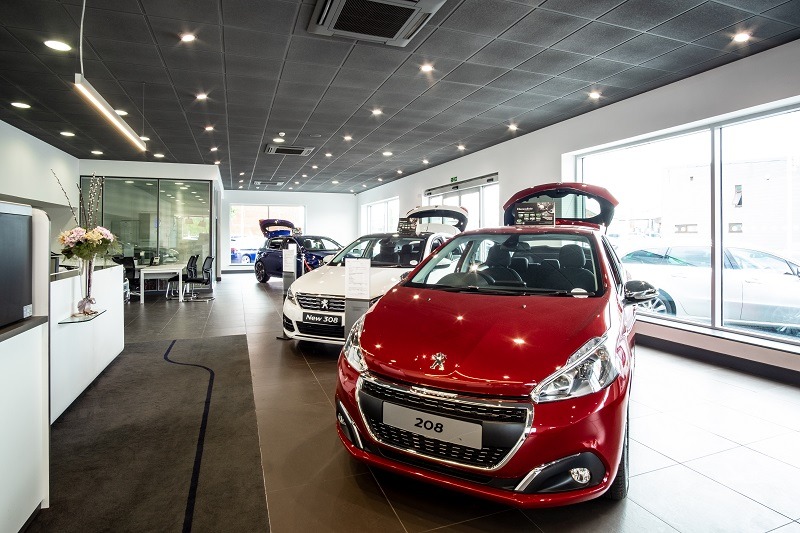
    motability accessible vehicles in the showroom

    What Adaptations are Available to Disabled Drivers or Passengers?

    A Motability car can be driven by a nominated driver, which is especially the case for disabled children or for other people who are unable to drive. This means that some may require adaptations as a passenger and others require adaptations as a driver. Both are available on Motability.

    The three categories for Motability adaptations are seating & stowage, driving controls, and access. Driving controls change how the vehicle is driven to cater for drivers who may have limited or no use of their legs and feet. Adapted driving controls include hand controls for braking and acceleration, pedal modification and steering aids, which are all more than often fitted to an automatic car.

    Changes to the seating and stowage of the vehicle can be made to cater for both drivers and passengers who use the vehicle on a daily basis. Motability cars commonly feature altered boot space and storage facilities to carry personal mobility equipment, plus mechanical hoists to load wheelchairs or scooters into the boot or roof-rack facility.

    The third category of adaptation is for access. Adapted access help disabled people enter and exit the car through the front or back doors. Motability cars can be fitted with manual and electric lifts to load people and equipment in and out of the cars. Adapted access can fit transfer plates, electrical hoists and swivel seating to the car.

    All adaptations are made available when applying for a Motability car. The Motability dealer will assess your position and they will be able recommend the necessary adaptations to the car you’ve chosen. What’s more, Motability provide more than 500 different adaptations and many of them are available at no extra cost. You can check your eligibility online now.

    If you would like to feature on Disabled Living’s blog please get in touch with us via email: info@disabledliving.co.uk

  • Staying Fit with a Disability

    Staying Fit with a Disability

    This is a sponsored blog post written by Jorvik Tricycles for Disabled Living.

    If you have from a disability, you may wonder and worry how you can exercise and stay fit. Fortunately, there are lots of ways that you can get out and about or stay healthy from the comfort of your own home. In our guide, we’ll show you the best ways you can stay fit and healthy and feel good about yourself.

    Head outdoors

    It’s important you don’t let your disability get in your way of getting out and about into the great outdoors. If you have a powered wheelchair, you can move around with ease on paths and footways. They are powered electrically so you can move along independently without the need of help from others.

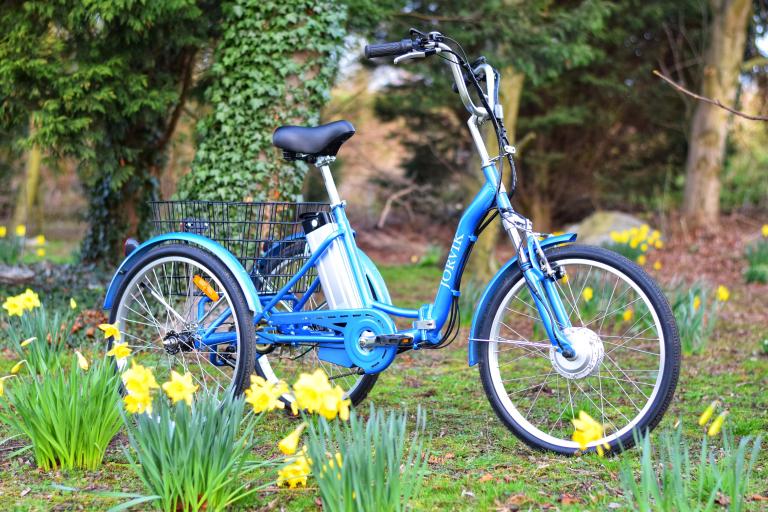
    Another alternative, are tricycles. If you have confidence in the use of your legs, then you can propel yourself along on a tricycle. The great thing about them is that they are on three wheels (two at the back and one at the front). This gives you greater stability and makes you feel a bit safer when you’re riding around. There is a great range of tricycles from Jorvik Tricycles so check them out.

    Jorvik Tricycle

    Exercise from home

    There are some great exercises you can do from your home, and even the comfort of your chair. Here are some of the best exercises you can do, taken from a great article by Invacare:

    • Shoulder Movements – Moving your shoulders in a circular motion helps to keep them strong. You’d be amazed how often you use your shoulders so it’s important to keep them mobile and strong.
    • Balloon Squeeze – Find a ball or if possible, a medicine ball and place it on your chest. Start to squeeze the ball as hard as you can. The more you squeeze the ball, the more it works your chest and you will feel the pinch!
    • The Zombie Twist – No, not a Halloween dance. This exercise derives its name from the way you look whilst doing it. Sit up straight in your chair and hold your arms out in front of you (like a zombie). Start to twist slowly from right to left keeping your arms out straight. Repeat 10 times (or less if you’re struggling).
    • The Jazz Toes – If you enjoy bopping along to a song whilst exercising, you will enjoy this one. Sit up straight in your chair or wheelchair and place your feet flat on the ground. All you need to do is point your feet up towards the ceiling and then point them to the floor. You should feel a slight twinge at the back of your foot.
    • Higher Knees – Again, sit up straight in your chair or wheelchair and put your feet flat on the ground or on your footplate. Lift your leg slowly to a manageable point and start to bend your knee in towards you. Hold for 5 seconds and then start to lower your foot down. Try and repeat the exercise around 10 times if you can.

    So, there you have our top tips for keeping fit from home or in the great outdoors. Get in touch with us if you need any more advice. It is incredibly important to stay fit and hopefully this post has helped you see just how easy it is.

  • DMUK Baywatch Campaign

    DMUK Baywatch Campaign

    This is a guest blog written by Heidi Turner on behalf of DMUK for Disabled Living

    DMUK’s Baywatch campaign, which looks into levels of disabled parking abuse at supermarkets, is changing format for 2020.

    A common problem for many disabled motorists is not being able to park at their desired destination, especially at their local supermarket. The major complaint is that the disabled bays are all occupied with cars not displaying a Blue Badge.

    baywatch campaign logo

    Disabled Motoring UK’s Baywatch campaign seeks to address this. This campaign researches the level of disabled parking abuse at supermarkets, by asking disabled motorists to survey their local supermarket car park. Specifically, they count how many disabled bays are provided and how many cars that are parked in them without displaying a Blue Badge.

    We launched this year’s campaign in March 2020 with a great response from supporting organisations and the campaign’s sponsor, the British Parking Association. DMUK is so pleased with the positive response it gets from its members, the public and organisations. Last year was our best campaign yet with record numbers of participants. However, this was before the world was swamped by the current Coronavirus pandemic. Even though many areas of the UK are seeing a decrease in infections and deaths from Coronavirus, and the government are easing lockdown restrictions, DMUK has decided that it is not appropriate to ask individuals to physically go to a supermarket car park and count cars not displaying a Blue Badge which are parked in disabled bays. This could put participants in a position where they find it harder to social distance and we would never ask people to put themselves at an increased risk of catching the virus.

    Join our Survey

    Instead we will be running a survey for the month of August which participants can complete without leaving their home. DMUK will ask individuals to think back over the last 12 months to consider their general parking experience and ask them to answer some questions about this experience at supermarkets and on their everyday journeys. We will use this data to tackle the supermarkets and other parking providers over their disabled parking policies. As a thank you for taking part there will also be an opportunity for one participant to win a £25 M&S voucher.

    The survey will be printed in the August issue of Disabled Motoring and there will be an online version going live in August which can be accessed through the website: https://www.disabledmotoring.org/baywatch-2020

    We hope that in August 2021 to have this pandemic long behind us and run our usual Baywatch Campaign.

    The campaign has support from Baroness Tanni Grey-Thompson, she commented: “It’s so sad that Disabled Motoring UK has to run its Baywatch Campaign. Disabled bay enforcement should be mandatory, especially for the big supermarkets that can afford to invest in policing their car parks. I see disabled parking abuse every day, it’s never a surprise to me, including at my local supermarket. There is a real lack of understanding about how essential these bays are to disabled people and I applaud DMUK’s Baywatch Campaign as it plays a vital role in highlighting the issue of disabled parking abuse at supermarkets.”

    Heidi Turner, Communications and Campaigns Director at DMUK, said: “Baywatch is one of the charity’s longest running campaigns and is really important to draw attention to the parking problems that disabled people face when just trying to do their everyday grocery shopping. The charity has decided to change the format of Baywatch this year in order to keep our supporters safe. Nevertheless the new survey will provide us with some really useful data to keep the pressure on the supermarkets to do more to manage their disabled parking bays properly. Disabled motorists face parking problems in all aspects of their life and the new survey will also encompass some more general parking questions which will expand the scope of the DMUK Baywatch Campaign.”

    DMUK Baywatch Appeal

    In October 2019 DMUK launched its Baywatch Appeal as a way of raising additional funds to support the charity’s campaigning efforts. Since its launch the charity has raised an extra £5740.58 in added donations. Any extra money the charity can raise to support campaigning is so helpful. We understand that many people are under financial pressures at this time  and ideally the best thing that individuals can do is to fill in the Baywatch survey in August, but if you can help with a donation too that is very much appreciated. Donations can be made through our website www.disabledmotoring.org or by calling 01508 489449.

    DMUK Baywatch Sponsor

    DMUK has worked for many years with the British Parking Association (BPA) to improve parking for disabled motorists. The BPA sponsored the campaign in 2019 and is once again sponsoring it for 2020.

    Kelvin Reynolds, British Parking Association, Director of Corporate and Public Affairs, said:  “We wholeheartedly support DMUK’s annual Baywatch campaign. With one in every five disabled parking bays being misused at supermarkets, this campaign is a great way to raise awareness of the importance of only using disabled bays if you are a Blue Badge holder. We encourage as many people as possible to participate in the survey.”

Disabled Living