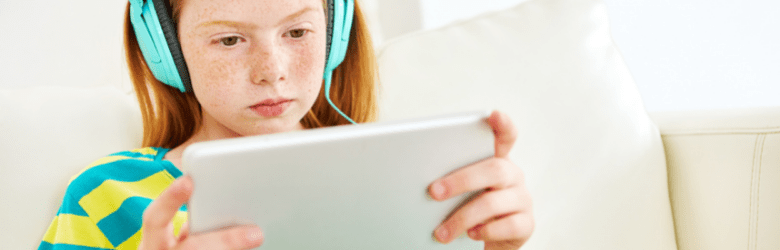
In this guest blog by Autability, learn about why preconceptions about screen time can be harmful, and the uses and benefits of screens for children with autism, and their families.
The question of screen time and people with autism
Screen time. A topic we hear about a LOT in parenting. Some people see it as a treat, some people see it as dangerous. But what if someone has a genuine need for it?
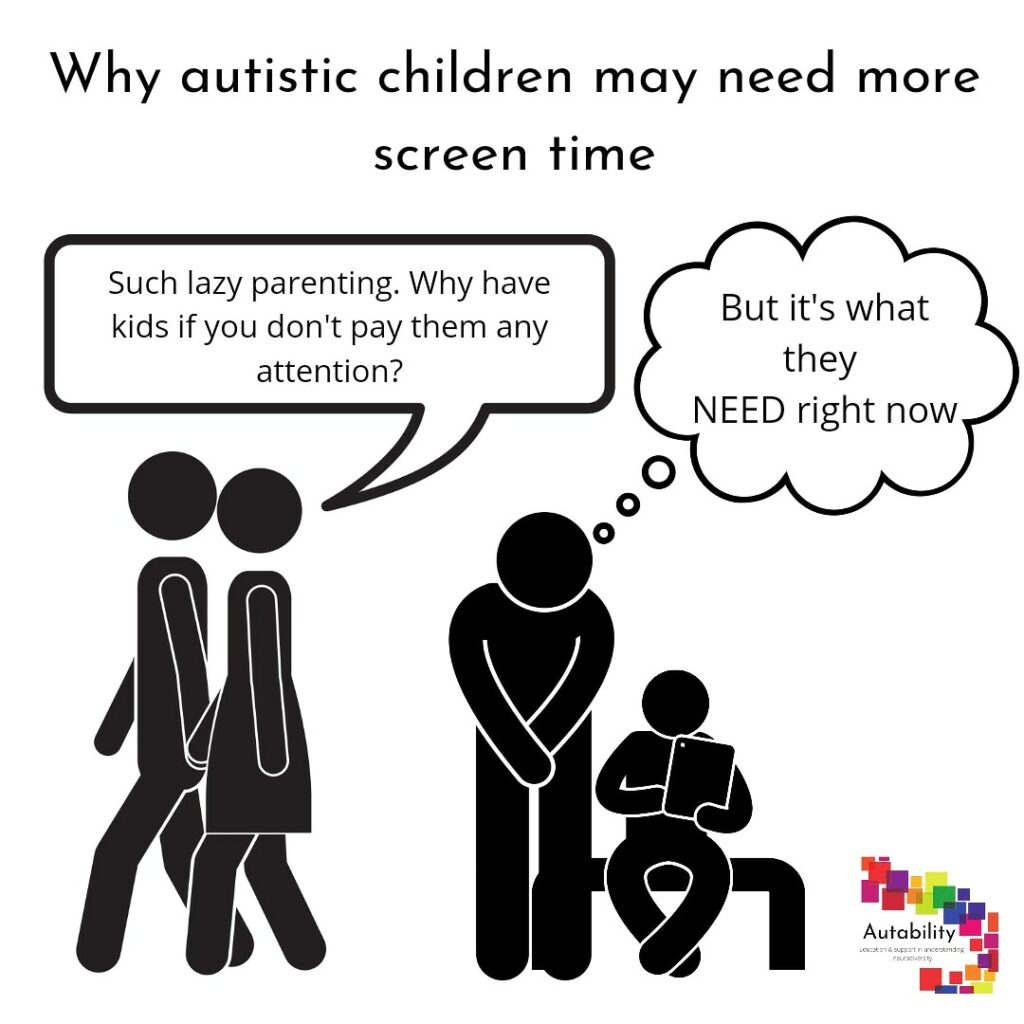
Many autistic children and adults get lost in their electronics. It’s helpful for so many reasons yet people will often judge parents who let their children use iPads, phones and laptops frequently because they don’t understand what is happening and why.
So what does screen time actually do for an autistic and/or ADHD child?
- It helps them regulate. Watching familiar videos or listening to favourite songs over and over can actually be a form of stimming. It helps the child regulate their emotions, calm their brain and rest mentally from an arousing and stressful world.
- Many autistic children will learn in their own way, in their own space, in their own time. Educational videos can often teach autistic children more than a teacher due to their surroundings at home being more comforting, familiar and quite than a classroom. My child learnt to read fluently by the age of 4 via his iPad.
- It allows the child to block out stressful external stimuli such as hospital waiting rooms, supermarkets or restaurants. They absorb themselves in their game, maybe with headphones on, and means they can cope in an environment which would otherwise cause sensory overload.
- Autistic children can find relationships in the outside world difficult. Many form friendships online or are able to communicate far easier with their friends online than in person. It can actually be their least stressful way of socialising. Of course, it is important to put online safely measures in place.
- It can allow children to take part in family time. ADHD children can really struggle to watch a film without becoming bored. But if they have a tablet or phone to play on, they can happily take part in family movie nights as they can occupy that part of their brain that causes boredom or under stimulation. The same goes for board games and meals out.
- Just like everyone else, autistic and ADHD children need time to rest even if they are regulated. Their version of rest often means occupying their brain with games. It’s simply their version of chilling out.
About Autability
Autability exists to educate, train and support people who parent or work with neurodivergent individuals. So much of the advice and training available today comes from neurotypical sources. Autability believes that the best qualification a person can have in order to advise and train others is lived experience.
Autability has two directors, Charlotte and Danielle.
Charlotte is diagnosed autistic, ADHD, dyspraxic and dyslexic. As well as her diagnoses she has the following qualifications and experience:
- Post graduate certificate in autism
- Working towards a masters in autism
- Mum to a complex son diagnosed with autism, ADHD and epilepsy
- Degree in music
- Degree in history and religion
- Qualified teacher
- Director of Supporting Paws CIC
- Author of upcoming book on parenting autistic children (published by JKP)
- Fellowship of the royal school of music in piano, singing and flute
Danielle is diagnosed ADHD. She has the following qualifications and experience:
- Psychology degree
- Mum to a complex son diagnosed with autism and ADHD
- Creator of The Autism & ADHD Diaries blog
- Experienced trainer in the corporate and not for profit sectors
- Author of upcoming book on parenting autistic children (published by JKP)
You can visit Autability’s website by clicking here. Learn more about Disabled Living’s Kidz to Adultz exhibitions by clicking here.