Tag: Children

  • Screen time and autism: When are screens necessary?

    Screen time and autism: When are screens necessary?

    In this guest blog by Autability, learn about why preconceptions about screen time can be harmful, and the uses and benefits of screens for children with autism, and their families.

    The question of screen time and people with autism

    Screen time. A topic we hear about a LOT in parenting. Some people see it as a treat, some people see it as dangerous. But what if someone has a genuine need for it?

    Many autistic children and adults get lost in their electronics. It’s helpful for so many reasons yet people will often judge parents who let their children use iPads, phones and laptops frequently because they don’t understand what is happening and why.

    So what does screen time actually do for an autistic and/or ADHD child? 

    1. It helps them regulate. Watching familiar videos or listening to favourite songs over and over can actually be a form of stimming. It helps the child regulate their emotions, calm their brain and rest mentally from an arousing and stressful world.
    2. Many autistic children will learn in their own way, in their own space, in their own time. Educational videos can often teach autistic children more than a teacher due to their surroundings at home being more comforting, familiar and quite than a classroom. My child learnt to read fluently by the age of 4 via his iPad.
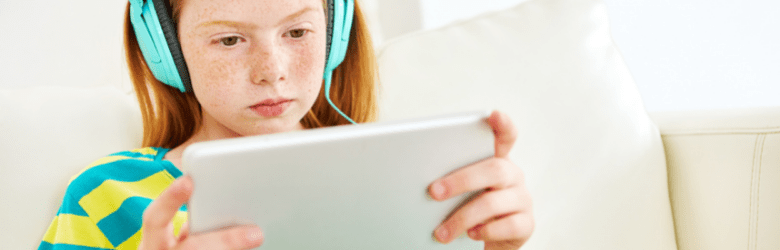
    3. It allows the child to block out stressful external stimuli such as hospital waiting rooms, supermarkets or restaurants. They absorb themselves in their game, maybe with headphones on, and means they can cope in an environment which would otherwise cause sensory overload.
    4. Autistic children can find relationships in the outside world difficult. Many form friendships online or are able to communicate far easier with their friends online than in person. It can actually be their least stressful way of socialising. Of course, it is important to put online safely measures in place.
    5. It can allow children to take part in family time. ADHD children can really struggle to watch a film without becoming bored. But if they have a tablet or phone to play on, they can happily take part in family movie nights as they can occupy that part of their brain that causes boredom or under stimulation. The same goes for board games and meals out.
    6. Just like everyone else, autistic and ADHD children need time to rest even if they are regulated. Their version of rest often means occupying their brain with games. It’s simply their version of chilling out.

    Screen time and autism.

    About Autability

    Autability exists to educate, train and support people who parent or work with neurodivergent individuals. So much of the advice and training available today comes from neurotypical sources. Autability believes that the best qualification a person can have in order to advise and train others is lived experience.

    Autability has two directors, Charlotte and Danielle.

    Charlotte is diagnosed autistic, ADHD, dyspraxic and dyslexic. As well as her diagnoses she has the following qualifications and experience:

    • Post graduate certificate in autism
    • Working towards a masters in autism
    • Mum to a complex son diagnosed with autism, ADHD and epilepsy
    • Degree in music
    • Degree in history and religion
    • Qualified teacher
    • Director of Supporting Paws CIC
    • Author of upcoming book on parenting autistic children (published by JKP)
    • Fellowship of the royal school of music in piano, singing and flute

    Danielle is diagnosed ADHD. She has the following qualifications and experience:

    • Psychology degree
    • Mum to a complex son diagnosed with autism and ADHD
    • Creator of The Autism & ADHD Diaries blog
    • Experienced trainer in the corporate and not for profit sectors
    • Author of upcoming book on parenting autistic children (published by JKP)

    You can visit Autability’s website by clicking here. Learn more about Disabled Living’s Kidz to Adultz exhibitions by clicking here.

  • Summer’s Story of Life with Spina Bifida

    Summer’s Story of Life with Spina Bifida

    January’s Story of the Month has been written by Shaun Finlay from Hastings. He tells us the story of his daughter’s life with spina bifida.

    Summer was born with a hole in her spine. Her nerves were all exposed causing her to be paralysed from her chest down. This has resulted in her now being a full-time wheelchair user, double incontinent and very reliant on those around her for daily support.

    On top of this she was also born with Hydrocephalus (extra fluid on the brain). This is controlled by a ‘shunt’ which drains the fluid from her brain down to her belly. It is essentially a valve, which is programmed using magnets, to control the amount of fluid to be drained. Unfortunately this means she must avoid heavy magnetic fields, e.g. airport scanners, MRI scanners, as they can adjust the setting of the shunt.

    With all of these diagnoses, she has had to deal with much more than the average 6 year old. Currently she has had 4 brain surgeries, 1 major spinal surgery, multiple bladder surgeries and regular scans and check-ups, most of which are done in the Evelina Children’s Hospital in London. She also has many more operations planned for her future, including a full bladder reconstruction.

    Fighting for Summer’s needs

    As a family we often have to fight on Summer’s behalf, for equipment and services that she should be entitled to and should be receiving as standard. For example; when Summer was just 2 ½ years old, her consultant in Evelina recommended she have a wheelchair for her own independence and self esteem. However, her local wheelchair service declined. This then bought our first big fight for her!

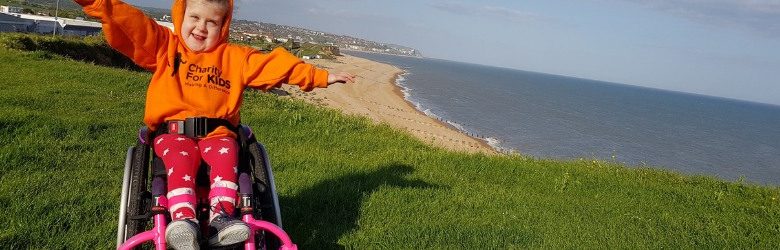
    summer practicing moto cross

    We were very lucky to come across a small local charity (Charity For Kids) who were able to fund a Quickie Youngster 3. This is a lightweight wheelchair that suited all of her needs. Since then the charity has assisted in the purchase of further equipment which was declined by the NHS, including physio equipment and her 2nd wheelchair, a Ti-Lite Twist. The local community also pulled together to raise money for a specialist bed for Summer, again cementing our faith in the community spirit of Hastings.

    All of this obviously takes its toll on Summer and the whole family, however to meet Summer you would never guess! She is a very bright and cheery little girl, who loves unicorns, fairies and princesses. Summer has an extremely kind and caring nature. She is one of the most selfless people I know, regularly engaging in charity events to ‘give back what they have given’. She is currently training with her dad for her 1st half marathon! Summer is a big personality in the local community, spreading joy and smiles everyday.

    Summer’s favourite hobbies and activities

    summer group photo smiling

    Despite her obvious challenges, Summer loves to join in playing with her peers and is involved with an inclusive cheer group, performing in shows and events. She has recently begun ballet, with the prospect of shows and dance exams in the near future and also involves herself with local charities attending events and raising funds to support others. To date, Summer (with help from family and friends) has raised nearly £10,000 for charity and has more planned for future events.

    When she isn’t dancing, Summer has a daredevil streak within her. Having discovered para-athlete Aaron Fotheringham on YouTube, Summer has been interested and involved in WCMX (wheelchair moto cross). She has followed her older brothers and taken her wheelchair to skate parks and ramps and also to BMX pump tracks. Although she finds it rather daunting and scary to start, she loves the thrill of speed and pushing herself and her chair to its limits.

    Her WCMX dreams came true in June 2016, when she got to meet Aaron. Nitro Circus (who Aaron performs with) were performing in Sussex. Aaron invited Summer to have VIP tickets to watch the show and meet with Aaron afterwards. Here, Summer watched him do his back flip in his wheelchair, off a 50ft ramp! Summer said to her mum and dad, “I want to do that!”

    What we love the most about Summer

    Any parent would agree that, every achievement your child makes will make you proud. As a parent of a child with additional needs those achievements can be very different. With Summer’s paralysis and the challenges that come with that, her sheer determination and perseverance inspires us, her friends, peers and everyone she meets. This was recognised last year when Summer was awarded with the ‘Gold Award’ at the ‘2018 Child Of Sussex Awards’ in Brighton. Today, it’s still a huge highlight in her life. And it gives her the recognition of the brave, strong and amazing little girl she is.

    summer receiving her award

    In the six years of her life, we have become more than just parents. We have become carers and nurses to her, advocates for hers and all disabled rights. We have become specialists in her conditions and a voice to stand up for her rights and needs. This is part of the ‘behind-the-scenes’ of parenting a child with extra needs, which no one ever tells you about. But we wouldn’t change a thing!

    You can follow Summer’s Story through social media on Facebook, Twitter and Instagram using the links below.

    www.facebook.com/summers.story1

    www.instagram.com/Summers.story1

    www.twitter.com/summersstory1

    Does your child have spina bifida? If you would like to submit a story to Disabled Living’s blog please send an email to: info@disabledliving.co.uk

  • Why Harry Beattie is ‘One Amazing Kid’

    Why Harry Beattie is ‘One Amazing Kid’

    Harry Beattie was born at 27 weeks in Raigmore Hospital Inverness after an spontaneous rupture in the membrane at 22 weeks. He was ventilated for 3 months and had a Patent Ductus Arteriosus closed in Glasgow prior to this. Due to an ongoing chest infection Harry had many stays in hospital. On one occasion he was so ill, he was transferred to Royal Hospital for Sick Children. Harry ended up being there for 3 months with a tracheotomy at the end of this. Having two other children at home who were adopted (Harry was an IVF baby), was really difficult.

    Natasha Bolger from Disabled Living interviewed Harry Beattie’s mum, Beverley.

    Please can you tell us about Harry’s background?

    At 11-years-old the next big admission was to try ventilation as he had hypoventilation. Now, Harry ventilates via a tracheotomy 24/7. He has had very little admissions for his chest since this, until recently. I think he finds life tougher as he gets older and feels tired more easily. Harry has always been the happiest wee boy and although he is in a chair and can’t speak, boy can he get his point across… he is definitely the ‘boss’! Others will ask if I’m his personal assistant (or I’ll ask if I’m his slave) and Harry shakes his head and sticks out his tongue. This is Harry’s way of responding with ‘yes’. So I know my place! He understands every word and can answer a yes or no question by actions I’ve just
    mentioned.

    Harry has severe cerebral palsy affecting all four limbs and has severe dystonia which causes him so much pain. We are waiting for results from St Thomas’ Hospital in London about having Deep Brain Stimulation to help manage his dystonia and hopefully managing his pain better as he is on a ton of medication to try and help this. He absorbs medication really quickly and what he is on should knock out a horse, but not our Hars!

    Harry group photo with Harry Hill

    What are Harry’s favourite things/hobbies?

    Harry loves books including audio books. TV is also a big hit with CBeebies being his favourite. I tell him he is too old for it but he doesn’t care!

    What was it like meeting Harry Hill?

    Harry Hill has been so kind to him. He invited Harry to London to watch the recordings of his show ‘Alien Fun Capsules’. Harry giggled all the way through! We are still in touch with Harry Hill who is an absolute gentleman. .

    ..And Prince Harry too! Can you describe what that was like?

    Harry was awarded a ‘Well Child Award’ in 2017 – nominated by the Well Child nurses in Edinburgh. He won the Inspirational Young Person Award. We are so proud of Harry getting this award. He has had such a tough life and never complains, unless I’m not doing what he wants!

    Harry family picture

    Prince Harry is the patron for this charity and he is such a genuine, down-to-earth and funny man who understood Harry’s sense of humour. They enjoyed a bit of banter throughout the evening. They both said I “forced Harry to wear the kilt”. So before the end of the evening, Prince Harry took a few steps back and leaned in to my Harry to say, “Remember, do not let your mum make you wear that kilt again if you don’t want to!” Of course, Harry giggled. The evening was a star studded affair and the children were
    the stars that night – just as they deserved to be.

    Is there anything else you would like to add?

    This is not the journey we would have chosen for our child, but hand on heart I wouldn’t change a thing (apart from him being in pain) he is an inspiration to us all and makes us laugh every day! We have met amazing people through Harry he has definitely made us better people by having him in our lives. One amazing kid!

    Do you have a story you would like to share? For details on how to submit your piece please email: info@disabledliving.co.uk

  • Playtime for Children with Disabilities

    Playtime for Children with Disabilities

    This post has been written by Special Kids all about the senses that children with disabilities develop during playtime.

    When you think about childhood, you probably think about the nostalgic memories of days spent playing with dolls, building blocks, and jigsaw puzzles. A magical time where your imagination was able to run riot while you developed skills such as problem-solving. For some of us, playtime was likely to be random – no set time, toys, or routine; however, children with disabilities, are likely to prefer structure when playing. Why not set play time aside for your child to fit into their existing routine?

    Playtime allows for the exploration and development of the senses; children with disabilities can quickly become overwhelmed by the senses; the structure can help to ease discomfort.

    Creativity

    Ah, painting, who didn’t enjoy creating mini masterpieces when they were kids? Painting,
    drawing, and creating things with playdough can help children become comfortable with
    different textures as well as developing their knowledge of colours and shapes. Art based
    activities allow your child to express their feelings and imagination which can help to make
    sense of the world around them and communicate their understanding of it.

    Problem solving

    Problem solving is a crucial skill to develop throughout childhood and adult life; activities that encourage this skill make it fun and engaging rather than challenging and confusing. Take the classic jigsaw puzzle; all the pieces have to fit a certain way. Although jigsaws are an excellent way to solve a problem, it is useful to play with things such as building blocks too, as this can show your child that there are more ways than one to solve problems as there isn’t always a strict way to build or not to build something.

    Sound

    Sound doesn’t have to be overwhelming for children with disabilities; it can be soothing.
    Whether this is something familiar such as music from the TV shows your child watches
    or a bedtime nursery rhyme. Why not make music a part of play time? Children’s glockenspiels can be an excellent way for your child to experience sound while
    improving memory by learning a song.

    children's soft butterfly toy

    Comfort

    We all want our child to feel as comfortable as possible. When learning new things and
    developing skill comfy clothing is essential. Think about it, none of us would get into bed wearing uncomfortable clothes such as jeans; we would wear pyjamas, so why should this idea of comfy clothing not be a part of day to day life for your child? Our Wonsie’s and bodysuits are great for playtime – not only are they made with soft, non-irritable material, they are also stretchy so that movement is effortless. We have a range of products for different needs; not only do we stock clothing, we also offer accessories, bibs, and bedding. We believe that quality is paramount. All of our products are designed with care.

    Raising awareness and providing solutions

    Since 2014, we have had the fantastic opportunity to be a part of the Kidz Exhibitions. They have created an environment that is both welcoming and supportive. Through their several yearly events, they provide a platform to raise awareness for children with various disabilities, and we are proud to be a part of it. We’ve met so many new people at their events who keep coming back and are pleased to say that we will be exhibiting at Kidz to Adult North this year on Thursday 8th November. And we can’t wait to showcase our new and existing range.

    We are delighted to have been given the opportunity to guest blog for Kidz to Adultz North. And to say thank you, we invite you to check out our adaptive clothing range and use the code NEWCUST10 for a discount. Why not sign up to our newsletter too for updates and offers.

  • Mum Creates Playgroup to Connect, Support, and Thrive Inspiring Inclusion

    Mum Creates Playgroup to Connect, Support, and Thrive Inspiring Inclusion

    The idea of ‘Jolly Josh’ months ago was ‘pure imagination’. A chain of events would lead me to realise that there was a gap in the system; the solution would become Joshua’s legacy. 

    We have a large, loving, supportive family who were with us every step of Joshua’s Journey. And we also have a wonderful network of friends. Yet I still wanted to meet someone ‘living’ a similar situation. At the time we knew that Joshua had suffered from ‘extensive brain damage’, we knew that his milestones would differ from other children’s. We had 20+ professionals supporting us. We knew that we were submerged in to a world of special needs and that we’d do everything we could to support Joshua to reach his own potential. At this point, we were unaware that Joshua’s condition was ‘life shortening’.

    I met one particular mum at a baby class that I took Sophie and Joshua to. Her daughter also had an NG (Nasogastric Tube), the first child (other than Josh) that I had met with one. I instantly struck up conversation, I had a million questions to ask, and I was excited that Josh would know that he wasn’t the only child with a feeding tube up his nose. Now, this mum comes to Jolly Josh and we have become friends.

    I attended an event for parents and carers of disabled children in 2017. It was a brilliant event with lots of professionals providing information about their services. I had just been granted reduced hours, stepping down from full time work to part time, to be with Joshua and attend appointments, etc.

    I visited each stand in the hope to find services that would help Joshua and our circumstances, sadly they were minimal.

    parents with josh and his sister

    We already had a play worker, other than this nothing applied to Joshua as he was under 4 years of age. Services seemed to come in to place when children started school and I didn’t want to wait until then to meet other parents/carers in the same situation. I wanted to access as much as I could before then to help Joshua to develop and reach his potential and I also wanted to meet other mums. I was left feeling extremely disappointed, that’s most definitely not meant with any disrespect! This is when I knew that Jolly Josh was going to make an impact.

    When I began to vocalise my idea of Jolly Josh ‘Stay and Play sessions’, the notion was very misunderstood. Some thought of it as a ‘respite’ session. I was actually told ‘I never left my child.’ You can imagine my response to that; I had worked full time up until very recently. Did this comment mean that are parents/carers of disabled children are expected to abandon careers or have the finances to stop working? Also, this remark was a huge detriment to the value and importance of respite.

    In addition I was told it was believed that children of preschool age were at home with their parents. Mine hadn’t been as I worked. Yet now that I worked part time did that mean I was to stay indoors, hidden, adding to the isolation of having a child with complex needs?

    I approached Joshua’s care team, his Consultant Paediatrician, his nurses, his Health Visitor etc. And they were all incredibly enthusiastic. I asked if they’d consider being trustees if I was to create a charity. They happily agreed.

    Over Easter Joshua’s health began to rapidly decline and in May 2017 we were given the devastating news that he had ‘weeks if months until he found peace.’

    I gave up work and became Joshua’s full time carer; I was now a ‘stay at home’ mum to both my babies. Though we didn’t stay at home very often. We were out and about making as many memories as possible!

    We went on to spend a lot of time at Manchester Children’s Hospital and stayed at Derian House Children’s Hospice on many occasions. During this time I met another mum. We discussed the many challenges facing our children, their siblings and our family. For example, required yet expensive home improvement changes, the need for public Changing Places, etc. Sophie enjoyed playing with her daughter and I realised that she also would benefit from meeting other ‘young carers.’

    This (for me) verified the need for Jolly Josh

    During this time I also focused on Jolly Josh. I planned a timetable of professionals to attend each week, also planning weekly educational and sensory themed sessions. And I acquired toys, seating aids and resources. I broached Mrs Fierro at Springside School who was fully supportive of the concept of Jolly Josh, so much so that she gained permission for our sessions to be held at Springside School.

    Joshua passed away on 27th August (8 months ago), exactly a month before we were due to open Jolly Josh. I knew that we had to continue. It was perhaps a distraction but it became a positive focus. I planned a very successful open day which I had many volunteers to thank for! The day was incredible but Joshua’s physical presence was very much missed.

    I am incredibly proud of what we have achieved in such a short space of time. Our sessions have been very informative, a wide range of professionals have provided advice to parents/carers. We have worked closely with Springside School to introduce children who will be future pupils. We have set up a lovely peer support group; parents are making good relationships, exchanging ideas, concerns and experiences. In addition, our children are making friendships and thriving, their siblings gaining support too.

    Children play alongside one another, inclusively, some questioning, for example, “Why does that boy have a tube up his nose?” and learning children are all different and that’s what makes them all special. We are creating an awareness of our children’s differences in a safe and secure environment, hoping to educate the community and promote inclusion.

    I have many dreams for the future of Jolly Josh. And I am hopeful that we can ‘Connect, Support, Thrive and Inspire Inclusion.’

    To learn more about Jolly Josh please visit their website. You can also follow them on Facebook and Twitter.

  • How an Occupational Therapist Helped in a Kenyan Sanctuary

    How an Occupational Therapist Helped in a Kenyan Sanctuary

    This Story of the Month has been written by Gareth Brown, Development Manager at AAT GB Ltd for Disabled Living.

    In October 2017, we received a video clip from an OT from Northern Ireland. She was making an enquiry about buying a Chillibean. This is one of our Stabilo vacuum posture cushions. Nothing unusual in that, it is a very popular and versatile piece of equipment after all. However, that’s where normal ended and an adventure began!

    Jolene Allen is a missionary Occupational Therapist working out in Kenya. She runs a centre called the Metropolitan Sanctuary for Children with Disability in Nyeri. In her video, she described a country where approximately 70% of the population of children with a disability live below the poverty line. Free healthcare is extremely limited to children under 5-years-old for rehab. Physio and government hospitals are overwhelmed with huge queues and limited resources. Assistive devices such as Orthotics, prosthetics and wheelchairs sadly aren’t free. Also, there aren’t affordable to most people or are impractical.

    Having a child with a disability can be stigmatised and is believed to be a curse to many families.

    The sad results of this are that, many mums are left to cope with children with disabilities on their own with little or no social support. Often, mothers themselves buckle under the pressure of stigma and self blame. They run away, deserting the child. Many get raised by grandmothers. Many get abandoned. Tragically, in some tribes, they are not allowed to live. The reality of this is that many children spend their lives lying on a bed looking at the ceiling, and are often left all day. Sometimes, they’re tied to the bed, while the mum has to go out and work just to be able to support the family and survive.

    Sadly, there aren’t support systems for feeding or supportive seating. So, deformities go unchecked and many of these children don’t survive into adulthood.

    It’s a pretty gloomy picture for such a fast developing African country. Though the government and charitable organisations are endeavouring to develop health services, progress is slow. Particularly in the area of custom made adaptive seating, which still remains out of reach for the vast majority who would benefit from it. Should a child be fortunate enough to have rehabilitation services, it’s common that staff who ought be prescribing equipment, are largely accustomed to disregarding positioning altogether.

    So what’s Jolene up to?

    She’s been at the Sanctuary for over seven years now, overseeing the rehab services including therapy services, medical reviews, medicine, day care, counselling, support and even residential services for the most disadvantaged children. She established a social enterprise hub, which involves employing mothers of children with disability to make paper with recycled materials and create beautiful hand crafted art.

    The really amazing part is what they’re making for the children. Jolene has mastered the art of using recycled cardboard and paper to make custom postural seating and equipment. Each child is assessed and measured and has a perfectly matched cardboard chair (or standing frame, or combination of the two) made for them. This allows them to be able to sit up and be part of family life. It helps their posture, breathing, swallowing and digestion and raises their quality of life to unprecedented levels. Families are also gently educated in the importance of this when they are given the equipment as well.

    sanctuary helping child

    Not resting on her laurels, Jolene has been tackling ever more challenging seating for the children. She uses extremely complex shapes, vacuum bags, vacuum cleaner and polystyrene beads to create moulded patterns. And then making papier-maché seating systems mounted into cardboard bases. This has proven quite a difficult undertaking with such basic but ingenious equipment, which triggered her call for help to us.

    We were so inspired by her amazing creativity and achievements. AAT donated a Stabilo Grande mattress to the Sanctuary to use for creating the moulded seats. This proved to be a very useful tool for making more accurate moulds and is now used to form plaster of Paris body templates of each child so a custom seat can be made. I also offered to help with advice. And after many, quite technical conversations, it was clear that talking about it just wasn’t good enough.

    An inspirational adventure

    An adventure was long overdue for me. So, mid February found me on a plane heading out to Nairobi on my first ever trip to Kenya. What a week it was! I had a very busy time. First, coaching everyone on how to get the best out of the Stabilo cushion. Then we experimented with the various techniques used in the UK for creating custom moulded seating but adapted them to using only the resources available locally. It was such a rewarding experience and a privilege to work with Jolene and her team of dedicated staff. We had great fun problem solving on such a practical level where every tiny improvement would make such a huge difference. I could easily have stayed for a month and still had so much more to do.

    So, what next?

    team at work

    A return trip is certainly on my to-do list! They are currently raising the funds to build the next part of the Sanctuary, a three storey building to house children during extended intensive therapy visits, accommodation and training facilities for OTs, physios and families. There’s still a long way to go but the ground has already been excavated and the giant retaining wall has been built by hand over the last 9 months.

    The Cardboard seating is moving on to a next generation of more adjustable, longer lasting seats with improved shaping, cushioning and harnessing. Moulded seating is still in development while materials are being sourced locally, hopefully including liquid Polyurethane foams from BASF chemicals for foam in place seating.

    My next project has already started, building a foam carving duplicator machine so a copy can be cut straight from the Stabilo cast of the child’s shape, saving a lot of time and cost. This would mean the plaster of Paris body print would not be needed and a child can be test fitted while still at the clinic, potentially saving the family many hours of uncomfortable additional travelling.

    Grateful for any assistance

    Jolene and her team would be grateful for any assistance from professionals in all areas of rehabilitation services. This includes: PTs, OTs, SLTs, Orthopaedic Technicians, or people with experience in wheelchair or seating services. They’re always keen for people to buy and sell their paper products. And they have a £100 box challenge every Christmas where you retail £100 of their products to family and friends. For further information visit Sanctuary Artists website.

    To find out more about the wonderful work going on at the sanctuary please click here.

  • Cooper’s Journey with Cerebral Palsy

    Cooper’s Journey with Cerebral Palsy

    January’s Story of the Month goes to, Kerrie Keen, 37 years old who talks about her son’s journey with cerebral palsy. Kerrie is married to her husband, Owen and is a proud mum to her 15 year old son and 4 year old identical twin boys, Cooper and Lucas. If you would like to catch up with our previous Story of the Month, please click here

    Owen and I discovered we were expecting twins in November 2012 at our first scan. Once we got our heads around the practicalities, we loved the thought of our twins always having each other, always having a play mate and sharing an incredible bond for life.

    April 2013, Cooper was born along with his twin brother Lucas. Cooper was the first born and weighed a little 4lbs 14oz and Lucas was born two minutes later weighing a big 7lbs 9oz. However, 5 hours after birth, Cooper was unusually sleepy and not feeding. After a pin prick blood test showed he had low blood sugar, he was taken to neonatal for the night.

    The seizures began

    Cooper young boy cerebral palsy

    Cooper began to have seizures and had dangerously low oxygen levels on the first night. He was then moved to intensive care and put on machines and a tube was put into his nose to enable feeding.  At 6 days old he was transferred to Glasgow Children’s Hospital for a MRI.  After the scan, a neurologist told us that Cooper had suffered grade 4 bleeding on the brain and would be severely disabled, if he survived.

    After transferring back to hospital, where the boys were born, Cooper began to fight back. His oxygen levels become steady and he stopped having seizures. However, the paediatric consultant told us they suspect Cooper has hydrocephalus. We had never heard of this! He told us Cooper might possibly need a shunt at some point.  We had never heard of a shunt but we decided to take each day as it came and see if we encounter this in the future.

    At 5 weeks old, Cooper left hospital.  He was finally well enough to come home. He was still being tube fed every 3 hours, day and night, which I found so difficult. The tiredness on top of trying to come to terms with Cooper being ill was such a trying time for us as a family.

    Having a VP shunt fitted

    Cooper young boy cerebral palsy

    November 2013, only 7 months old, Cooper was admitted to hospital in Glasgow to undergo his first brain surgery to fit a VP shunt. The aim of the shunt was to drain cerebral spinal fluid (CSF) from his brain down to his abdominal area where it would be absorbed. It was amazing to see the changes in Cooper only hours after this operation. A baby, who tightly clenched his right arm across his body, was now open handed trying to grab his milk bottle. This was an amazing day for us all. It was like we could start to see progress – a light at the end of a very dark tunnel. Cooper’s stability carried on and he became stronger and bigger over the next few months.

    June 2014, Cooper had another routine paediatrician appointment. The aim of this was to keep track of his development and physiotherapy which would help make him stronger. There was nothing unusual about this appointment, I gave an up to date account of what Cooper could do and what I felt he was struggling to do milestone wise. However, two weeks later, I received the summary letter of this appointment and my heart was broken. These letters always start the same, in bullet points, with the conditions which your child suffers.

    Coming to terms with a diagnosis of cerebral palsy 

    Cooper young boy cerebral palsy

    I knew about Cooper’s grade 4 bleeds on the brain and I knew about his hydrocephalus and VP shunt. What I didn’t know was that Cooper had been diagnosed with cerebral palsy. This was mentioned months before by another paediatrician as a possibility for the future, but it wasn’t mentioned at all during the latest development appointment. I will always remember how I felt reading for the first time that my 1 year old son had cerebral palsy. I was distraught. Everything seems to hit you that bit harder when it’s on paper after re-reading the letter. I contacted the hospital and said I desperately needed to speak to this paediatrician. He apologised and said I should never have found out that way.

    Such a major diagnosis which will last my son a lifetime, this shock is something that will stay with me forever. Cooper’s cerebral palsy has since been defined as quadriplegic cerebral palsy with dystonia. He is a little boy who struggles with increasingly tight muscular spasms, mainly in his legs but in his arms too.

    We can’t take things for granted

    Since, he has mastered being able to roll both ways which is fantastic! He’s unable to walk but recently Cooper has learned to sit upright propping up with his arms. A truly inspiring day for us all! He has coped brilliantly with everything and he never complains.

    What I have learned from having a child with a severe disability is that, we can’t take things for granted. The world of disability is so up and down and we never truly know exactly what’s around the corner. Even the smallest expectations are not a given. One day things can be calm and you feel like you are making progress. Then the next day, you feel like you are back at the beginning. You feel scared, uncertain and angry at the thought of your child having to struggle with every area of their life.

    Also, the world of disability can be so isolated. I feel extra worries and pressure due to having one able bodied twin and one severely disabled twin. It is soul destroying seeing one child leaving behind their twin developmentally, physically and emotionally.

    I try to keep positive and remember that Cooper is alive, that is the most important outcome for us.


    Read more about Cooper’s journey by visiting Miracles and Me on Facebook.

  • A Quarter of the Public ‘Don’t Know What Cerebral Palsy Is’

    A Quarter of the Public ‘Don’t Know What Cerebral Palsy Is’

    This post has been written by JMW Solicitors. JMW Solicitors support families affected by cerebral palsy caused as a result of medical negligence. A team of expert solicitors ensure families receive the best possible care package and support to lead as normal life as possible. JMW fully support an initiative to raise awareness and highlight the importance of open discussions to support families.

    A new survey

    A new survey of 736 people has revealed a lack of understanding surrounding cerebral palsy in the UK. Conducted by the Clinical Negligence department at JMW Solicitors , the survey found that almost one-quarter (24%) of people do not know what cerebral palsy is.

    The research showed that despite almost one-quarter (24%) of respondents personally knowing someone with CP, a similar proportion said they do not know anything about the condition. More than four in ten (41%) of those questioned described their understanding of cerebral palsy as “poor”, while a further 15% described it as “very poor”. This compared to 38% with a “good” understanding of it and 6% with a “very good” understanding, highlighting the need for further awareness of the condition.

    cerebral palsy

    Just 22% know that roughly one in every 400 children is born with the condition. The other 78% believe cerebral palsy is less common; 21% answered one in every 800, 25% selected one in every 4,000 and 11% opted for one in every 8,000. Almost one-quarter (23%), meanwhile, concede that they are not aware cerebral palsy can vary in severity.

    Here’s what Eddie Jones has to say

    Eddie Jones, Partner and Head of Clinical Negligence at JMW, says: “Our findings highlight a real lack of knowledge among the general public regarding cerebral palsy. It is illuminating that almost one-quarter of the almost 750 people we asked confess to not knowing what the condition actually is. We believe that understanding cerebral palsy is an important step to helping both people with cerebral palsy and those closest to them and more can be done nationally to raise awareness.

    Many people freely admit they do not know much about cerebral palsy; indeed, the percentage of people claiming to have “very poor” or “poor” knowledge of the condition (a combined 56%) is significantly higher than those with a “very good” or “good” knowledge of it (a combined 44%).

    The survey also found that only 29% of respondents say they think £1 million or more is needed in compensation to adequately care for a child with cerebral palsy for the rest of their lives. The other 71% assume less compensation is required, including almost one-quarter (24%) selecting £500,000 to £1 million, and 3% choosing the lowest option; £1,000 to £10,000. Knowledge of the true extent of the care costs required to support children and adults with CP is limited.

    man holding child

    Eddie Jones added: “The majority of people not only don’t know how many children are born with cerebral palsy in the UK, they also believe prevalence of the condition is much lower than it actually is. As a law firm, JMW has helped many children and families to claim compensation that can run into the millions of pounds for a single case when the condition is caused by negligence at birth or in the newborn period. Every penny is essential for assisting that individual and their families, and it is alarming to see that so few people understand how much is needed.

    JMW Solicitors produced a guide to cerebral palsy diagnosis and more information is available on the NHS website.

    If you would like to submit a blog to us, please send an email to: info@disabledliving.co.uk

Disabled Living