Category: General

  • Angela’s Accessibility Training at Manchester Airport with TryB4UFly

    Angela’s Accessibility Training at Manchester Airport with TryB4UFly

    This post has been written by Angela Christian, one of our Occupational Therapists at Disabled Living. Angela took part in some training by Graham Race on Wednesday 23rd May 2018 at Manchester Airport with TryB4UFly. Function Specialist, Ashley Horsfall and Customer Experience, Susan Dean were also present from Manchester Airport.

    Manchester airport tour

    Assistance Lane at Manchester Airport

    Manchester Airport contract work to OCS, to support their passengers needs throughout the journey from the car park, during the airport and when accessing onto the Aircraft.

    At all the main entrance points; Passenger can locate an Assistance Point, where they can call for assistance from OCS staff who responds in person within 15 minutes maximum.

    Prior to checking in passengers with physical or hidden disabilities can locate the reception point for assistance, where they can wait in quiet area before check in. Passengers can get help to with check in and board via an Assistance Lane.

    Hidden Disabilities

    green and yellow sunflower landyard
    Landyard

    Reception points can provide a special lanyard (Green with Sunflowers) which informs staff members and airline companies that a passenger has additional support needs. The lanyards can be collected from Reception Point for Assistance. This allows passengers to use assistance lanes when boarding and also priority and family lanes at security.

    Reception Point for Assistance Terminal 2

    airport reception point for assistance

    Manned desks at the reception points are available (Terminal 2 above). These are centrally located near shops and restaurants and if passengers want to shop or eat, there is no need to stay in one place. The OCS staff use Customer Call to locate Passengers when its time to board, staff will buzz to locate Passengers ready to board.

    plane at manchester airport
    Ambulift

    OCS support passengers throughout their journey from the car park, throughout the airport and when accessing the Aircraft, via the use of the ambulift, Eagle Hoist or other transfer aids.

    Disability and Toileting

    Equipment provided in the Manchester Airport Changing Places above.

    • Overhead full room coverage hoist system

    IMPORTANT: Sling not provided

    • Mobile hydraulic height adjustable changing bench
    • Wide tear off paper dispenser
    • Privacy screen
    • Peninsular conventional close coupled WC with grab rails and support arms
    • Electrical height adjustable sink.

    Manchester airport currently have a transformation plan, to improve airport facilities for people with special needs. Passengers will see an increased number of changing places; air side and land side, more central assistance points. Dog assistance areas, sensory/quiet rooms, first aid rooms, new assistance points and more.

    Useful resources

    Manchester Airport – Special Assistance 

    Seat Guru

    TryB4UFly

    Accessible Tourism

    Enable Holidays

    Accomable

    Mobility Equipment Hire Direct

    Travel advice with a mobility aid

    BHTA – Air Transport Advice

    Flexel Mobility

  • SeatPlan Help You To Find Accessible Theatres in the UK

    SeatPlan Help You To Find Accessible Theatres in the UK

    This post has been written by Laura Kressly for Disabled Living.

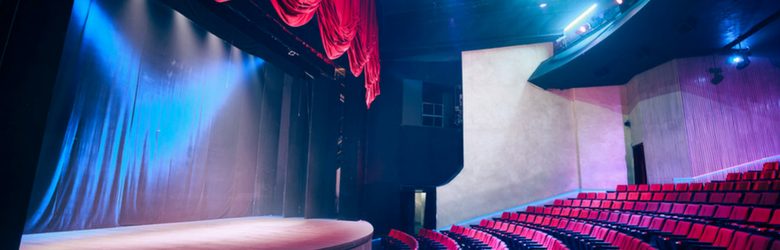
    Commercial theatres aren’t known for being access friendly, but this is finally starting to change due to a shift in attitudes. Unfortunately, theatre buildings struggle to keep up.

    Many buildings in London’s West End are old, including most of the theatres. They date to Victorian times or, in some instances, are even older than that – the fourth version of the Theatre Royal Drury Lane was built in 1812, seven years before Queen Victoria was born. Historical buildings are notoriously bad for access, and with many of the biggest and best theatres in the country having listed status, it can be difficult for people with access and mobility needs to go to the theatre.

    Fortunately, theatre owners and managers are aware of the need to improve in this area and are doing what they can to install access provisions around budget and planning restrictions. With growing awareness of these building’s power to exclude non-disabled audiences, there have been a lot of recent changes. It’s now normal for theatres to have infrared hearing systems, access performances, removable seating, downloadable visual stories, dog-minding services and staff specifically trained to support theatregoers with access requirements. When building regulations allow, ramps and lifts have been installed, as have low-level service counters.

    But it’s still not perfect…

    Theatre seating is usually spread over several levels, and many venues are unable to install internal lifts. Main entrances often have at least a few steps. Most theatres request that patrons with access requirements notify the venue in advance, and arrive at least half an hour early. Some theatres don’t even have adapted toilets.

    This means that theatregoers have to take on much of the responsibility of arranging the logistics of their theatre trips and ensuring their access requirements are met well in advance of the performance date they want to attend. Every building is different and access provisions vary across theatre land, so prospective audiences need to conduct a lot of research to find the information they need. Whilst most West End and large regional theatres have access information on their websites, if you are considering seeing different shows at different venues this is a time consuming process. Search results tend to cater towards outlets selling tickets rather than providing comprehensive information about the whole theatre-going experience, so locating information for each venue you are considering booking tickets for takes a long time.

    Access pages on SeatPlan

    Because of the lack of comprehensive theatre access information for the West End in one place, theatre website SeatPlan added an access page to each of their venue profiles. The site lists all of the major West End theatres, and many regional ones. They provide detailed descriptions containing entrances, numbers of steps, whether or not there are lifts and so forth. There is also contact information for the access teams at the theatres.

    These knowledgeable staff members will be able to provide you with all necessary information relating to your access requirements and assist you in booking appropriate tickets. They can also advise on the availability of touch tours, audio description, captions and BSL interpreted performances. Some shows also schedule relaxed performances, which are suitable for people who may experience over-stimulation, or have ASD or other learning difficulties.

    So whilst theatres have much to do in order to increase accessibility further, they are taking steps in the right direction. Independent resources like SeatPlan also help by making the process quicker and more streamlined. The theatre industry as a whole is finally waking up to their accessibility shortcomings so change is fortunately afoot.

  • Why the Great Manchester Run Inspired Us

    Why the Great Manchester Run Inspired Us

    On Sunday 20th May 2018, Manchester joined together once again for the Great Manchester Run organised by Simply Health. This year’s running event saw 30,000 people run through the city on Manchester. When applying, participants had the choice of running 10K or a half marathon. Spectators cheered, including family and friends of the runners along with chosen charities. For this Story of the Month, we wanted to talk about a couple of the participants who inspired us.

    Everyone who took part in the Great Manchester Run should be very proud of themselves. Whether you completed the run as part of a tradition, good cause, or for keeping fit, it’s an amazing achievement. There were two extra people who stood out to us.

    Martin Hibbert

    Martin Hibbert was only 10 metres away from the bomb that detonated at the Ariana Grande concert last year. Last week he completed the 10K run in his wheelchair. He chose to take part in the run in memory of all those who died last year. and to raise money for the hospitals who helped save his life. Also, a huge part of his decision was to do it for his daughter who suffered life-changing injuries. We felt that it was so inspiring to see someone with such strength and determination finish the race.

    15-year-old Freya Lewis

    A member of staff at Disabled Living spotted Freya on NHS Heroes Awards 2018 aired on ITV on Monday 21st May at 8.30pm. The programme told Freya’s story about how she had raised an amazing £40,000. After being seriously injured in the attack last year 3 metres from the blast in the Manchester Arena attack, Freya completed the 2.5K junior course at the Great Manchester Run last week. She did this in memory of all those who lost their lives, including one of her best friends Nell Jones.

    Well done to everybody who participated. Entries for the Great Run 2019 are now open. Click here to view more information.

  • Were You Involved with the Tan Y Bryn Residential and Holiday Home in Abergele?

    Were You Involved with the Tan Y Bryn Residential and Holiday Home in Abergele?

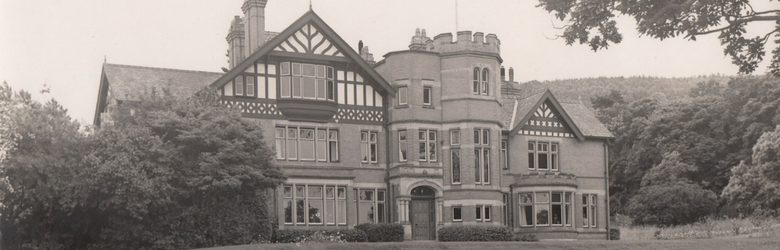
    On Saturday 9 June from 11.00am – 3.00pm at Gwyrch Castle, Abergele the public is invited to an afternoon of fascinating free heritage exploring the links between Tan Y Bryn residential and holiday home in Abergele, North Wales and the 120 year old charity Disabled Living, formerly the Cripples Help Society.

    From the late 1940s until the early 1980s, the Manchester based charity ran holidays and residential care for disabled people, working closely with the businesses and community of North Wales. Wales: Tan Y Bryn was a residential and holiday home for disabled adults in Abergele and White Heather in Old Colwyn provided convalescence holidays for disabled children. Trips were also made to Llandudno and Rhyl for groups of adults.

    Individuals, community groups and businesses from North Wales helped to raise funds, gave their time through volunteer support for day trips and entertainment, worked as staff or provided essential services for the charity.

    Such organisations included the Abergele Women’s Institute Choir, the Red Cross, Round Table, Lions Clubs, Sun Valley Camp, the Ladies Circle, James & Beardmore Auctioneers, Williams’s Boot Stores (Abergele) and Norwest Heating (Colwyn Bay). The local Mothers Union, Young Wives and the Licenses Victuallers Association helped to set up a shop in Tan Y Bryn for the residents.

    Since losing the majority of its records in a recent fire, the charity has been working towards rebuilding its heritage and is keen to hear from people in North Wales who remember Tan-Y-Bryn or White Heather or other holidays.

    People outside White Heather
    People outside White Heather

    The charity invites people to come along, share a panad, chat about their memories of this heritage or simply enjoy the images of North Wales from previous days.

    Debra Evans, Disabled Living’s Chief Executive said:

    The story of Disabled Living is the story of the people who were involved with the charity from the disabled people who used its services to the volunteers who helped to ensure that the holidays created special memories for both children and adults. People’s memories are what bring the charity to life and we want to have a chance to celebrate and thank the communities in North Wales who helped the charity deliver its services.

    Diane Woodrow, Education Officer at Gwyrch Castle said:

    It’s wonderful to bring part of Abergele heritage into the castle, states. The links between Disabled Living and the local area go back a long way and capturing those stories is an important part of the locations histories.

    The day is part of a larger project supported by the Heritage Lottery Fund

    People who are prepared to share their stories, or any photographs or materials they might have about Disabled Living’s heritage, are asked to contact Debra Evans at Disabled Living on 0161 214 5959 or email debra.evans@disabledliving.co.uk. No stories or images will put into the public domain without the written permission of the individual involved.

  • 5 Days Out Near Changing Places to Enjoy in the Sun

    5 Days Out Near Changing Places to Enjoy in the Sun

    This blog post has been written by Sarah Colley from Felgains Care Equipment & Mobility for Disabled Living. They offer a range of mobility and independent living aids that can help you get out and about this summer. 

    Hallelujah! The sun has taken its hat off and it finally feels like the long, wet winter finally might be behind us. As the days get longer and warmer, our thoughts have turned to swapping the rain coat for sunglasses and getting out there.

    So, we’ve compiled 5 ideas for days out in the fresh air – all of which are accessibility-friendly and within a 15-minute drive of a Changing Places facility. Get planning those outdoor adventures and make some memories!

    Scarborough Sea Front and Open Air Concert

    Perhaps one of England’s most recognisable seaside towns, Scarborough conjures images of fish and chips, sandy toes and traditional amusements. And no wonder. Scarborough has been one of the UK’s most popular coastal escapes for almost 400 years. Today, Scarborough is an accessible destination that everyone can enjoy. The seafront has been awarded the maximum 5 stars for disabled access, with a three-and-a-half flat surface running parallel to the sea.

    For those feeling adventurous, the sandy bay is accessible via ramp, and as the tide comes right in twice a day, the sand is reasonably compact.

    If you fancy a bit of culture after your seafront stroll, Scarborough’s Open Air Theatre offers concerts with a difference. Stars topping the bill in 2018 include Lionel Richie, Gary Barlow, Noel Gallagher’s High Flying Birds and Britney Spears, to name but a few.

    The venue boats a disabled area with space for wheelchairs and seats for accompanying carers, as well as accessible parking spaces, ramps, and accessible toilets.

    Closest Changing Places

    Castle House
    Elders Street
    Scarborough
    YO11 1DZ
    United Kingdom

    (A 3-minute drive from Scarborough Open Air Theatre)

    The Street
    12 Lower Clark Street
    Scarborough
    YO12 7PW

    (A 5-minute drive from the centre of South Bay Beach)

    Forest Adventure at Cannock Chase

    If you go down to the woods today, you might get a big surprise. No, not a teddy bears’ picnic, but all-terrain “Tramper” mobility scooters, miles of waymarked accessible routes, and stunning scenery to boot. Cannock Chase is Staffordshire’s only Area of Outstanding Natural Beauty, but in this case, quality really does trump quantity. The 4.5 square mile area packs in enchanting woodland, open heathland and wonderful wildlife, including a herd of around 800 fallow deer.

    There’s also plenty of history, including German and Commonwealth war cemeteries.

    Closest Changing Places

    Rugeley Road
    Hednesford
    WS12 1QR

    (Around a 10-minute drive, from the centre of the Chase)

    Wildlife Wetlands Trust Slimbridge, Gloucester

    Perched on the banks of the River Severn, WWT Slimbridge is a watery wonderland that’s open to all. From flamboyant foreigners, such as the fuchsia-feathered flamingos, to more secretive native species – there’s lots to see and do. Get to grips with slippery characters with an amphibian handling session, check out the cheeky otters at feeding time, or relax in one of the many bird hides. Most of them are step-free, and the paths around Slimbridge are reasonably level.

    There are plenty of manual wheelchairs available to loan, plus several mobility scooters. Alternatively, you could opt to board a wheelchair-accessible Land Rover safari to explore the site by car.

    Closest Changing Places

    The Pulse, Dursley
    Castle Street
    Dursey
    GL11 4BS

    A 15-minute drive from the WWT

    Farmers Market, Aberystwyth

    Nothing quite beats the hustle and bustle, sights and sounds of a famers market. However, tightly packed-in stalls and cobblestones can sometimes rule them out as accessible options for a day out. However, the home of Aberystwyth’s market, North Parade, features plat pavements with plenty of dropped curbs. Leaving you to focus on getting as many free samples as possible…

    Launched 18 years ago, this bi-monthly market presents foodie heaven, with up to 30 stalls touting a wide range of local produce, from cheeses to whisky. And if you’re not too full after a few hours savouring the local fare, why not take a 45-minute drive down the coast to New Quay, where you can hop on a wheelchair-friendly pleasure boat. You might even spot a dolphin or two!

    Closest Changing Places

    Welsh Assembly Government
    Rhodfa Padarn
    Aberystwyth
    SY23 3UR

    (A 5-minute drive from North Parade)

    Kew Gardens

    Did you know that Kew Gardens is a UNESCO World Heritage Site? In fact, it’s London’s largest. The history of the gardens can be traced all the way back to 1772, when the two royal estates of Richmond and Kew were combined.

    Today, Kew is recognised internationally as a leader in botanical research, and the gardens offer wonderful spaces in which to feed your curiosity or simply unwind. Blue badge holders can park free of charge, and there are several mobility scooters that are free to borrow.

    If you’d like some expert assistance while exploring the gardens, there are a variety of guided tours that have been designed specifically for visitors with disabilities, including BSL walking tours, health walks for people living with dementia, and sensory tours for people who are visually impaired.

    On your travels around the grounds, you’ll discover the world’s biggest Victorian glasshouse. Re-opening on the 5th May after a 5-year renovation, the temperate glasshouse houses some of our planet’s rarest and most threatened plants. There’s also a Japanese landscape, tree-top walkway, and a magnificent 17-foot structure designed to provide insight into life in a beehive.

    Changing Places on site

    But these are just our suggestions! There are lots of brilliant accessibility-friendly options out there. And if you ever have any questions about choosing a suitable mobility aid for your adventurers, the team at Felgains will be happy to help.

  • New Finance Prices for Bariatric Training Mannequins Confirmed

    New Finance Prices for Bariatric Training Mannequins Confirmed

    This is a guest blog written by Chris Jarratt for Disabled Living.

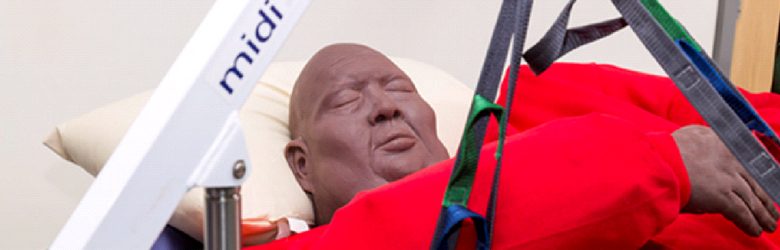
    Bariquins can now announce the finance-assisted rates of ‘Barry’ and ‘Benny’ and their accessories, like clothing and storage boxes. The lease/hire and hire/purchase options can help spread the cost of obtaining a single or multiple mannequins.

    For the basic Bariatric Training Mannequins, the lease/rental finance payments are calculated at just £197.67 + VAT over 24 monthly payments. There’s also a document fee of £180.
    For hire/purchase, the finance payments for the basic Bariquin amount to just £197.67 over 24 monthly payments. There is also the document fee and the fee for the option to purchase too. The deposit of £840 takes care of the VAT.

    As previously reported, the finance option is offered by Arkle Finance Ltd (AFL) who are authorised and regulated by the Financial Conduct Authority.

    They have pre-approved the Bariquin for credit which makes the process of applying for finance for Barry or Benny a simple and straightforward process.

    arkle finance limited logo

    Although it may be quicker and easier to use AFL, organisations and individuals are free to use their regular finance provider. However, you will have to get your financier to approve Bariquins Bariatric Training mannequins for credit purposes first (as Arkle currently charge around 6.5% interest, you’ll also find that they’re pretty competitive anyway).

    For those that may have missed it, here’s a bit of info about Arkle themselves

    They are a funding company specialising in Asset Finance and Leasing. AFL were established in 1997 and are based in the UK, in Northamptonshire. They formed with the purpose of helping organisations large and small, as well as private individuals, to obtain the equipment & vehicles they require. They fund a diverse range of equipment, from coffee machines to wind turbines. And now, Bariquins!

    We must reiterate that Bariquins is not a credit broker and we only refer customers to AFL for the credit facilities. Bariquins simply take your details and find out your requirements, then pass those details to Arkle. They will then call you directly and handle all the explanations and paperwork that go with the finance provision. So, give us a call now and find out how we can help you on: 0161 464 6160.

  • Exploring the British Countryside from a Wheelchair’s Seat

    Exploring the British Countryside from a Wheelchair’s Seat

    This post has been written by Lucy Wyndham for Disabled Living.

    England has a countryside that is both beautiful and accessible. Though many worry about wheelchair accessibility, in recent years numerous innovations have made exploring the British countryside easier than ever. While many have adapted the natural landscape to be easier to navigate, others still have used ponies and other tricks to do the same without damaging the local landscape at all.

    From the north

    Exploring the natural environments of Britain can mean seeing some of the oldest and grandest historical sites, from the two-thousand-year-old Hadrian’s Wall to ancient and Danish architecture along the countryside of Northumberland. The rolling hills and fields of Britain are considered iconic, providing a natural experience that both old and young alike enjoy.

    It is no boast to say the natural environments draw many. Film crews for movies as famous as Harry Potter and Downtown Abbey have rented vast swathes of land to place their viewers in a location with an otherworldly atmosphere. In Northumberland, home to Britain’s most northern park, tourist information centres offer accessibility information, and all local trains have been adapted for wheelchair accessibility.

    Meanwhile, the areas historic value means that many existing buildings offer an excellent look into the area’s past, such as the Roman Army Museum. The museum is right next door to Hadrian’s Wall itself and provides many opportunities to go outside and explore the local landscape on your own behest to see historical ruins and structures in their native environment.

    To the south

    Meanwhile, in the South Downs of England, some people have taken an innovative and different approach. To avoid pouring concrete or other nature destroying materials, they’ve begun offering a service that pulls wheelchair users in chariots designed to take them up even rocky slopes. This gives wheelchair owners access to a nearly one-hundred-mile trail through nature.

    Additionally, many beaches from Bournemouth to Brighton offer wheelchair accessible cabins and rental spaces. With the South Downs nearby and the Surrey Hills Area Of Outstanding Beauty just a little bit further away, there are plenty of options for lodgings close to nature and several wonderful places to see in the British countryside.

    Next time you consider where to take a nature-themed outing, consider the beautiful British countryside. You may prefer the accessibility provided by non-traditional means of transportation, like the proud ponies of the south, or the more casual accessibility offered by the parks and trains of northern Britain. Both of these and more offer unique ways to ensure that you have few reasons to believe disability can separate you from the great outdoors.

    You might also like…

    Have you heard of Mobility Solutions? They offer hundreds of mobility aids online and instore.

  • Learn About How the Turna by Accora Works

    Learn About How the Turna by Accora Works

    This is a guest blog by Angela Sutherland, Training & Development Assistant at Accora. Angela got in touch with us firstly to introduce herself. And secondly, to tell us all about Turna and how it works. As Accora are part of our Supplier Directory, we thought this would be a great opportunity to spread the word.

    What is the Turna?

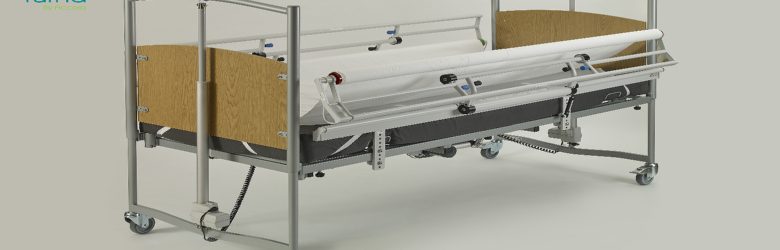
    Turna, as an in-bed patient turner, is a unique combination of a powered turning sheet and two bed rails. The system is controlled using a handset which rotates one roller at a time, causing the sheet to turn the person lying on it. This reduces the strain of turning a person as it is no longer just a manual task but a task that is controlled at the press of a button. Click here to see videos about how Turna works.

    Turna Benefits

    1. Increase service user dignity and comfort when being turned
    2. Enables one carer to turn a service user in bed
    3. Reduce the physical effort and strain for carers

    angela staff photo accora
    Angela Sutherland, Training & Development Assistant at Accora

    With so much pressure on Adult Social Care and the budgets being a main focus, we wanted to make sure we have made you aware of the potential savings that are associated with using our Turna product and if we can help you out with this product in 2018.


    How is incontinence managed?

    For incontinent users, we recommend placing an incontinence sheet under the patient. This will reduce the need to change the turning sheet so regularly. If soiled, the turning sheet will need to be changed just like a normal bed sheet. Make sure the incontinence sheet is not rolled on to the Turna rolls.

    What beds does it fit?

    The Turna fits most community profiling beds. The technical specification of the bed must comply with EN 60601-2-52 and can be only mounted on beds with square side bars on the lying surface. Please get in touch and we will happily come and try the system on your bed.

    Do all the profiling functions still work as normal with the system?

    Yes. As long as you loosen the turning sheet before using the profile functions.

    Can you use air mattresses with the system?

    Yes. When using the alternating air mattress, it is recommended that it is turned to “auto firm” or “static” with max pressure before turning a service user to ensure less friction and greater comfort for the client.

    Is it easy to change the sheet?

    Yes. Just the same process as changing a normal bed sheet – however you must detach a sheet from the turning roller and then attach a new one – meaning you have two sheets to tuck under the service user not one. You have the soiled or old turning sheet and the new turning sheet.

    Is the sheet washable?

    Yes, both the slide sheet and the turning sheet can be washed at 95 degrees and machine dried at a low temperature.

    For more information visit the Turna website or watch these videos.

  • Mum Creates Playgroup to Connect, Support, and Thrive Inspiring Inclusion

    Mum Creates Playgroup to Connect, Support, and Thrive Inspiring Inclusion

    The idea of ‘Jolly Josh’ months ago was ‘pure imagination’. A chain of events would lead me to realise that there was a gap in the system; the solution would become Joshua’s legacy. 

    We have a large, loving, supportive family who were with us every step of Joshua’s Journey. And we also have a wonderful network of friends. Yet I still wanted to meet someone ‘living’ a similar situation. At the time we knew that Joshua had suffered from ‘extensive brain damage’, we knew that his milestones would differ from other children’s. We had 20+ professionals supporting us. We knew that we were submerged in to a world of special needs and that we’d do everything we could to support Joshua to reach his own potential. At this point, we were unaware that Joshua’s condition was ‘life shortening’.

    I met one particular mum at a baby class that I took Sophie and Joshua to. Her daughter also had an NG (Nasogastric Tube), the first child (other than Josh) that I had met with one. I instantly struck up conversation, I had a million questions to ask, and I was excited that Josh would know that he wasn’t the only child with a feeding tube up his nose. Now, this mum comes to Jolly Josh and we have become friends.

    I attended an event for parents and carers of disabled children in 2017. It was a brilliant event with lots of professionals providing information about their services. I had just been granted reduced hours, stepping down from full time work to part time, to be with Joshua and attend appointments, etc.

    I visited each stand in the hope to find services that would help Joshua and our circumstances, sadly they were minimal.

    parents with josh and his sister

    We already had a play worker, other than this nothing applied to Joshua as he was under 4 years of age. Services seemed to come in to place when children started school and I didn’t want to wait until then to meet other parents/carers in the same situation. I wanted to access as much as I could before then to help Joshua to develop and reach his potential and I also wanted to meet other mums. I was left feeling extremely disappointed, that’s most definitely not meant with any disrespect! This is when I knew that Jolly Josh was going to make an impact.

    When I began to vocalise my idea of Jolly Josh ‘Stay and Play sessions’, the notion was very misunderstood. Some thought of it as a ‘respite’ session. I was actually told ‘I never left my child.’ You can imagine my response to that; I had worked full time up until very recently. Did this comment mean that are parents/carers of disabled children are expected to abandon careers or have the finances to stop working? Also, this remark was a huge detriment to the value and importance of respite.

    In addition I was told it was believed that children of preschool age were at home with their parents. Mine hadn’t been as I worked. Yet now that I worked part time did that mean I was to stay indoors, hidden, adding to the isolation of having a child with complex needs?

    I approached Joshua’s care team, his Consultant Paediatrician, his nurses, his Health Visitor etc. And they were all incredibly enthusiastic. I asked if they’d consider being trustees if I was to create a charity. They happily agreed.

    Over Easter Joshua’s health began to rapidly decline and in May 2017 we were given the devastating news that he had ‘weeks if months until he found peace.’

    I gave up work and became Joshua’s full time carer; I was now a ‘stay at home’ mum to both my babies. Though we didn’t stay at home very often. We were out and about making as many memories as possible!

    We went on to spend a lot of time at Manchester Children’s Hospital and stayed at Derian House Children’s Hospice on many occasions. During this time I met another mum. We discussed the many challenges facing our children, their siblings and our family. For example, required yet expensive home improvement changes, the need for public Changing Places, etc. Sophie enjoyed playing with her daughter and I realised that she also would benefit from meeting other ‘young carers.’

    This (for me) verified the need for Jolly Josh

    During this time I also focused on Jolly Josh. I planned a timetable of professionals to attend each week, also planning weekly educational and sensory themed sessions. And I acquired toys, seating aids and resources. I broached Mrs Fierro at Springside School who was fully supportive of the concept of Jolly Josh, so much so that she gained permission for our sessions to be held at Springside School.

    Joshua passed away on 27th August (8 months ago), exactly a month before we were due to open Jolly Josh. I knew that we had to continue. It was perhaps a distraction but it became a positive focus. I planned a very successful open day which I had many volunteers to thank for! The day was incredible but Joshua’s physical presence was very much missed.

    I am incredibly proud of what we have achieved in such a short space of time. Our sessions have been very informative, a wide range of professionals have provided advice to parents/carers. We have worked closely with Springside School to introduce children who will be future pupils. We have set up a lovely peer support group; parents are making good relationships, exchanging ideas, concerns and experiences. In addition, our children are making friendships and thriving, their siblings gaining support too.

    Children play alongside one another, inclusively, some questioning, for example, “Why does that boy have a tube up his nose?” and learning children are all different and that’s what makes them all special. We are creating an awareness of our children’s differences in a safe and secure environment, hoping to educate the community and promote inclusion.

    I have many dreams for the future of Jolly Josh. And I am hopeful that we can ‘Connect, Support, Thrive and Inspire Inclusion.’

    To learn more about Jolly Josh please visit their website. You can also follow them on Facebook and Twitter.

  • Home and Life Modifications for Disabled Parents

    Home and Life Modifications for Disabled Parents

    This is a guest blog written by Ashley Taylor. She offers her advice on the challenges that disabled parents can face. 

    Having a baby is one of the most exciting times in a person’s life. You’re getting to know a new person who depends on you completely. And they will grow up to be an independent human being. How amazing is that? If you have a disability, parenting comes with an extra bit of challenges that you have to learn to overcome. But you can. And you will!

    If you have a disability, you’ve likely already modified your home to accommodate your needs. But with a baby on the way, you’ll probably need a few extra accommodations. You might need to make extra modifications to your home and life so you can get around with a baby in tow.

    Consider consulting an occupational therapist. OTs are especially trained to help people live their lives independently. An OT can take a look at your life, your abilities and needs, and she can work with you to help make modifications or give you special exercises that can help. She can also recommend new ways to handle child care that you might not have thought of, such as ways to put baby in a car seat or adaptive ways to carry the baby.

    Hire a contractor

    Look for a contractor who is experienced in home modifications for people with disabilities. A contractor with experience in disability modifications can discuss your needs with understanding and work with you on what needs to be done. You may need extra ramps to get in and out of your home, expandable hinges for doorways, skid-resistant flooring or more.

    Paying for it

    Many states, cities and organisations offer grants and special loans for people with disabilities to get modifications made in their homes. You can also have fund-raisers and ask friends and family for help in getting ready for baby. If they can’t pitch in money, they might be able to offer their elbow grease and potential babysitting.

    Adaptive furniture

    baby's room with clothes

    You’ll need a crib, stroller, changing table and more. Luckily, there are more options these days than ever before for adaptive parenting. You can find bassinets that attach to the side of your bed, cribs with side-opening doors, adjustable cribs and baby beds and even strollers meant for parents with disabilities. You can even consider hiring someone to adapt a piece of furniture for you, or find a non-profit that can help you for free.

    Ask for help

    Nobody can raise a baby on their own without the help of others in their lives to offer support and encouragement. So, don’t be afraid to ask for help if you need it. You’re responsible for another person’s life. So being a martyr isn’t going to help anyone. Ask your family, friends, other parents or anybody who can help you get what you need. Your baby is worth it.

    Once you have your baby in your home, you’ll be amazed at how she will change your life. Yes, you should be prepared to get little or no sleep and experience the same stress that other parents endure while raising a child. But the love you’ll have for your little one will knock your socks off. You’ll be so amazed at your child’s ability to bring out the best in you, that you won’t remember what it’s like to not be a parent. Watching your little person grow into an independent adult will remind you that life is amazing. And you won’t want to miss a single second of it.

    For more stories like this please visit the Disabled Living blog. Or if you would like to share a story of your own offering advice to disabled parents then please contact us via email: info@disabledliving.co.uk

Disabled Living