Tag: accessible

  • An Exciting Year Ahead for Changing Places

    An Exciting Year Ahead for Changing Places

    This is a guest blog by Rise Adaptations for Disabled Living.

    The campaign for an increased number of Changing Places toilets to be installed across the UK looks set to have a great year, following on from several key campaign successes in 2020.

    Changing Places toilets are a much-needed facilities for people whose needs can’t be met by standard accessible toilets. Featuring adult-sized changing benches, these remarkable bathrooms are the difference between someone with severe disabilities being able to enjoy a day out, or never having the chance to participate in activities many take for granted.

    For people with complex disabilities, the lack of suitable bathrooms has long been an issue – there are many accounts of people sacrificing their dignity and privacy having to be changed on the floor of public bathrooms. They enable so many more people to participate in society in a dignified and humane way.

    Founded in 2006 the campaign has so far had great success increasing both awareness of the issue and the number of facilities.

    There are now over 1,500 registered Changing Places across the UK, but 2020 saw two huge announcements regarding funding and legislation which are set to take effect this year, making a difference to the lives of so many.

    New Year, New Regulations

    One of the most exciting developments for Changing Places – and a major win for disability campaigners – are the changes scheduled to be made to Building Regulations.

    The amendments made to Approved Document Part M, Volume 2, non-domestic buildings, effective now, mandate the inclusion of a Changing Places toilet in specific types of new buildings and buildings undertaking major refurbishment.

    After a consultation process with campaigners and users alike, the Government ruled that the previous regulations, which only mentioned a Changing Places toilet as ‘desirable’, were not sufficient to meet the needs of the most vulnerable.

    Although existing spaces can be adapted to include a Changing Places toilet, the mandatory inclusion of these bathrooms in Building Regulations mean new buildings and attractions will be inclusive of those with severe disabilities, right from the start.

    The amendments to Approved Document Part M mean a Changing Places toilet must be installed in newly built assembly, recreation, and entertainment buildings with a capacity for 350 or more people, shopping centres, leisure centres, and hospitals.

    ‘Assembly, recreation, and entertainment buildings’ includes a wide variety of venues including cinemas, museums, and educational facilities such as colleges.

    Options for Existing Buildings

    The new regulations are greatly welcome and will change the way public spaces are designed to include those with greater needs. But what are the options for existing buildings?

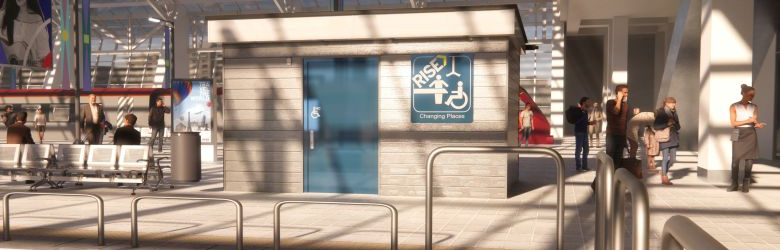
    Most Changing Places toilets are either modular buildings or adapted spaces – the modular option being particularly popular in outdoor locations, such as theme parks and zoos.

    Modular Changing Places providing a safe, hygienic space for visitors to attractions that previously had no provisions. Built offsite and craned into position, modular toilets typically come fully equipped with adult-size changing bench, hoist, and enough space for a user, plus two carers.

    For buildings with the required internal space (12m2), internal adaptions can also be carried out as turnkey service, with both the building work and installation of specialist equipment delivered simultaneously.

    Funding

    Historically, the issue most businesses have encountered when it comes to installing a Changing Places toilet is the financial implication. Costs can be prohibitive for many organisations, particularly public bodies, and charitable organisations. Many existing Changing Places toilets have been installed through a mixture of public fundraising and ad-hoc grants.

    The Government did fund some installations last year across NHS properties and motorway service stations but went further on their promise to do more by pledging an additional £30 million for Changing Places in the 2020/21 budget.

    It is yet to be seen how and where this budget will be allocated, but it guarantees a new period of expansion for Changing Places this year thanks to the additional funding businesses will be able to apply for.

    To learn more about the campaign and see how you can help, please visit the Changing Places Consortium. For further information about design and installation, please visit riseadapt.co.uk

  • Living Changes to Help People Stay Safe and Independent at Home

    Living Changes to Help People Stay Safe and Independent at Home

    This is a sponsored post written on behalf of Agincare.

    As we get older, some of the daily tasks we used to find easy to carry out and take for granted may not be as straightforward anymore. Whether it’s reaching up to find something in a cupboard or making a cup of tea, it’s inevitable that as we grow older in age, our mobility and health can be affected. Although this is something a large number of people are faced with, it doesn’t mean you’re no longer able to live independently and safely.

    Being independent is something we all appreciate, no matter how young or old we are. It’s inevitable that having our independence taken away from us can negatively affect our lifestyles, so it’s important to prevent this. In later life, health issues such as hearing impairments and more severe problems like Alzheimer’s disease become more common, but there are a number of ways individuals who have these problems can still live independently.

    As part of their latest campaign, Agincare wanted to share some simple changes which can be made around the home, for people with some of the most common health issues in later life. Five floor plans have been created and outline how it’s still possible to live independently and safely, even if you have issues such as frailty and Dementia.

    Below are a few examples from the Agincare campaign.

    Dementia

    For someone living with Dementia, their own home is a place of safety and comfort. It’s widely known that Dementia affects people’s memory, so it’s important to take this into consideration if a family member has the illness and wants to live alone.

    To begin with, as Dementia can make people forgetful, it’s important you make sure they can come to no accidental harm. It’s a good idea to fit overflow plugs wherever there are taps, such as in the kitchen and bathroom; which will prevent the risk of flooding. If your friend or relative often tries to leave their home, then sensor alarms are a great way to alert you when this is happening, which then means you can check if they’re ok and need any assistance.

    Visual impairment

    When having a visual impairment, living alone can be challenging, but this doesn’t mean it can’t be done. A number of simple changes around the home can go a long way in this case and they don’t have to come at a price.

    It’s important that during the day, as much natural light is brought into the home as possible. Using different textures for items of furniture and other commonly used products will allow people to easily distinguish where they are and how to safely move around. Bright colours can often help individuals with visual impairments, so opting for contrasting colours when it comes to furniture can make objects become clearer.

    Frailty

    As we grow older, frailty is something we will all experience, but again, simple changes around the home can ensure we live safely and independently.

    Falls are a lot more common for people in later life, so it’s important to minimise any risks as much as possible. Making sure furniture is spaced out means there are no narrow gaps you need to manoeuvre through. Reaching up to find things in cupboards can also result in falling or other types of injury, so it’s wise to put storage boxes on top of units to make life that little bit easier.

    After looking at Agincare’s floor plans and the changes they have suggested, you can start to see that people with health issues can live safely and independently. Whether it’s fitting sensor alarms or making sure furniture is spaced out as much as possible, a number of simple changes can make someone’s life more safe and secure.

    We want to know what you thought of the points mentioned and the floor plans Agincare have created. Join in the conversation on social, using #HomeForTheElderly.


    If you would like to feature on Disabled Living’s blog please send an email to: info@disabledliving.co.uk

  • How Motability Cars Cater for Drivers and Passengers with Disabilities

    How Motability Cars Cater for Drivers and Passengers with Disabilities

    This is a sponsored post written by Stoneacre Motor Group.

    The Motability scheme is relatively unknown to many in Britain, but for more than 600,000 of us, a Motability vehicle is life changing. You probably already see Motability vehicles every day even if you may not realise so and you may certainly know someone who already benefits from the use of one.

    Motability is an extensive collaboration between the charity sector, the Government and the automotive industry. As a charity-led organisation, Motability that has helped millions of people across the country gain access to a car, mobility scooter, or motorised wheelchair. And they continue to do so with more than half a million people currently on the scheme.

    The scheme is open to any citizen who receives one of four higher rate mobility allowances from the Government, who are able to exchange their benefits with the Motability charity to lease mobility equipment that can help improve their independence and standard of living.

    How Does Motability Work?

    Anyone who currently receives any of the four higher rate mobility allowances are eligible to apply for the scheme and lease a vehicle. These rates include disability living allowances, personal independence payments, and other supplements for war pensioners and Veterans.

    The scheme is simple in how it runs. Claimants are able to exchange their cash allowances with the Motability charity who in turn provide a lease vehicle of their choice. Motability are then paid every month by the Department for Work and Pensions who deduct the cost of the lease from the mobility allowances of the claimant.

    The cost of the lease includes all tax, insurance, breakdown and servicing costs, which are taken care of by the charity at limited expense to the claimant. Its effectively a ‘just add fuel and drive’ kind of deal, which typically last anywhere between 3 to 5 years before the equipment must be returned or the lease extended.

    Claimants are able to choose what to spend their allowances on, whether that be a mobility scooter, motorised wheelchair or a Motability car. Those that only travel short distances tend to favour a scooter or wheelchair, with others who need to travel longer distances opting for a car that has special adaptations for disabled drivers and passengers.

    What Cars are Available on the Motability Scheme?

    The majority of major car brands all offer some of their models on Motability, which means there’s a great choice of cars on offer. From compact SUVs and 7 seater family cars, to chic city-cars and hot hatchbacks, there’s plenty to look out for.

    Motability cars come available with a whole range of adaptations that can be made to improve the utility of the vehicle for disabled drivers and passengers.

    You can apply through a Motability dealer who are registered dealers for the charity. Motability dealers help claimants with their application for their scheme as well with their search for a car.

    Adaptations are made to the vehicle to improve the general use of the car and for some people it can mean they don’t require any assistance to travel. For others, adaptations can simply just make a car much more feasible to use, especially for wheelchair users or paraplegics.

    motability accessible vehicles in the showroom

    What Adaptations are Available to Disabled Drivers or Passengers?

    A Motability car can be driven by a nominated driver, which is especially the case for disabled children or for other people who are unable to drive. This means that some may require adaptations as a passenger and others require adaptations as a driver. Both are available on Motability.

    The three categories for Motability adaptations are seating & stowage, driving controls, and access. Driving controls change how the vehicle is driven to cater for drivers who may have limited or no use of their legs and feet. Adapted driving controls include hand controls for braking and acceleration, pedal modification and steering aids, which are all more than often fitted to an automatic car.

    Changes to the seating and stowage of the vehicle can be made to cater for both drivers and passengers who use the vehicle on a daily basis. Motability cars commonly feature altered boot space and storage facilities to carry personal mobility equipment, plus mechanical hoists to load wheelchairs or scooters into the boot or roof-rack facility.

    The third category of adaptation is for access. Adapted access help disabled people enter and exit the car through the front or back doors. Motability cars can be fitted with manual and electric lifts to load people and equipment in and out of the cars. Adapted access can fit transfer plates, electrical hoists and swivel seating to the car.

    All adaptations are made available when applying for a Motability car. The Motability dealer will assess your position and they will be able recommend the necessary adaptations to the car you’ve chosen. What’s more, Motability provide more than 500 different adaptations and many of them are available at no extra cost. You can check your eligibility online now.

    If you would like to feature on Disabled Living’s blog please get in touch with us via email: info@disabledliving.co.uk

  • Accessible Iceland: Chris’ Holiday Blog

    Accessible Iceland: Chris’ Holiday Blog

    This blog was written by Chris Cammiss, Disability Trainer and Advisor at Disabled Living.

    I thought I’d push the envelope a little bit this time, so instead of heading for some late season sun in Lanzarote or the Seychelles I planned a trip to Iceland. 

    Of course, my expectations were of snow drifts, misty breath, icy pavements and multiple layers of clothing, so I went fully prepared. 

    How wrong can you be?

    Although we were travelling in late September last year, I encountered hot – yes, hot sun and generally comfortable T-shirt weather. In fact, I only wore a light coat on one evening. 

    The Accessible Hotel

    We booked a four-night weekend break based in the capital of Iceland, Reykjavik. We’d done our research in advance and my partner had found a holiday company which specialised in disability. The owner, who had already worked for a holiday company became seriously disabled after a car accident and decided to start up his own specialised organisation. They were able to book a suitable hotel, plan a couple of day-long excursions and advise on restaurants, activities and attractions. Alternating with free time in the city, this made for a busy but comfortable break. 

    The hotel was superbly located at the edge of the city centre, the hotel room was spacious and very comfortable, and the bathroom had a bigger than average shower room.  

    The concept of accessibility is very well understood in Iceland, but some practical interpretations differ to ours, so the shower room had only one tiny grab rail and an emergency cord but no shower seat. There was no foot recess under the sink at all. 

    The toilet was low with no support rails at all. Remember to contact the hotel and ask specific questions. 

    Exploring Reykjavik

    I loved the atmosphere of the city – a very hippy/indie/multi-cultural vibe – not a big city feel at all. Great mix of old and new. The new, often large buildings were fully accessible, older ones usually had ramps so were a delight to explore. Being the capital city, there were the usual huge cultural buildings, but many of the original, quaint streets were still intact. 

    During the day the whole scene was overlooked by the impressive modern cathedral, shining white at the top of the hill, in the evening you look for the food and the jazz. 

    The countryside is extremely mountainous – dramatic and atmospheric. Lots of lakes, glaciers and fiercely flowing water. There is a lot of green but most of that is lichen. 

    Our tours took us to spectacular spouting geysers, hot, boiling mud pools and dramatic waterfalls. You can see why Iceland is such a popular country for filmmakers  it’s perfect for any Lord of the Rings or Game of Thrones spin-offs! We were very well looked after by Siggy – our personal guide/driver for two full days, with his fully accessible vehicle. 

    The Blue Lagoon

    have to mention the Blue Lagoon. This is a very famous tourist attraction built around pools filled by natural hot springs where you can swim, sit or float in salty water at close to body temperature. So, I arrive in my expensive wheelchair and ask how I can get in? Well, we will transfer you to our special plastic wheelchair, which they did in their fully accessible changing room with the help of two lifeguards. At the poolside they indicated where my ramp descended into the water. I realised immediately that it was quite steep and I would have difficulty maintaining control –no problem said two female lifeguards we will help, we have swimsuits! Off they went to change and away we went 

    Iceland Blue Lagoon

    The Food

    I had certain expectations of the food available – I’d been told about marinated, buried, foul smelling lamb dishes for instance. I knew there would be excellent fish but expected very little meat and vegetables. The reality is very different. Lots of fresh local fish – the best fish and chips – great lamb stewsplenty of vegetables and fancy salads. Many local specialities as well, such as puffin, shark and (unexpectedly) horse meat, which were all extremely delicious and a complete surprise.  

    The Aurora Borealis

    The Aurora Borealis (Northern Lights) of course should be the highlight (!) of any trip, and here we were very lucky. You should go in the winter months to give yourself a good chance but there are absolutely no guarantees. For us the very high quality, detailed weather reports (low cloud, medium cloud and high cloud levels) suggested two of our nights gave a very high probability of a spectacular show and one of those nights really delivered. Everyone moved down to the bay – nearby street lights switched off – and watched. The show was tremendous with colours, swirls, movement and drama – breathtaking display moving across the whole sky. The best vantage point was around the “Sun Voyager” a huge, stylised Viking longboat sculpture jutting out into the sea. You chose your spot and just marvelled. 

    The second, highly recommended night – absolutely nothing. You can’t ever be sure. 

    This trip more than ticked all the boxes and I will definitely go back to Iceland. I’ll make sure it’s in winter so there’s the best chance of seeing the lights, and, as always, I’ll do my research. 

    Happy travelling, 

    Chris 

  • Best Accessible Days Out in Greater Manchester

    Best Accessible Days Out in Greater Manchester

    This is a guest blog for Disabled Living, written by Patricia McCartney.

    Are you looking to find accessible days out for you and your family? Supportability have got you covered! Whether you’re looking to keep the kids busy over the summer holidays or just want to make the most of the weekend. 

    This blog post starts with detailing some of the best accessible days in Greater Manchester. Further into the blog post there is information going to look some accessible days out across the rest of the UK.

    Best Accessible Days Out in Manchester

    iFLY Indoor Skydiving, Manchester

    If you’re looking for an adrenaline pumping activity try visiting iFLY Manchester. The staff are experienced in dealing with disabled people using their facilities, and encourage visitors with physical disabilities to try indoor skydiving.

    The best idea is to contact the centre in advance so they are aware you are coming so they can make sure to allocate the time and attention needed. With this in mind if you can book on weekdays when the centre is less busy, we would recommend doing so.

    In terms of parking you have three Blue Badge Spaces in the car park that are near the entrance. The building itself is fully accessible, all levels are connected with good size lifts, with three accessible toilets available.

    When it comes to the activity itself one carer is allowed to enter the flying zone free of charge. However, in the flight chamber itself only the instructor will be with you at all times.

    Museum of Science and Industry, Manchester

    If you’re looking for a more relaxed and educational day out the Science and Industry Museum is a great option.

    The museum is spread out over five nineteenth-century buildings, which may initially put you off. However, the whole site is wheelchair accessible with smooth paths connecting the different areas.  There is also step-free access to all floors of their multi-level buildings.

    Wheelchairs can be borrowed (£20 deposit required) and the staff are very willing to help. All multi-level buildings are served by lifts, and most buildings have disabled toilets.

    The museum always has something on, and regularly provides special exhibits and events during half term weeks. So, it could be a great option for the kids.

    If you’re thinking of going check out https://www.scienceandindustrymuseum.org.uk/visit/facilities-accessibility so you can familiarise yourself with the museum and its facilities.

    The museum also offers free personal assistant/carer tickets for paid events and exhibitions. These are available to book online, by phone on 0333 241 4000 or in person on the day of your visit.

    Disability Cycling with Supportability, Stockport

    Supportability Wheelers project offers weekly cycling opportunities throughout the year for disabled and able-bodied adults, children & young people. The Project has a variety of adapted cycles to enable individuals of all abilities to experience and enjoy cycling.

    Over the past few years the project has supported nearly 400 disabled adults and 125 disabled children at Woodbank Park in Stockport. This is where UK Para-cycling Champion Katie Toft who has Cerebral Palsy started her cycling days.

    Many of the disabled children and adults who use the project have complex needs. The cycles are specially adapted, so everyone can join in and have fun, whilst getting some healthy exercise!

    Carers and parents can also drop in at Wheelers Café during the disability cycling sessions to meet and socialise

    Royal Exchange Theatre, Manchester

    Another laid back but fun night out is on the cards here at the Royal Exchange Theatre. The building itself is one of the most unusual theatre designs in the country, but this doesn’t stop it being accessible.

    The theatre has wheelchair spaces offering excellent, unimpeded views of the action, plus a lift providing level access to all floors.

    You can check out all the accessible performances at: https://www.royalexchange.co.uk/access

    Chill Factore, Manchester

    Chill Factore is actually home to Disability Snowsport UK. They provide adaptive skiing for individuals with any disability. By using adaptive equipment and specialist instruction and support they are able to cater for even those with very limited mobility.

    The entrance is approx. 10m-20m from the accessible parking spaces. The path leading to the main entrance is approx. 8m wide and made from levelled concrete. There is free on-site car parking available for all guests.

    There are 9 toilet blocks with each one having a disabled access toilet with non-slip flooring.

    You can find all the information you need on the link: https://www.chillfactore.com/plan-visit/accessibility/

    National Football Museum, Manchester

    If you’re planning a day out for some football fans, then the National Football Museum could be the perfect pick.

    The museum offers great accessibility to all disabled visitors. Lifts, ramps, and accessible toilets are common throughout the building.

    There’s seven levels of football heritage and memorabilia to be explored here. You can even listen to the historic commentary on some of the greatest moments in football.

    Visit the accessibility page of the National Football Museum for more information.

    Rest of the UK

    If you’re looking to travel a bit further there are some great days out you can have throughout the rest of the UK. These are our favourite picks.

    Cadbury World

    Perfect for those with a sweet tooth! During your visits you’ll learn about the history of Cadburys, watch the makers at work and, of course, eat chocolate!

    The disabled facilities are suitable for people with all needs. There are low-level desks, ramps, lifts, disabled toilets, tactile surface level indicators, large print guides and an infrared system for hearing aid users.

    You can find out more information on the Cadbury World website.

    Avon Tyrell

    All of the activities at Avon Tyrell have additional equipment to support those that need it.

    The hoists and adapted equipment used on site means that you can zip wire across the lake, climb our climbing wall, take part in tree climbing, shoot an arrow in Archery or canoe/kayak across the water.

    They offer over 40 activities to choose from. They even offer accessible adventures you can get involved with.

    You can find more information on the link below

    https://www.avontyrrell.org.uk/accessibility.html

    Other ideas

    Festivals

    confetti in the air at a concert

    If you’re looking something epic to do over the summer holidays a festival could be your answer. Some of the biggest festivals in the UK provide great access options.

    Checkout the ones below:

    Edinburgh Fringe festival accessibility

    Latitude festival accessibility

    Bluedot festival accessibility

    Greenbelt festival accessibility

    Zoos

    three lions in safari

    Days out at the zoo never disappoint. There are approximately 54 zoos and wildlife parks in the UK.

    The top 3 are worth checking out are:

    Whipsnade Zoo

    London Zoo

    Longleat Safari Park.

    Other wildlife parks that have been positively praised by disabled visitors include the Five Sister Zoo near Livingston, Yorkshire Wildlife Park.

    What are your favourite accessible days out in Manchester and the rest of the UK? Tell us on Twitter or Facebook.

  • 6 Accessible Travel Hacks for Wheelchair Users

    6 Accessible Travel Hacks for Wheelchair Users

    This blog post has been written by Stuart on behalf of My Baggage for Disabled Living.

    Finding accessible travel options as a wheelchair user can sometimes be frustrating and difficult. It’s impossible to prepare for every situation. All you can do is try and prepare as much as possible and give yourself a break, this is your holiday after all! We’ve put together six accessible travel tips to help ensure your trip goes as smoothly as possible.

    Before you book your flight

    It’s important to ensure that the airline you are travelling with has comprehensive information for passengers who are wheelchair users. Each airline policy will differ and if you are flying outside the EU you may not be covered by disability laws. Some airlines will have restrictions on the size of electric wheelchairs, so when in doubt always contact their customer services.

    If you need assistance both on and off the aircraft when you are booking your flight, tick the airport assistance checkbox. Every airport will have this service available, but the service will differ. When choosing your seat, some wheelchair users prefer the window seat to the aisle, as anyone requesting special assistance is boarded first onto the plane. Remember that this also means you will be the last to leave the plane as you will have to wait for airport assistance. This is important if you have an onward flight to catch, so always allow for this delay when booking long-haul or connecting flights.

    Avoiding wheelchair damage

    Your wheelchair is an important part of your mobility and the last thing you want is to discover it has been damaged in transit. One way to try and protect your wheelchair is to include written instructions attached to it, explaining how to break it down and how the chair lifts and tilts. A fragile sticker also goes a long way. Before you hand your wheelchair over, remember to remove any parts that can be removed such as the seat pad, footrest or wheels. You will be able to carry these items on board the plane and they will not count towards your hand luggage.

    To always protect yourself, take photographs of your wheelchair prior to handing it over to airport staff. This way, in the rare occasion that your chair is damaged, you have before images. If the worst does happen and your wheelchair is damaged, take images immediately and include them, alongside the before journey images and contact your airline’s customer service team as soon as possible.

    Accessible bathroom issues

    This is a real problem for wheelchair users when flying. Most domestic, short-haul flights will not have an accessible toilet available or an aisle wide enough to accommodate a wheelchair. Before booking a flight, confirm whether they have an on-board wheelchair or an accessible bathroom. This will usually only be available on long-haul flights or on bigger aircraft, but every airline will have its own policy. It’s important to remember that air stewards will not assist in transferring you into the bathroom but will be able to push your wheelchair. When in doubt confirm with your airline or with special assistance at the airport prior to departure. Accessing accessible bathrooms is a real struggle for wheelchair users no matter what mode of transport. To learn more about this, there is a great blog called Wheelchair Travel, which outlines what airlines cater to wheelchair users.

    Luggage shipping

    Travelling through the terminal with your luggage whilst in your wheelchair can be incredibly stressful. A popular way to combat this is through shipping your luggage directly to your destination. This will mean you will not have to navigate the airport with your suitcase in tow or worry about making it in time to the arrival’s carousel. Luggage shipping is very easy, all you have to do is arrange for a courier company to collect your items from your home and ship it to your forwarding address where you will spend your holiday, leaving you one less thing to worry about. One concern is the cost, but luggage shipping can often work out cheaper than the cost to store your luggage in the hold.

    Finding accessible accommodation

    Finding accessible accommodation has gotten a lot easier thanks to many hotel comparison sites like booking.com and hotels.com. These websites give wheelchair users the option to search for a place that is wheelchair friendly. Enable this option so you can ensure that the room you pick is entirely accessible. When in doubt you can contact the hotel directly or when booking via a comparison website, you can add this request in the booking requests option.

    Accessible activities

    Once you arrive at your destination and check into your accessible hotel, the next hurdle can be finding accessible activities to enjoy. Many destinations will have a dedicated tourist website which will cover facilities and tourist sites that are fully accessible. They will also provide information on accessible transport to reach these sites and any further information you may require to put your mind at ease. Websites like VisitEngland and Accessible Travel Netherlands offer advice and information for wheelchair users.

    If you don’t want to go on an independent holiday, there are plenty of tours, cruises and package holidays that cater and provide accessible activities. An example is a Responsible Travel, who offer responsible adventure holidays which are also accessible. You can go on a trip to explore the wonders of Ancient Egypt, enjoy an island resort stay on the luxurious Maldives or even go in search of mountain gorillas in Rwanda. The world is your oyster and there are many destinations and tour operators out there who will cater to a variety of needs and ensure you have the holiday of your dreams.

    Destinations that are wheelchair accessible

    When deciding where to go, you might wonder what destination will even be able to cater for you and your wheelchair. To help inspire you, the following destinations are wheelchair accessible; Lisbon, Amsterdam, Krakow, Israel, Ecuador, Morocco, South Africa, Slovenia, Barbados and Dubai.

    Although there may currently be extra travel restrictions due to COVID-19, travelling is still possible. Make sure to check how to travel responsibly before you set off in Love Holidays’ COVID-19 Tourism Travel Guide.

Disabled Living