Tag: Travel

  • Preparing to Travel with an Autoimmune Disease

    Preparing to Travel with an Autoimmune Disease

    Autoimmune disease is an extremely broad category of medical conditions, which makes offering helpful advice across the board thwart with difficulties. There’s close to 100 different disorders listed in medical literature include well-known examples such as Type 1 Diabetes, and Rheumatoid Arthritis.

    The shared thread that ties them all together is that they involve the body’s immune defence system malfunctioning in some way so it turns against our own bodily functions, or is else triggered by things in our food or environment.

    Apart from that, the causes, symptoms and treatments vary greatly from condition to condition. So, when it comes to travelling with an autoimmune disorder. Here are some things to bear in mind.

    Travel may well cause autoimmune disease symptoms to flare up

    Travel, and flying in particular, has been widely linked to worsening symptoms of autoimmune conditions. Our immune systems are sensitive to fluctuations in hormone levels, and when things are kept in delicate balances, the emotional and physical exertions of flying can be enough to trigger immune responses you don’t want.

    Advice on how to keep stress levels to a minimum while travelling include things like taking food with you so you can stick to normal eating routines, and also planning plenty of rest into your itinerary.

    Get the right travel insurance

    Managing your condition while abroad will vary according to which disorder you suffer from. But one general principle that applies whatever particular disease you have is planning ahead in case you need medical attention while you are away.

    This includes things like looking up emergency numbers and local doctors, pharmacists and hospitals before you travel. But it also means taking out the right kind of travel insurance which will cover the costs involved should you need medical help.

    Whatever specific condition you have, it is vital that you take out appropriate autoimmune disorders travel insurance from a specialist provider. These types of policy will schedule in specific cover for your condition and any treatments related to it, giving you the peace of mind of setting off with travel insurance that fully meets your needs.

    If you would like to feature on Disabled Living’s blog please email: info@disabledliving.co.uk.

    This is a sponsored post.

  • Get Out This Summer – Accessible Parks and Attractions in the UK

    Get Out This Summer – Accessible Parks and Attractions in the UK

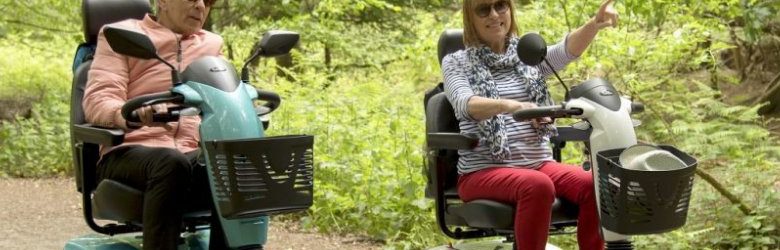
    Image courtesy of CareCo – their newest class 3 scooters, the Corvus Rapide and Vega RS8. CareCo share some accessible parks and attractions to visit in the UK.

    We are lucky to have so many accessible parks and attractions in the UK, and as by law all public places must be accessible, a comprehensive guide is impossible. But here we share our favourite places that you may not have explored yet – some quirky, some off the beaten track, and some simply spectacular.

    So get out for an adventure and explore these tourist attractions without any concern that you’ll be left in the sidelines or miss the main event due to access problems. Here we share some great gardens, stately homes and also where to experience the great outdoors.

    Botanic Gardens, Sheffield

    Robert Marnock designed Sheffield’s Botanic Gardens in the Gardenesque style, and they opened in 1836. The 19 acre site has plants from all over the world, with Mediterranean, Asian, American prairie-style, woodland and rock-and-water plantings in different garden areas.

    The paths through the gardens are well surfaced and mostly easy to navigate, although there are some steep sections and some places with steps. A map of the garden is available to allow you to plan your visit.

    Knebworth House and Gardens

    Knebworth is probably most famous for its annual music festival that has seen the likes of The Rolling Stones, Pink Floyd, Led Zeppelin, Queen, Oasis, and Robbie Williams. But for rest of the year it is a stately home of the Lytton family. Only the ground floor is accessible to wheelchairs (mobility scooters are not allowed though) and wheelchair accessible toilets can be found in the gift shop. By arrangement you may park right in front of the house too.

    Walking through the Gardens at Knebworth is like entering a romantic dream set in bygone times. The walled garden and rose garden are always a popular choice. There is also a maze and a dinosaur trail, which are great fun if you visit with children. The paths are mostly gravel, but also mostly flat, although there are some areas with steps. As well as the annual music festival there are many events throughout the year.

    Queen Elizabeth Olympic Park, London

    The London 2012 Games may now seem like a lifetime ago, but the legacy certainly lives on. East London now has the Queen Elizabeth Olympic Park with beautiful parklands and waterways to explore. It has good quality paths throughout and benches every 50m. You can also hire mobility scooters and manual wheelchairs. This is a great place to head to if you live in London and are new to exploring places in a wheelchair or on a mobility scooter.

    The New Forest

    The New Forest has several accessible attractions to visit. First up is Beaulieu, which is mostly accessible to all visitors, although some parts of listed buildings are not accessible as changes have not been allowed. Beaulieu offers free manual wheelchairs and mobility scooters, on a first come, first served basis. The lower level of Palace House is accessible to wheelchairs, and although there are 2 steps down to the dining area and kitchen shop, staff can take wheelchair users around to a private entrance to gain access. The National Motor Museum, Abbey, and World of Top Gear are accessible.

    If you wish to explore a little of the natural New Forest, head to the Blackwater Arboretum trail, which is a 0.9km circular walk. It runs from the car park and through the arboretum where you can see trees from all over the world.

    The Lake District

    The combination of mountains and lakes may not be an obvious choice, but the Lake District National Park has gone to great efforts to make the area more accessible. It offers “42 Miles Without Stiles” where you’ll find well-kept paths with wide gates for easier wheelchair and mobility scooter access. They have 48 routes planned out with start points and directions provided, plus an interactive map. They also provide advice on gradients on each route so you know what to expect, and what areas to avoid. You can purchase all the routes from information centres too.

    Stonehenge

    This may be an obvious one, but it is amazing how many wheelchair users do not realise that Britain’s most famous ancient monument is now accessible. It has ramped access and a paved path running alongside the ruins, along with many disabled parking bays and accessible toilets. They even have an emergency disabled toilet closer to the stones.

    So, now you have no excuse for not getting out and exploring some of the great outdoors and history that the UK has to offer. If you are heading to a national park on a mobility scooter or powerchair, it is wise to ensure that your battery is fully charged in advance, and to carry a backup battery too, just in case. Climbing hills will burn through the battery faster than usual, so always be prepared.

    This post has been written by Jon Wade on behalf of CareCo. Visit CareCo’s page on the Disabled Living Supplier Directory.

  • Providing Freedom and Independence this Summer

    Providing Freedom and Independence this Summer

    This post has been written by Katie O’Thy, Digital Marketing Assistant at Pro Rider Mobility, who are listed in our Supplier Directory.

    If you or a family member have a disability which means having to use a mobility scooter then you will know how difficult it can be to get out and about during the cold, wet, winter months.

    Fortunately enough we have now said goodbye to winter and hello to spring, we’re more than ready to welcome some sunshine and the days being lighter for longer. With the change in season comes a change in possibilities for those who use a wheelchair or mobility scooter.

    The spring and summer days allows those who are disabled to access more opportunities and not be restricted by the confines of the house – day in, day out.

    A mobility scooter can give freedom and independence to those who want it the most, from being able to go to the local supermarket to do some shopping, taking their fluffy companion for a walk or even being able to go for a day out with the family.

    red and black scooter with basket by pro rider mobility

    There are a variety of mobility scooters available to cater and meet everyone’s needs, from a light, foldable scooter which is easy to store and place, to pavement and road scooters which are available in different speeds and sizes.

    A foldable mobility scooter is a great choice for the upcoming summer months, it doesn’t limit you to where you can go and what you can do because with the easy to fold option it only takes a minute to fold the scooter up, pack it in the car and head out with the family for a fun filled day. We’re sure this is something that the whole family will love, being able to spend time with all of their loved ones and not feeling as if anybody is left out due to their disability.

    Summer Scooter Safety

    While thinking about how the warmer weather makes for a more pleasant day out, now is a good time to mention how the roads and pavements will be much safer compared to winter.

    During the colder months we find it to be a lot wetter and potentially icy outside, causing accidents to all people of all ages. These conditions however, put our elderly or disabled family members at more risk so it’s no wonder that staying in during winter can seem like a better and of course, safer option.

    With the sun now beginning to shine and the rain not making as many appearances, the pavements are dry, accessible and most importantly safe for mobility scooter users; there is no risk of slipping on ice or getting soaked!

    We know that independence to someone with a disability is massively important and that’s why we aim to help with providing as much increased independence as possible along with making sure awareness of safety is paramount; not just in the summer months but all year round.

    By opting for a mobility scooter you’re guaranteeing yourself a much more positive future, no longer being stuck and having to rely on others, no more worried family members fearing you might injure yourself on your feet. Operating a mobility scooter it is so straightforward; it can be gotten to grips with in no time, and with further support always available, it really is worth making this investment to an improved and more fulfilled lifestyle!

    For more information please visit: www.proridermobility.com

    If you would like to submit a blog post to Disabled Living please send an email to: info@disabledliving.co.uk

  • Accessibility at Longleat Safari Park and Cheddar Gorge

    Accessibility at Longleat Safari Park and Cheddar Gorge

    This post has been written by Chris Cammiss, Disability Awareness Trainer at Disabled Living. He talks about how accessible Longleat Safari Park and Cheddar Gorge are as a wheelchair user.

    So, who’s up for some extreme tourism? My latest escapade was to spend a couple of days looking at Longleat and sister attraction Cheddar GorgeSome simple cave exploration in the Gorge and dancing with lions at Longleat – no problem at all for a wheelchair user!

    I have to admit I was intrigued. How romantic, how interesting, but how much would I see? How would I manage in the caves and how would I get around the Safari Park?

    Well, I found the whole experience fascinating and much more accessible than you might have thought. With the help of some very well-motivated staff I had a great time. Both sites were an absolute pleasure to visit. Yes, I saw plenty of features that could be improved but the sites are well worth a visit now.

    cheddar-gorge-natural-valley

    First day was Cheddar Gorge – an attraction consisting of several caves developed in Victorian times as a tourist venue. With introductory film shows, a modern museum, caves, walks, viewpoints and shops, there’s a full family day out here.

    After purchasing tickets see the introductory film. This sets the scene beautifully with colourful history, wildlife, flora, what to visit and what can be managed. Then try the caves!

    The main cave – Gough’s Cave – after the man who made a public attraction out of it, is unfortunately inaccessible to many wheelchair users and mobility impaired visitors because of four large, sloping steps, but is very rewarding indeed. If you can be carried or otherwise helped down it is well worth the effort.

    (Personally, as I was on my own at a very quiet time so a staff member bumped me down but this is definitely not company policy!)

    A long winding tunnel then takes you into the rock – Cheddar Man, unique rock formations, dramatic twists and turns, audio description points – very special indeed.

    The ground surface is excellent – the slightly ridged concrete path carries you along with no trips, bumps or slips.

    Try the Museum of Prehistory. It’s small enough not to be daunting but large enough to house a huge array of exhibits all displayed with imagination. This is a very accessible venue. I was lucky enough to be accompanied by an enthusiastic school party who were greatly entertained by the Stone Age re-enactor who dressed them in animal skins, told them about skinning a rabbit and finally showed them how to start a fire with a few sticks – hugely impressive!

    My favourite destination was Cox’s Cave. This is a network of several inter-connected chambers. Complex and challenging for many with mobility or visual impairments, it rewards those who can manage handsomely. A brilliant multi media film show depicting the development of Early Man is displayed on the raw walls of each chamber, carrying you through his history, changing environment and the animals he hunted. Sound and lights enhance this extremely entertaining production. Different episodes lead you through the cave complex. In my wheelchair I was able to see the first parts and the last parts with the help and advice of the brilliant staff. Nothing was too much trouble.

    The next day I visited nearby Longleat

    deer at longleat safari park
    Photo by Mark Woodbury – https://www.flickr.com/photos/markwoodbury/38962211774

    Driving through the grounds for the first time my first impression was how fabulous the actual house appears. After parking I planned my day to include all the major attractions. There’s so much here for everyone to enjoy and again the staff were incredible. It’s also obvious thought has already gone into improving access.

    The House itself was a delight. As often happens, the dedicated disabled entrance takes you through several rooms the public may never see before joining the beginning of the public flow along the official tourist route through the House. Volunteer guides in every room – all dressed as 20’s flappers on my visit – will inform as much as you want or transport you into their world if you prefer!

    Outside there are formal grounds, endless playgrounds, many animal enclosures, all generally accessible. There’s a fully accessible miniature train to carry you around the grounds while you catch your breath, even a fully accessible cruise around the huge lake.

    There are many shops and eating places – all very accessible, and most of the rides are accessible as well.

    The only downside in my opinion was the Adventure Castle play area. This was a stunning looking space, castle, drawbridge, aerial rope walks but all completely inaccessible to anyone with a major mobility issue.

    If you have your own transport it all works brilliantly – you just drive around at your own pace, stopping at the fully accessible African Village as you go. If not, you can catch the fully accessible Safari Bus and sit back in comfort. It’s all there around you – elephants, giraffes, lions, tigers, rhinos and flamingos.

    Throw in the firework display and light show after dark – what’s not to like? It was a challenging trip but well worth the effort.

  • Why Barcelona Is One of the Best Accessible Travel Destinations

    Why Barcelona Is One of the Best Accessible Travel Destinations

    Our latest Story of the Month feature is by Chris Cammiss, Disability Trainer and Advisor at Disabled Living. He tells us about his recent travels to Barcelona.

    It’s that time of year again – the weather is changing and the clocks have gone back. So we decided to have a city break away to enjoy the last of the autumn heat. We chose Barcelona because Spain has a decent reputation for disabled access. It could still be warm and there are plenty of indoor destinations if the skies were to open!

    We were not disappointed in any way

    Three days out of four were sunny and hot and only one was partly rainy. Spain lived up to its reputation with great accessibility everywhere. We had each visited Barcelona briefly, but a long time ago so had no useful memories of the city layout. Together we chose a small, quirky hotel which was located close to the old centre. And we loved our fabulous room with all the appropriate facilities.

    people walking through barcelona

    We were only a ten minute walk away from Catalunya Square and the start of Las Ramblas. Both of these are very popular destinations for locals and visitors alike.

    “As a wheelchair user, what made a great immediate impression were the excellent surfaces everywhere. All the pavements were level, no evidence of trip hazards from lifting or cracked flagstones, dropped kerbs at every crossing, smooth surfaces everywhere and tactiles where required for those with a visual impairment.”

    It’s no surprise either that bike riding is strongly encouraged here – easy to do and keeps motor traffic down.

    Thoughts on the Gothic Quarter

    When entering the old area – the Gothic Quarter which forms the ancient centre of the city – the same applies. Roads may be narrow and winding here but still all is step-free. Sometimes there will be a gradient, even steep sometimes. But I never saw a single flight of steps I had to avoid. I did see the occasional cobbled surface here in an old square but there were always flagged paths set into the surface. I thought this was very impressive.

    taxis and tour bus in the street of barcelona

    Every bus and taxi was accessible including the shuttle bus to the airport, and every building I wanted to see had level access and/or discreet ramps throughout. Having realised this in the first few hours then we proceeded to relax and planned the course of each day knowing access was not going to be an issue.

    So, what to do in just a few days? Presumably we all like to eat and drink, spend some cash on local specialities and visit the historical sites? This is the place to do just that!

    The Gothic Quarter particularly had a wealth of ancient buildings – including the medieval Cathedral (with its ramped access), its geese and its candles – fascinating markets and winding streets full of bars and restaurants.

    The best highlights from the trip

    • A wonderful walk along the beach on a perfectly level path alongside the sand
    • A wander down a tiny street where every other shop seemed to be an artisan chocolate maker
    • Plates of tapas washed down with rather more local Cava and Rioja than is strictly recommended
    • A meal in a simple enough looking bistro which was actually set inside an old cinema
    • Sitting in a bar drinking beer with the locals watching Barcelona thrashing Real Madrid 5 – 1!

    serving of paella

    With paella in the restaurant/bar along the street, more patatas bravas than you can shake a stick at, the discovery of an excellent local brandy and churros with hot chocolate in a street cafe; I can safely say we didn’t miss much. But don’t think it was all excessive consumption, we also found a brilliant, extensive Picasso exhibition just a block away and we made the customary visit to the Gaudi buildings dotted around this beautiful city, including the almost-completed Gaudi Cathedral which is like no other building I have ever seen. There were huge queues here but a quick indication from someone in the information kiosk sent us to a back entrance where we both gained free, instant access! Brilliant!

    If you want an exciting weekend away with lots to see and do, knowing the terrain will be really accessible, then you couldn’t do much better than a trip to Barcelona.

  • Exploring the British Countryside from a Wheelchair’s Seat

    Exploring the British Countryside from a Wheelchair’s Seat

    This post has been written by Lucy Wyndham for Disabled Living.

    England has a countryside that is both beautiful and accessible. Though many worry about wheelchair accessibility, in recent years numerous innovations have made exploring the British countryside easier than ever. While many have adapted the natural landscape to be easier to navigate, others still have used ponies and other tricks to do the same without damaging the local landscape at all.

    From the north

    Exploring the natural environments of Britain can mean seeing some of the oldest and grandest historical sites, from the two-thousand-year-old Hadrian’s Wall to ancient and Danish architecture along the countryside of Northumberland. The rolling hills and fields of Britain are considered iconic, providing a natural experience that both old and young alike enjoy.

    It is no boast to say the natural environments draw many. Film crews for movies as famous as Harry Potter and Downtown Abbey have rented vast swathes of land to place their viewers in a location with an otherworldly atmosphere. In Northumberland, home to Britain’s most northern park, tourist information centres offer accessibility information, and all local trains have been adapted for wheelchair accessibility.

    Meanwhile, the areas historic value means that many existing buildings offer an excellent look into the area’s past, such as the Roman Army Museum. The museum is right next door to Hadrian’s Wall itself and provides many opportunities to go outside and explore the local landscape on your own behest to see historical ruins and structures in their native environment.

    To the south

    Meanwhile, in the South Downs of England, some people have taken an innovative and different approach. To avoid pouring concrete or other nature destroying materials, they’ve begun offering a service that pulls wheelchair users in chariots designed to take them up even rocky slopes. This gives wheelchair owners access to a nearly one-hundred-mile trail through nature.

    Additionally, many beaches from Bournemouth to Brighton offer wheelchair accessible cabins and rental spaces. With the South Downs nearby and the Surrey Hills Area Of Outstanding Beauty just a little bit further away, there are plenty of options for lodgings close to nature and several wonderful places to see in the British countryside.

    Next time you consider where to take a nature-themed outing, consider the beautiful British countryside. You may prefer the accessibility provided by non-traditional means of transportation, like the proud ponies of the south, or the more casual accessibility offered by the parks and trains of northern Britain. Both of these and more offer unique ways to ensure that you have few reasons to believe disability can separate you from the great outdoors.

    You might also like…

    Have you heard of Mobility Solutions? They offer hundreds of mobility aids online and instore.

  • Why We Love Ravenglass and Muncaster (And You Should Too!)

    Why We Love Ravenglass and Muncaster (And You Should Too!)

    Cumbria might not sound the ideal place for easy walks and accessible venues. There are challenging peaks, extensive lakes and frequent rivers leaving very few level spaces. But the coastal strip is a different matter with several little gems well worth a visit. And Ravenglass is my favourite!

    It’s a tiny fishing port with a huge enclosed natural harbor which originally attracted the Romans with its shelter for their galleys en route to the Scottish wars.

    The village is tiny. There’s one wide street with quaint cottages either side, many signed – Post Office, Reading Room, Station House and so on. They have relics of the past like the ancient petrol pump.

    There’s a large central car park, well disguised, with plenty of blue badge parking, from which there are smooth paths to all parts of the village which you can explore to your hearts content.

    Driving to the car park you will have already seen the boats at anchor in the bay and now you can actually access the beach at the end of the village down the concrete slope provided for the boats. The beach here is rough but hard with sand and stones giving a decent level surface for a little exploration to admire the scenery check the tides and spot the abundant wildlife.

    Café

    After your exertions there are plenty of accessible cafes, pubs and restaurants to suit all tastes.

    Another path from the car park will take you to the miniature railway only minutes away. Admittedly this path is a bit of a push as it goes over the “proper” railway. So, you could drive round to the Station car park where you will find more blue badge parking.

    Now you can easily explore the Station, the trains, the shop, the cafe, and the museum. All of which are accessible with toilets. This used to be a proper working line taking miners a few miles inland to their work. It’s now a tourist route all the way with accessible carriages on the trains.

    Get a ticket then enjoy the beautiful scenic route which has several stops you can explore, particularly at the end of the line where you have to get off while they swap the locomotive from one end to the other before the return trip. You can explore for as long as you want and catch a later train. If you’re lucky you will see foxes, badgers and rabbits together with a wealth of bird life along the route.

    As if that’s not enough, back at base another smooth, flat path will take you to the remains of the old Roman Bath House once standing alongside the huge Roman fort (since demolished). This is a lovely undemanding walk with plenty of shade from the trees with views through to fields and to the sea. The remains are just alongside the path and can be reached on hard grass. Apparently these are the tallest Roman wall ruins in England.

    Muncaster Castle

    If you want to make a weekend of it then visit Muncaster Castle only a minutes drive away.

    They are very accessibly minded here. So, you can have fancy afternoon tea in the sumptuous castle, walk through the woods, around the gardens, see a falconry display, join in with the heron feeding maybe catch a medieval fayre. There’s something here for everyone. You can even rent an accessible cottage onsite.

    I can thoroughly recommend Ravenglass and Muncaster for any disabled person wanting a cracking day out (family optional).

    If this has whetted your appetite, you’ll need an accessible vehicle to get you there in the first place and to move around once there so why not contact Mobility Nationwide to find the perfect second-hand mobility vehicle for your needs.

    You can also view their infographic below:

    Mobility Nationwide

    Would you like to share your favourite accessible attractions on our blog? Send an email to: info@disabledliving.co.uk

  • Making the Most of Your Cruise Experience with Your Disability

    Making the Most of Your Cruise Experience with Your Disability

    This post has been written by Chris Cammis, Disability Trainer & Advisor at Disabled Living. He shares his advice for booking a cruise holiday when you have a disability, to help you make the most of your experience.

    This form of travel has become a firm favourite for many disabled travellers in recent years for obvious reasons. It can be great fun but I do recommend that you read on to avoid pitfalls and enhance your enjoyment.

    Before booking, check the cruise line website to see if there are deck plans of the boat you are interested in. You may be given dimensions of rooms, location of accessible rooms, important distances and so on which will be relevant to your planning. Generally, newer and bigger boats have better facilities.

    For instance, some (smaller) river cruise line boats seem to have no adapted cabins at all although they advertise heavily in the older traveler market, whereas ocean cruisers generally will have them. It’s often a balance where the smaller boat has more of a friendly environment but may not have the physical adaptations you need.

    If confronted about the lack of facilities they will often say they are not registered in the UK so do not need to comply with UK legislation.

    Generally the craft are physically very comfortable – level, smooth floors, plenty of lifts, lots of space, well lit, warm and so on – perfect for most of us.

    The main issue I find is getting off the boat at each destination. You are at the mercy of tides, dock structure, depth of water and timetables. The boat may not know exactly where it is docking until told at the last minute due to other traffic and you may only be able to reach land on a small ferry boat from the liner as the gangplank may be very steep and/or very narrow.

    If transferring by a small boat, it’s ultimately up to the captain whether he will risk danger to you and his crew trying the transfer. Sometimes there may be a choice of different size boats taking people from different points on board. So I advise that you do your research. I’ve often found most staff don’t know all the details. So you may miss out if you rely on them completely.

    In Vietnam only one member of senior staff knew there were two sizes of boats going ashore from two parts of the ship. And I needed to be escorted through the staff-only decks to one particular boat so I could get on via a level gangplank rather than by negotiating a precarious flight of steps.

    Once off you will need transport. A question to consider – is it accessible? The cruise company will have various buses for various trips which you can book online beforehand or on-board and pay extra for. These buses are virtually never accessible.

    If you comment they will say they are in a foreign country and have no control over access rules in that country (although we all know the buses would all be made accessible overnight if the cruise company said only accessible ones would do).

    Bigger companies may lay on accessible trips with appropriate transport (if they have enough takers). So do your research online beforehand so that you can ask any specific questions.

    I have to confess that I had a wonderful accessible trip around St Petersburg. There were only two disabled passengers (including me) with their companions. There was a minibus which had access to everywhere and a driver on a mission to show us all the delights of the city. We saw all the standard sights and more without queuing and spent the rest of the voyage telling everyone else what they had missed.

    Staff on-board are often hazy here. They really want everyone to go on their basic trips so they make lots of extra money. They don’t have a vested interest in doing lots of disability research for one or two disabled travellers who can’t go on the official trips.

    Don’t despair, there is always a way. The popular hop on-hop off double deckers which take tourists around many cities of the world are always accessible. If they cover your destination, they will be on the dockside so buy your 24 hour or 48 hour ticket and you will be taken to every tourist destination available.

    Alternatively, you could book a taxi on your own. Just discuss where you want to go, when you have to be back and shake on a price. If language is an issue (very rare with English) the driver will have pictures of destinations so you can just point.

    Bigger destinations will have independent travel companies so you can book online. Check itineraries, interpreters, costs, times, and difficulties then go ahead. It doesn’t have to go through the cruise company.

    If you do make your own arrangements, make sure you have the right visas etc. Normally the staff on-board will organise the appropriate paperwork. But if you are going off-piste you might need to make your own arrangements well beforehand. Russia and Cambodia come to mind.

    Don’t get me wrong – I love cruising. It works beautifully for me as a wheelchair user. But my partner and I do put in the hours online beforehand to make the on-land part work well.

    Would you like to share an accessible travel experience on Disabled Living’s blog? Get in touch by sending an email to: info@disabledliving.co.uk or call us on 0161 214 4590.

  • Travelling On An Aeroplane with Your Disability

    Travelling On An Aeroplane with Your Disability

    This post has been written by Chris Cammiss, Disability Trainer & Advisor at Disabled Living. Chris has been a wheelchair user since childhood. After graduating from The University of Manchester, he was a secondary schoolteacher for 28 years. Chris now delivers Disability Awareness training and conducts Access Audits over the UK. He travels widely and has accumulated a lifetime’s experience in this environment. He shares his advice for travelling on an aeroplane with your disability.

    Flying has become much easier over the years with international guidelines bringing some sort of consistency to the process. However each country, airport and airline has its own individual variations.

    Chris Cammiss

    Here is some advice from Chris to those with disabilities who are travelling in the future.

    When booking the flights either online or in store, check that your disability is recorded. Also, make sure the precise nature of the help required is noted. It is important to consider possible circumstances.

    Can a wheelchair user walk at all? This is necessary for ordering the aisle chair for use on-board. Do you need help around the airport? Can you walk unaided for any distance? Do you need a buggy? Can you see at all? You’re entitled to all sorts of help all round the airport and onto the plane itself.

    These questions may seem intrusive but the precise level of help needed is what’s important. Members of staff are usually trained to be sensitive here.

    When checking in, make sure this information has been noted. At this point check-in staff should send a message through to the assistance point, making your arrival known. It’s useful at this point to go to the assistance point yourself to double-check. Check-in staff often ring the assistance point but if the phone is engaged they may forget to ring later or may be too busy, so the assistance team could think that you haven’t turned up.

    At check-in, you can get a travel tag for your wheelchair, walking frame etc if it is to be loaded aboard to make sure it doesn’t get mixed up with the airport’s own equipment. This is not part of your baggage weight allowance.

    I don’t personally find it helpful to pre-book seats. Different airlines have different policies on placing disabled travellers in aisle seats, non-aisle seats, seating at a bulkhead, avoiding bulkheads and so on so I leave it to them.

    If you are to transfer from an aisle chair check if the seat arm will lift to aid smooth transfer. Usually they do but not always. Each aircraft is different internally.

    There will always be an aisle chair available to get you to your seat in the aircraft if you need it. However, it may be the property of the airport therefore; there may not be an aisle chair on the plane in flight although this is best practice.  Check, especially for long flights. Consider urine bottles or similar to use at your seat. You may also wish to consider using your wheelchair cushion to sit on for extra comfort on long flights.

    All this may seem fairly obvious but I was once helped onto a 10 hour flight to Cuba to be told after take-off that the plane was a double decker, the toilet was on the other floor to me and they didn’t carry an aisle chair – no contingency plan at all.

    En route to New Zealand I asked for the aisle chair and appropriate assistance to then be asked, “What? You can’t walk at all?” as if it was my fault that I was putting the staff to so much trouble. I mentioned this to the Head Steward who saw unemployment staring him in the face and was deluged for the rest of the flight with every expensive gift they could think of.

    Assistance staff will be trained, but this could have been by watching a 20 min DVD. You will encounter a range of people – many women as this is seen as a caring role and men close to retirement as the role is seen as less physical than other roles, so you may not be helped by the big strong tough guy who would make the whole process easier – far from it.

    You may also find yourself transferring in a space with no support, limited help, but lots of concerned onlookers and so on. Your companion may find themselves overwhelmed – carrying their own luggage, yours as well, maybe a cushion or similar, passports and boarding passes. They become invisible as you receive all the help.

    Once on board you should be on the Steward’s list so staff should make themselves known to you, asking what they can do.

    Knowing how roughly luggage can be treated in loading/unloading and how tricky turbulence can be regular disabled travellers will often not take their best/most expensive wheelchair or other equipment with them on planes. It’s hard to give statistics as people often won’t claim damages but I’ve had two bad breakages of my wheelchair in the last ten years – one wrecked the footplate, and the other twisted the frame.

    Each could have compromised the holiday. Luckily we were able to improvise in each case. You could check coverage in your travel insurance if you are concerned.

    Equipment in the hold should be delivered to you at the plane entrance as you get off if that’s what you require, rather than at baggage retrieval, as I once experienced.

    You may have to wait to be helped off a plane. If staff have several disabled passengers to help or several flights have arrived close together or the terminal is huge, there could be a problem. But it is a legal requirement that airline staff can’t all leave the plane until all passengers are off so you’ll always have someone to talk to.

    If all else fails do what they do in Peru. On take-off they cross themselves and after a successful landing they burst into applause. I hope this helps and happy flying!

    Would you like to share your experience of travelling on an aeroplane with your disability? Get in touch with us via email: info@disabledliving.co.uk or call us on 0161 214 4590.

Disabled Living