Author: Daryl

  • Seating and Posture with Phil Moore

    Seating and Posture with Phil Moore

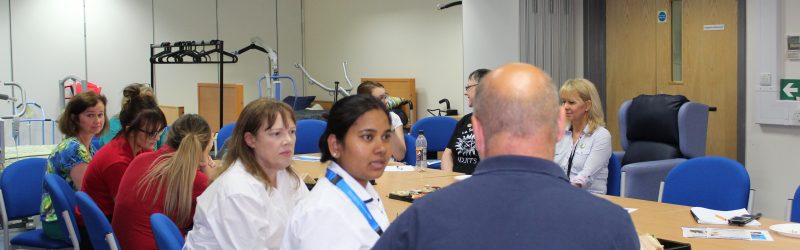
    This post has been written by Deborah Bell, Enablement team manager at Disabled Living. Our latest Lunch and Learn session was full to the brim. Therapists from all over Manchester attended the Seating and Posture session.

    17 therapists at our Disabled Living Training room were joined by Phil Moore. He talked about the importance of seating. In his discussion of seating in the past, he developed his presentation taking us into the relevant and accurate assessment of our clients.

    We learnt that this enables them to have the best chair for their purpose.Phil Moore delivering Lunch and Learn

    Phil seemed concerned about people over prescribing. But the reasons for that may be a whole other blog topic around positive risk taking and legislation. Elaborating on this, he shared his experiences of assessing people who had poor posture due to the direction their chair was in.

    People will always position their posture due to the thing most focused on whether it’s the TV, a conversation with someone, or looking out of a window, without moving their chair. This can then lead to the person sitting asymmetrical for no good reason.

    The group was very interactive and included a discussion where we asked Phil questions about issues he had come across. We also had an interesting discussion around seating and dementia. This could have carried on for a couple of hours if there was more time.

    All in all it was a very interesting two hours which, concluded positively with ideas that small things can often make a huge difference. Not only this but that, the importance of finding the right chair, can help an individual improve their posture in the future.
    Lunch and Learn food

    Phil provided a fantastic lunch of sandwiches, sushi, fruit and doughnuts which was enjoyed by all of us who attended.

    The networking was great and Phil introduced Graham who looks after the Chair Doctor, a service which provides specialist repair and refurbishment of posture, nursing and riser/recliner chairs. This seems like a very useful and popular service in days when we have to look after every penny.

    The Care Team look forward to delivering more sessions and are working closely with Disabled Living. So, stay posted for more information about these events coming soon.

    Keep up to date with our latest news on Twitter @disabledliving.

  • An Afternoon with Wiltshire Farm Foods at Disabled Living

    An Afternoon with Wiltshire Farm Foods at Disabled Living

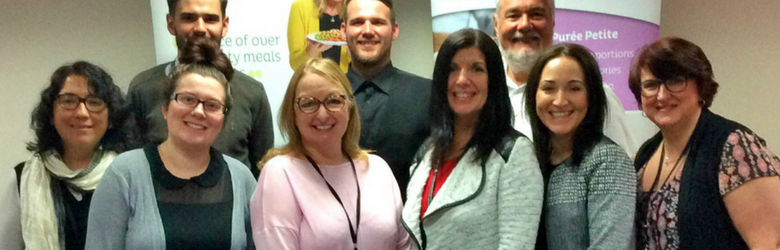
    On Friday 20 May 2017, our team over at Burrows House enjoyed a dinner by Wiltshire Farm Foods. To begin the event, we were provided with texture modified foods and information about specifications, swallowing precautions, and the different types of purée food. With the purée food in particular, we didn’t really know if it would be so appetising.

    Purée food taster session

    However, the presentation of the food was surprisingly nice, and the taste was tastier than expected.

    There is a fantastic range of purée food. – Angela

    There were a range of dishes to choose from where different volumes of calories can be chosen. For example, there is a choice of mini meals for the evening and large meals for lunch for those who need a certain calorie intake to support their diet. With each mouthful, there’s a big concentration on taste for the Wiltshire Farm Food’s customers.

    Wiltshire Farm Foods Brochure Purée Bakewell Sponge

    As each customer has different needs and requirements, it’s important to cater for all. For those with food allergies, Wiltshire Farm Foods like to make the meals more vibrant so it can look more appealing for the customer.  Also, they have a ‘Nutritious and Delicious’ option where the meals contain less than 400 calories. Alongside this, is the option of foods which include low fat, low salt, and gluten free.

    Non-allergy food option

    Meals with vitamin D and calcium help to keep customer’s bones strong and help to prevent any bone conditions from worsening. Not everybody likes the vitamin chewy option; however, it is important that those who need it do consume it.

    Likewise with the purée food, a person with excellent health can take one look at the food and think it doesn’t look too delicious, but when you think about it from the perspective of a person who has this as their only option for food intake, you realise just how important food is to them in order to keep them healthy.

    Lemon Sponge and Custard

    Key facts about Wiltshire Farm Foods

    • The best selling meal is roast beef
    • 85 years old is the average customer age
    • Main meals start from the price of £2.99
    • Most meals take 8-12 minutes in the microwave or 35 in the oven to cook

    We asked David Barker, who delivered the event, what makes Wiltshire Farm Foods different from other services that offer frozen ready meals?

    We make all of our own meals using fresh ingredients and freeze them quickly to lock in all the nutrition flavour and goodness and then deliver them.

    Wilshire Foods banner

    To see more reasons why you should choose Wiltshire Farm Foods, see what they have to say for themselves.

    Wiltshire Farm Foods deliver their meals between 9.00am and 3.00pm so that it is within hours of daylight.

  • Finding the Right Hotel for You and Your Disability

    Finding the Right Hotel for You and Your Disability

    This is a third blog by Chris, giving you the best advice for finding the best hotel for you and your disability. Staying in a good hotel can be an integral part of the enjoyment of your holiday or an indispensable part of your work. So how do you choose, if accessibility is a factor?

    The word ‘access’ can be tricky here. The hotel might mean you can get in and have a drink. You may be able to reach the restaurant and have a lovely meal, but you may not be able to stay as there are no suitable rooms. You read phrases like ‘some access’ ‘reasonable access’ or ‘fairly accessible’ which are ultimately meaningless.

    There are many booking websites now and good ones such as booking.com have an accessibility filter so you can click on ‘facilities for disabled guests’.

    This often works well but increasingly I am encountering problems. The reason is that the establishments are self-certifying. In some cases they are given basic guidance when they sign up but it’s up to them.

    There is no huge inspectorate going out to check every hotel. You would think people would be honest as the last thing they want is an argument in reception when a disabled visitor is unhappy but on the other hand they don’t want to turn away potential custom by saying they have no facilities when they may have a few. So, use the booking websites for initial research but ring the hotel direct when you think you have found one and check carefully.

    In France and part of Italy there is a booking organisation called ‘Logis’. You can use this like booking.com with their disability filter. You can check whether the restaurant is accessible, whether there are any accessible rooms, or both. This filter has worked very well for me with only one disagreement in 15 years of regular use.

    When researching, TripAdvisor has a disability group you can join which holds lots of relevant accessibility information.

    Even when you are in a hotel which boasts about its great accessibility features there will be no consistency from one establishment to another – particularly in toilet/bathroom provision.

    A typical accessible hotel room will have a few standard accessibility features – possibly a larger room, possibly a larger bathroom, often bath removed and shower installed (often with no seat), one or two grab rails in the bathroom, red alarm cords for if you fall in the bathroom or roll out of bed and a phone with large buttons.

    Even if the room is good it might be located a long way from the reception or the restaurant – even in a different building. That might be the only place with suitable rooms to adapt so again, check. This is surprisingly common and arises because new buildings may have been added as the hotel has expanded and these new buildings are more likely to conform to current accessibility guidelines.

    Keep a cool head – when in Cyprus last year our accessible room was an absolute delight. It had been decided that the rooms should be on the ground floor for fire safety – fair enough. But to make the ground floor accessible they had ramped what had previously been 8 or 9 steps up from Reception. The ramp was ridiculously steep. The only people confronted by this ramp were the disabled guests. Everyone else went to different floors by the lift with no slope in sight.

    When in Majorca I remember talking to the manager about his brilliantly adapted accessible bathroom. He was in the bathroom and I was in the bedroom because I couldn’t get to the brilliant bathroom as the door was too narrow.

    In many ways you are safer with an established chain. Premier Inn and Novotel for instance each have an excellent design for their accessible rooms and bathrooms so you can rely on consistent provision across the country.

    A good hotel will have bed raisers available, maybe a mobile hoist, ability to change a double bed for two singles and so on. Check their website or ring direct.

    When researching a hotel online, look for their Access Statement, which is where they all relevant accessibility information should be contained. If there isn’t a statement that’s your first warning sign!

    If you book a hotel room in a hotel which is part of a holiday complex of some kind then you may have an accessible room in or near the hotel but the accessible shower and toilet are in a nearby building serving the holiday park.

    Don’t take anything for granted!

  • Making the Most of Your Cruise Experience with Your Disability

    Making the Most of Your Cruise Experience with Your Disability

    This post has been written by Chris Cammis, Disability Trainer & Advisor at Disabled Living. He shares his advice for booking a cruise holiday when you have a disability, to help you make the most of your experience.

    This form of travel has become a firm favourite for many disabled travellers in recent years for obvious reasons. It can be great fun but I do recommend that you read on to avoid pitfalls and enhance your enjoyment.

    Before booking, check the cruise line website to see if there are deck plans of the boat you are interested in. You may be given dimensions of rooms, location of accessible rooms, important distances and so on which will be relevant to your planning. Generally, newer and bigger boats have better facilities.

    For instance, some (smaller) river cruise line boats seem to have no adapted cabins at all although they advertise heavily in the older traveler market, whereas ocean cruisers generally will have them. It’s often a balance where the smaller boat has more of a friendly environment but may not have the physical adaptations you need.

    If confronted about the lack of facilities they will often say they are not registered in the UK so do not need to comply with UK legislation.

    Generally the craft are physically very comfortable – level, smooth floors, plenty of lifts, lots of space, well lit, warm and so on – perfect for most of us.

    The main issue I find is getting off the boat at each destination. You are at the mercy of tides, dock structure, depth of water and timetables. The boat may not know exactly where it is docking until told at the last minute due to other traffic and you may only be able to reach land on a small ferry boat from the liner as the gangplank may be very steep and/or very narrow.

    If transferring by a small boat, it’s ultimately up to the captain whether he will risk danger to you and his crew trying the transfer. Sometimes there may be a choice of different size boats taking people from different points on board. So I advise that you do your research. I’ve often found most staff don’t know all the details. So you may miss out if you rely on them completely.

    In Vietnam only one member of senior staff knew there were two sizes of boats going ashore from two parts of the ship. And I needed to be escorted through the staff-only decks to one particular boat so I could get on via a level gangplank rather than by negotiating a precarious flight of steps.

    Once off you will need transport. A question to consider – is it accessible? The cruise company will have various buses for various trips which you can book online beforehand or on-board and pay extra for. These buses are virtually never accessible.

    If you comment they will say they are in a foreign country and have no control over access rules in that country (although we all know the buses would all be made accessible overnight if the cruise company said only accessible ones would do).

    Bigger companies may lay on accessible trips with appropriate transport (if they have enough takers). So do your research online beforehand so that you can ask any specific questions.

    I have to confess that I had a wonderful accessible trip around St Petersburg. There were only two disabled passengers (including me) with their companions. There was a minibus which had access to everywhere and a driver on a mission to show us all the delights of the city. We saw all the standard sights and more without queuing and spent the rest of the voyage telling everyone else what they had missed.

    Staff on-board are often hazy here. They really want everyone to go on their basic trips so they make lots of extra money. They don’t have a vested interest in doing lots of disability research for one or two disabled travellers who can’t go on the official trips.

    Don’t despair, there is always a way. The popular hop on-hop off double deckers which take tourists around many cities of the world are always accessible. If they cover your destination, they will be on the dockside so buy your 24 hour or 48 hour ticket and you will be taken to every tourist destination available.

    Alternatively, you could book a taxi on your own. Just discuss where you want to go, when you have to be back and shake on a price. If language is an issue (very rare with English) the driver will have pictures of destinations so you can just point.

    Bigger destinations will have independent travel companies so you can book online. Check itineraries, interpreters, costs, times, and difficulties then go ahead. It doesn’t have to go through the cruise company.

    If you do make your own arrangements, make sure you have the right visas etc. Normally the staff on-board will organise the appropriate paperwork. But if you are going off-piste you might need to make your own arrangements well beforehand. Russia and Cambodia come to mind.

    Don’t get me wrong – I love cruising. It works beautifully for me as a wheelchair user. But my partner and I do put in the hours online beforehand to make the on-land part work well.

    Would you like to share an accessible travel experience on Disabled Living’s blog? Get in touch by sending an email to: info@disabledliving.co.uk or call us on 0161 214 4590.

  • Travelling On An Aeroplane with Your Disability

    Travelling On An Aeroplane with Your Disability

    This post has been written by Chris Cammiss, Disability Trainer & Advisor at Disabled Living. Chris has been a wheelchair user since childhood. After graduating from The University of Manchester, he was a secondary schoolteacher for 28 years. Chris now delivers Disability Awareness training and conducts Access Audits over the UK. He travels widely and has accumulated a lifetime’s experience in this environment. He shares his advice for travelling on an aeroplane with your disability.

    Flying has become much easier over the years with international guidelines bringing some sort of consistency to the process. However each country, airport and airline has its own individual variations.

    Chris Cammiss

    Here is some advice from Chris to those with disabilities who are travelling in the future.

    When booking the flights either online or in store, check that your disability is recorded. Also, make sure the precise nature of the help required is noted. It is important to consider possible circumstances.

    Can a wheelchair user walk at all? This is necessary for ordering the aisle chair for use on-board. Do you need help around the airport? Can you walk unaided for any distance? Do you need a buggy? Can you see at all? You’re entitled to all sorts of help all round the airport and onto the plane itself.

    These questions may seem intrusive but the precise level of help needed is what’s important. Members of staff are usually trained to be sensitive here.

    When checking in, make sure this information has been noted. At this point check-in staff should send a message through to the assistance point, making your arrival known. It’s useful at this point to go to the assistance point yourself to double-check. Check-in staff often ring the assistance point but if the phone is engaged they may forget to ring later or may be too busy, so the assistance team could think that you haven’t turned up.

    At check-in, you can get a travel tag for your wheelchair, walking frame etc if it is to be loaded aboard to make sure it doesn’t get mixed up with the airport’s own equipment. This is not part of your baggage weight allowance.

    I don’t personally find it helpful to pre-book seats. Different airlines have different policies on placing disabled travellers in aisle seats, non-aisle seats, seating at a bulkhead, avoiding bulkheads and so on so I leave it to them.

    If you are to transfer from an aisle chair check if the seat arm will lift to aid smooth transfer. Usually they do but not always. Each aircraft is different internally.

    There will always be an aisle chair available to get you to your seat in the aircraft if you need it. However, it may be the property of the airport therefore; there may not be an aisle chair on the plane in flight although this is best practice.  Check, especially for long flights. Consider urine bottles or similar to use at your seat. You may also wish to consider using your wheelchair cushion to sit on for extra comfort on long flights.

    All this may seem fairly obvious but I was once helped onto a 10 hour flight to Cuba to be told after take-off that the plane was a double decker, the toilet was on the other floor to me and they didn’t carry an aisle chair – no contingency plan at all.

    En route to New Zealand I asked for the aisle chair and appropriate assistance to then be asked, “What? You can’t walk at all?” as if it was my fault that I was putting the staff to so much trouble. I mentioned this to the Head Steward who saw unemployment staring him in the face and was deluged for the rest of the flight with every expensive gift they could think of.

    Assistance staff will be trained, but this could have been by watching a 20 min DVD. You will encounter a range of people – many women as this is seen as a caring role and men close to retirement as the role is seen as less physical than other roles, so you may not be helped by the big strong tough guy who would make the whole process easier – far from it.

    You may also find yourself transferring in a space with no support, limited help, but lots of concerned onlookers and so on. Your companion may find themselves overwhelmed – carrying their own luggage, yours as well, maybe a cushion or similar, passports and boarding passes. They become invisible as you receive all the help.

    Once on board you should be on the Steward’s list so staff should make themselves known to you, asking what they can do.

    Knowing how roughly luggage can be treated in loading/unloading and how tricky turbulence can be regular disabled travellers will often not take their best/most expensive wheelchair or other equipment with them on planes. It’s hard to give statistics as people often won’t claim damages but I’ve had two bad breakages of my wheelchair in the last ten years – one wrecked the footplate, and the other twisted the frame.

    Each could have compromised the holiday. Luckily we were able to improvise in each case. You could check coverage in your travel insurance if you are concerned.

    Equipment in the hold should be delivered to you at the plane entrance as you get off if that’s what you require, rather than at baggage retrieval, as I once experienced.

    You may have to wait to be helped off a plane. If staff have several disabled passengers to help or several flights have arrived close together or the terminal is huge, there could be a problem. But it is a legal requirement that airline staff can’t all leave the plane until all passengers are off so you’ll always have someone to talk to.

    If all else fails do what they do in Peru. On take-off they cross themselves and after a successful landing they burst into applause. I hope this helps and happy flying!

    Would you like to share your experience of travelling on an aeroplane with your disability? Get in touch with us via email: info@disabledliving.co.uk or call us on 0161 214 4590.

  • Installation of the High Sheriff of Greater Manchester

    Installation of the High Sheriff of Greater Manchester

    This post has been written by Nina Rios, Business Development & Marketing Coordinator at Disabled Living. Last week I was delighted be invited to the ceremony for the Installation of Kui Man Gerry Yeung OBE, DL as The High Sheriff of Greater Manchester. Gerry, has been Disabled Living’s President for the last 10 years and has brought a wealth of knowledge and expertise to our Management Board.

    Gerry was born in China and came to Manchester as a teenager with his family. He completed his education in the UK and joined the family business, Yang Sing Restaurant at its inception. The success of the restaurant and its great popularity gave him an opportunity to become part of the community of Manchester.

    Gerry Yeung and Debra Evans
    Debra Evans, Chief Executive with Gerry Yeung OBE.

    Gerry has been actively involved in the commercial, educational, charitable and cultural life of the city of Manchester for many years and was President of the Manchester Chamber of Commerce and Industry. Gerry’s networks are vast and over the years he has introduced me to a wide range of influential people to assist me to develop services and support the long term strategic vision I have for Disabled Living.

    Gerry very kindly hosts Disabled Living’s Annual General meetings at the Yang Sing Cathay in the Trafford Centre, Manchester. And I am sure those of you who have attended our AGM will agree the food is of the finest quality – a little like Gerry!

    Share your thoughts with us via Twitter @disabledliving.

  • Boy with Lennox-Gastaut Syndrome Says ‘Hello Mum’

    James Walker is 16 years old and suffers from a condition called Lennox-Gastaut Syndrome. It is a type of epilepsy which causes multiple different types of seizures. For the first time in his life, James was able to break his silence. He was able to say “Hello Mum” using a new digital communication aid.

    James’ condition left him with severe learning disabilities and without the ability to walk or move. He recently told the BBC that he was “excited to learn something new”. The communication aid allows James to use his eyes as a cursor to click on words and pictures.

    This computer system allows him to stock up thousands of words and phrases that James may use daily and he is hoping to increase this over time as he currently has set up around 60.

    Due to the nature of James condition, he has limited arm movement. And previously his communication system only allowed him to say a few small phrases. It didn’t allow him a choice of phrase or an alarm system.

    Gina Walker, James’ mother said she had never expected that her son would be able to talk. When James said the words “Hello Mum” she was overwhelmed and cried. In her interview with the BBC she said that: “The fact that his first words were ‘Hello Mum’ was just fantastic. It is mind blowing to think I had not heard him speak for 16 years and now I can have conversations with him.”

    James has a great sense of humour that can now be heard

    For the first time in his life, his opinions and thoughts can be heard. Gina said “He has now told me that he doesn’t like my singing, his personality and sense of humour is definitely coming out!”

    James’ mother has also said that this new communication software has improved his health, as he is susceptible to many seizures a day. James didn’t used to have the ability to alert his parents or teachers to an on-coming fit. Gina told the BBC, “Every seizure he has is dangerous, so if I can stop them from being full blown it is worth it’s weight in gold”. The early warning allows her to use a nerve stimulation magnet which sends mild electrical impulses to calm the irregular brain activity which can trigger his seizures.

    Not only does the computer system bring him all this communication it brings him a lot more independence too. He can control the television, his bedroom lights and that’s just the beginning of the possibilities. We can’t wait to see even more technological development.

    Do you know anybody with Lennox-Gastaut Syndrome?

    Catch up with other news on the Disabled Living blog.

  • The Revolutionary Bionic Eye Is Changing a Woman’s Life

    Rhian Lewis, a 49 year old woman who has suffered from retinitis pigmentosa an inherited disorder since she was five, talks to Disabled Living about her condition.

    The condition causes gradual deterioration of the light-detecting cells within the eye; this can eventually lead to blindness. One in 3,000 people in the UK have the disease, for which there is no cure.

    Rhian has marked a significant moment in history by being the first person fitted with a ‘bionic eye’. Mrs Lewis was given a retinal implant as part of an ongoing trail at the Oxford’s John Radcliffe hospital. Surgeons at the Oxford Eye Hospital have implanted a chip that will help her see. She is completely blind in her right eye and has virtually no vision in her left.

    Rhian has this surgery in June last year; the operation lasted around 6-8 hours. During the follow up tests it became clear that she could see for the first time in 16 years. She was asked to tell the time and once she realised the time she said ‘It felt like Christmas Day!’

    The implant is an amazing piece of technology which sends pulsed electrical signals to the nerve cells, from the outside it just looks like a hearing aid. The brain eventually learns to convert the flashing images into meaningful shapes and objects, this technology has the power to transform lives.

    When the bionic eye is first switched on, patients see flashes of light, but over a few weeks the brain learns to convert those flashes into meaningful shapes and objects.

    The images can be black and white and grainy but still have the power to transform lives. This specific bionic eye is being tested as a treatment for retinitis pigmentosa since 2012. Rhian is the first patient to be fitted with the device outside Germany.

    The lead researcher at Oxford, Professor Robert MacLaren, said “It’s an amazing process because what Rhian and others are trying to do is reactivate a part of the brain that hasn’t been doing anything for the last 10 years or so,” he said. “There is a lot of rehabilitation because basically they are learning to see again.”

    A wireless hand held power supply means that Rhian can adjust the contrast and frequency to suit her needs and in different conditions as she is continuing her practise and regaining her confidence and independence.

    If the rest of Prof Robert MacLaren’s trial is successful the team hopes that one day the implant could be available on the NHS. It could also be applied to other eye diseases, such as age-related macular degeneration.

  • A Young Boy Named Jacob with Autism and His Support Dog Minta

    A Young Boy Named Jacob with Autism and His Support Dog Minta

    Jacob is 8 years old and suffers from severe autism. This means that Jacob struggles with expressing himself and communicating with others. His mother described the moment that Minta entered their lives and she immediately saw a change in Jacob.

    Support dog Minta was first introduced to the family in 2013, before then Susan, Jacob’s mother, says Jacob was a lonely boy who had no friends. She described him as isolated and lonely which was heartbreaking for her to see.

    Jacob’s everyday life was a struggle, he would become upset even going to the shops.
    When Minta was introduced to Jacob his life changed forever. The stress that used to come with his everyday tasks are reduced. His mother describes that when they need to do something she just explains to Jacob that Minta wants to do it too and he does not become stressed at all. He will now happily chat to strangers which would have been impossible before because he is proud of Minta.

    Jacob and his support dog Minta

    Susan is so proud of Jacob now, she describes the difference in him as phenomenal and incredible and we agree! Life before Minta saw Jacob wanting to become invisible and now he is just growing in confidence. Autism Assistance Dogs are training to provide safety and to help facilitate a increasingly independent and socially inclusive life for both the child with autism and their family. Just like in Jacob’s case a support dog can provide comfort and reassurance like nothing else can.

    Support dogs is a charity that provides help with everyday tasks and mobility for people with physical disabilities, give advance warning of seizures for people with epilepsy and provide safety and support for children with autism and their families.

    Support dogs autism assistance programme can be life changing for both the child and their whole family. The dogs are specially trained to increase the child’s quality of life. The clients of Support Dogs are often children who are unable to communicate or express their feelings in a way that is understood by others and have little sense of danger including the consequences of their actions. Around 1 in 100 children in the UK are diagnosed with Autism. Support Dogs are a brilliant charity that provides excellent respite for the child and the family too.

    If you want to find out more information on Support Dogs, please visit their website.

    Written by Amy Rowland.

Disabled Living