Author: Daryl

  • Disabled Living are Celebrating! Would You Like to Help Us?

    Disabled Living are Celebrating! Would You Like to Help Us?

    Disabled Living has been awarded £58,400 from the Heritage Lottery Fund (HLF) for an exciting project From Donkeys to Innovators that celebrates its rich and unique 120 year history.

    Made possible by money raised by National Lottery players, the project focuses on the charity’s history from its establishment as an organisation teaching children to be kind to animals into its current day role working with disabled people to provide innovative advice and information.

    Disabled Living's Heritage

    From Donkeys to Innovators celebrates the lives of the people involved with Disabled Living sharing their stories and contribution to the charity’s past. It also provides an opportunity for the public to learn more about Manchester’s social history as the charity has links with the city’s economic, cultural and health heritage, involving diverse community organisations and institutions.

    Importantly, the voices of disabled people will be recognised, preserved and celebrated, documenting an important part of disability heritage.

    Having nearly lost all of its archive in a fire in recent years, one key element of the project will be to ensure that the charity’s stories are preserved for the future by digitising all materials. This will also mean that the rich and vibrant stories can be viewed and shared with the general public.

    Filming studio

    Young disabled people will be involved in making their own film reflecting on being disabled in the past compared to their own experiences today. They will use Disabled Living’s archives to gain an understanding of how disabled people lived years ago.

    This is where we would like to hear from you…

    We would like to talk to young people (14-25 years) who have a disability or additional needs who would like to be involved in making a film by interviewing older disabled people about their experiences when they were children. We are looking for six young people who live, ideally in the North West of England who could travel to Manchester for filming.

    This project is funded by the Heritage Lottery Fund.

    For further information about any of the above please contact Disabled Living on 0161 214 4590 or email; debra.evans@disabledliving.co.uk

  • How This Year’s Bluedot Festival Inspired and Entertained

    How This Year’s Bluedot Festival Inspired and Entertained

    Chris shares his experience at Bluedot festival. It’s that time of year again – festival season. Sun, rain, mud, huge crowds – what could be more exciting for a wheelchair user?

    Doesn’t immediately spring to mind as your best bet – acres of bumpy, tufty grass between car park and arena, maybe rain, sinking up to your axles in mud, no access to toilets, queues everywhere, can’t get anywhere near the bar or the burgers and generally getting trampled all the time by hordes of able bods rushing to the front who haven’t seen you way down there.

    A bit different from the image of sitting in a grassy field without a care in the world, listening to the gorgeous music, watching all your favourite groups! What could possibly go wrong?

    Muddy ground

    I’ve been out of touch for too long on this sort of scene – my first festival was Knebworth in the seventies and it really was all about sitting in a field all day. I remember queuing up for early morning entry with some of my fellow revellers, choosing a spot halfway up the hill with a brilliant view and not moving an inch until 2.00 am. the next day! Certainly wouldn’t advise that approach now.

    Well… worry not. This can all be sorted and a great time is there for the taking

    Consider Bluedot – a new festival based around Jodrell Bank. Besides three days of great music there’s a slant towards science with all the public facilities at Jodrell available, lots of temporary stuff as well, guest speakers, international links, demonstrations – all themed around us (the Bluedot of earth from space), and all very accessible indeed.

    I could only go for one day and I knew who I wanted to see so I purchased my day ticket months ago. A very clear link on the festival website sent me to loads of accessibility info where I could download an email to get me a parking space near to the actual festival entrance and a free companion ticket if needed (I didn’t as my companion was unavoidably required elsewhere so I went ahead alone).

    Wheelchair sign

    In general, always head for the festival website itself first, don’t go to Ticketmaster, Ticketline etc. They will sell tickets to you of course but as soon as you look for accessible tickets or advice on accessibility or similar they will send you to the venue website, so don’t waste your time.

    So, the big day arrived. On reaching Jodrell Bank, I looked for the specific car park mentioned on the email, found it easily (very well signed) and then saw cars as far as the eye could see! Disaster! Miles to push on the grass! On my own! Oh gee!

    But no, on production of my email at the gate I was told to drive straight to the front where plenty of space was still being kept available next to the festival entrance. Every steward knew what to do.

    After a quick push to the entrance where my ticket was checked I was told to go the access reception tent to get a wrist band which would allow me access to the viewing platform and to the portable but accessible toilets. Wow!

    Whilst queuing at the access reception I then noticed lots of signage:

    • Did I want accessible camping? (died and gone to heaven – what consideration, and a first for me)
    • Did I want a quiet area for camping? (not really – but could work for some)
    • Did I want any help with hearing loops? (Maybe afterwards!)
    • Did I want viewing platform access? (Oh yes – bring it on!)
    • Did I need to know where the accessible toilets were located? (Absolutely!)
    • Did I want advice on types of food available, gluten free, vegan, vegetarian? (not my bag but I know it goes on)

    So now I can expect consideration over appropriate parking, a dedicated viewing platform, accessible toilets, low counters at the food and drink outlets – the list goes on and on.

    Disabled toilet sign

    Having relaxed, I wandered around looking at what was on offer. Hard, smooth grass and proper tarmacked paths made progress easy and good site planning meant you always seemed to have space. There was so much food and so many events. Eventually, I settled for a steak wrap and a coffee before wandering across to the viewing platform. There was plenty of help available if needed.

    There were accessible toilets behind the viewing platform itself so I chose my spot and settled in. Absolutely brilliant!

    Regular festival goers tell me I can find all these things around the country, and hearing impaired discos, silent discos, sensory discos… It’s all becoming mainstream now so don’t hold back.

    Bluedot was also very family friendly so the vibe was tremendous. Wandering around all day nobody gave me a second look. If I stopped somewhere passers by would occasionally ask if I needed help but not intrusively. It all felt relaxed and comfortable. I never felt isolated or out of place. Lots of staff and volunteers were available to help everyone, but no-one in your face.

    Next year I think I’ll just have to do the accessible camping – I owe it to myself!

    So, give it a try, it’s not all Glastonbury and the mud, what have you got to lose? If you spot a festival you fancy, go straight to their website and look for anything to do with access – a link, direct info, an email address, a phone number and follow it up. You owe it to yourself!

    Would you like to share your experience of an accessible festival with us? Get in touch by sending an email to: info@disabledliving.co.uk for the chance to feature on Disabled Living’s blog.

  • Health Information Week – 5 Steps to a Healthy Lifestyle

    Health Information Week – 5 Steps to a Healthy Lifestyle

    Throughout this week we have been sharing some questions on social media to help you think about your healthy or unhealthy lifestyle. As Health Information Week is 3 – 9 July, we are going to share our top 5 steps to a healthy lifestyle. It’s not just a healthy diet and exercise that’s involved, which is what some people believe it to be.

    It is essential that quality information is provided to people to enable them to better manage their health and wellbeing and make fully informed decisions about their treatment and care. Library and Knowledge specialists are uniquely positioned to underpin this vital agenda, working in partnership with clinical staff and other information providers.

    Patrick Mitchell, Regional Director – South of England, Health Education England (HEE)

    Stay hydrated

    Whether you’re at home, in education, work, on a day out, or wherever, it is so important to stay hydrated. Think about all of the brain fuel you’re using, especially if you’re concentrating on a project or you’re busy with work. Fluids in our body help to maintain many functions such as the heart, brain, and muscles. Click here to see what the NHS recommends on the types of fluid intakes and amounts.

    Have a balanced diet

    A balanced diet, it can mean one thing to one person, and something completely different to another. Today, we live in a world where there’s so much controversy as to what’s actually healthy for us. However, we can eat the foods we enjoy as long as we don’t over indulge. Do you have a diet which includes nutrients from all of the food groups?

    Sometimes, it’s worth considering if you really need that snack! Many of us mistake thirst for hunger at times too.

    Exercise and keep active

    The thought of exercise might seem like a lot of effort, however the after effect is known to boost your happiness levels. Many of us can feel accomplished when we reach goals we never knew our strength could reach. Keeping active can boost our metabolism and reduce many health risks such as heart disease. Advice from the NHS about how to stay healthy as a disabled person can be found here.

    Think positively

    All of the above can give you a boost to help you to approach life with more energy and enthusiasm. Thinking positively enables you to do more of the things you love and think less about the things that are worrying you. If something is on your mind, you could: find someone to talk to, explore different remedies, or find a hobby to occupy you.

    Have enough sleep

    You may be wondering what ‘enough’ sleep is. Some of us need the standard 8 hours of sleep while others need more, or even less. If you are constantly waking up tired especially knowing you have a long, busy day ahead, you may need to get some more sleep. Sleep can help to boost your mental wellbeing and help you to concentrate with whatever the day throws at you.

    If there’s one thing you do this week, evaluate how healthy your lifestyle is, and if improvements can be made, make a start with one of these steps to see how it can make an impact on your health.

  • Disabled Living’s Dementia Tea Dance – Celebrating Our History of 120 Years

    Disabled Living’s Dementia Tea Dance – Celebrating Our History of 120 Years

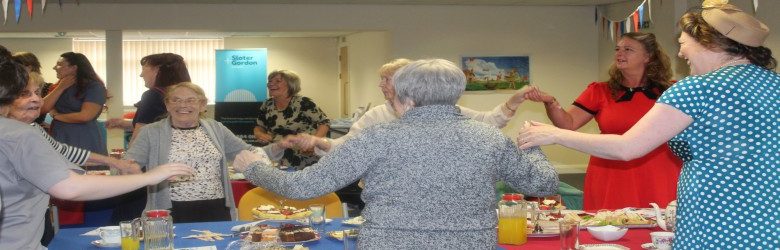
    On Tuesday 4 July, Disabled Living hosted our very own 1940’s Dementia Tea Dance in coordination with Health Information Week. The aim of this event was to kick-start our celebrations for providing 120 years of service.

    The event was for people with dementia and their carers to enjoy an afternoon filled with music by The Daisies. Many of our guests got into the celebratory spirit as they danced and sang to songs from the 1940’s, 50’s, and 60’s.

    The Daisies
    Disabled Living hired The Daisies to perform at a 1940’s themed tea dance for people with dementia, their relatives and carers. This event was to mark the start of Disabled Living celebrating 120 years of providing services.

    Debra Evans, Chief Executive of Disabled Living said:

    It was essential we had a very interactive and upbeat performance as photographs and videos which we taken on the day will be used for social media and our website. In addition, Disabled Living have been awarded Heritage Lottery Funding for a range of projects showcasing our history and this event will be captured within elements of these projects.

    Our guests and staff absolutely loved the show The Daisies put on; their compilation of tracks was spot on, with an extremely polished and professional performance.

    Slater and Gordon UK

    Alzheimer's Society

    We were delighted to have representatives from Slater and Gordon Lawyers who came along to provide people with advice about wills, trusts and mental capacity issues.  To ensure our guests, relatives and carers had up to date knowledge on the range of services available to support people with dementia we also welcomed our colleagues from the Alzheimer’s Society.

    To fit into the 1940’s theme, we had vintage posters displayed around the room including ‘We Can Do It!’ and ‘Dig for Victory’.

    Tea was served in our vintage tea pots and cakes were displayed on these lovely vibrant floral two-tier cake stands. The whole selection of food enjoyed by all included sandwiches, cakes, scones and of course, plenty of cups of tea and coffee. The china plates, cups and saucers made a wonderful contribution to our 1940’s theme.

    Thank you to Le Mange Tout for your catering service – you never disappoint us.

    Cakes

    Our guests also had the chance to experience our multi-sensory rooms to get a feel for the vibrant and relaxed atmosphere that they have to offer.

    Members of staff happily joined in with the 1940’s theme and wore clothing which represented that era. Many of the female members of staff wore 1940’s cocktail dresses, polka-dot dresses, and another included a land girl outfit, with our hair styled in waves, curls, and rolls. Lawrence our caretaker suited up for the occasion too!

    Disabled Living's Dementia Tea Dance

    We would like to thank IAS, De Brook Lodge (Ideal Care Homes), all of our guests and members of staff who joined us to kick-start our celebrations for 120 years of providing services and being part of this special occasion.

    A guide to alcoholism and dementia by Oliver Clark. This post also includes an infographic {showing|detailing|outlining the long-term effects of alcohol on the brain.

  • Disabled Living’s Work and How Small Charity Week Helps Us

    Disabled Living’s Work and How Small Charity Week Helps Us

    For our second blog supporting Small Charity Week, we would like to share the impact that Disabled Living’s work over the last 120 years has given people. Ever since Disabled Living established in 1897, we were a small charity in Salford and Manchester.

    There were even more events and highlights that happened in between these days. A full list of our history can be found here which includes an expansion to include training, continence service, extended occupational therapy services and craft classes.

    Two more recent highlights are the refurbishment of Redbank House in 2011 and our new centre in Worsley being opened by Sir Alex Ferguson in 2012.

    Redbank House

    Alex Ferguson 2012

    Disabled Living 2012

    Now we have grown nationally, and even parts have developed internationally. Developing products is very important to us. Not only does it help to keep us financially stable but it also means we are helping people with the equipment and services that they need as the world evolves each day.

    We work across all types of long-term disabilities providing people with solutions and building our relationships.

    Debra Evans, Chief Executive of Disabled Living

    Small Charity Week helps us to:

    • Promote what it is that Disabled Living do as a charity
    • Raise awareness of our different services
    • Raise awareness and build relationships with charities across the UK

    Follow Disabled Living on Twitter to see how we’ll be involved with Small Charity Week.

  • 3 Benefits of Small Charity Week

    3 Benefits of Small Charity Week

    Small Charity Week is celebrated during 19 – 24 June 2017 and brought to us by The Foundation for Social Improvement (FSI). This year, we are proud to be participating at Disabled Living.

    Small Charity Week is supported by Provident Financial Group (PFG), and the Provident Good Neighbour Community Programme as well as being sponsored by JustGiving – the simple way to donate and fundraise online since 2011.

    This awareness week aims to promote the sector of charities that there are in the UK to show recognition, value, and support to those who participate.


    Charity

    There are many charities across the UK, all of which support their own causes. This is why we would like to participate, to be part of the charity community that is raising awareness of what Small Charity Week do and how it helps charities like us.

    This year Disabled Living are celebrating 120 years of providing services and we aim to support people to maintain independence and improve the quality of their life.

    Disabled Living has an excellent reputation for the quality of services which include:

    My wife and I recently spent a morning at your centre. We were guided expertly by the occupational therapist who took a great deal of trouble explaining the pros and cons of stair lifts

    Mr B D – Altrincham

    The 3 Benefits of Small Charity Week

    1. They play an active part on social media to encourage others to learn more about the small charities that are in the UK. Their social campaign reaches thousands of people and that’s something that needs to be celebrated.

    2. They allow any small charity in the UK to participate and celebrate the diverse community of charities that are supporting a wide range of different sectors.

    3. They bring charities together that people may not have heard of before and help to promote their brand awareness. Learning more about these charities enable us to realise just how many charities participate in Small Charity Week.

    We have two more blogs coming up for Small Charity Week so stay posted!

    How does Small Charity Week benefit you? Tell us on Twitter or Facebook

  • The Importance of Men’s Health Week & Bladder and Bowel Care

    The Importance of Men’s Health Week & Bladder and Bowel Care

    Men’s Health Week takes place between 12th and 18th of June. Last year’s campaign was very successful tackling stress and ways to help beat it. This year’s theme is all about abdominal obesity. Some people may wonder why belly fat is the most dangerous type of fat in your body and the reason is because it surrounds some of the most vital organs in your body.

    Throughout this post, we will discuss men’s health and a little bit about experiencing bladder and bowel problems.

    Belly fat can still be a concern if you think you’re overall weight is healthy. A large amount of belly fat can increase the risks of:

    • Cardiovascular disease
    • Insulin resistance and type 2 diabetes
    • Colorectal cancer
    • Sleep apnoea
    • Premature death from any cause
    • High blood pressure

    Facts taken from Men’s Health Forum.

    Hazardous waist
    One man in five dies before the age of 65. TOGETHER we can change that

    According to Men’s Health Forum, if a man’s waist is larger than 37 inches which is equivalent to 94 centimetres, you’re at an increased risk of many health problems such as heart disease and stroke. What’s more, if a man’s belly measures more than 40 centimetres then they are at a risk of more health problems.

    Taking precautions like eating slowly, reading food labels and learning more about what the food you’re eating contains, drinking more water, and keeping active can help towards keeping your belly fat and yourself a lot healthier.

    Take the quiz to see if you think you know these the answers to these interesting questions here.

    Bladder and Bowel Care for Men

    It is not uncommon for men to experience problems with their bladder or bowel.  Common bladder problems may include dribbling or leakage, dashing to the toilet, difficulties emptying the bladder, straining to pass urine, increase frequency and getting up several times in the night to pass urine.

    Some common bowel problems may include bowel leakage (faecal incontinence), constipation and difficulties emptying the bowel.  If you have any unexpected changes in your bladder or bowel it is important to speak to your GP as soon as possible. 

    The important message is that help is at hand…

    Having a bladder or bowel problem (or both), can cause embarrassment, anxiety and distress, often having a major impact on an individuals quality of life. Often people are reluctant to discuss their symptoms with anyone, but it is important to know that much can be done to treat, manage and improve symptoms.

    Please don’t suffer in silence, speak to someone, your GP, a Continence or Bladder and Bowel Specialist Nurse, District Nurse or other health care professional. Or you can ring our nurse led helpline in confidence, for advice and support, on Disabled Living‘s helpline number – 0161 214 4590.

  • 10 Reasons Why Carers Are So Important

    10 Reasons Why Carers Are So Important

    Carers Week’s annual campaign aims to raise awareness of carers in the United Kingdom, highlighting the challenges that carers face and the support received by families, professionals, and communities. 

    Recognise, support, and celebrate

    Come together to show your love and support for those who take the patience, positivity, and determination that it takes to care for somebody who needs their help. It’s worth considering the importance of carers and the wonderful job that they do.

    3 in 4 carers don’t feel their caring role is understood or valued by their community – carersweek.org

    …and that’s something that needs to be changed.

    What makes cares so important?

    1. The number of older people is rising and that means more carers are needed
    2. Carers do their best around challenging circumstances
    3. Carers dedicate a lot of time in their role
    4. They are compassionate and want to make a difference
    5. Their experience and professionalism creates a lot of great empathy
    6. They create a resilient working environment
    7. They see things from a greater perspective
    8. They provide company just by being there for somebody
    9. They deal with personal situations – whether it be personal physical care or simply listening
    10. They do their utmost to make sure a person is happy and comfortable

    Sometimes, there can be people who try to take caring up as a profession but they can no longer continue. One of my friends started a job as a carer and she cried on the first evening because the emotional and physical exhaustion was too much for her to handle.

    However, my mum was a carer for an elderly lady called, Alice, who shared a long-term friendship with my grandparents. She continued to support her even when Alice was the only one left in the friendship triangle. My mum would shop for her, go to the exact places Alice required her shopping to be from; cook for her; clean; bath her and so on. – Natasha, Marketing Coordinator & Content Writer at Disabled Living

    Single Handed Care
    Single Handed Care Day at Redbank House in April

    Here at Disabled Living, we value all of those wonderful carers who want to help others, who face obstacles and don’t let it get in the way of their determination to make a difference. We admire those who support the elderly, disabled people, and anyone of any age who requires a carer to make their lives better for them as they most possibly can.

    Our equipment room showcases our range for facilities to help care for disabled and older people.

    Kitchen | Disabled Living

    Bed | Disabled Living

    Bathroom | Disabled Living

    We will continue to value carers

    Disabled Living are proud to have pledged our support for carers. Are you going to show your support? So far there has been an amazing response to pledges and you can help increase that number.

    Spread the word in the workplace, your community, and anywhere you can. See more here.

  • Diabetes Week – ‘Know Diabetes Fight Diabetes’

    Diabetes Week – ‘Know Diabetes Fight Diabetes’

    The staff at our Health & Social Care Hub, Redbank House, wanted to know how many people they have known to have diabetes. Between Natasha, Danielle, Emma, and Lawrence, they have known eight people with diabetes. That’s a significant number which consists of friends, relatives, and work colleagues.

    There are two common types of diabetes – Type 1 and Type 2.

    Type 1

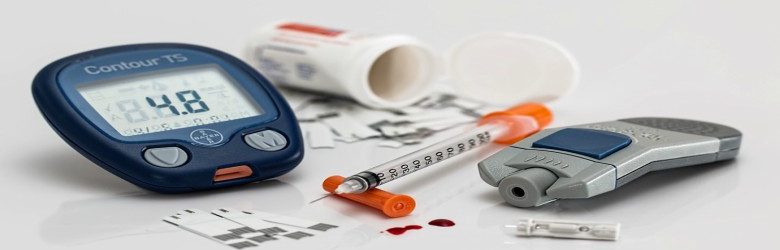
    Type 1 diabetes develops when the insulin-producing cells in the body have been destroyed and the body is unable to produce any insulin. Source: Diabetes.org

    According to Diabetes.org. 10% of all adults with diabetes are diagnosed with Type 1. It is most commonly found before the age of 40, and more likely found in childhood. A healthy diet and regular physical activity is advised to help keep control of your diabetes. Someone who has Type 1 diabetes puts insulin into their bodies either by injections or an insulin pump.

    Type 2

    Type 2 diabetes develops when the insulin-producing cells in the body are unable to produce enough insulin, or when the insulin that is produced does not work properly (known as insulin resistance). Source: Diabetes.org

    Usually, people find out that they have this kind of diabetes over the age of 40. According to Diabetes.org, Type 2 diabetes is becoming more popular with children, adolescents, and people from all ethnic groups. Again, maintaining a healthy diet and completing physical activities is a way of treating this type of diabetes.

    There is also Gestational Diabetes which is known for affecting pregnant women in their third trimester. For more information please click here.

    We spoke to Catherine, aged 47 and Faye, aged 23 about their diagnosis and what it’s like to live with diabetes.

    Catherine’s Story

    I was diagnosed 3 years ago. My pre-diabetic symptoms were water infections and the worst headaches ever. I was gobsmacked when I found out and devastated.

    My tablets made me feel better at first but then they made my body react differently (persistent cough and uncontrollable bowels) so I made small changes to my diet and lifestyle and for good or bad I stopped taking my tablets and feel so much better.

    I haven’t had a day of work in two years nor have I had a water infection since. I only get premenstrual headaches or tiredness ones.

    My mum had diabetes complications, for example, constant diarrhoea led to misuse of Imodium type of medication, which then led to me stopping my Metformin as I believe I was starting to go down that road.

    – Catherine

    Faye’s Story

    Please can you tell us a little bit about your background with diabetes (when you were diagnosed, which type, any symptoms that were a sign before your diagnosis)?

    My diabetes journey began at 7 and a half-years-old. I was thirsty all the time, sleeping loads but still really tired, and lost over 2 stone but not doing anything different! I went to the doctors 6-7 times before they said let’s check your water. When this was checked they sent me straight to Pendlebury Children’s Hospital as my ketone level was off the scale and my blood sugar reading was just as high.

    As soon as I got to hospital they diagnosed me with Type 1 diabetes and put me on a straight insulin drip and I was in hospital for 10 days before they sent me home with my insulin.

    Does diabetes control many things in your life? If yes, are they the same things compared to your childhood?

    I wouldn’t say it controls many things I do as I still do everything all people my age do. Although I would say I just have to be a little bit more careful and cautious. I still drive, go out, have a job and I would say live a normal life. The only thing different to having it as a child to now is my mum had more control of what I ate and more control of doses and sugars.

    How do you feel now in comparison to when you were diagnosed?

    Well as I was diagnosed so young I didn’t really know anything about it and mum and dad just did everything so I have asked them how it felt. In their response, they explained that they had to learn about it quickly as neither of them had any knowledge of it, they were both worried and concerned about me and my life and how it would affect my life in the future.

    Now I suppose I just take it in my stride. I have good days and I have really bad days but it is what it is. I count myself lucky that I’m still here and not suffering. Whereas, there are so many other people with different ailments.

    Is there anything you would recommend to others who are hearing the news that they’re diabetic for the first time?

    If you would like more information or advice please visit the Diabetes.org website.

    Thank you to Catherine and Faye for sharing their story of life with diabetes. If you would like to share your story on Disabled Living’s blog, please visit in touch via email: info@disabledliving.co.uk

  • Why Gerry Yeung is Our Story of the Month

    Why Gerry Yeung is Our Story of the Month

    For May, we are honoured to focus our Story of the Month to the High Sheriff of Greater Manchester, Kui Man Gerry Yeung OBE. He has been the president of Disabled Living for the last ten years.

    I have been President of Disabled Living for over 10 years. The charity is in its 120th year and provides impartial information and advice about products, equipment and services for disabled adults and children and the carers and professionals who support them. Their aim is to support people to maintain independence and enhance and improve their lives.

    Alongside this, Gerry has been involved within the business, social, training and magnanimous scenes in our city for a long time. Last month we shared more about Gerry’s background in a previous post.

    Installation Ceremony - collage

    Evidently, Gerry is very passionate about Manchester and his fundraising. On Sunday 28 May, he will be participating in the Great Manchester Run so we thought that we would take a moment to ask Gerry some questions related to the run and his outlook on our vibrant city, Manchester.

    We asked Gerry the questions below.

    What do you love about Manchester?

    Manchester is a special place. It is big enough for a commercially, culturally, and exciting atmosphere. Yet it is small enough for everyone to work together.

    What motivates you the most for the Great Manchester Run?

    Knowing I can raise as much money as possible for the charities and to raise the profile of the High Sheriff Office. And in general, just keeping my body fit and to complete the run within my goal time which is less than an hour.

    What is it about Manchester that inspires you?

    Due to the recent atrocity in Manchester, there is a lot of sadness. However, you can see the spirit of the people in Manchester and that the city is very much alive, with so much pride and togetherness.  There has been a lot of determination and a tremendous amount of empathy for those involved.

    Is there anything else that you would like to add?

    Be generous with your donations! Donations can be submitted through my Virgin Money page.

    Gerry wishes to raise over 20,000 to his chosen charities: Disabled Living, Re-Dish, Wai Yin Society, Greater Manchester High Sheriff’s Police Trust, Chinese Health Information Centre, and Local Chinese Sunday Schools.

    Thank you to Gerry for answering these questions and we wish you the best of luck in completing the Great Manchester Run in less than an hour.

Disabled Living