Author: Daryl

  • The Links Between Abi Rehabilitation and Sports and Social Life

    The Links Between Abi Rehabilitation and Sports and Social Life

    Sarah Jones, Senior Associate at Clarke Willmott LLP, attends our In the Dock with a Expert Witness workshop. We recently spoke to Sarah to hear all about the ‘Boots, Balls and Brains’ event discover the links between ABI Rehabilitation and sports and social life. 

    About ‘Boots, Balls and Brains’

    For football fans, those interested in rehabilitation, social media and social lives of anyone who works with, supports or lives with an acquired brain injury… we have a wonderful and different event happening in Southampton this month called ‘Boots, Balls and Brains’.

    This is a joint event hosted by Clarke Willmott solicitors and Outer Temple Chambers which will also raise funds for Saints Foundation with a unique day of interactive lectures and information at St Mary’s Stadium, home of Premier League Southampton FC.  The day will be focusing on the links between ABI Rehabilitation and sports and social life, by offering expert advice on the practical ways leisure time activities can be a vital component of and motivator towards the rehabilitation of those affected.

    Headline speaker Dr. Magdalena Ietswaart of the University of Sterling will be speaking about her much debated research into the effects of repeatedly heading a football and will share her thoughts on Brain Health in Sport: Neuroplasticity, Football Heading and Dementia.

    Dr Richard Maddicks, neuropsychologist, talks about the risks of social media and Internet usage for injured clients.

    Additional presentations will come from Susie Quinlan at ILS on the use of therapeutic activities from a case manager’s point of view and Anita Pascoe of West Country Case Management on the practical implications of social media in the world of case management.

    Beneficiaries of the work of Saints Foundation will speak about their own positive experience of sport and ABI, with the support of Saints Foundation personnel.  Legal teams from Outer Temple and Clarke Willmott will provide the latest legal updates.

    Incredible value at only £50 per head for the day (a reduced rate of £25 to delegates from other registered charities), with all proceeds going to Saints Foundation, the event is a must for all neuropsychologists, clinical psychologists, occupational therapists, SALTs, case managers, support workers and sports scientists or anyone with a professional interest in ABI, rehabilitation and sport and social media.

    More information

    Please visit the link for more information and to sign up: https://www.clarkewillmott.com/events/boots-balls-and-brains/

  • Disabled Living’s 122nd Annual Meeting

    Disabled Living’s 122nd Annual Meeting

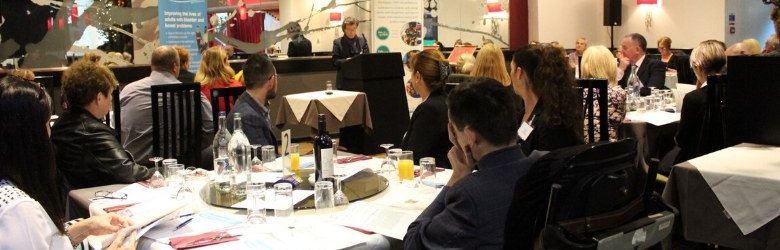
    Last month we commemorated Disabled Living’s 122nd Annual Meeting at Yang Sing Cathay based at Intu Trafford Centre. Throughout 2018-2019, Disabled Living continued to work together to provide information and advice for disabled people, their families and carers to help them achieve optimum independence and self-determination.

    Chief Executive of our charity, Debra Evans, explained that it’s been a very busy year for the team, as we continue to develop our services and introduce exciting new partnerships. She added:

    “We have so many talented, knowledgeable and experienced staff members who we want to nurture and provide them with the support to continue their ongoing professional development. It is important we have the right staff, sat in the right seats on the ‘Disabled Living Bus’, in order to be innovative  and remain financially stable.”

    A few highlights

    • Available office space at Redbank House resulted in a new client ‘WeMindTheGap’. The team got to know the young women involved throughout the duration of the course.
    • BBUK were pleased to launch their ‘Just Can’t Wait Cards’ – available for people who have a medical condition and need to access a toilet urgently.
    • Our Disability Awareness trainer, Chris Cammiss, delivered Access Audit training at The Foreign Office.
    • Kidz to Adultz launched their fabulous Kidz to Adultz Magazine where celebrities have been featured such as Olly Murs.
    • The development of Disabled Living’s monthly newsletters and e-bulletins resulted in an increase of circulation and acknowledgement of how useful the resource is to them.

    We were delighted to have Joshua Wintersgill join us at this year’s Annual Meeting

    Joshua is the Founder and Director of easyTravelSeat. He gave us an insight into growing up with Spinal Muscular Atrophy from 18 months old and being a wheelchair user ever since the age of 10 years old. Using his innovative skills, a couple of years ago, Joshua launched Able Move to make boarding planes easier for disabled people. Since Joshua won the ‘Great British Entrepreneur of the Year (South West) Award’, he secured a brand license with easyGroup, reforming as easyTravelSeat as it’s known today. His work continues to inspire all, and we wish him the best of luck with his aspiration to be a Paralympian in the future.

    joshua wintersgill in his wheelchair presenting speech

    Joshua gave a very moving speech about the challenges of living with a neuromuscular condition but turned them into motivations. We look forward to hearing his seminar at Kidz to Adultz North on Thursday 14th November at EventCity.

    Katie recently joined our marketing team, and this was the first Disabled Living Annual Meeting she attended. We asked her what she thought about the event…

    “Being new to the charity, it was clear to see that the team and trustees are very passionate about the work they do for Disabled Living. It was great to hear about all the amazing achievements that the charity has been a part of over the year and meet some of the trustees who have helped to make this happen.”

    We would like to thank all staff, trustees, partners and volunteers who helped us to have another great year, yet again. Also, a big thank you to our President, Kui Man Gerry Yeung OBE DL and his staff for being as welcoming as always at his restaurant. We think the food gets tastier every year!

    All of our teams – Equipz, Training, BBUK, Redbank House and Kidz to Adultz Exhibitions are feeling optimistic for the year ahead.

    Take a look at this year’s Annual Report for more details.

  • LimbPower Create New Player Pathway Resource to Increase Engagement in Activity

    LimbPower Create New Player Pathway Resource to Increase Engagement in Activity

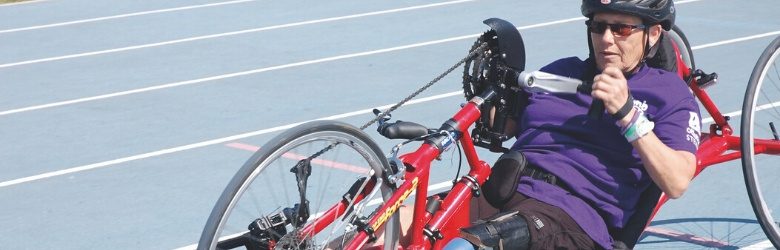
    LimbPower have introduced their new player pathway resource to increase sport activity for athletes and non-athletes with a limb impairment. Sport is for everyone, whatever your age or physical ability. Access can be more challenging for persons with a limb impairment and there can be a myriad of questions, challenges and barriers to overcome, whether you’re just starting to get active or progressing from beginner to a higher level.

    Questions such as, where do I start? How do I access opportunity to try a particular sport? How do I return to a sport I used to play? How do I achieve my goals and ambitions?

    The new Player Pathway resource for athletes and non-athletes with a limb impairment produced by LimbPower (with support from Sport England’s Inclusive Sport Fund and the Activity Alliance), answers some of these questions and will support you in knowing where and how you can access physical activity and sport.

    “One of the major barriers to participation in physical activity and sport is access to information. This new Player Pathway resource is an excellent addition to LimbPower’s suite of information sheets on Accessing Sport and Physical Activity. Each resource we create is designed to fill a knowledge gap to enable individuals with limb impairments to access physical activity and sport.” – Kiera Roche, LimbPower CEO

    The resource clearly shows the different opportunities from grass roots to elite level and highlights the organisations who can support you on your journey and how you can access this support.

    The resource also highlights where and how LimbPower can support you at the different levels of participation.

    “The Player Pathway is a fantastic new resource,” says LimbPower Patron Richard Whitehead. “Not only does it support individuals who want to take part in social physical activity, it also provides guidance for those who want to aim higher and compete at events or games meetings. In addition, importantly the factsheet enables coaches to understand where to sign post for the next opportunities available.” he adds.

    This new resource sits alongside LimbPower’s suite of Accessing Sport and Physical Activity Fact Sheets created to engage individuals with limb impairments in physical activity and sport. The new resource factsheet is available free to download from the LimbPower website www.limbpower.com. For further information please contact LimbPower’s Sports Development Officer Andy Brittles at andy@limbpower.com.

    If you would like to share your news with Disabled Living, please get in touch with us via email: info@disabledliving.co.uk

  • Exploring Profound and Multiple Learning Disabilities and Profound and Multiple Barriers to Learning

    Exploring Profound and Multiple Learning Disabilities and Profound and Multiple Barriers to Learning

    In her last post, guest contributor Joanna Grace, said that some people will never become symbolic communicators, a sentence that may have jarred those used to presuming that everyone can achieve, even if it is in very small steps and will take a very long time. Joanna now talks about multiple learning disabilities and the barriers to learning.

    We could question the worth of a skill to a person who must spend over half their life acquiring it, but leaving to one side those who do eventually master the standardised form of communication we are insisting they use, there remain a group of people who will never become symbolic communicators. Saying that these people exist is becoming a taboo and we must not let that happen as this group is exceptionally vulnerable to being left behind as practice advances.

    I remember Flo Longhorn talking to me about a little girl she once worked with who had only the top of her brainstem, she had the ability to blink, to breathe and to smile, but the rest of her brain simply was not there. That little girl was never going to become a symbolic communicator.

    Recently I heard from a special schoolteacher who had moved from the UK to Australia where she had taken charge of a class of students with profound and multiple learning disabilities. The school had a commitment to all of their learners becoming symbol communicators so within her class she met students who had spent the past sixteen years being supported to match symbols hand over hand.

    The students had been presented with two symbols, given a third that matched one of the first two, and then someone else had used their hand to lift the third symbol onto its matching pair.

    Without any sign of being able to do this for themselves they had been being made to do this for sixteen years and were completely unresponsive. The teacher began to share sensory stories with her students, after the first half a term one of the parents wrote in to say their son had begun to look at them at home and that previously they had not been aware that he could do this. Presumed competence had robbed that particular young man of sixteen years of engaging with his family and the glorious sensations that make up his life.

    To presume someone is more than they are is not kind, it is prejudice. It is saying this way of being is best, and if you are not this, that is bad. High expectations and presumed competence should never be universal, they should be highly individual and personalised. We should also place them upon ourselves, we should have high expectations of our own abilities to carefully and continually evaluate each person we support as we support them, we should presume ourselves competent at avoiding blanket assumptions either of competence or incompetence. We should be reflective and connected as we support people.

    Within the community of people currently described by the umbrella term Profound and Multiple Learning Disabilities, a term often shortened to PMLD are two distinct groups:

    • We have people with profound and multiple learning disabilities PMLD, people who experience physical, sensory and cognitive impairments.
    • We have people with profound and multiple barriers to learning PMBL, people whose physical and sensory impairments mask their cognitive abilities.

    The misunderstanding that these two groups are one group is damaging to both. This series of articles began with me discussing Objects of Reference, so let us use Objects of Reference as an example here. For people with profound and multiple barriers to learning to us Objects of Reference can be a steppingstone to more formal systems of communication. For people with profound and multiple learning disabilities Objects of Reference are a lifeline of understanding thrown into a confusing soup of experience.

    For people with profound and multiple barriers to learning we would expect to see an increasing number of Objects of Reference being meaningfully used and for the use of objects to progress into the use of symbols in time. To increase the number of Objects of Reference being used with someone with profound and multiple learning disabilities or to move towards symbols could well be to remove the communicative potential of the objects entirely. The same actions are, for one group, meaningful progress, whilst for the other group they could be a backward step. You can see the danger.

    When we offer an Object of Reference to a person what happens?

    Is it a token gesture performed because a policy states we should? Do we observe a connection with that object? Is that a connection with the object alone or does the object appear to have an orientated quality? i.e. is the Object of Reference being used in a way that is meaningful to that person?

    There are many more examples beyond that of Objects of Reference, of the impact of this dangerous grouping of two distinctly different groups under one umbrella term. All of the examples point to how important it is that we do what is right for the person we are with, not what is right according to policy, or right according to what we do with people who have this label attached to them. It is important to discover different care options depending on what the individual’s needs are. Being person centred is not a case of following set rules, we must consistently be highly observant, connective and reflective valuing each person for who they actually are.

    This post was written by Joanna Grace, a new contributor to Disabled Living’s blog. Sensory Engagement Specialist, trainer, author, TEDx speaker and founder of The Sensory Projects.

  • Connecting People to Research: Why Your Voice Matters

    Connecting People to Research: Why Your Voice Matters

    Dr Emily Howlett, Patient Involvement Project Manager, at Manchester University NHS Foundation Trust talks about the importance of connecting people to research.

    Imagine you’re going to cook someone an omelette. You know they’re very hungry, you’ve worked out the best ingredients to use, the best recipe to follow and the right utensils you need to create a sensational meal. But because you didn’t ask the person first what they thought about your idea, you didn’t realise they’re allergic to eggs.

    If you apply that to health research, a researcher who is an expert on the biology of a particular health condition and who’s working tirelessly to develop better treatments for patients, may not have a sense of what it feels like to have the condition. They won’t know the impact of changing a treatment or how the side-effects might affect everyday life, or what it’s like to drive to multiple appointments every week and find a car parking space. By listening to people’s real-life experiences of a health condition, to understand what matters to them, researchers can work with people to set the priorities for health research that will benefit everyone.

    Our team sets up partnerships between patients and researchers

    We run focus groups to give people with an interest in health research the opportunity to explore key questions with the professors and doctors carrying out the research, to make sure it’s relevant to patients.

    Our work covers a number of different research areas including cancer, lung conditions (COPD, asthma, chronic cough, Aspergillosis), hearing loss and conditions effecting skin, muscles or joints.

    We run our focus groups throughout the year and invite different people to each event. If you have experience of any of these conditions and would like to give your views to researchers, we’d love to hear from you.

    We will pay for your time

    We offer £20 an hour to people coming along to share their experiences, we also cover travel expenses within Greater Manchester, and provide refreshments. You’ll get the chance to learn about research and engage in interesting, stimulating discussions. Most importantly you’ll have the chance to use your voice to shape local health research.

    To help us to match you to a focus group that aligns with your interest and experience, we’ll get in touch to find out a bit more about you first. We’ll then let you know when an opportunity comes up. If you’d like to sign up to our database or just find out more, please email Emily.howlett@mft.nhs.uk.

    This post was written by Dr Emily Howlett, Patient Involvement Project Manager, Public Programmes Team. If you would like to feature on Disabled Living’s blog please email: info@disabledliving.co.uk 

  • Living with Retinitis Pigmentosa – Elin’s Sight Loss Journey

    Living with Retinitis Pigmentosa – Elin’s Sight Loss Journey

    Elin Williams caught our attention on Twitter. She reached the shortlist to attend The National Diversity Awards but that wasn’t only thing that inspired us. Elin has her own disability and lifestyle blog. She shares her journey and motivational messages on social media to empower others who are visually impaired. We spoke to her about her story of life with Retinitis Pigmentosa (RP). 

    When you’re three years old, you’re expected to be full of life, splashing different coloured paints onto a piece of paper in attempt to create your childhood masterpiece. You’re expected to have no care in the world when playing with other children.

    Despite being incredibly shy, I did all of the above but the way I reacted to some activities and situations ignited a previously dormant worry for my parents. Welsh is my first language and health visitors thought that I couldn’t understand English when they tried urging me to read letters and words they showed me. They assumed that I wasn’t the brightest child but that wasn’t the reality. I couldn’t see.

    My parents also noticed that I couldn’t see in the dark. This was the first sign that suggested something was wrong.

    And so my third year of life marked the inception of my sight loss journey

    The years that followed were laden with hospital appointments with ophthalmologists trying to find the root of my deteriorating eyesight. It was three years later, when I was finally diagnosed with the degenerative condition, Retinitis Pigmentosa (RP).

    blind woman using a white cane

    I don’t remember much, if any, of this time but the challenges that followed are still clear in my mind. As a young child, it’s safe to say that I was confused by the entire concept. A qualified teacher of vision impairment (QTVI) came to help me at school, work was adapted into large print, I learned to touch type and started learning braille a couple of years later, just before I left primary school. I was also introduced to the white cane when I was about eight years old but everything was quite raw at the time and I was still adjusting to my diagnosis, trying to comprehend the realities of sight loss.

    And so, after one or two trips around my local village with my cane in hand, I decided I wasn’t ready at that time and pushed the thought of using it away. I saw it as a symbol of my disability, something that would encourage more misconceptions, stereotypes and sniggering laughter. So, it was stored away in a box in the corner of my room for eight years after that.

    But despite the relief in not having to use my cane, the realities of sight loss still loomed over me like a dark cloud. However, I tried to hold on to the shining rays of the sun which peeked out from behind and that’s what I’ve always tried to do. I’m a positive person and I like to focus on the light at the end of the tunnel, even if that glimmer blurs and fades a little more everyday.

    I spent many of my initial teenage years going out with my friends

    We’d ride our bikes around our local area and did all sorts of tricks on the trampoline. I also gained an interest in beauty and fashion and continued playing the piano and harp. In those moments, I felt just like everyone else (let’s not mention the cars and people I nearly crashed into with my bike)!

    young girls riding bikes

    But there have been moments of uncertainty, grief and upset. I didn’t have the confidence to talk openly about my disability with others my age and so many didn’t understand. This resulted in some taking the opportunity to bully me for it. I had an awful feeling of loneliness and my sixth form years were peppered with anxieties and panic attacks.

    But a positive was formed from these feelings and judgements since I took the opportunity to relieve my feelings through writing and I eventually turned to publishing my thoughts on my blog – My Blurred World – which changed my life in a way I never imagined it could. It opened my eyes to a world I never knew existed before, introducing me to a whole community of fellow vision impaired people who assured me that I wasn’t alone, knowledge that I never indulged in much before this. But it’s now clearer than ever.

    I try not to let sight loss dictate my life and I always strive to pursue the things I want to achieve

    As well as writing my blog, I’m studying a degree in Arts & Humanities (specialising in English Language and Creative writing) with The Open University. I’m striving for a career as a writer. I’ve also worked/do work and volunteer in the charity sector which is incredibly rewarding. My point is, living with sight loss doesn’t have to prevent you from achieving what you want in life. It does present challenges, of course it does, I know that all too well, but it can lead you to some invaluable opportunities and experiences, offering a wealth of knowledge you wouldn’t have otherwise.

    I’ve been registered blind/severely sight impaired since I was twelve years old and I like to describe my eyesight as being an old camera which is constantly out of focus, with the shutters slowly closing in. But my focus on life is clearer than ever and although there are many hurdles and challenges, I aim to live my life in the most positive way I can.

    Sight loss isn’t the end, it’s just the beginning of a new way of life.

    This post was written by Elin Williams, creator and writer of the award-winning blog, My Blurred World.

    If you would like to feature on Disabled Living’s blog please email: info@disabledliving.co.uk

  • Is Presuming Competence for Non Symbolic Communicators Risk Free?

    Is Presuming Competence for Non Symbolic Communicators Risk Free?

    In one of our previous posts, we introduced Joanna, contributor to Disabled Living’s blog who you’ll see more of over a series blogs. Joanna wrote about Objects of Reference and highlighted the dangers of using a standardised approach to them for people who will not become symbolic communicators.

    I imagine some people protested my words:

    “But we always presume competence, they might not be symbolic communicators now, but they may become symbolic communicators.”

    Of course it is true that some people will learn slowly over time to become symbolic communicators, however it is also true that some people will never learn to be symbolic communicators.

    Hidden in the defence above is the assumption that presuming competence is always a good thing. We have all been warned about the danger of assumptions!

    “But it is important to have high expectations.” Why yes it is, but are high expectations a definable level or are they relative to each person? Many settings speak the language of being “person centred” whilst at the same time implementing standardised systems of communication which are meaningless to some individuals within that setting.

    “But having high expectations and presuming competence is respectful, you wouldn’t want us to have low expectations and presume incompetence would you?”

    No of course not, but these things are relative.

    Suppose I presumed your competence at flight, and marched you to the top of a high building declaring my faith in you and encouraging you to leap off.

    Would my high expectations and presumed competence be good for you? No.

    Although we do not pitch people off buildings with our presumed competence, to pit people against things they cannot do is as harmful to their self-esteem as such a leap would be harmful to your body. People with complex disabilities already have high rates of mental ill health, damaging their self-esteem is not going to help.

    There are things we cannot do. There are things other people cannot do. Admitting this is not being disrespectful of a person, it is acknowledging them as they are, accepting them as they are, respecting them as they are.

    Hidden in the jolly declarations of presumed competence is a prejudice that says intellect is best. To have it is good, to lack it is bad. Perhaps those of us who have this wonderful intellect should use it a little more to consider what is wonderful about other people’s lives, to celebrate them for that, to measure them against that, rather than measuring them against the standard we have been measured against.

    Perhaps the high expectations should be on us, we should expect ourselves to recognise each person for who they are, and how they are right now. If we have high expectations for them they should relate specifically to that person, not to a pre-defined standard of what achievement looks like. For some achievement might be graduating with full honours, for others it might be listening to sounds in a new environment without distress. Neither achievement is greater than the other, both are massive for the person accomplishing them. Both deserve recognition and celebration.

    This post was written by Joanna Grace, a new contributor to Disabled Living’s blog. Sensory Engagement Specialist, trainer, author, TEDx speaker and founder of The Sensory Projects.

  • Family-run Harrogate Company Works with Yorkshire’s Ambulance Service

    Family-run Harrogate Company Works with Yorkshire’s Ambulance Service

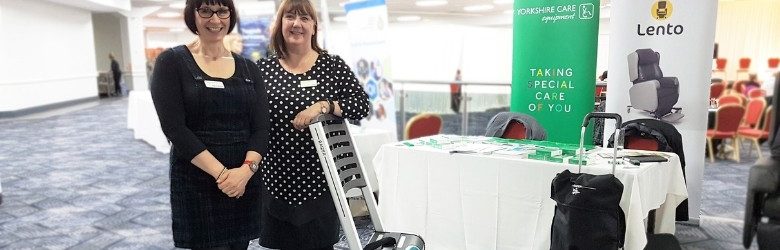
    Harrogate-based Yorkshire Care Equipment has supplied Yorkshire Ambulance Service (YAS) with over 50 Raizer emergency lifting chairs that are now being used by first responders, falls teams and care homes in the Sheffield area.

    YAS and NHS Sheffield Clinical Commissioning Group (CCG) have started a project in the city that aims to get people who have fallen back on their feet as soon as possible. The Raizer chairs are part of this joint project which provides staff with appropriate lifting equipment and focuses on residents having an improved experience. The results will be shared with other ambulance services, some of which are also trialling the equipment.

    Yorkshire Ambulance Service responds to nearly 800,000 emergencies every year with around 10% of these related to people who have fallen. Many of these calls come from care homes where staff are either physically unable to lift the person back to their feet or are unable to do so because of lack of training and access to appropriate equipment.

    Karen Owens, Director of Urgent Care and Integration at Yorkshire Ambulance Service NHS Trust, said:

    “Feedback from the care home staff and residents in the project described the Raizer chair as something which will help staff move people safely and with dignity and will give staff the confidence to assess injury prior to making the decision to moving someone.

    “We very much appreciate the collaborative working and funding provided by the CCG on this project.”

    The Raizer is completely unique from other falls lifting products because it only takes one carer to operate it. In turn, this saves money and time for care staff.

    Steve Ellis, Yorkshire Care’s Raizer Specialist, said:

    “When we worked with YAS last year, we knew that the Raizer could make a real difference to the level of care they were providing. Even when I’ve carried out training with their staff, you can see how much more confident the staff feel when they know they have a device that will genuinely improve the quality of care they provide.”

    Content provided by Yorkshire Care Equipment. If you would like to feature on Disabled Living’s blog please contact us via info@disabledliving.co.uk. 

  • Jonathan’s Story About Not Being Able to Speak to Communicate

    Jonathan’s Story About Not Being Able to Speak to Communicate

    Can you imagine not being able to speak to communicate? The silence, the loneliness, the pain. Inside you disappear to magical places, but most of the time remain imprisoned within the isolation. Waiting, longing, hoping. Until someone realises you potential and discovers your key, so your unlocking can begin. Now you are free, flying like a wild bird in the open sky. A voice for the voiceless. This is me, and this is my story.

    Entering the Education System

    When I entered the education system I was labelled as having Profound and Multiple Learning Disabilities (PMLD). I was enrolled at a Special School.

    At first I enjoyed my time, making new friends and having fun with my lovely teacher – who made lessons engaging, varied and entertaining. Once a week, I attended my local primary school where I joined in with my able bodied peers for the afternoon. That first academic year set a foundation of friendship, forming the basis for my self-esteem; and belief that I can meaningfully join in with peers, despite my physical disabilities.

    Entering year one I was looking forward to learning more, but instead I found my learning stagnate at a preschool level. For example, during literacy the teacher would read us an oversized toddler book with occasional flashes of the pictures, whilst we were given objects to feel.

    How was I going to learn to read without access to text? Outwardly I looked vacantly stupid (giving credence to the idea that academically there was very little going on for me); inwardly I was amusing myself lost in my own thoughts. Meanwhile, I was increasingly enjoying my afternoon at the local primary and the learning I was joining them for.

    During the summer of Year 2 Marion Stanton, an AAC literacy specialist, suggested to my mother that she should try to teach me, and so at the start of year 3, I was taken out of my Special School for an hour a day to be taught, by my mother, to read, write and do basic maths. During the previous summer I had done some work on basic phonics at home using an eye gaze computer. It was frustrating because the computer couldn’t read my eyes very well, but my mother and carers could using an etran frame – my access to learning was found! Initially, the progress was slow, but thankfully, the advice my mother was given, resulted in her making the lessons more challenging and I haven’t looked back since.

    English, Maths and Science

    By year 5, two years after I started literacy and numeracy lessons at home, I had caught up with my peers and went on the roll of my local primary school. Now I am entering year 9 at my local mainstream secondary school studying English, maths and science.

    Being able to read and write has totally transformed my life. As a non-verbal child, I can now communicate exactly what I want to say, my relationships have been renewed as I can hold conversations with family and friends, and there is new life in my free time!

    My story of learning to read and write should not be unique. For this reason, I have set up my charity, Teach Us Too envisaging a world where all children are taught to read and write regardless of their educational label. Because labels should help educational practitioners understand the kind of barriers to learning a pupil will face, and the interventions that will help to overcome those barriers; but labels should never be an excuse not to teach children to read and write.

    eye can write front cover

    Whilst the vision behind Teach Us Too is my passion, my love is writing: prose and especially poetry. Last year these two amalgamated when my memoir Eye Can Write was published, with my share of the profits going to my charity. Sharing my story in the hope that it will change the stories of children like me.

    This post has been written by Jonathan Bryan at Eye Can Talk. Jonathan has a book which is available on Amazon and all good book stores. Find out more via: http://bit.ly/EyeCanWriteBook

    Facebook: Eye Can Talk
    Twitter: @eyecantalk

    If you would like to feature on Disabled Living’s blog please get in touch with us via email: info@disabledliving.co.uk

  • No Place like an Accessible Home!

    No Place like an Accessible Home!

    Many of us fondly remember the image of a young farm girl, clicking the heels of her sparkling, ruby red slippers and longingly chanting the words, “There’s no place like home, there’s no place like home…” Her tale isn’t a far cry away from most disabled people’s dream of wanting their own forever home.

    I believe, living independently is a huge factor to leading a happy life. I have a rare form of Muscular Dystrophy (a progressive muscle wasting disease) meaning I need my powered wheelchair to be able to move around, so having a home that has enough space is extremely important. I’m lucky enough to have my own accessible home however there are many disabled people that are still living in unsuitable conditions.

    According to the English Housing Survey, only 7% of homes in England have even the most basic access features. Furthermore, new figures published in June by Housing Association, Habinteg, reveal that outside of London, under a quarter of new homes due to be built by 2030 are planned to be accessible to a category 2 standard and only 1% are set to be suitable for wheelchair users. With there being 1.8 million people in the UK with an accessible housing requirement and 300,000 with an unmet need, this highlighted the crisis we’re in. The housing crisis has been described as ‘hidden’. Why? Is it really hidden? Shows like DIY SOS have been clearly illustrating how inaccessible people’s properties are for years. It’s clear today more than ever, that there is an accessible homes crisis.

    Having the appropriate housing can dramatically improve disabled people’s ability to live independently.

    Those whose homes do meet their accessibility needs have reported improved health and wellbeing. However, an accessible home is not only beneficial to the people living in it. Just having the right adaptations to the home can create significant savings to the public purse, reducing social care costs for local authorities and health costs for the NHS as the number of accidents at home will significantly reduce.

    So, why is my accessible home convenient for me?

    Firstly, all the doors are wide enough to ride my wheelchair through with ample space. I don’t have to worry about not being able to go into certain rooms or possibly damaging the door frame with my wheelchair. Secondly, the kitchen counters can be adjusted to the appropriate height for me to reach. In my previous property, the counters were too high so it was impossible for me to cook meals or even make a cup of tea. I also have a wet room which allows me to move around freely and not worry about how much water I spill. Some of these features may not sound like a big deal, but for a wheelchair user, these features are the difference between an independent and restricted life.

    Depressingly, it did take over 3 years for me to be in this position. I was on the social housing waiting list for years before I received the keys to my home. I didn’t meet the criteria for some accessible bungalows (I had to be 65 or over) but thankfully I was accepted by Habinteg and left my previous cramped flat. Living in my accessible bungalow for the last 7 years has drastically improved my wellbeing and mental health. It’s provided me with a new lease on life and I can do tasks I would’ve only dreamed of at my old home.

    Being a disabled person means you’ll constantly face mental and physical challenges. The housing crisis is one that should be taken off the table as soon as possible. It’s not a luxury to live in a suitable home and I believe everyone, old and young, disabled and non-disabled, deserves to have somewhere to live where they can feel at home.

    This post has been written by Kerry Thompson, tenant of Habinteg Housing Association. If you would like to feature on Disabled Living’s blog to write about topics such as accessible housing, please get in touch with us via email: info@disabledliving.co.uk.

Disabled Living