Tag: activities

  • How To Keep Active And Overcome Mobility Issues

    How To Keep Active And Overcome Mobility Issues

    This is a guest blog by CareCo who feature in Disabled Living’s Supplier Directory.

    While most of the country is struggling to come to terms with the “new normal” that is life without a coronavirus vaccine, for many people with mobility issues life is really not all that different. Many elderly people, especially those who have developed mobility problems due to chronic medical conditions, are used to spending weeks or even months indoors, with infrequent trips out to a shop or café.

    Those who have family carers to take them out are the lucky ones, many others are effectively stranded at home, and this simply worsens physical health, and can cause mental health problems associated with loneliness and isolation. That being said, there are now many tools that can provide much needed assistance, so let’s run through some of the most useful items that help people to stay active.

    Staying Active in the Home

    Ask a young person about being active at home and they will think you mean treadmills and home gym equipment, but as we get old, anything that requires movement can become a challenge.

    The first challenge many people face each day is getting out of bed. When your muscles are refusing to do what the brain wills, you need to get some mechanical assistance in the form of an electric adjustable bed – these beds are not just for making reading in bed easier! At the press of a button your back is raised, and you can swing your legs around to the floor and stand up. Beds such as the Milton Electric Bed come in all sizes from small singles to king size, and have a choice of mattresses.
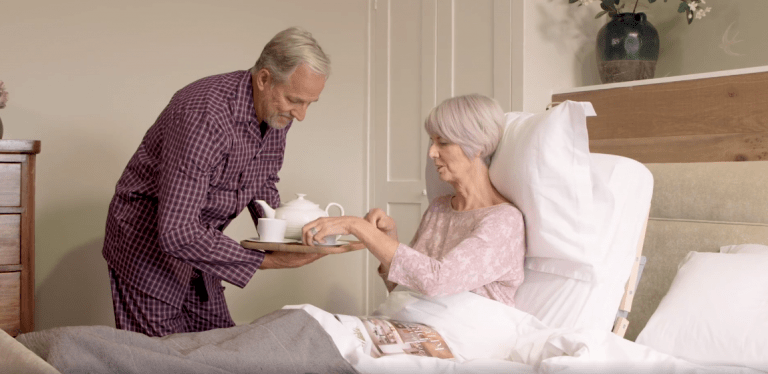
    lady in adjustable bed

    Walk Safely Around the Home

    Walking aids are not just for shopping, although this is where they are most often seen. A good wheeled walker allows you to get around your home without worrying about falls, and many also provide a tray to make carrying food and drinks safer and easier. The Deluxe Height Adjustable Trolley has 2 trays and hand brakes, making it one of the best indoor walking aids around.

    Leaving the House

    Of course, the biggest challenge for many people is leaving the house. If your legs are weakened due to arthritis or other illness, or your sense of balance impaired, then going for a walk is often not an option. But a good quality wheeled walking aid provides enough the stability and support to get you up and out again. Walking aids such as the Atlas Lightweight Rollator were made famous this year when Captain Tom used one to walk lengths of his garden to raise money for the NHS. These walking aids can support up to 136kg (21st 6lbs) and have a seat so you can rest your legs too. They are much more advanced than the traditional Zimmer frame that many people think of when they first hear mention of walking frames.

    Helping Others Out

    Of course, it is not just people with mobility issues that get out less. Many people who care for somebody that has mobility problems effectively become isolated with them, as it becomes harder and harder to leave the house together. Investing in a good quality transit chair is vital if your partner, or a child has mobility problems, as it allows you to both get out the house together.

    Modern transit wheelchairs are very lightweight and easy to manoeuvre, and they come with brakes too so you can safely stop. For instance, the I-GO Airrex comes in a range of sizes for greater comfort, as easy to operate brakes, large wheels for a smoother ride, and only weighs 12kg, which makes lofting it into a car boot, or storing away at home, much easier.
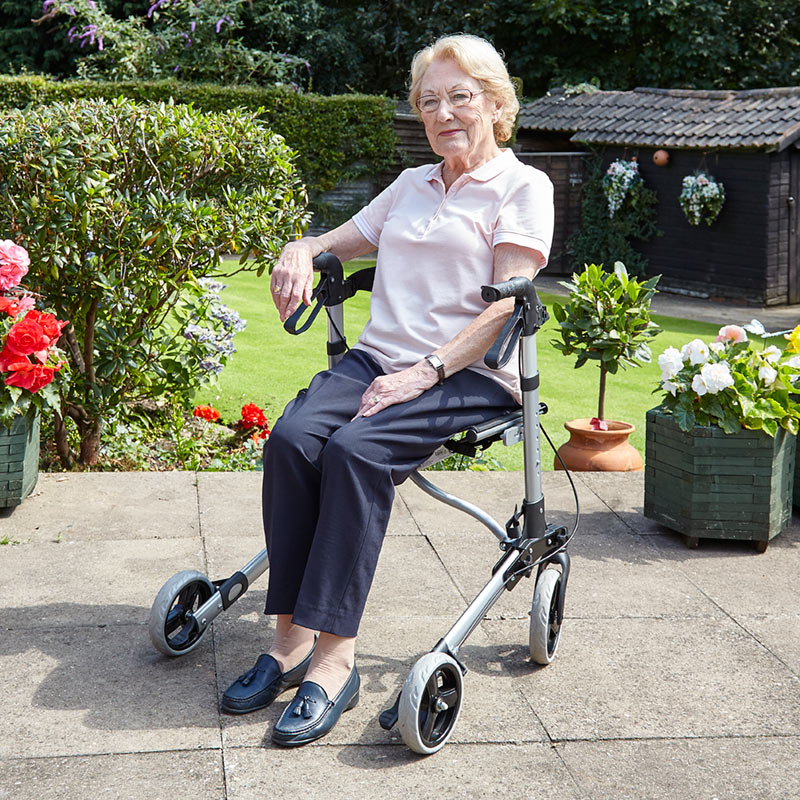
    woman sat in her wheelchair in the garden

    Enjoy the Garden Again

    If you are lucky enough to have a little garden, then you really must try to get out and do a bit outside. Gardening provides gentle exercise and is therapeutic too. If bending over to dig out weeds is no longer possible, then a Long Reach Trowel allows you to dig out those weeds from a chair, and if your hands have been weakened by arthritis, then an ergonomic trowel can solve this problem too, with a handle that is easier on the wrist and does not require as much grip strength as a standard trowel.

    Getting older and frailer is a challenge that we will all face, but with the right mobility aids and assistance we do not have to give up an active life. We have the tools at our disposal to live a more independent life for longer than any of our ancestors were ever able to do, regardless of mobility issues.

    If you would like to feature on Disabled Living’s blog please get in touch via email info@disabledliving.co.uk

  • Stratford upon Avon Boat Club (SUABC)

    Stratford upon Avon Boat Club (SUABC)

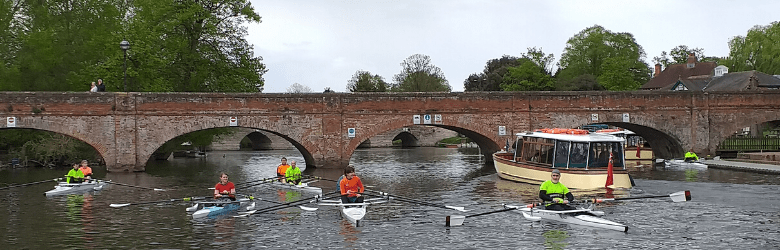
    Mark Dewdney, Head Coach of Adaptive Rowing at Stratford upon Avon Boat Club (SuABC). Mark has coached adaptive rowing for nearly 15 years and has been at Stratford for 5 years. He chairs the Club Adaptive Group that works directly with the governing body, British Rowing, to develop the sport. Mark discusses the club’s history with Disabled Living and we also hear from a few members at the boat club.

    “The SUABC adaptive squad started in late 2015 with just 2 disabled rowers. In the 5 years since it has grown to 10. Just about the largest such section in the UK. There are several sessions during each week with each rower attending when they can. The team goes to rowing events around the south of England. Whilst this is what the squad is designed to do racing is not compulsory; participation and enjoyment is the order of day.

    Current athletes include individuals suffering from spinal cord injuries, hemiplegia, visual impairment, ABI, autism and other issues. We cater for all ages from 13 upwards; and most disabilities with the proviso that it must be considered safe for the person to be in a rowing boat. Everyone is risk assessed!

    To provide a safe environment there is a large group of coaches and helpers. We have built the support structure up as squad numbers have increased. The club ethos is that everyone helps each other. Athletes, family and friends are encouraged to contribute in any way they can. It is not just about being on the water. It is all the little jobs that make that possible. This evolutionary approach of only taking more rowers on when we have the infrastructure to support them is the basis for our success.

    stratford upon avon boat club

    The club is in a building that is over a hundred years old. This brings the usual problems of access. We are still far from perfect, but we are working slowly through a long list of improvements to make the place as user-friendly as it can be. As soon as covid-19 allows a ramp to the landing stage will be installed and a new safety launch will be delivered. A proper lift to the club gym is a long-term goal. Despite the clear and in certain areas, continuing issues, we have made it work. If we see a problem, we try to address it. This is ultimately why we thrive. Read on to discover some case studies below.

    Kelly

    Once upon a time I was, amongst other things, a keen mid to long distance runner. I trained regularly with my local running club, the Sparkhill Harriers, and completed various half marathons and a full marathon. In 2010 I had an accident, I broke my back and severed my spinal cord, rendered paraplegic; reliant on a wheelchair for transportation, it would be fair to say that, at the time, I was devastated at the prospect of never being able to run again because I loved it so very much.

    I discovered adaptive rowing, at Stratford upon Avon Boat Club (SuABC), last summer after what was a particularly difficult summer in terms of my disability and health issues, though I had been doing ergo rowing (on a machine) prior to that, post injury, never before had I rowed on a river. My life changed from that moment onwards, immediately; I got a sense of freedom that, quite honestly, I hadn’t had since the days I used to take a leisurely 10K burn around my old neighbourhood. Mentally, rowing helped me out of a hole and the physical plus of any exercise is tried and tested. Honestly, I am hooked and feel very lucky to have found the team and am grateful to the coach and volunteers at SuABC for dedicating all the energy and time that they do so that disabled people, like me, can take part in such an amazing sport. I am naturally competitive and feel as though I have found my calling, whether I get good enough to win races, or not, I get satisfaction from improving each day, and really cannot wait for a time when I can get good enough to be entered in to a race. I feel like I have so much to look forward to, this time last year I was feeling lost and was in pretty bad shape really. I thank you from the bottom of my heart.

    David

    “David Rose, a tetraplegic wheelchair user talks about his experience. Growing up in Stratford-upon-Avon I spent a lot of time by the river and myself and friends often hired out one of the rowing boats. This was great fun and enjoyable and gave me a taste for being on the river. After I broke my neck, 33 years ago now, my life certainly took a different direction, but I continued to do as much as a wheelchair user as I would have done if I would have still been walking. I have done many different types of outdoor activities and played a number of sports, my main sporting achievement being part of the Great Britain Wheelchair Rugby Squad.

    I had always known about rowing on the river and have often watched people rowing as I walk my dog along the river but I’d never thought about whether it would be possible for me to be able to go out rowing. Then, one very cold day last November I was crossing the river bridge and looking down I saw the boats out and about and also a couple of people in wheelchairs, so I had to go and say hello.

    empty atmosphere at straford upon avon boat club

    After chatting to people for a while the rowing session ended and everyone was going across to the local pub and I was asked to join them and from that point I have really felt part of the adaptive rowing squad as everyone was so welcoming and easy to get on with.

    As someone who is very new to rowing the things, I’ve picked up on is the camaraderie of the group and how supportive everybody is of each other.  Whether you want to become a club rower or take it to the next level and become a very competitive rower there is certainly a level and depth of understanding about rowing that I have already picked up on from just being able to go up and down the river watching from the bank to seeing people get in and out of boats.

    The level of support that an individual requires is well thought through and given in a very relaxed way that means getting into the boat is done in such a way someone feels safe but not overwhelmed.

    By now I would imagine you have a picture of me really enjoying rowing up and down the river but so far, I’ve yet to get in a boat! Just after I’d first said hello to everybody the whole of the UK was hit with awful weather and floods which stopped rowing for many weeks and then the bad weather progressed further and now with the current lockdown situation I’ve still to try rowing out.

    Even without being able to meet up the adaptive squad have stayed in touch via email but also daily on WhatsApp. From conversations and just touching base to make sure everyone is okay to being incredibly supportive meaning the social isolation isn’t having such a big impact.

    I am really looking forward to the end of the lockdown so that I can go out rowing properly for myself.  To be able to get back into the outside world for all of us will be so appreciated and I have really missed mixing with a really great group of people. It is something I’m looking forward to immensely. If rowing is something that interests you, no matter what your disability is, I would really encourage coming along and giving it ago as well.

    Ian

    Paola writing on behalf of her son (will be at a special needs school until he is 20)

    My son, Ian (18), was diagnosed with Autistic Spectrum Disorder with Learning Disabilities and Challenging Behaviour when he was 4 y/o. He began rowing 5 years ago. This sport has given him the chance to learn new skills outside of an academic environment. It lets him blow off steam whilst also keeping him healthy. With rowing, Ian feels part of a community where he can socialize and learn to work as a team.

    Ian says: “I like rowing because it makes me fit and healthy. I like my coaches because they are kind and caring and they help me to be a better rower. My favourite boat is the double. I love regattas.”

    Learn More About the Stratford upon Avon Rowing Club

    Thank you for Mark and his team members at Stratford upon Avon Boat Club for sharing your stories with Disabled Living. For more information about the club please visit: http://www.stratford-rowing.co.uk/

  • Best Accessible Days Out in Greater Manchester

    Best Accessible Days Out in Greater Manchester

    This is a guest blog for Disabled Living, written by Patricia McCartney.

    Are you looking to find accessible days out for you and your family? Supportability have got you covered! Whether you’re looking to keep the kids busy over the summer holidays or just want to make the most of the weekend. 

    This blog post starts with detailing some of the best accessible days in Greater Manchester. Further into the blog post there is information going to look some accessible days out across the rest of the UK.

    Best Accessible Days Out in Manchester

    iFLY Indoor Skydiving, Manchester

    If you’re looking for an adrenaline pumping activity try visiting iFLY Manchester. The staff are experienced in dealing with disabled people using their facilities, and encourage visitors with physical disabilities to try indoor skydiving.

    The best idea is to contact the centre in advance so they are aware you are coming so they can make sure to allocate the time and attention needed. With this in mind if you can book on weekdays when the centre is less busy, we would recommend doing so.

    In terms of parking you have three Blue Badge Spaces in the car park that are near the entrance. The building itself is fully accessible, all levels are connected with good size lifts, with three accessible toilets available.

    When it comes to the activity itself one carer is allowed to enter the flying zone free of charge. However, in the flight chamber itself only the instructor will be with you at all times.

    Museum of Science and Industry, Manchester

    If you’re looking for a more relaxed and educational day out the Science and Industry Museum is a great option.

    The museum is spread out over five nineteenth-century buildings, which may initially put you off. However, the whole site is wheelchair accessible with smooth paths connecting the different areas.  There is also step-free access to all floors of their multi-level buildings.

    Wheelchairs can be borrowed (£20 deposit required) and the staff are very willing to help. All multi-level buildings are served by lifts, and most buildings have disabled toilets.

    The museum always has something on, and regularly provides special exhibits and events during half term weeks. So, it could be a great option for the kids.

    If you’re thinking of going check out https://www.scienceandindustrymuseum.org.uk/visit/facilities-accessibility so you can familiarise yourself with the museum and its facilities.

    The museum also offers free personal assistant/carer tickets for paid events and exhibitions. These are available to book online, by phone on 0333 241 4000 or in person on the day of your visit.

    Disability Cycling with Supportability, Stockport

    Supportability Wheelers project offers weekly cycling opportunities throughout the year for disabled and able-bodied adults, children & young people. The Project has a variety of adapted cycles to enable individuals of all abilities to experience and enjoy cycling.

    Over the past few years the project has supported nearly 400 disabled adults and 125 disabled children at Woodbank Park in Stockport. This is where UK Para-cycling Champion Katie Toft who has Cerebral Palsy started her cycling days.

    Many of the disabled children and adults who use the project have complex needs. The cycles are specially adapted, so everyone can join in and have fun, whilst getting some healthy exercise!

    Carers and parents can also drop in at Wheelers Café during the disability cycling sessions to meet and socialise

    Royal Exchange Theatre, Manchester

    Another laid back but fun night out is on the cards here at the Royal Exchange Theatre. The building itself is one of the most unusual theatre designs in the country, but this doesn’t stop it being accessible.

    The theatre has wheelchair spaces offering excellent, unimpeded views of the action, plus a lift providing level access to all floors.

    You can check out all the accessible performances at: https://www.royalexchange.co.uk/access

    Chill Factore, Manchester

    Chill Factore is actually home to Disability Snowsport UK. They provide adaptive skiing for individuals with any disability. By using adaptive equipment and specialist instruction and support they are able to cater for even those with very limited mobility.

    The entrance is approx. 10m-20m from the accessible parking spaces. The path leading to the main entrance is approx. 8m wide and made from levelled concrete. There is free on-site car parking available for all guests.

    There are 9 toilet blocks with each one having a disabled access toilet with non-slip flooring.

    You can find all the information you need on the link: https://www.chillfactore.com/plan-visit/accessibility/

    National Football Museum, Manchester

    If you’re planning a day out for some football fans, then the National Football Museum could be the perfect pick.

    The museum offers great accessibility to all disabled visitors. Lifts, ramps, and accessible toilets are common throughout the building.

    There’s seven levels of football heritage and memorabilia to be explored here. You can even listen to the historic commentary on some of the greatest moments in football.

    Visit the accessibility page of the National Football Museum for more information.

    Rest of the UK

    If you’re looking to travel a bit further there are some great days out you can have throughout the rest of the UK. These are our favourite picks.

    Cadbury World

    Perfect for those with a sweet tooth! During your visits you’ll learn about the history of Cadburys, watch the makers at work and, of course, eat chocolate!

    The disabled facilities are suitable for people with all needs. There are low-level desks, ramps, lifts, disabled toilets, tactile surface level indicators, large print guides and an infrared system for hearing aid users.

    You can find out more information on the Cadbury World website.

    Avon Tyrell

    All of the activities at Avon Tyrell have additional equipment to support those that need it.

    The hoists and adapted equipment used on site means that you can zip wire across the lake, climb our climbing wall, take part in tree climbing, shoot an arrow in Archery or canoe/kayak across the water.

    They offer over 40 activities to choose from. They even offer accessible adventures you can get involved with.

    You can find more information on the link below

    https://www.avontyrrell.org.uk/accessibility.html

    Other ideas

    Festivals

    confetti in the air at a concert

    If you’re looking something epic to do over the summer holidays a festival could be your answer. Some of the biggest festivals in the UK provide great access options.

    Checkout the ones below:

    Edinburgh Fringe festival accessibility

    Latitude festival accessibility

    Bluedot festival accessibility

    Greenbelt festival accessibility

    Zoos

    three lions in safari

    Days out at the zoo never disappoint. There are approximately 54 zoos and wildlife parks in the UK.

    The top 3 are worth checking out are:

    Whipsnade Zoo

    London Zoo

    Longleat Safari Park.

    Other wildlife parks that have been positively praised by disabled visitors include the Five Sister Zoo near Livingston, Yorkshire Wildlife Park.

    What are your favourite accessible days out in Manchester and the rest of the UK? Tell us on Twitter or Facebook.

Disabled Living