Tag: Disability

  • DMUK Baywatch Campaign

    DMUK Baywatch Campaign

    This is a guest blog written by Heidi Turner on behalf of DMUK for Disabled Living

    DMUK’s Baywatch campaign, which looks into levels of disabled parking abuse at supermarkets, is changing format for 2020.

    A common problem for many disabled motorists is not being able to park at their desired destination, especially at their local supermarket. The major complaint is that the disabled bays are all occupied with cars not displaying a Blue Badge.

    baywatch campaign logo

    Disabled Motoring UK’s Baywatch campaign seeks to address this. This campaign researches the level of disabled parking abuse at supermarkets, by asking disabled motorists to survey their local supermarket car park. Specifically, they count how many disabled bays are provided and how many cars that are parked in them without displaying a Blue Badge.

    We launched this year’s campaign in March 2020 with a great response from supporting organisations and the campaign’s sponsor, the British Parking Association. DMUK is so pleased with the positive response it gets from its members, the public and organisations. Last year was our best campaign yet with record numbers of participants. However, this was before the world was swamped by the current Coronavirus pandemic. Even though many areas of the UK are seeing a decrease in infections and deaths from Coronavirus, and the government are easing lockdown restrictions, DMUK has decided that it is not appropriate to ask individuals to physically go to a supermarket car park and count cars not displaying a Blue Badge which are parked in disabled bays. This could put participants in a position where they find it harder to social distance and we would never ask people to put themselves at an increased risk of catching the virus.

    Join our Survey

    Instead we will be running a survey for the month of August which participants can complete without leaving their home. DMUK will ask individuals to think back over the last 12 months to consider their general parking experience and ask them to answer some questions about this experience at supermarkets and on their everyday journeys. We will use this data to tackle the supermarkets and other parking providers over their disabled parking policies. As a thank you for taking part there will also be an opportunity for one participant to win a £25 M&S voucher.

    The survey will be printed in the August issue of Disabled Motoring and there will be an online version going live in August which can be accessed through the website: https://www.disabledmotoring.org/baywatch-2020

    We hope that in August 2021 to have this pandemic long behind us and run our usual Baywatch Campaign.

    The campaign has support from Baroness Tanni Grey-Thompson, she commented: “It’s so sad that Disabled Motoring UK has to run its Baywatch Campaign. Disabled bay enforcement should be mandatory, especially for the big supermarkets that can afford to invest in policing their car parks. I see disabled parking abuse every day, it’s never a surprise to me, including at my local supermarket. There is a real lack of understanding about how essential these bays are to disabled people and I applaud DMUK’s Baywatch Campaign as it plays a vital role in highlighting the issue of disabled parking abuse at supermarkets.”

    Heidi Turner, Communications and Campaigns Director at DMUK, said: “Baywatch is one of the charity’s longest running campaigns and is really important to draw attention to the parking problems that disabled people face when just trying to do their everyday grocery shopping. The charity has decided to change the format of Baywatch this year in order to keep our supporters safe. Nevertheless the new survey will provide us with some really useful data to keep the pressure on the supermarkets to do more to manage their disabled parking bays properly. Disabled motorists face parking problems in all aspects of their life and the new survey will also encompass some more general parking questions which will expand the scope of the DMUK Baywatch Campaign.”

    DMUK Baywatch Appeal

    In October 2019 DMUK launched its Baywatch Appeal as a way of raising additional funds to support the charity’s campaigning efforts. Since its launch the charity has raised an extra £5740.58 in added donations. Any extra money the charity can raise to support campaigning is so helpful. We understand that many people are under financial pressures at this time  and ideally the best thing that individuals can do is to fill in the Baywatch survey in August, but if you can help with a donation too that is very much appreciated. Donations can be made through our website www.disabledmotoring.org or by calling 01508 489449.

    DMUK Baywatch Sponsor

    DMUK has worked for many years with the British Parking Association (BPA) to improve parking for disabled motorists. The BPA sponsored the campaign in 2019 and is once again sponsoring it for 2020.

    Kelvin Reynolds, British Parking Association, Director of Corporate and Public Affairs, said:  “We wholeheartedly support DMUK’s annual Baywatch campaign. With one in every five disabled parking bays being misused at supermarkets, this campaign is a great way to raise awareness of the importance of only using disabled bays if you are a Blue Badge holder. We encourage as many people as possible to participate in the survey.”

  • Accessible Iceland: Chris’ Holiday Blog

    Accessible Iceland: Chris’ Holiday Blog

    This blog was written by Chris Cammiss, Disability Trainer and Advisor at Disabled Living.

    I thought I’d push the envelope a little bit this time, so instead of heading for some late season sun in Lanzarote or the Seychelles I planned a trip to Iceland. 

    Of course, my expectations were of snow drifts, misty breath, icy pavements and multiple layers of clothing, so I went fully prepared. 

    How wrong can you be?

    Although we were travelling in late September last year, I encountered hot – yes, hot sun and generally comfortable T-shirt weather. In fact, I only wore a light coat on one evening. 

    The Accessible Hotel

    We booked a four-night weekend break based in the capital of Iceland, Reykjavik. We’d done our research in advance and my partner had found a holiday company which specialised in disability. The owner, who had already worked for a holiday company became seriously disabled after a car accident and decided to start up his own specialised organisation. They were able to book a suitable hotel, plan a couple of day-long excursions and advise on restaurants, activities and attractions. Alternating with free time in the city, this made for a busy but comfortable break. 

    The hotel was superbly located at the edge of the city centre, the hotel room was spacious and very comfortable, and the bathroom had a bigger than average shower room.  

    The concept of accessibility is very well understood in Iceland, but some practical interpretations differ to ours, so the shower room had only one tiny grab rail and an emergency cord but no shower seat. There was no foot recess under the sink at all. 

    The toilet was low with no support rails at all. Remember to contact the hotel and ask specific questions. 

    Exploring Reykjavik

    I loved the atmosphere of the city – a very hippy/indie/multi-cultural vibe – not a big city feel at all. Great mix of old and new. The new, often large buildings were fully accessible, older ones usually had ramps so were a delight to explore. Being the capital city, there were the usual huge cultural buildings, but many of the original, quaint streets were still intact. 

    During the day the whole scene was overlooked by the impressive modern cathedral, shining white at the top of the hill, in the evening you look for the food and the jazz. 

    The countryside is extremely mountainous – dramatic and atmospheric. Lots of lakes, glaciers and fiercely flowing water. There is a lot of green but most of that is lichen. 

    Our tours took us to spectacular spouting geysers, hot, boiling mud pools and dramatic waterfalls. You can see why Iceland is such a popular country for filmmakers  it’s perfect for any Lord of the Rings or Game of Thrones spin-offs! We were very well looked after by Siggy – our personal guide/driver for two full days, with his fully accessible vehicle. 

    The Blue Lagoon

    have to mention the Blue Lagoon. This is a very famous tourist attraction built around pools filled by natural hot springs where you can swim, sit or float in salty water at close to body temperature. So, I arrive in my expensive wheelchair and ask how I can get in? Well, we will transfer you to our special plastic wheelchair, which they did in their fully accessible changing room with the help of two lifeguards. At the poolside they indicated where my ramp descended into the water. I realised immediately that it was quite steep and I would have difficulty maintaining control –no problem said two female lifeguards we will help, we have swimsuits! Off they went to change and away we went 

    Iceland Blue Lagoon

    The Food

    I had certain expectations of the food available – I’d been told about marinated, buried, foul smelling lamb dishes for instance. I knew there would be excellent fish but expected very little meat and vegetables. The reality is very different. Lots of fresh local fish – the best fish and chips – great lamb stewsplenty of vegetables and fancy salads. Many local specialities as well, such as puffin, shark and (unexpectedly) horse meat, which were all extremely delicious and a complete surprise.  

    The Aurora Borealis

    The Aurora Borealis (Northern Lights) of course should be the highlight (!) of any trip, and here we were very lucky. You should go in the winter months to give yourself a good chance but there are absolutely no guarantees. For us the very high quality, detailed weather reports (low cloud, medium cloud and high cloud levels) suggested two of our nights gave a very high probability of a spectacular show and one of those nights really delivered. Everyone moved down to the bay – nearby street lights switched off – and watched. The show was tremendous with colours, swirls, movement and drama – breathtaking display moving across the whole sky. The best vantage point was around the “Sun Voyager” a huge, stylised Viking longboat sculpture jutting out into the sea. You chose your spot and just marvelled. 

    The second, highly recommended night – absolutely nothing. You can’t ever be sure. 

    This trip more than ticked all the boxes and I will definitely go back to Iceland. I’ll make sure it’s in winter so there’s the best chance of seeing the lights, and, as always, I’ll do my research. 

    Happy travelling, 

    Chris 

  • Washpod ‘Is a Life Changer’ For Sheffield Mum

    Washpod ‘Is a Life Changer’ For Sheffield Mum

    This is a guest blog from Washpod who feature in our Supplier Directory.

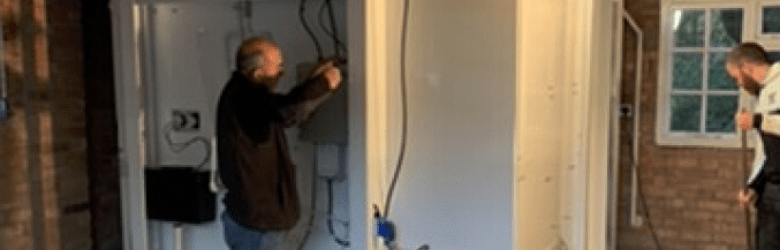
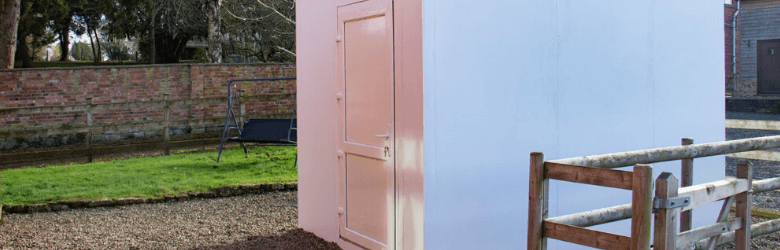
    Jessica, a mother from Sheffield, has called her new WashPod disabled wetroom, ‘a life changer’ for her and her little daughter, Isabella. The internal WashPod was installed into the family’s garage in just a day recently, but it will allow them to stay in their rental home just as long as they want while they build a new home that’s adapted to Isabella’s growing needs.

    Isabella’s Story

    Isabella is now 5 years old but severely brain-damaged, blind and has cerebral palsy. She has been non-mobile from birth, relies on a wheelchair and care for all her needs.

    “It had come to the point when carrying her up and downstairs was beginning to get dangerous so something had to change” says Jessica. “I heard about WashPod from another family and was able to get funding for it which means that we can keep Isabella on the ground floor which is safer and more manageable”.

    “The property is a rental and doesn’t belong to me so having the WashPod is fantastic as it fits in the garage and we don’t need to change the property” continues Jessica. “I would definitely recommend it as a safe way to shower and perfect for disabled people who can’t get upstairs”.

    The plan is to keep WashPod for a couple of years so that they can get their house built in a sensible, comfortable timeframe.

    Get in Touch

    To learn more about contact the team at Washpod visit: https://dignityaccess.co.uk/

    If you would like to share your news on our Disabled Living blog, please email info@disabledliving.co.uk

  • Caring for a Child with Spastic Quadriplegia

    Caring for a Child with Spastic Quadriplegia

    This is a guest blog post written by Catherine Atkins for Disabled Living. Catherine and her son Jack are regular visitors at our Kidz to Adultz Middle event. Jack has spastic quadriplegia, a type of cerebral palsy that effects all four limbs.

    In 2010 I was delighted to find out that I was expecting my first child via sperm donor. I’m in a same sex relationship but had been desperate for children for years. The pregnancy was perfect, I thoroughly enjoyed getting bigger and showing that I was obviously pregnant. I loved all the extra attention I was getting and was over the moon when I got to feel the first kicks. The midwives were happy with how things were progressing and actively encouraged me to have a water birth at a midwifery run unit in Birmingham.

    Giving Birth to Jack

    I went into a natural labour 11 days after my due date and the water acted as a wonderful source of pain relief. Jack was born pretty easily in the water. However, he was a funny colour when he was pushed under the water to me and he was not breathing or moving at all. Jack had managed to get his umbilical cord wrapped around his neck twice and suffered a lack of oxygen for over 20 minutes. The next 9 hours were the most painful of my life.

    Jack was taken away to be resuscitated whilst my partner and I waited for news as to whether he would pull through. We were eventually called into a small side room to talk with the doctor. They confirmed that due to the lack of oxygen Jack had suffered, it was extremely unlikely that he would survive the night and if by some miracle he did, then the brain damage would be that great that he would have no quality of life.

    A Smile that Melts Hearts

    Jack was transported to another hospital to receive cooling treatment for 72 hours, which is where his body temperature is kept at a lower than normal rate in order to prevent any further brain damage. Every morning we waited for the doctors to do their rounds and every morning it was touch and go whether Jack would survive the day. At one point it was looking likely that he had renal failure and we were told that would almost certainly mean the end to our precious bundle. Fortunately for us all, Jack is made of extremely strong stuff and he pulled through and has gone from strength to strength. His smile melts everybody’s hearts and his cheeky sense of humour is hilarious.

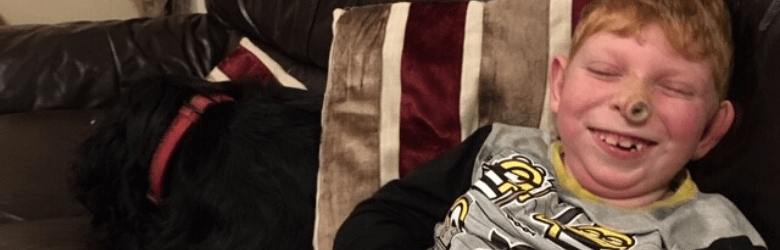
    Admittedly he is still classified as severely disabled as he is unable to walk or talk. He has spastic quadriplegia, a type of cerebral palsy that effects all four limbs. He has minimal head control and abnormal arm movements. His legs are extremely stiff and his feet are misshapen. Jack is fed purely through his PEG as he has a very poor swallow and no gag reflex which makes any attempt to eat or drink extremely dangerous. Jack also has a nasal pharyngeal airway (NPA) in permanent situ. This is because his tongue muscles are weak and his tongue will flop over his airway if it is not held back by the NPA.

    Catherine and Jack

    Jack’s Epilepsy

    So yes he isn’t without problems. However the biggest challenge we have and are facing at this time is Jack’s epilepsy. The epilepsy began just before his third birthday. One night we were all asleep (Jack has always slept next to me as he requires regular suctioning throughout the day and night), I woke to find that Jack was having a full on tonic clonic seizure. Having never had any experience with seizures in the past, we weren’t really sure what was happening so we called an ambulance. The seizure lasted over 40 minutes and was terrifying but the doctors managed to stabilise him eventually and he was allowed home the following day.

    A Learning Curve

    Since then Jack has been in and out of hospital with various types of seizures. I learnt early on to ensure I knew the correct way of pronouncing the names of the cocktail of medications that Jack was taking in order to gain any kind of confidence from the number of doctors we met along our journey. The professionals I have met along the way have taught me so much. We were lucky enough to have a friend who is the best paediatric physio in the world (in my opinion anyway) and she has helped us immensely. Without her, I know we would not be where we are now so a huge thank you to Alison.

    I have often been asked if I have a medical background due to being able to spout out so much information about Jack’s condition and spastic quadriplegia. This couldn’t be further from the truth, I used to faint at the sight of needles or blood and couldn’t even watch casualty on the television! When you’re faced with such a situation you learn so much as you go along.

    I’ve watched Jack go through having 8 large needles of Botox injected into the backs of his legs twice a year in order to help with his spastic quadriplegia. I change Jack’s PEG every three months (although I admit I still feel rather queasy when faced with an unnatural gaping hole leading straight into his tummy but every time I change it I’m getting that bit better), I can change his NPA with my eyes shut and do things that no mother should ever have to do.

    The Most Rewarding Job

    I would have had to return to work if Jack had been born healthy. However, because of the situation, I gave up my job and became Jacks full time carer, the most rewarding and wonderful job ever. I’ve since gone on to have a beautiful daughter and a rather mischievous little boy. When my third child was born we arranged to have his stem cells collected from the placenta in the hope that one day Jack might be stable enough to travel to America to have stem cell treatment. There’s no guarantees but a stem cell treatment may help improve Jacks abilities.

    What I am trying to say is that you can do anything when you really put your mind to it. Whatever life throws at you there are always ways to turn negatives into positives. If ever I feel a bit down, Jack’s beautiful smile turns my frown upside down! I am one extremely lucky mummy!

  • 6 Accessible Travel Hacks for Wheelchair Users

    6 Accessible Travel Hacks for Wheelchair Users

    This blog post has been written by Stuart on behalf of My Baggage for Disabled Living.

    Finding accessible travel options as a wheelchair user can sometimes be frustrating and difficult. It’s impossible to prepare for every situation. All you can do is try and prepare as much as possible and give yourself a break, this is your holiday after all! We’ve put together six accessible travel tips to help ensure your trip goes as smoothly as possible.

    Before you book your flight

    It’s important to ensure that the airline you are travelling with has comprehensive information for passengers who are wheelchair users. Each airline policy will differ and if you are flying outside the EU you may not be covered by disability laws. Some airlines will have restrictions on the size of electric wheelchairs, so when in doubt always contact their customer services.

    If you need assistance both on and off the aircraft when you are booking your flight, tick the airport assistance checkbox. Every airport will have this service available, but the service will differ. When choosing your seat, some wheelchair users prefer the window seat to the aisle, as anyone requesting special assistance is boarded first onto the plane. Remember that this also means you will be the last to leave the plane as you will have to wait for airport assistance. This is important if you have an onward flight to catch, so always allow for this delay when booking long-haul or connecting flights.

    Avoiding wheelchair damage

    Your wheelchair is an important part of your mobility and the last thing you want is to discover it has been damaged in transit. One way to try and protect your wheelchair is to include written instructions attached to it, explaining how to break it down and how the chair lifts and tilts. A fragile sticker also goes a long way. Before you hand your wheelchair over, remember to remove any parts that can be removed such as the seat pad, footrest or wheels. You will be able to carry these items on board the plane and they will not count towards your hand luggage.

    To always protect yourself, take photographs of your wheelchair prior to handing it over to airport staff. This way, in the rare occasion that your chair is damaged, you have before images. If the worst does happen and your wheelchair is damaged, take images immediately and include them, alongside the before journey images and contact your airline’s customer service team as soon as possible.

    Accessible bathroom issues

    This is a real problem for wheelchair users when flying. Most domestic, short-haul flights will not have an accessible toilet available or an aisle wide enough to accommodate a wheelchair. Before booking a flight, confirm whether they have an on-board wheelchair or an accessible bathroom. This will usually only be available on long-haul flights or on bigger aircraft, but every airline will have its own policy. It’s important to remember that air stewards will not assist in transferring you into the bathroom but will be able to push your wheelchair. When in doubt confirm with your airline or with special assistance at the airport prior to departure. Accessing accessible bathrooms is a real struggle for wheelchair users no matter what mode of transport. To learn more about this, there is a great blog called Wheelchair Travel, which outlines what airlines cater to wheelchair users.

    Luggage shipping

    Travelling through the terminal with your luggage whilst in your wheelchair can be incredibly stressful. A popular way to combat this is through shipping your luggage directly to your destination. This will mean you will not have to navigate the airport with your suitcase in tow or worry about making it in time to the arrival’s carousel. Luggage shipping is very easy, all you have to do is arrange for a courier company to collect your items from your home and ship it to your forwarding address where you will spend your holiday, leaving you one less thing to worry about. One concern is the cost, but luggage shipping can often work out cheaper than the cost to store your luggage in the hold.

    Finding accessible accommodation

    Finding accessible accommodation has gotten a lot easier thanks to many hotel comparison sites like booking.com and hotels.com. These websites give wheelchair users the option to search for a place that is wheelchair friendly. Enable this option so you can ensure that the room you pick is entirely accessible. When in doubt you can contact the hotel directly or when booking via a comparison website, you can add this request in the booking requests option.

    Accessible activities

    Once you arrive at your destination and check into your accessible hotel, the next hurdle can be finding accessible activities to enjoy. Many destinations will have a dedicated tourist website which will cover facilities and tourist sites that are fully accessible. They will also provide information on accessible transport to reach these sites and any further information you may require to put your mind at ease. Websites like VisitEngland and Accessible Travel Netherlands offer advice and information for wheelchair users.

    If you don’t want to go on an independent holiday, there are plenty of tours, cruises and package holidays that cater and provide accessible activities. An example is a Responsible Travel, who offer responsible adventure holidays which are also accessible. You can go on a trip to explore the wonders of Ancient Egypt, enjoy an island resort stay on the luxurious Maldives or even go in search of mountain gorillas in Rwanda. The world is your oyster and there are many destinations and tour operators out there who will cater to a variety of needs and ensure you have the holiday of your dreams.

    Destinations that are wheelchair accessible

    When deciding where to go, you might wonder what destination will even be able to cater for you and your wheelchair. To help inspire you, the following destinations are wheelchair accessible; Lisbon, Amsterdam, Krakow, Israel, Ecuador, Morocco, South Africa, Slovenia, Barbados and Dubai.

    Although there may currently be extra travel restrictions due to COVID-19, travelling is still possible. Make sure to check how to travel responsibly before you set off in Love Holidays’ COVID-19 Tourism Travel Guide.

  • Getting the Most Out of Your Recliner Chair

    Getting the Most Out of Your Recliner Chair

    Fenetic Wellbeing tell us how you can get the most out of your recliner chair. Recliner chairs are one of the best types of chair for those who suffer from back pain or struggle getting in and out of their chair. They’ve been specifically designed to provide maximum body support and offer you a comfortable seated experience. This guide will take you through the benefits of a recliner chair and how they can be of benefit for you.

    What is a recliner chair?

    You may have already guessed by the name. Recliner chairs recline when you’re seated, and you can often choose how reclined the chair is. More often than not they also come with a footrest so that, when the chair is reclined, you can simply put your feet up and relax.

    There’s a great range of recliner chairs from Fenetic Wellbeing, in particular their range of electric recliner chairs. You operate these with the touch of a button and there’s a range available that lets you operate the headrest and footrest separately known as dual motor. Single motored riser recliner chairs operate them simultaneously. With electric recliner chairs you can choose the position of the footrest and headrest with considerable ease. You need to ensure that the chair is placed somewhere near a power source as they’ll need to be plugged in to ensure the features work.

    Traditional recliner chairs are operated using a lever. These can be placed anywhere in your living room as they don’t need to be connected to a power source. You pull up on the lever and use your body to get the chair to a comfortable position.

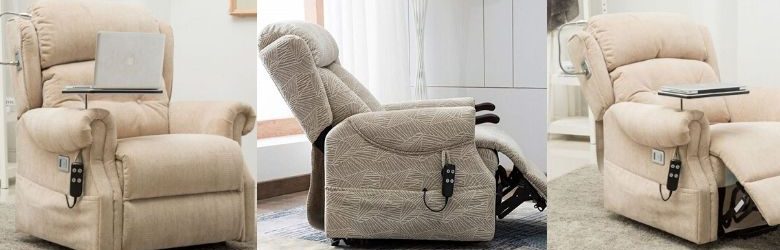
    riser recliner chair in cream

    Why should you consider a recliner chair?

    Research has been undertaken that has shown how beneficial recliner chairs can be for those who suffer from mobility issues and the elderly. They not only make your experience getting in and out of the chair more comfortable, they also offer you a bit more safety.

    When seated, they’re also extremely beneficial. They provide your back and spine with support and also give your neck some additional comfort. When in the reclined position they provide a temporary relief from any niggling aches and pains so you can watch your favorite television programme in peace. When risen they also offer relief from hip and neck problems, so whatever the issue they can make your life far more comfortable and enjoyable.

    So, as you can see, they really are an all-rounder and can really help you to have some temporary relief from any aches and pains that you normally suffer from when seated.

    Are you a keen skier? We recently wrote a blog looking at the rise of adaptive and accessible skiing.

    How can you ensure your recliner chair last the distance?

    Like anything in your home, your recliner chair needs a little bit of love, care and attention to ensure you get maximum use out of them and they last the distance. If you take good care of them, they can potentially last you for years. If they get damaged or aren’t cleaned on a regular basis, it’s highly likely you’ll have to replace them far sooner.

    When it comes to getting the best quality, you need to sometimes spend a little bit more than you may have expected to get longevity. If you keep them clean, they’ll feel fresh for years. You need to be careful when getting in and out of the chair you aren’t sitting down to heavily, as this can damage the bottom of the chair and the springs. With a bit of investment in your chair, you’ll get a comfortable and pain-relieving experience.

    cream recliner chair

    You may not immediately think of your chair as something that needs love and care but hopefully, we’ve shown you they do! You need to ensure, where possible, they’re looked after as this is the best way of ensuring they’ll last for a long time. If you fully take care of them, you’ll see the real benefit that recliner chairs can have for you and how they can make your life so much easier and more comfortable.

    For more information visit: www.feneticwellbeing.com

  • The Rise of Adaptive and Accessible Skiing

    The Rise of Adaptive and Accessible Skiing

    This is a guest blog post written by Staysure Travel Insurance. In this blog, they outline how technological advances are helping skiing to become a more accessible sport and what to consider if you want to go skiing with a disability.

    Skiing alongside snowboarding has been one of the top sport choices for anyone thinking to head to the mountains for a winter retreat. Originally, the fast-paced sport was a means of transportation in the mountainous areas in the Nordics with most of the evidence pointing to both ancient and modern origins stemming from Norway.

    While, it likely turned into a sport a little earlier, alpine skiing was introduced in 1936 (Olympics) and flourished as a leisurely activity after the second world war, when technology and transportation improved, so that the Alps became more accessible to non-locals.

    It would not be a surprise for most people to expect this sport to be somewhat inaccessible. Afterall, YouTube has countless videos of snowboards and skiers performing insane flips or reaching unruly speeds, which may in part, provide an inaccurate and unrealistic picture of an ‘extreme’ sport for anyone new to it. However, this isn’t the case at all. The sport isn’t inaccessible to people who may have, as an example, reduced lower-limb strength.

    How Has Skiing Become More Accessible?

    Winter sports have progressively become more accessible and inclusive to a wide variety of people. Alongside advances in technology, ski resorts have started to realise that people should be able to go to a ski resort with their family and friends and enjoy the mountain experience without anyone feeling left out from the action due to a disability or condition.

    If you are for example, a wheelchair user looking for ski trip, one of the first port of calls is to look for resorts offering adaptive ski equipment. These could come in the form of seated dual skis, which looks rather like an advanced, lever-operated sled or a piloted version. This is helpful if the user has limited strength and stamina. In the piloted version, either a ski guide or a more experienced member of your troupe could ‘drive’ you with the rest of the group.

    This is just one of the examples of the things you could find. For anyone who can use regular skis, you can find support in the guise of stabilisers, which effectively provide balance and stability as well as helping someone turn more effectively. This would be particularly useful for an amputee with a missing lower limb or someone who requires more support. This could be suitable if the skier has had recent surgery or come out of intensive cancer treatment. The type of adaptive ski equipment used will ultimately vary from individual to individual, this will often be dependent on a condition or disability someone may have and the level of ease for the user.

    Accessible Resorts

    Modern resorts, especially many of the French and Swiss resorts have had many pushes to make skiing more accessible and inclusive and will have the facilities (e.g. disabled or accessible toilets), equipment and specialised instruction to match many individual needs. Therefore, a beginner will be able to find an instructor with expertise in a specific type of equipment so that they feel more comfortable when trying it out for the first time. In fact, many ski schools have instructors that teach in sign for those who are deaf/hard of hearing or provide ski guides who can accompany those who have limited or no vision and other instances where someone may need to the extra support.

    Just getting in touch with one of the resorts, will provide you with all the information you need to go for that winter retreat. If you are struggling to know where to start, you could try this accessible resorts guide to whittle down the resort options and find something that looks more appealing. Hopefully, this little summary of adaptive skiing will give you the confidence to take a plunge and go skiing this winter.

    Find out more about Staysure on Disabled Living’s Supplier Directory here: https://supplierdirectory.disabledliving.co.uk/winter-sports-accessible-resort-guide-staysure/

  • Washpod Helps Bring Young Man Home From Hospital

    Washpod Helps Bring Young Man Home From Hospital

    Having spent 4½ months in hospital, 21 year old Luke wanted nothing more than to go home. However, his house had no accessible bathroom facilities. WashPod, the unique mobile wetroom, talk about how they provided a rapid and dignified solution for Luke.

    In early 2019, Luke was hit by a car when he was crossing the road and was seriously injured. He currently needs a wheelchair which made coming back to the family home difficult. For his mother, Annette, the options offered to her were totally unsuitable.

    Luke in his Farnborough Washroom

    “Luke was trying to come to terms with his situation. The last thing he needed was to come home and have no suitable bathroom facilities” says Annette.

    She discovered the WashPod from Dignity Access online (www.dignityaccess.co.uk) and was thrilled.

    “I am so pleased with our WashPod as it’s given Luke so much independence and dignity at a difficult time which has been crucial. It’s been of huge benefit to him and allowed him home without disruptive adaptations ” continues Annette.

    It was a rapid installation as there was a WashPod that was becoming available and within two weeks from the first phone call, it was connected to Luke’s downstairs bedroom with a lobby for total privacy and comfort. In this instance, the unit was craned into position but both internal and external units can also be constructed from a flat-pack form and transported through the house or narrower side gates

    About WashPod

    If access to the bathroom is now impossible, WashPod is the perfect shorter-term solution saving the option of prolonged hospital care or an early move to an expensive care home. There is nothing like it on the market.

    “The WashPod unit provides a temporary, accessible wet room in a self-contained fully accessible plumbed in box. WashPods are either positioned externally in the garden or erected within an existing, reception or dining room that can be made available for the purpose”. Lewis Gopsill, General Manager of manufacturer Dignity Access Ltd. 

    The applications are numerous from Housing Associations and Local Authorities who may wish to buy them and lease them out to residents as needed, or hospitals during building works, commercial enterprises wishing to provide accessible washrooms and private individuals who simply wish to stay at home.

    The WashPod is fully fitted to comply with the highest specification of part M of the building regulations. It has been designed by architects who specialise in the designing for disability and endorsed by occupational therapists and case managers.

    Typical facilities include accessible shower facility, basin and WC. External units include underfloor heating. Hoisting for transfer purposes can also be provided where needed.

    Both internal (with a mini version too) and external options give a less able person dignity until more suitable arrangements can be made. This reduces disruption and stress to the family home.

    External Washpods are usually erected within 2 to 3 days and can include a covered link to an external patio or back door. Internal Washpods can take only a day to install. The units are constructed off site and re-assembled in the home by an expert team.

    Both units can be ‘plug and play.’ A purpose-made pump and water heater unit means that the units are connected into existing cold water supplies only and 2 domestic sockets. Access to a drain point somewhere within the house or garden is used to pump the waste through a flexible 2” pipe.

    Internal Washpod

    Benefits

    • Out of hospital faster (thus releasing a hospital bed)
    • Immediate return to (or ability to remain in) family/familiar surrounding
    • No permanent alteration to the property
    • Pod can be removed easily and the property reinstated very quickly
    • Short period from order to installation
    • Total independence for user
    • No reduction in house value
    • Minimum disruption
    • Fraction of the cost compared to care home provision.

    WashPod is being manufactured and marketed by Dignity Access. They are a sister company to Cowan Architects, specialists in disability adaptations and inclusive living design.

    WashPod can be found on Disabled Living’s Supplier Directory.

  • Disabled TV Characters Played by Disabled Actors

    Disabled TV Characters Played by Disabled Actors

    Diversity is something that should be celebrated, and we think it’s great to see that characters on TV and in film are becoming more and more inclusive. This includes portraying those with disabilities and minority communities. Although representation of people with disabilities in television is still only estimated at around 2.5%, this is something which we hope will increase in the coming years.

    However, it can still be difficult to find a TV show or film that has accurate representations of disabilities. It is even more difficult to find a TV show or film that has an actor who actually has the disability they are portraying. It is estimated that approximately 95% of disabled characters on our screens don’t have a disability in real life, which could be perceived as an issue. Having said this, we thought it is worth celebrating the actors who have disabilities both on-screen and off-screen. Read on to discover just some of the disabled actors who play disabled characters on TV.

    Walter White Jr. – Breaking Bad

    This character is played by RJ Mitte who has cerebral palsy. In the series, he plays Walter White Jr. who also has CP. Mitte wanted to find acting opportunities where his disability would serve to educate viewers and increase awareness. Now a celebrity ambassador for United cerebral palsy, Mitte is proof that we need more actors with disabilities on the screen to help raise awareness of disabilities.

    https://www.instagram.com/p/urDOoaLzt6/

    Izzy Armstrong – Coronation Street

    Cherylee Houston plays the character of Izzy Armstrong on Coronation Street and both are wheelchair users. Houston has used a wheelchair from the age of 23 when she was diagnosed with a rare connective tissue disorder called Ehlers-Danlos Syndrome. Although her disability was not the focus of her character, her story-lines did tackle two important disability-related issues. Izzy Armstrong showed viewers what it was like to live with chronic pain and the logistical problems of being a disabled prisoner. Since Coronation Street, Cherylee has continued to raise awareness of disabilities. Currently, she is currently involved in a great social media campaign called #TakingtheDis. The campaign involves highlighting places in the UK that are not accessible for wheelchair users.

    https://www.instagram.com/p/9EPbr8gdqV/

    Becky Jackson – Glee

    Becky Jackson, played by Lauren Potter, has Down’s syndrome. In Glee, her character is the school’s head cheerleader. The sassy character is brilliantly played, showing complexities, dating boys and adjusting to college. It is also proof that her disability doesn’t stop her from reaching her goals. Becky’s disability is rarely spoken about during the series, making Glee a great example of including a disabled character that isn’t defined by their disability.

    https://www.instagram.com/p/B00aGC6oavc/

    Mr. Wrench – Fargo

    In the first season of Fargo, Russell Harvard plays the intimidating deaf hitman, Mr. Wrench. In his season, Harvard was able to communicate to his accomplice via sign language. This allowed viewers to gain some insight into using sign language. When asked about it, Harvard stated how being deaf doesn’t define this character. This is definitely a step in the right direction since Fargo portrays another way of communicating, showing how individuals use sign language. The crime-drama series has received ‘universal acclaim’ and has won 51 award nominations.

    https://www.instagram.com/p/BbhY6UznBrQ/

    Sally Harper – Call the Midwife

    Sarah Gorder, who plays Sally Harper in Call the Midwife, is a professional actress, dancer and model with Down’s syndrome. During the series, Sally has an on-screen relationship with Jacob Milligan (played by Colin Young) who has CP. Gorder states that her aim is to play roles where people see her as a woman and performer first rather than focusing on her Down’s syndrome – which ‘Call the Midwife’ does brilliantly.

    https://www.instagram.com/p/B6_TQt_JG2q/

    Although studies show that many of the actors playing disabled characters on our screens do not have disabilities themselves, the portrayal of disabled characters still points in the right direction through increasing diversity. This may give viewers a chance to gain a deeper understanding of what it means to have a particular disability.

    In the future, we hope to see more actors with disabilities portraying characters with disabilities on our screens.

    If you have a disability and would like free impartial information or advice about something, then please contact Disabled Living.

  • Visual Supports: How they can help improve lives

    Visual Supports: How they can help improve lives

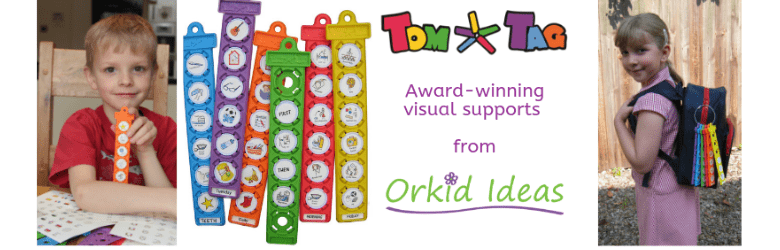
    Clare and Deborah of Orkid Ideas are two mums passionate about visual supports and how they can be used to improve the lives of children, and adults with disabilities. They designed and developed TomTag – an award-winning visual support tool, inspired and named after Clare’s son Tomas who has autism.

    Whilst we all rely on some sort of visual support in our everyday lives -a watch, a food-shopping list or diary for example, visual supports are particularly important for those with disabilities as they can assist with communication, help develop organisation skills and promote independence.

    Clare and Deborah give some real-life examples to explain how people with disabilities can use visual supports to help make a meaningful difference to their daily lives.

    Daily living

    A simple visual checklist breaking down personal hygiene routines into small steps can be an effective way to teach and remind children how to take care of their bodies and help them develop good personal hygiene practices for life.

    Checklists for learning personal hygiene routines such as toileting, hand washing, showering, bathing, hair care or general daily hygiene tasks can be created and kept handy in the bathroom or bedroom.

    For older children and adults, visual checklists can be used to develop independent living skills such as doing the laundry, shopping and cooking.

    child cleaning their teeth with tom tagchild washing their hands with tom tag

    Schedules and routines

    A visual schedule can help people with disabilities organise and manage their day and can be in a variety of formats, for example a written list, pictures, symbols or actual objects.

    For individuals with few language skills or who are mostly non-verbal a visual schedule can be created using actual objects to represent activities; for example, a cup for snack time, a spoon for meals or a shopping bag for trips to the supermarket. Hand the object to the individual to indicate the activity they are moving or transitioning to next. Don’t forget to make a list of which objects you are going to use to represent each activity.

    Picture, symbol or photograph schedules are good for individuals who can consistently match pictures in the same way you would in a simple lotto game whilst written schedules work best for individuals who can read.  You can move from picture to written schedules by adding words alongside the pictures and then gradually work towards replacing them completely

    A visual schedule helps reduce anxiety by taking away the element of surprise and makes transitions between activities easier. They are also transferable between environments and people keeping everyone involved organised!  Depending on the age and ability of the individual the more you can involve them in helping to make their own schedules, the more likely they are to take ownership and be committed and motivated towards using them.

    cooking with tom tagscollection of tom tags

    Communication

    Being able to make choices gives people with disabilities greater control over their environment and increases their independence. Visual supports can assist with communicating needs and wants. For example, when getting dressed, offer a choice of two different shirts by holding the two shirts up and asking them to choose either by pointing at the shirt, looking at it or saying which they prefer. Likewise, when offering a drink, use a choice board with pictures to allow them to choose from two or three options.

    Sensory overload, changes to routine, difficulties processing information, being tired or hungry are all common triggers for anger and challenging behaviour. A visual feelings scale can be used to help individuals tell you how they are feeling. Whilst a visual reminder giving guidance and strategies about what they can do about the situation will help them handle things better in the future.

    Visual supports sometimes take time to establish but used consistently can help people with disabilities live their lives more independently and with confidence.

    TomTag is an award-winning visual support resource. Create personalised visual schedules, timetables, checklists, choice boards, reward charts or reminders for a wide range of needs and experiences all with one unique and versatile system. For advice and support about TomTag visual resources you can contact Clare and Deborah at www.orkidideas.com

    child zipping up his jacket with tom tagstom tags and playing

    Find Orkid Ideas on Disabled Living‘s Supplier Directory here: https://supplierdirectory.disabledliving.co.uk/orkid-ideas-2/

Disabled Living