Month: July 2020

  • Care Available for Disabled People

    Care Available for Disabled People

    This is a sponsored post by Country Cousins for Disabled Living’s blog about care for disabled people.

    Sometimes, having a disability can sometimes be very limiting and make day to day tasks difficult to complete. Fortunately, there are a number of care options that you can take advantage of to make your life easier to manage. Allowing you to start enjoying the little things in life and enjoy spending time with loved ones.

    In this guide we’re going to take you through some of the best options that are available to you. Hopefully then you can decide around what care you would like to take advantage of, allowing you to make the most of your life.

    Live-in Care

    Live-in care is one of the most popular forms of care amongst the elderly and disabled community. This is mainly due to the fact you get to stay in your own home amongst all the home comforts you’re used to. A carer will come round to your home and do as little or as much as you would like. We spoke to live-in care experts Country Cousins and they told us their top benefits of live-in care:

    • You can stay in your environment and choose how your house looks and how it’s decorated. It’s your space so you control it.
    • If you still like your independence, then you can make the most of having time to yourself in your home.
    • Routines are incredibly import and if you have your own routine you can stick to it. This includes things like wake up times, meal times and when you head out to the shops. You can stay active and keep your routines.
    • Your family can visit whenever you like and don’t have to stick to a schedule.
    • The care is tailor made depending on the individual and you get your own personal support. If you’re just wanting a chat and a coffee, they are there to do just that.
    • If you have a pet, you can keep them because you’re in your own home so the rules are your rules.

    Living with Family

    One option available is living with family if they have the capacity to care for you. When living with family, you are around people you’re comfortable with and they can help you as much or as little as you need. This can be anything from going to the shops for the basics or for days out and trips where you may need a little bit of help. Here are some of the benefits of living with your family:

    • You will still maintain some form of independence even though you are amongst your family.
    • The costs will be a lot lower because all you’ll need to pay for is upkeep and costs for things like bills and food shops. Care can sometimes be seen as quite expensive.
    • The people providing the care and assistance you need are people you know, love and trust so you can fully relax.

    Supported Living Services

    Supported living services are there to provide you with care if you don’t want to live in a care home but struggle to live independently at home. They’re a combo of live-in care and care homes where you get your own space to live with some help with basic tasks like cooking and washing.

    Some supported living accommodation can house around 2-3 people who may have similar health issues or particular disability. Staff will visit the home to help you with anything from getting out of bed to getting ready to go out or go to work and complete household tasks for you. You can find out more about supported living services on the NHS website.

    Hopefully, you’re able to find care that’s right for you and gives you everything you need. If you need any more help or advice, then feel free to get in touch with us and we’ll see how we can help you.


    If you would like information and advice on products or services for a disabled person you care for, please contact our Disabled Living helpline on 0161 214 4590.

  • Accessible Iceland: Chris’ Holiday Blog

    Accessible Iceland: Chris’ Holiday Blog

    This blog was written by Chris Cammiss, Disability Trainer and Advisor at Disabled Living.

    I thought I’d push the envelope a little bit this time, so instead of heading for some late season sun in Lanzarote or the Seychelles I planned a trip to Iceland. 

    Of course, my expectations were of snow drifts, misty breath, icy pavements and multiple layers of clothing, so I went fully prepared. 

    How wrong can you be?

    Although we were travelling in late September last year, I encountered hot – yes, hot sun and generally comfortable T-shirt weather. In fact, I only wore a light coat on one evening. 

    The Accessible Hotel

    We booked a four-night weekend break based in the capital of Iceland, Reykjavik. We’d done our research in advance and my partner had found a holiday company which specialised in disability. The owner, who had already worked for a holiday company became seriously disabled after a car accident and decided to start up his own specialised organisation. They were able to book a suitable hotel, plan a couple of day-long excursions and advise on restaurants, activities and attractions. Alternating with free time in the city, this made for a busy but comfortable break. 

    The hotel was superbly located at the edge of the city centre, the hotel room was spacious and very comfortable, and the bathroom had a bigger than average shower room.  

    The concept of accessibility is very well understood in Iceland, but some practical interpretations differ to ours, so the shower room had only one tiny grab rail and an emergency cord but no shower seat. There was no foot recess under the sink at all. 

    The toilet was low with no support rails at all. Remember to contact the hotel and ask specific questions. 

    Exploring Reykjavik

    I loved the atmosphere of the city – a very hippy/indie/multi-cultural vibe – not a big city feel at all. Great mix of old and new. The new, often large buildings were fully accessible, older ones usually had ramps so were a delight to explore. Being the capital city, there were the usual huge cultural buildings, but many of the original, quaint streets were still intact. 

    During the day the whole scene was overlooked by the impressive modern cathedral, shining white at the top of the hill, in the evening you look for the food and the jazz. 

    The countryside is extremely mountainous – dramatic and atmospheric. Lots of lakes, glaciers and fiercely flowing water. There is a lot of green but most of that is lichen. 

    Our tours took us to spectacular spouting geysers, hot, boiling mud pools and dramatic waterfalls. You can see why Iceland is such a popular country for filmmakers  it’s perfect for any Lord of the Rings or Game of Thrones spin-offs! We were very well looked after by Siggy – our personal guide/driver for two full days, with his fully accessible vehicle. 

    The Blue Lagoon

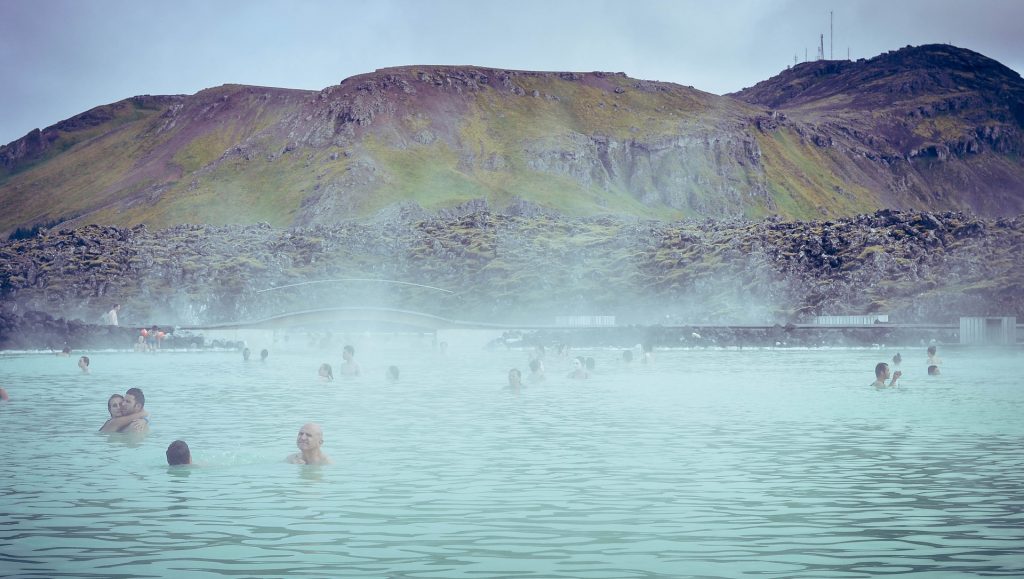
    have to mention the Blue Lagoon. This is a very famous tourist attraction built around pools filled by natural hot springs where you can swim, sit or float in salty water at close to body temperature. So, I arrive in my expensive wheelchair and ask how I can get in? Well, we will transfer you to our special plastic wheelchair, which they did in their fully accessible changing room with the help of two lifeguards. At the poolside they indicated where my ramp descended into the water. I realised immediately that it was quite steep and I would have difficulty maintaining control –no problem said two female lifeguards we will help, we have swimsuits! Off they went to change and away we went 

    Iceland Blue Lagoon

    The Food

    I had certain expectations of the food available – I’d been told about marinated, buried, foul smelling lamb dishes for instance. I knew there would be excellent fish but expected very little meat and vegetables. The reality is very different. Lots of fresh local fish – the best fish and chips – great lamb stewsplenty of vegetables and fancy salads. Many local specialities as well, such as puffin, shark and (unexpectedly) horse meat, which were all extremely delicious and a complete surprise.  

    The Aurora Borealis

    The Aurora Borealis (Northern Lights) of course should be the highlight (!) of any trip, and here we were very lucky. You should go in the winter months to give yourself a good chance but there are absolutely no guarantees. For us the very high quality, detailed weather reports (low cloud, medium cloud and high cloud levels) suggested two of our nights gave a very high probability of a spectacular show and one of those nights really delivered. Everyone moved down to the bay – nearby street lights switched off – and watched. The show was tremendous with colours, swirls, movement and drama – breathtaking display moving across the whole sky. The best vantage point was around the “Sun Voyager” a huge, stylised Viking longboat sculpture jutting out into the sea. You chose your spot and just marvelled. 

    The second, highly recommended night – absolutely nothing. You can’t ever be sure. 

    This trip more than ticked all the boxes and I will definitely go back to Iceland. I’ll make sure it’s in winter so there’s the best chance of seeing the lights, and, as always, I’ll do my research. 

    Happy travelling, 

    Chris 

  • How To Keep Active And Overcome Mobility Issues

    How To Keep Active And Overcome Mobility Issues

    This is a guest blog by CareCo who feature in Disabled Living’s Supplier Directory.

    While most of the country is struggling to come to terms with the “new normal” that is life without a coronavirus vaccine, for many people with mobility issues life is really not all that different. Many elderly people, especially those who have developed mobility problems due to chronic medical conditions, are used to spending weeks or even months indoors, with infrequent trips out to a shop or café.

    Those who have family carers to take them out are the lucky ones, many others are effectively stranded at home, and this simply worsens physical health, and can cause mental health problems associated with loneliness and isolation. That being said, there are now many tools that can provide much needed assistance, so let’s run through some of the most useful items that help people to stay active.

    Staying Active in the Home

    Ask a young person about being active at home and they will think you mean treadmills and home gym equipment, but as we get old, anything that requires movement can become a challenge.

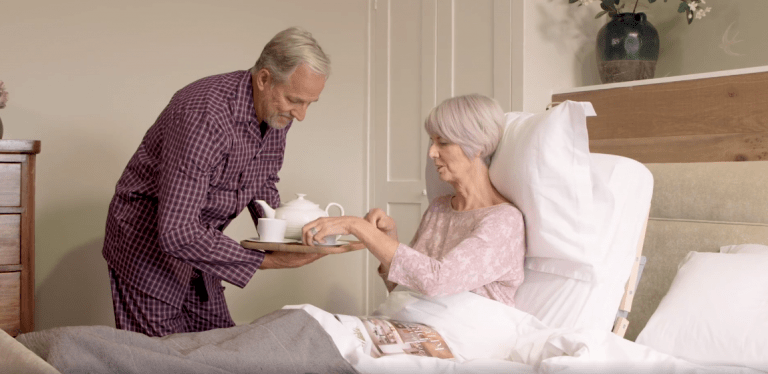
    The first challenge many people face each day is getting out of bed. When your muscles are refusing to do what the brain wills, you need to get some mechanical assistance in the form of an electric adjustable bed – these beds are not just for making reading in bed easier! At the press of a button your back is raised, and you can swing your legs around to the floor and stand up. Beds such as the Milton Electric Bed come in all sizes from small singles to king size, and have a choice of mattresses.

    lady in adjustable bed

    Walk Safely Around the Home

    Walking aids are not just for shopping, although this is where they are most often seen. A good wheeled walker allows you to get around your home without worrying about falls, and many also provide a tray to make carrying food and drinks safer and easier. The Deluxe Height Adjustable Trolley has 2 trays and hand brakes, making it one of the best indoor walking aids around.

    Leaving the House

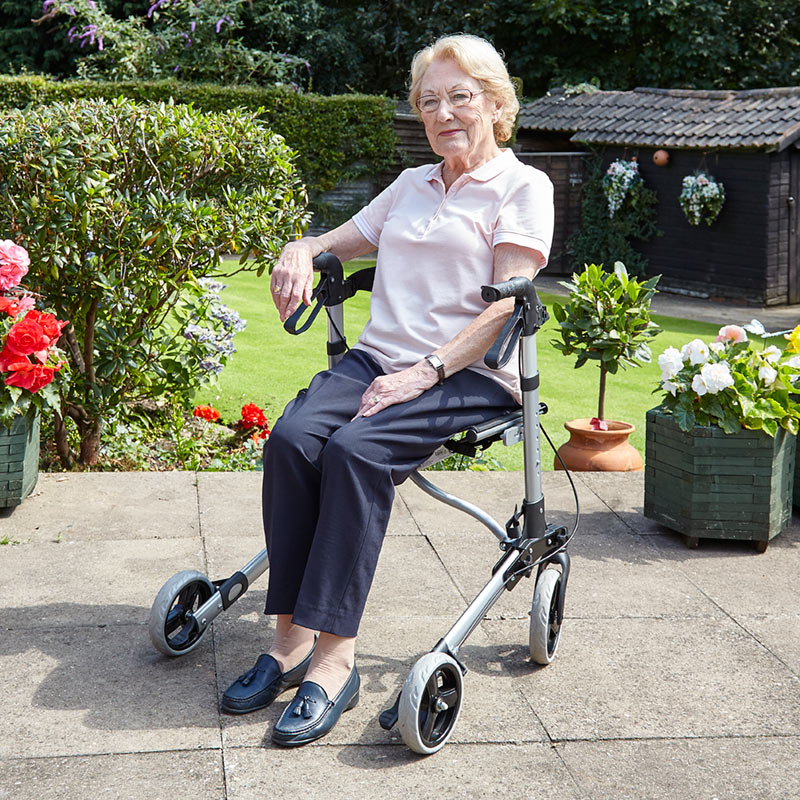
    Of course, the biggest challenge for many people is leaving the house. If your legs are weakened due to arthritis or other illness, or your sense of balance impaired, then going for a walk is often not an option. But a good quality wheeled walking aid provides enough the stability and support to get you up and out again. Walking aids such as the Atlas Lightweight Rollator were made famous this year when Captain Tom used one to walk lengths of his garden to raise money for the NHS. These walking aids can support up to 136kg (21st 6lbs) and have a seat so you can rest your legs too. They are much more advanced than the traditional Zimmer frame that many people think of when they first hear mention of walking frames.

    Helping Others Out

    Of course, it is not just people with mobility issues that get out less. Many people who care for somebody that has mobility problems effectively become isolated with them, as it becomes harder and harder to leave the house together. Investing in a good quality transit chair is vital if your partner, or a child has mobility problems, as it allows you to both get out the house together.

    Modern transit wheelchairs are very lightweight and easy to manoeuvre, and they come with brakes too so you can safely stop. For instance, the I-GO Airrex comes in a range of sizes for greater comfort, as easy to operate brakes, large wheels for a smoother ride, and only weighs 12kg, which makes lofting it into a car boot, or storing away at home, much easier.

    woman sat in her wheelchair in the garden

    Enjoy the Garden Again

    If you are lucky enough to have a little garden, then you really must try to get out and do a bit outside. Gardening provides gentle exercise and is therapeutic too. If bending over to dig out weeds is no longer possible, then a Long Reach Trowel allows you to dig out those weeds from a chair, and if your hands have been weakened by arthritis, then an ergonomic trowel can solve this problem too, with a handle that is easier on the wrist and does not require as much grip strength as a standard trowel.

    Getting older and frailer is a challenge that we will all face, but with the right mobility aids and assistance we do not have to give up an active life. We have the tools at our disposal to live a more independent life for longer than any of our ancestors were ever able to do, regardless of mobility issues.

    If you would like to feature on Disabled Living’s blog please get in touch via email info@disabledliving.co.uk

  • Baywatch Campaign Changing Format for 2020

    Baywatch Campaign Changing Format for 2020

    Disabled Living are proud to support Disabled Motoring UK’s (DMUK) latest Baywatch campaign which looks into levels of disabled parking abuse at supermarkets, Baywatch, is changing format for 2020. DMUK tell us all about the campaign coming up in August 2020 and how you can support. 

    A common problem for many disabled motorists is not being able to park at their desired destination, especially at their local supermarket. The major complaint is that the disabled bays are all occupied with cars not displaying a Blue Badge.

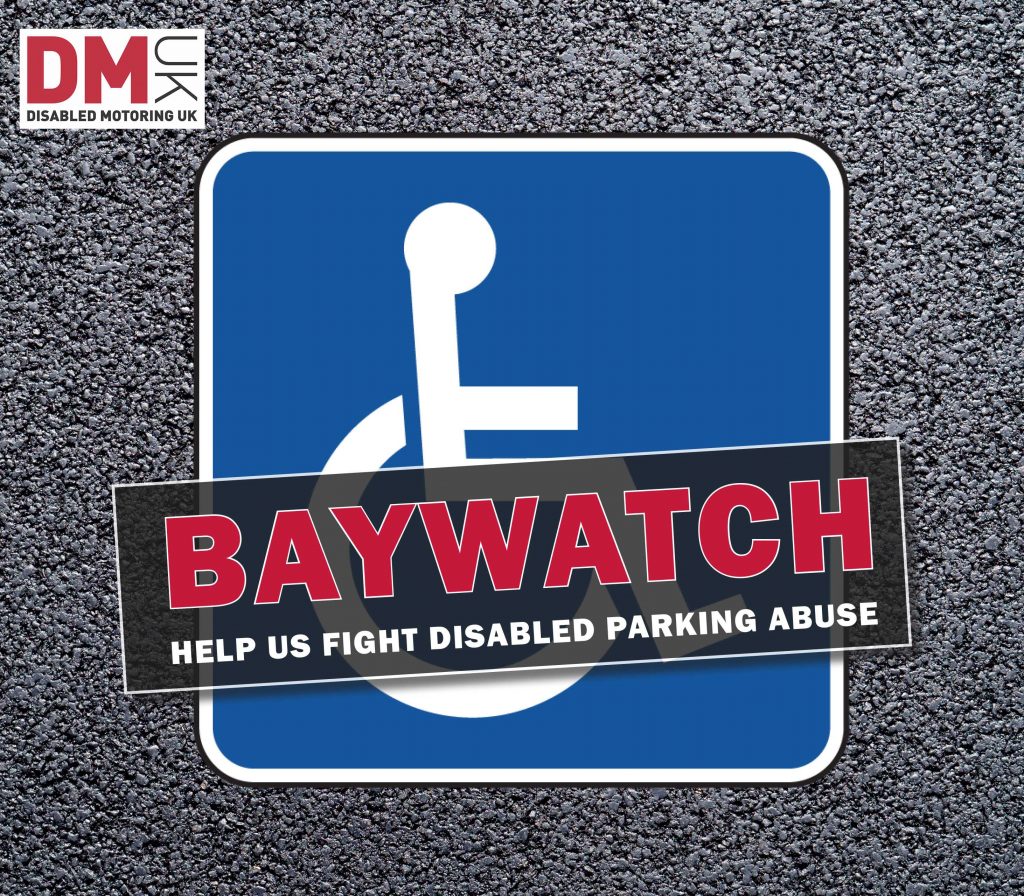
    Disabled Motoring UK’s Baywatch campaign seeks to address this. This campaign researches the level of disabled parking abuse at supermarkets, by asking disabled motorists to survey their local supermarket car park. Specifically, they count how many disabled bays are provided and how many cars that are parked in them without displaying a Blue Badge.

    We launched this year’s campaign in March 2020 with a great response from supporting organisations and the campaign’s sponsor, the British Parking Association. DMUK is so pleased with the positive response it gets from its members, the public and organisations. Last year was our best campaign yet with record numbers of participants. However, this was before the world was swamped by the current Coronavirus pandemic. Even though many areas of the UK are seeing a decrease in infections and deaths from Coronavirus, and the government are easing lockdown restrictions, DMUK has decided that it is not appropriate to ask individuals to physically go to a supermarket car park and count cars not displaying a Blue Badge which are parked in disabled bays. This could put participants in a position where they find it harder to social distance and we would never ask people to put themselves at an increased risk of catching the virus.

    Baywatch disabled parking graphic

    Instead we will be running a survey for the month of August which participants can complete without leaving their home. DMUK will ask individuals to think back over the last 12 months to consider their general parking experience and ask them to answer some questions about this experience at supermarkets and on their everyday journeys. We will use this data to tackle the supermarkets and other parking providers over their disabled parking policies. As a thank you for taking part there will also be an opportunity for one participant to win a £25 M&S voucher.

    The survey will be printed in the August issue of Disabled Motoring and there will be an online version going live in August which can be accessed through our website https://www.disabledmotoring.org/baywatch-2020

    We hope that in August 2021 to have this pandemic long behind us and run our usual Baywatch Campaign.

    The campaign has support from Baroness Tanni Grey-Thompson, she commented: “It’s so sad that Disabled Motoring UK has to run its Baywatch Campaign. Disabled bay enforcement should be mandatory, especially for the big supermarkets that can afford to invest in policing their car parks. I see disabled parking abuse every day, it’s never a surprise to me, including at my local supermarket. There is a real lack of understanding about how essential these bays are to disabled people and I applaud DMUK’s Baywatch Campaign as it plays a vital role in highlighting the issue of disabled parking abuse at supermarkets.”

    Heidi Turner, Communications and Campaigns Director at DMUK, said: “Baywatch is one of the charity’s longest running campaigns and is really important to draw attention to the parking problems that disabled people face when just trying to do their everyday grocery shopping. The charity has decided to change the format of Baywatch this year in order to keep our supporters safe. Nevertheless the new survey will provide us with some really useful data to keep the pressure on the supermarkets to do more to manage their disabled parking bays properly. Disabled motorists face parking problems in all aspects of their life and the new survey will also encompass some more general parking questions which will expand the scope of the DMUK Baywatch Campaign.”

    DMUK Baywatch Appeal

    In October 2019 DMUK launched its Baywatch Appeal as a way of raising additional funds to support the charity’s campaigning efforts. Since its launch the charity has raised an extra £5740.58 in added donations. Any extra money the charity can raise to support campaigning is so helpful. We understand that many people are under financial pressures at this time and ideally the best thing that individuals can do is to fill in the Baywatch survey in August, but if you can help with a donation too that is very much appreciated. Donations can be made through our website www.disabledmotoring.org or by calling 01508 489449.

    DMUK Baywatch Sponsor

    DMUK has worked for many years with the British Parking Association (BPA) to improve parking for disabled motorists. The BPA sponsored the campaign in 2019 and is once again sponsoring it for 2020.

    Kelvin Reynolds, British Parking Association, Director of Corporate and Public Affairs, said: “We wholeheartedly support DMUK’s annual Baywatch campaign. With one in every five disabled parking bays being misused at supermarkets, this campaign is a great way to raise awareness of the importance of only using disabled bays if you are a Blue Badge holder. We encourage as many people as possible to participate in the survey.”

    For more information please contact:

    Heidi Turner

    Communications & Campaigns Director

    Heidi@disabledmotoring.org

    01508 489449

  • New Micro WashPod Will Help People Stay Safe at Home

    New Micro WashPod Will Help People Stay Safe at Home

    This is a guest blog by WashPod who feature in Disabled Living’s Supplier Directory.

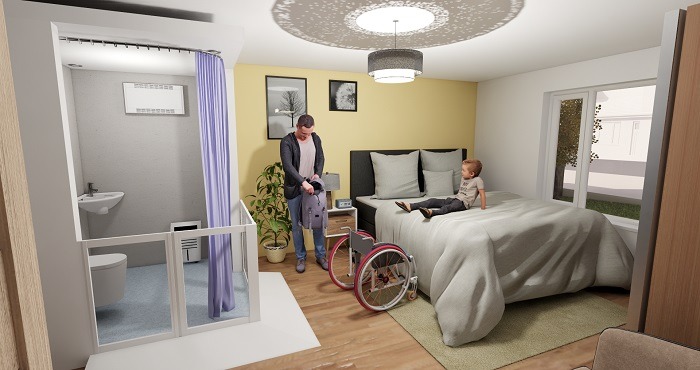
    The new Micro WashPod mobile, disabled wetroom has been launched as the smallest to join the range of WashPod models that offer bathing solutions to hire for those who have mobility issues but wish to stay in their own home, be they elderly or disabled.

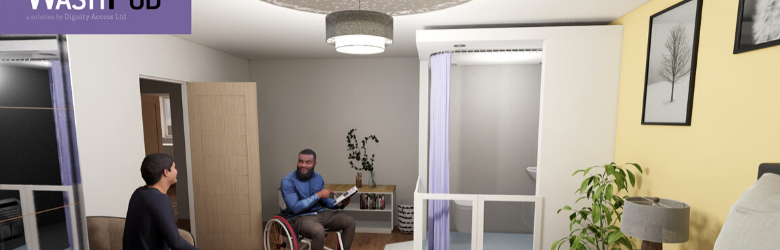
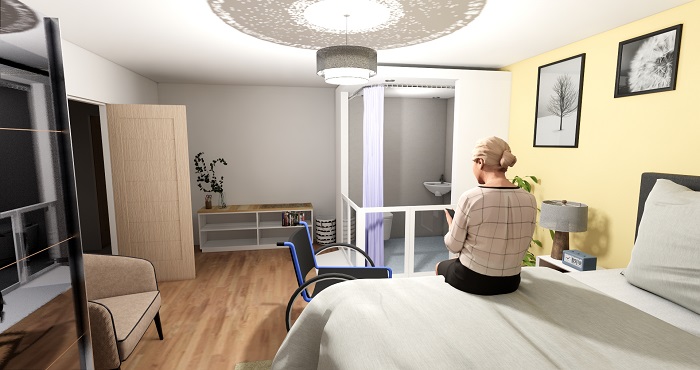
    The Micro WashPod is a unique solution to bathing and has been specially designed for limited spaces, fitting internally into a reception room or bedroom. It’s fabulously quick to install and can be fitted in less than a day. It will be the answer for many people needing at-home, disabled bathing where space is at a premium and where extra room for carers, hoists and trollies may not be needed.

    Benefits include:

    • Absolute minimum space required
    • Versatile and quick to install (less than a day)
    • Plug and play, no need for existing plumbing connections
    • Minimum disruption
    • Hired or bought direct or through our distributors

    The Micro WashPod has great versatility. By adding a platform, the Micro WashPod can gain a wheelchair turning circle. With tight installations, the ramp can also be removed on one side to give extra space. In addition, the panels can be configured to accommodate different orientations.

    parent and child using micro washpod

    Notes

    If access to the bathroom is now impossible, the WashPod range of disabled washrooms is the perfect interim solution saving the option of prolonged hospital care or an early move to an expensive care home. There is nothing like it on the market.

    In addition to the Micro, there is a standard External WashPod that can be installed in the garden or on a patio and two other internal models – the Standard and the Mini – that can be erected in a spare reception room or garage.

    Additional applications are numerous from Housing Associations and Local Authorities who may wish to buy them and lease them out to residents as needed, or hospitals during building works, and commercial enterprises wishing to provide accessible washrooms.

    The WashPods are plug ‘n play and fully fitted to comply with the highest specification of part M of the building regulations. They have been devised by architects who specialise in the designing for disability and endorsed by occupational therapists and case managers.

    Typical facilities include accessible shower facility, basin and WC. External units include underfloor heating. Hoisting for transfer purposes can also be provided where needed.

    Both internal (with a mini version too) and external options give a disabled person dignity until more suitable arrangements can be made, without significant disruption and stress to the family home.

    External Washpods are usually erected within 2 to 3 days and can include a covered link to an external patio or back door. Internal Washpods can take only a day to install. The units are constructed off site and re-assembled in the home by an expert team.

    woman using micro washpod

    Benefits

    • Out of hospital faster (thus releasing a hospital bed)
    • Immediate return to (or ability to remain in) family/familiar surrounding
    • No permanent alteration to the property
    • Pods can be removed easily and the property reinstated very quickly
    • Short period from order to installation
    • Independence and dignity for user
    • No reduction in house value
    • Minimum disruption
    • Fraction of the cost compared to care home provision.

    The WashPod range is being manufactured and marketed by Dignity Access which is a sister company to Cowan Architects, specialists in disability adaptations and inclusive living design.

    More information

    For more information, please contact Joanna Sale in Marketing, on 07717 425694, email: joannasale@cowan-architects.co.uk or visit the Dignity Access website.


    Did you know… Disabled Living are featured in the Top 10 UK Disability Blogs? For the chance to have your news/story published on our blog please send an email to: info@disabledliving.co.uk

Disabled Living