Category: General

  • Anosmia Awareness Day 2020 – How to Stay Safe in Your Home

    Anosmia Awareness Day 2020 – How to Stay Safe in Your Home

    This is a guest blog sent to us by Cadent Gas who have partnered with the charity Fifth Sense. They tell us about Anosmia Awareness Day on Thursday 27th February 2020 and share some tips on how to stay safe in your home. 

    Smell – a lifesaving sense

    Most of us do not even realise what an important role the sense of smell plays in our lives and the problems people who are deprived of it face.

    Our sense of smell does not only let us smell and distinguish the different aromas that things have it can also act as a main early warning system for our bodies and help keep us safe.

    Sometimes people don’t realise that they have a poor sense of smell. Around 5% of the population** are thought to be affected by anosmia, the medical term for the loss or lack of the sense of smell.

    People who suffer from a loss of smell are unable to detect warning odours such as food that has gone off, or not being able to smell gas or smoke.

    If you have a problem with your sense of smell and use gas appliances within your home, you are potentially at risk if there is a problem with your gas.

    Stay safe in 4 steps

     To help you stay safe at home, follow our four steps

    1. Get your gas appliances serviced every year by a Gas Safe Registered engineer. Visit gassaferegister.co.uk or call 0800 408 5500.
    2. Fit a natural gas detector – these can detect dangerous and ignitable gas escaping and will sound an alarm to warn you of the danger.
    3. Know what to do in the event of a gas escape – if your gas detector sounds, call the National Gas Emergency service for free  on 0800 111 999* immediately.
    4. Sign up to the Priority Services Register and gain access to additional support. We recognise a sense loss as a condition and want to ensure you are responded to as a priority. In the event of a gas emergency, you will receive extra services tailored to meet your needs.

    What is Anosmia?

    Anosmia is the medical name for a condition in which someone suffers a partial or complete loss of their sense of smell.

    As well as losing their sense of smell, people with anosmia may also suffer a reduced sense of taste, as these senses are very closely linked.

    Most people are unable to smell at some point during their lives because of a cold or blocked nose, but people with anosmia may have it forever.

    The most common single cause, either temporary or permanent, is illnesses which affect the nose or sinuses, such as polyps which grow in the airways, fractured bones or cartilage, hay fever or tumours.

    Head injuries and nervous system diseases like Parkinson’s or Alzheimer’s may also contribute to the condition by damaging the nerves which are responsible for detecting smells. If these nerves are damaged the messages they send to the brain may be incomplete or stopped completely.

    People may also inherit anosmia through their genes or develop it from other causes including liver failure, diabetes, or for no obvious reason at all.

    Fifth Sense

    We are working in partnership with Fifth Sense to raise awareness of smell disorders.

    Fifth Sense is the charity for people affected by smell and taste disorders, providing support, information and educating society on the huge role that the senses of smell and taste play in our lives. fifthsense.org.uk

    ** The Impact of Olfactory Disorders in the United Kingdom Carl M. Philpott1,2 and Duncan Boak3

    1Norwich Medical School, University of East Anglia, Norwich, UK, 2The Smell & Taste Clinic, James Paget University Hospital, Gorleston, UK, and 3Fifth Sense, London, UK

    If you would like to feature a guest post on our blog please get in touch with Disabled Living via email: info@disabedliving.co.uk.

  • Getting the Most Out of Your Recliner Chair

    Getting the Most Out of Your Recliner Chair

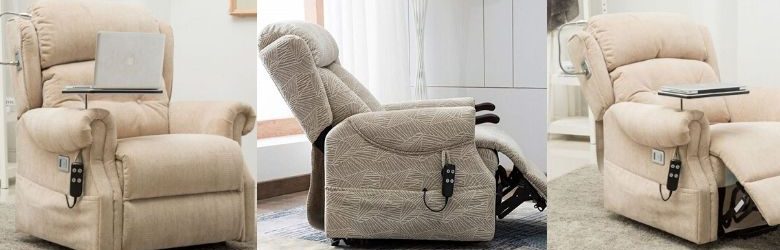
    Fenetic Wellbeing tell us how you can get the most out of your recliner chair. Recliner chairs are one of the best types of chair for those who suffer from back pain or struggle getting in and out of their chair. They’ve been specifically designed to provide maximum body support and offer you a comfortable seated experience. This guide will take you through the benefits of a recliner chair and how they can be of benefit for you.

    What is a recliner chair?

    You may have already guessed by the name. Recliner chairs recline when you’re seated, and you can often choose how reclined the chair is. More often than not they also come with a footrest so that, when the chair is reclined, you can simply put your feet up and relax.

    There’s a great range of recliner chairs from Fenetic Wellbeing, in particular their range of electric recliner chairs. You operate these with the touch of a button and there’s a range available that lets you operate the headrest and footrest separately known as dual motor. Single motored riser recliner chairs operate them simultaneously. With electric recliner chairs you can choose the position of the footrest and headrest with considerable ease. You need to ensure that the chair is placed somewhere near a power source as they’ll need to be plugged in to ensure the features work.

    Traditional recliner chairs are operated using a lever. These can be placed anywhere in your living room as they don’t need to be connected to a power source. You pull up on the lever and use your body to get the chair to a comfortable position.

    riser recliner chair in cream

    Why should you consider a recliner chair?

    Research has been undertaken that has shown how beneficial recliner chairs can be for those who suffer from mobility issues and the elderly. They not only make your experience getting in and out of the chair more comfortable, they also offer you a bit more safety.

    When seated, they’re also extremely beneficial. They provide your back and spine with support and also give your neck some additional comfort. When in the reclined position they provide a temporary relief from any niggling aches and pains so you can watch your favorite television programme in peace. When risen they also offer relief from hip and neck problems, so whatever the issue they can make your life far more comfortable and enjoyable.

    So, as you can see, they really are an all-rounder and can really help you to have some temporary relief from any aches and pains that you normally suffer from when seated.

    Are you a keen skier? We recently wrote a blog looking at the rise of adaptive and accessible skiing.

    How can you ensure your recliner chair last the distance?

    Like anything in your home, your recliner chair needs a little bit of love, care and attention to ensure you get maximum use out of them and they last the distance. If you take good care of them, they can potentially last you for years. If they get damaged or aren’t cleaned on a regular basis, it’s highly likely you’ll have to replace them far sooner.

    When it comes to getting the best quality, you need to sometimes spend a little bit more than you may have expected to get longevity. If you keep them clean, they’ll feel fresh for years. You need to be careful when getting in and out of the chair you aren’t sitting down to heavily, as this can damage the bottom of the chair and the springs. With a bit of investment in your chair, you’ll get a comfortable and pain-relieving experience.

    cream recliner chair

    You may not immediately think of your chair as something that needs love and care but hopefully, we’ve shown you they do! You need to ensure, where possible, they’re looked after as this is the best way of ensuring they’ll last for a long time. If you fully take care of them, you’ll see the real benefit that recliner chairs can have for you and how they can make your life so much easier and more comfortable.

    For more information visit: www.feneticwellbeing.com

  • How Dance Group AwA (Atypical with Attitude) Break Down Barriers

    How Dance Group AwA (Atypical with Attitude) Break Down Barriers

    AwA are ambassadors of the SEND community. Through the power of dance, AwA aims to break down barriers to inclusivity and integration, changing perceptions and stereotypes with the goal to change the way the world looks at disability. Through hard work, discipline, perseverance and dedication, the AwA dance team has improved the lives and opportunities for many living with challenges. The core ethos of our dance team is having the right attitude toward life. Stereotypes and perceptions will only be broken and changed through hard work and diligence. As pioneers within the dance community, AwA has proven time and time again that those who live with disabilities and challenges are more than capable of achieving the same as their mainstream counterparts.

    When the dance team was first made we made a core decision that would affect and influence everything that we do. Without working just as hard as our mainstream counterparts, we would never change the way people view disabilities and truly see what we are capable of. Every time we perform on the stage, no matter the size or arena, hours and hours of endless hard work and dedication has taken place.

    Through this ethos and methodology, AwA created a unique and inspiring team that went on to achieve many milestones for the SEND community. AwA appeared on the BBC’s The Greatest Dancer which reached the views of millions of people around the world, pushing the agenda that we are capable of much more than the world tells us. AwA were the first special needs team to ever qualify and compete at the UDO European Championships in 2018, representing the UK. Not only did we break down barriers to integration and inclusivity, we also ranked 2nd overall in our category making huge history as the first ever SEN team to do so.

    AwA dance group performance

    A year later we were the first special needs team to ever qualify and compete at the UDO World Championships in 2019, representing the UK and ranking 3rd overall in our category. As a result of our achievements we were blessed and privileged enough to appear on many different news platforms to continue spreading our message. Platforms such as BBC, London Live, Sky and Channel 5.

    A member of AwA states how being a part of the dance group has changed their life:

    I used to be ashamed of my autism. I used to think it was a detriment to myself and those around me. The world taught me that there was something wrong with me, that I was broken and needed to be fixed. I couldn’t understand why I was being told that “who I was” was wrong. When I joined AwA, everything changed. My autism turned into my superpower!

    Everywhere we went, every performance we attended and arena we participated in, people were inspired and amazed to see us do the same things as everyone else. I could see it in their eyes, their perceptions of the ability of those with “disabilities”, was shattered and rearranged within 4 minutes of watching us dance. That feeling empowered me so much. It gave me the fire and strength to continue on the path we were on and work even harder. If I didn’t have autism, I wouldn’t be in this amazing family of friends that I call my team. I used to be ashamed of my autism, now I am proud of it.

    Within the mainstream dance community in the UK, AwA is now widely recognised. We are regularly invited to perform and participate in many mainstream dominated environments as ambassadors of the SEND community. Also, we have hosted our own inclusive fundraisers to give platforms and opportunities to other members of the SEND community. Our other achievements include performing at the national school games summit, winning the first ever Para Dance in 2019. For two years in a row we have been granted mainstage performances at Move It exhibition, the UK’s largest dance exhibition as well as opened the Dance Awards UK show on behalf of DejaVu entertainment. We have also been invited to perform overseas such as the Best Buddies Conference in Indiana USA in 2019.

    AwA has and will continue to maintain a professional approach towards the art of dance and challenging perceptions. We are open to all, include all and accommodate anyone and everyone. Our doors will always be open to others who wish to join our mission and spread the message of inclusivity and integration. We pride ourselves on equality and humility in everything that we do.

    For more information on AwA, visit their Facebook page to keep up to date with their latest dance routines and achievements: https://www.facebook.com/atypicalwithattitude/


    If you or someone you know has autism and would benefit from using a sensory room, then please contact Redbank House. Alternatively, if you have a disability and are looking to receive some advice about services or equipment, contact Disabled Living today!

  • The Rise of Adaptive and Accessible Skiing

    The Rise of Adaptive and Accessible Skiing

    This is a guest blog post written by Staysure Travel Insurance. In this blog, they outline how technological advances are helping skiing to become a more accessible sport and what to consider if you want to go skiing with a disability.

    Skiing alongside snowboarding has been one of the top sport choices for anyone thinking to head to the mountains for a winter retreat. Originally, the fast-paced sport was a means of transportation in the mountainous areas in the Nordics with most of the evidence pointing to both ancient and modern origins stemming from Norway.

    While, it likely turned into a sport a little earlier, alpine skiing was introduced in 1936 (Olympics) and flourished as a leisurely activity after the second world war, when technology and transportation improved, so that the Alps became more accessible to non-locals.

    It would not be a surprise for most people to expect this sport to be somewhat inaccessible. Afterall, YouTube has countless videos of snowboards and skiers performing insane flips or reaching unruly speeds, which may in part, provide an inaccurate and unrealistic picture of an ‘extreme’ sport for anyone new to it. However, this isn’t the case at all. The sport isn’t inaccessible to people who may have, as an example, reduced lower-limb strength.

    How Has Skiing Become More Accessible?

    Winter sports have progressively become more accessible and inclusive to a wide variety of people. Alongside advances in technology, ski resorts have started to realise that people should be able to go to a ski resort with their family and friends and enjoy the mountain experience without anyone feeling left out from the action due to a disability or condition.

    If you are for example, a wheelchair user looking for ski trip, one of the first port of calls is to look for resorts offering adaptive ski equipment. These could come in the form of seated dual skis, which looks rather like an advanced, lever-operated sled or a piloted version. This is helpful if the user has limited strength and stamina. In the piloted version, either a ski guide or a more experienced member of your troupe could ‘drive’ you with the rest of the group.

    This is just one of the examples of the things you could find. For anyone who can use regular skis, you can find support in the guise of stabilisers, which effectively provide balance and stability as well as helping someone turn more effectively. This would be particularly useful for an amputee with a missing lower limb or someone who requires more support. This could be suitable if the skier has had recent surgery or come out of intensive cancer treatment. The type of adaptive ski equipment used will ultimately vary from individual to individual, this will often be dependent on a condition or disability someone may have and the level of ease for the user.

    Accessible Resorts

    Modern resorts, especially many of the French and Swiss resorts have had many pushes to make skiing more accessible and inclusive and will have the facilities (e.g. disabled or accessible toilets), equipment and specialised instruction to match many individual needs. Therefore, a beginner will be able to find an instructor with expertise in a specific type of equipment so that they feel more comfortable when trying it out for the first time. In fact, many ski schools have instructors that teach in sign for those who are deaf/hard of hearing or provide ski guides who can accompany those who have limited or no vision and other instances where someone may need to the extra support.

    Just getting in touch with one of the resorts, will provide you with all the information you need to go for that winter retreat. If you are struggling to know where to start, you could try this accessible resorts guide to whittle down the resort options and find something that looks more appealing. Hopefully, this little summary of adaptive skiing will give you the confidence to take a plunge and go skiing this winter.

    Find out more about Staysure on Disabled Living’s Supplier Directory here: https://supplierdirectory.disabledliving.co.uk/winter-sports-accessible-resort-guide-staysure/

  • Washpod Helps Bring Young Man Home From Hospital

    Washpod Helps Bring Young Man Home From Hospital

    Having spent 4½ months in hospital, 21 year old Luke wanted nothing more than to go home. However, his house had no accessible bathroom facilities. WashPod, the unique mobile wetroom, talk about how they provided a rapid and dignified solution for Luke.

    In early 2019, Luke was hit by a car when he was crossing the road and was seriously injured. He currently needs a wheelchair which made coming back to the family home difficult. For his mother, Annette, the options offered to her were totally unsuitable.

    Luke in his Farnborough Washroom

    “Luke was trying to come to terms with his situation. The last thing he needed was to come home and have no suitable bathroom facilities” says Annette.

    She discovered the WashPod from Dignity Access online (www.dignityaccess.co.uk) and was thrilled.

    “I am so pleased with our WashPod as it’s given Luke so much independence and dignity at a difficult time which has been crucial. It’s been of huge benefit to him and allowed him home without disruptive adaptations ” continues Annette.

    It was a rapid installation as there was a WashPod that was becoming available and within two weeks from the first phone call, it was connected to Luke’s downstairs bedroom with a lobby for total privacy and comfort. In this instance, the unit was craned into position but both internal and external units can also be constructed from a flat-pack form and transported through the house or narrower side gates

    About WashPod

    If access to the bathroom is now impossible, WashPod is the perfect shorter-term solution saving the option of prolonged hospital care or an early move to an expensive care home. There is nothing like it on the market.

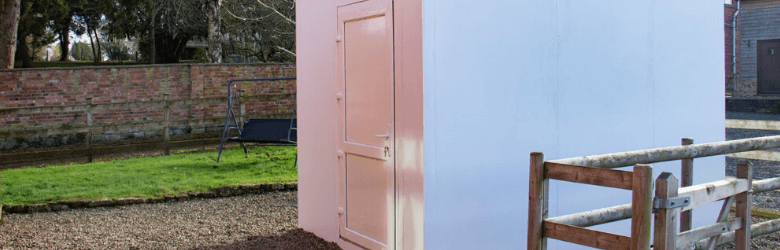
    “The WashPod unit provides a temporary, accessible wet room in a self-contained fully accessible plumbed in box. WashPods are either positioned externally in the garden or erected within an existing, reception or dining room that can be made available for the purpose”. Lewis Gopsill, General Manager of manufacturer Dignity Access Ltd. 

    The applications are numerous from Housing Associations and Local Authorities who may wish to buy them and lease them out to residents as needed, or hospitals during building works, commercial enterprises wishing to provide accessible washrooms and private individuals who simply wish to stay at home.

    The WashPod is fully fitted to comply with the highest specification of part M of the building regulations. It has been designed by architects who specialise in the designing for disability and endorsed by occupational therapists and case managers.

    Typical facilities include accessible shower facility, basin and WC. External units include underfloor heating. Hoisting for transfer purposes can also be provided where needed.

    Both internal (with a mini version too) and external options give a less able person dignity until more suitable arrangements can be made. This reduces disruption and stress to the family home.

    External Washpods are usually erected within 2 to 3 days and can include a covered link to an external patio or back door. Internal Washpods can take only a day to install. The units are constructed off site and re-assembled in the home by an expert team.

    Both units can be ‘plug and play.’ A purpose-made pump and water heater unit means that the units are connected into existing cold water supplies only and 2 domestic sockets. Access to a drain point somewhere within the house or garden is used to pump the waste through a flexible 2” pipe.

    Internal Washpod

    Benefits

    • Out of hospital faster (thus releasing a hospital bed)
    • Immediate return to (or ability to remain in) family/familiar surrounding
    • No permanent alteration to the property
    • Pod can be removed easily and the property reinstated very quickly
    • Short period from order to installation
    • Total independence for user
    • No reduction in house value
    • Minimum disruption
    • Fraction of the cost compared to care home provision.

    WashPod is being manufactured and marketed by Dignity Access. They are a sister company to Cowan Architects, specialists in disability adaptations and inclusive living design.

    WashPod can be found on Disabled Living’s Supplier Directory.

  • Disabled TV Characters Played by Disabled Actors

    Disabled TV Characters Played by Disabled Actors

    Diversity is something that should be celebrated, and we think it’s great to see that characters on TV and in film are becoming more and more inclusive. This includes portraying those with disabilities and minority communities. Although representation of people with disabilities in television is still only estimated at around 2.5%, this is something which we hope will increase in the coming years.

    However, it can still be difficult to find a TV show or film that has accurate representations of disabilities. It is even more difficult to find a TV show or film that has an actor who actually has the disability they are portraying. It is estimated that approximately 95% of disabled characters on our screens don’t have a disability in real life, which could be perceived as an issue. Having said this, we thought it is worth celebrating the actors who have disabilities both on-screen and off-screen. Read on to discover just some of the disabled actors who play disabled characters on TV.

    Walter White Jr. – Breaking Bad

    This character is played by RJ Mitte who has cerebral palsy. In the series, he plays Walter White Jr. who also has CP. Mitte wanted to find acting opportunities where his disability would serve to educate viewers and increase awareness. Now a celebrity ambassador for United cerebral palsy, Mitte is proof that we need more actors with disabilities on the screen to help raise awareness of disabilities.

    https://www.instagram.com/p/urDOoaLzt6/

    Izzy Armstrong – Coronation Street

    Cherylee Houston plays the character of Izzy Armstrong on Coronation Street and both are wheelchair users. Houston has used a wheelchair from the age of 23 when she was diagnosed with a rare connective tissue disorder called Ehlers-Danlos Syndrome. Although her disability was not the focus of her character, her story-lines did tackle two important disability-related issues. Izzy Armstrong showed viewers what it was like to live with chronic pain and the logistical problems of being a disabled prisoner. Since Coronation Street, Cherylee has continued to raise awareness of disabilities. Currently, she is currently involved in a great social media campaign called #TakingtheDis. The campaign involves highlighting places in the UK that are not accessible for wheelchair users.

    https://www.instagram.com/p/9EPbr8gdqV/

    Becky Jackson – Glee

    Becky Jackson, played by Lauren Potter, has Down’s syndrome. In Glee, her character is the school’s head cheerleader. The sassy character is brilliantly played, showing complexities, dating boys and adjusting to college. It is also proof that her disability doesn’t stop her from reaching her goals. Becky’s disability is rarely spoken about during the series, making Glee a great example of including a disabled character that isn’t defined by their disability.

    https://www.instagram.com/p/B00aGC6oavc/

    Mr. Wrench – Fargo

    In the first season of Fargo, Russell Harvard plays the intimidating deaf hitman, Mr. Wrench. In his season, Harvard was able to communicate to his accomplice via sign language. This allowed viewers to gain some insight into using sign language. When asked about it, Harvard stated how being deaf doesn’t define this character. This is definitely a step in the right direction since Fargo portrays another way of communicating, showing how individuals use sign language. The crime-drama series has received ‘universal acclaim’ and has won 51 award nominations.

    https://www.instagram.com/p/BbhY6UznBrQ/

    Sally Harper – Call the Midwife

    Sarah Gorder, who plays Sally Harper in Call the Midwife, is a professional actress, dancer and model with Down’s syndrome. During the series, Sally has an on-screen relationship with Jacob Milligan (played by Colin Young) who has CP. Gorder states that her aim is to play roles where people see her as a woman and performer first rather than focusing on her Down’s syndrome – which ‘Call the Midwife’ does brilliantly.

    https://www.instagram.com/p/B6_TQt_JG2q/

    Although studies show that many of the actors playing disabled characters on our screens do not have disabilities themselves, the portrayal of disabled characters still points in the right direction through increasing diversity. This may give viewers a chance to gain a deeper understanding of what it means to have a particular disability.

    In the future, we hope to see more actors with disabilities portraying characters with disabilities on our screens.

    If you have a disability and would like free impartial information or advice about something, then please contact Disabled Living.

  • Visual Supports: How they can help improve lives

    Visual Supports: How they can help improve lives

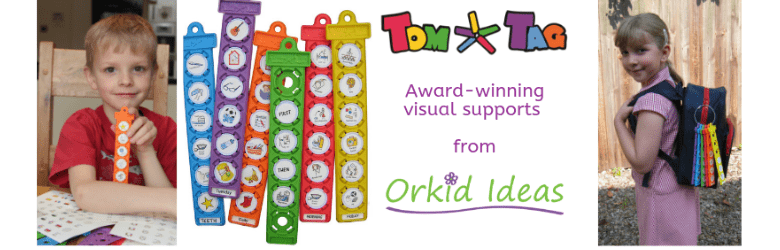
    Clare and Deborah of Orkid Ideas are two mums passionate about visual supports and how they can be used to improve the lives of children, and adults with disabilities. They designed and developed TomTag – an award-winning visual support tool, inspired and named after Clare’s son Tomas who has autism.

    Whilst we all rely on some sort of visual support in our everyday lives -a watch, a food-shopping list or diary for example, visual supports are particularly important for those with disabilities as they can assist with communication, help develop organisation skills and promote independence.

    Clare and Deborah give some real-life examples to explain how people with disabilities can use visual supports to help make a meaningful difference to their daily lives.

    Daily living

    A simple visual checklist breaking down personal hygiene routines into small steps can be an effective way to teach and remind children how to take care of their bodies and help them develop good personal hygiene practices for life.

    Checklists for learning personal hygiene routines such as toileting, hand washing, showering, bathing, hair care or general daily hygiene tasks can be created and kept handy in the bathroom or bedroom.

    For older children and adults, visual checklists can be used to develop independent living skills such as doing the laundry, shopping and cooking.

    child cleaning their teeth with tom tagchild washing their hands with tom tag

    Schedules and routines

    A visual schedule can help people with disabilities organise and manage their day and can be in a variety of formats, for example a written list, pictures, symbols or actual objects.

    For individuals with few language skills or who are mostly non-verbal a visual schedule can be created using actual objects to represent activities; for example, a cup for snack time, a spoon for meals or a shopping bag for trips to the supermarket. Hand the object to the individual to indicate the activity they are moving or transitioning to next. Don’t forget to make a list of which objects you are going to use to represent each activity.

    Picture, symbol or photograph schedules are good for individuals who can consistently match pictures in the same way you would in a simple lotto game whilst written schedules work best for individuals who can read.  You can move from picture to written schedules by adding words alongside the pictures and then gradually work towards replacing them completely

    A visual schedule helps reduce anxiety by taking away the element of surprise and makes transitions between activities easier. They are also transferable between environments and people keeping everyone involved organised!  Depending on the age and ability of the individual the more you can involve them in helping to make their own schedules, the more likely they are to take ownership and be committed and motivated towards using them.

    cooking with tom tagscollection of tom tags

    Communication

    Being able to make choices gives people with disabilities greater control over their environment and increases their independence. Visual supports can assist with communicating needs and wants. For example, when getting dressed, offer a choice of two different shirts by holding the two shirts up and asking them to choose either by pointing at the shirt, looking at it or saying which they prefer. Likewise, when offering a drink, use a choice board with pictures to allow them to choose from two or three options.

    Sensory overload, changes to routine, difficulties processing information, being tired or hungry are all common triggers for anger and challenging behaviour. A visual feelings scale can be used to help individuals tell you how they are feeling. Whilst a visual reminder giving guidance and strategies about what they can do about the situation will help them handle things better in the future.

    Visual supports sometimes take time to establish but used consistently can help people with disabilities live their lives more independently and with confidence.

    TomTag is an award-winning visual support resource. Create personalised visual schedules, timetables, checklists, choice boards, reward charts or reminders for a wide range of needs and experiences all with one unique and versatile system. For advice and support about TomTag visual resources you can contact Clare and Deborah at www.orkidideas.com

    child zipping up his jacket with tom tagstom tags and playing

    Find Orkid Ideas on Disabled Living‘s Supplier Directory here: https://supplierdirectory.disabledliving.co.uk/orkid-ideas-2/

  • In the Dock: Training on How to Avoid Legal Issues in the Workplace   

    In the Dock: Training on How to Avoid Legal Issues in the Workplace  

    At Disabled Living, we often see and help people who have had accidents at work. Hence, we have courses that help not only healthcare professionals, but also people in other industries such as construction and road building who may be exposed to certain hazards. The aim of the course is to keep people safe and prevent people from having injuries at work.

    What does In the Dock training involve?

    The day starts with a session from a solicitor who explains the process of making a claim in court and how to be successful. Delegates will be asked to stand up in the dock and listen to a real-life case. Afterwards, they will be asked to give their opinion on who won the claim. They are then asked to defend their decision as the solicitor cross examines them in the dock.

    What will be covered on the day?

    Real life cases, how the law works, health and safety at work law, negligence, blame.

    Who will benefit?

    The course will help workers stick to policies for their own safety and liability. Ultimately, this will help to increase safety in the workplace. The session will highlight real life cases to show what could happen if laws and policies are not adhered to.

    Why do Disabled Living deliver this training?

    All the training courses are arranged and delivered by Disabled Living. Each session addresses the issues faced by people wanting to remain as independent as possible. We want to deliver training to a diverse range of people in order to help prevention of issues in which people are faced with problems surrounding their independence.

    In the Dock training case study – Road surface workers

    Last week saw 60 men In the Dock facing a grilling by solicitor Phil Edwards, from Clarke Willmott, about their opinions on the legal cases presented before them. It became apparent that in defending their decisions, opinions are very diverse when it comes to apportioning blame in health and safety issues. Most were able to articulate and justify their decision on who should win the claim in court. However, there were a few surprises…

    Why did the road surface workers end up In the Dock?

    I was contacted by Abi the SHEQ coordinator at Phoenix Surfacing who had heard about the established ‘In the Dock’ legal sessions delivered by Disabled Living.

    After discussing some of the health and safety issues faced in the construction and road building industry, we decided that a bespoke and condensed version of the legal session would be a unique and innovative way to highlight the need for adhering to policies to the busy road workers who don’t want to sit in a conventional training session.

    What happened on the day?

    After a great breakfast, the men from Phoenix were introduced to Disabled Living and to Phil Edwards, a highly regarded solicitor from Clarke Willmott who specialises in dealing with life changing and complex injury cases.

    Topics of Discussion

    • Accidents at work: Why do they happen? Who is to blame? What does the civil law say? When can people make a claim?
    • Why should we worry? What are the potential implications, financial and physical? The room was very quiet when the subject of serious injury and death were broached.
    • Legal consequences: liability, negligence.

    Then came the debates!

    This is when the room became a lot noisier.

    From fights at the works Christmas party, to high platform level electrocutions, every man in the room had their own opinion of who was to blame.

    Are the companies to blame or the individual? Phil coaxed each man In the Dock to say why he had reached the decision he had about the incidents.

    A few of the men managed to articulately defend their decision about the outcome of the case. They were able to state correctly who was to blame and whether a claim could be made.

    Others managed to become undone by the questioning and ended up tripping themselves up.

    There were a few surprises when Phil stated what the result of the case was in the end. Sometimes the liability lies in unexpected places!

    What else could we teach these guys?

    Getting people to stand up and be interrogated In the Dock certainly was a great way to engage men who know all about health and safety. It was effective in highlighting what could happen to them and their co-workers if things go wrong, even when simple policies are ignored.

    What surprised the organisers of the event was the enthusiastic engagement within the room. During coffee breaks, the conversation continued as to what should have happened and who had done what during the cases.

    The workers at Phoenix Road Surfacing were asked if they had heard and taken on board anything that would affect the way they work and increase their safety.

    The feedback was a resounding yes. Whether it was something significant or small that needed to change, the important thing was that by attending this interactive session, the changes will be made.

    How will attending In the Dock make a difference?

    If only one small thing changes as a result of attending this session (e.g. through saving someone from a serious injury), we have made a difference.

    Highlighting best practice and the consequences that could occur if health and safety procedures are not followed is an effective way of getting the message across. Our In the Dock training manages to do this in an interesting and interactive way.

    What do you think?

    For more information and to sign up to one of our In the Dock training sessions, visit: https://www.disabledliving.co.uk/training/our-workshops/in-the-dock-with-an-expert-witness/ 

  • Answer Cancer: A new year’s resolution that could save your life

    Answer Cancer: A new year’s resolution that could save your life

    Are you one of those people who have not taken up a cancer-screening appointment? Have you left a bowel cancer-screening test to gather dust on the shelf?  If so, then why not make a new year’s resolution to re-arrange your appointment or use the bowel testing kit, if you have received one, because it could save your life!

    Cancer screening figures hit a new low 

    According to a 2017 report in the British Journal of Cancer, women with disabilities are less likely than other women to participate in breast and bowel cancer screening, and it seems that rates for the rest of the population are falling too.

    In 2019, just 71% of women in England turned up for their cervical cancer screening appointment – the lowest proportion for 21 years – while a similarly low percentage have undergone screenings for breast cancer. (The Guardian, October 2019)

    Greater Manchester ranks 12th out of the 14 regions across England for bowel and cervical screening and 13th for breast screening so the Greater Manchester Health & Social Care Partnership, is funding a three-year programme, called ‘Answer Cancer’ to address this.

    The aim is to increase the number of bowel, breast and cervical cancer screenings in Greater Manchester, especially for people who have traditionally not taken up the screening offer, and this includes people with disabilities.

    Talk Cancer

    The Answer Cancer programme is offering a series of ‘Talk Cancer’ sessions to raise awareness about cancer screening, the importance of early detection and how people can reduce their cancer risk. The first session will be at the end of January at Salford CVS with more sessions to follow in different areas of Greater Manchester throughout the year.

    “The idea is that people can attend a session and at the end of it, they can, if they wish, sign up to be a cancer champion,” said Jess Pathak, Answer Cancer’s Programme Manager. “Cancer champions can then go on to encourage friends and family or even their wider community, to consider the benefits of cancer screening when they receive their invite.”

    Answer Cancer Grants Fund

    Community groups who are interested in recruiting cancer champions in their area will also be able to apply to our grants fund for amounts of either £1,000 or £2,000. The last round of funding awarded 24 applicants a total of £35,000, which in theory, will lead to nearly 900 cancer champions being recruited.

    Creating a Social Movement

    The Answer Cancer team are hoping people will get involved in passing the message on to others so that screening is seen as a normal thing to do, just like getting your eyes tested. The idea is to build a social movement that improves cancer screening rates and health and wellbeing in communities.

    The first Talk Cancer awareness session will be from 10.30 to 12.30 on 24 January 2020 at Salford CVS – go to www.salfordcvs.co.uk to book your FREE place. Or to find out more about the Answer Cancer programme contact Gill Wood on 07902 756220 or email gill.wood@salfordcvs.co.uk

    talk cancer seminar

  • Accessible Christmas Gift Guide

    Accessible Christmas Gift Guide

    Are you looking for last minute Christmas gifts? Then look no further. Our accessible Christmas gift guide has a range of fun and useful products, making them the perfect stocking filler or main gift for your loved one. Whether you are looking for an easy-to-read pack of playing cards or a fun sensory item, we have compiled a list of some of our favourite Christmas gift ideas.

    Large Print Playing Cards Bridge Set

    This set contains red and blue backed Large Print Playing Cards. The large print means that they are easy to read, making them great for those with visual impairments. Despite the large print, the cards remain normal playing card size. These are ideal for a game of bridge around Christmas!

    large print playing cards

    Price: £1.50

    High Vision LED Table Lamp

    This High Vision LED Table Lamp is sleek, elegant and contemporary. It’s fitted with a long life, energy saving bulb that lasts up to 15,000 hours. The lamp itself generates over 400 lumens of light with a colour temperature that’s equal to that of noon daylight. This helps to boost concentration and minimise the risk of eyestrain and headaches. It comes with an adjustable goose-neck and a three-stage dimmer with touch control. This is a great gift for a book worm or someone that requires extra lighting!

    LED Lamp

    Price: £29.89

    Ring Pen

    This ergonomic Ring Pen not only looks great, but is ideal for adults who suffer from Arthritis, Carpal Tunnel Syndrome, Repetitive Stress Syndrome, or anyone that needs to alleviate pressure from holding a pen. The pen provides rigid support to the index finger, which greatly reduces stress on the fingers and wrist. It is available in three sizes and can be used with almost any type of pencil, pen or paint brush. This is the perfect stocking filler for the creatives amongst you!

    Ring pen

    Price: £16.31

    The Nature Sounds Pyramid

    The Nature Sounds Pyramid provides a relaxing environment through producing a variety of colours. It is perfect for those that are afraid of the dark, since the light gives of a subtle glow which has a calming effect. It also plays a range of soothing sounds, further aiding the relaxing and calming effect on the user. This gift provides the perfect relief for users who suffer from Tinnitus, night terrors and more.

    Nature Sound Pyramid

    Price: £13.69

    Aroma Dough Block – tub of 6

    This Aroma Dough Block set contains six different smells and colours. It’s created for individuals who learn and play through sensory stimulation. It is soft, flexible and easy to mould into various shapes and sizes, making it a great present to encourage creativity! The scents include Eucalyptus, Peppermint, Lemon, Lime, Bergamot and Lavender and are packed into six airtight tubs.

    Aroma Dough Block

    Price: £31.45

    Big Digit Talking Watch

    This stylish Big Digit Talking Digital Watch not only looks great, but is practical too. Due to the large LCD screen, the time is easy read and there is also a setting that gives a clear voice announcement of the date and time. This product is perfect for assisting those with limited sight! Settings also include alarms which can be used for medication reminders, a stopwatch, an hourly spoken time update and extra large liquid crystal display.

    big digit watch

    Price: £7.29

    If you would like some advice on any of the products listed on our online shop, then please contact us today. We are happy to advise you on any questions you may have to help you find a product that suits your needs.

Disabled Living