Tag: disabled

  • 5 Best Audiobooks If You Are Raising A Disabled Child

    5 Best Audiobooks If You Are Raising A Disabled Child

    This is an article written by Annabella at 10 Audioz for Disabled Living.

    Parenting can be a challenging aspect of life. Nevertheless, parenting kids with special needs can sometimes pose extra challenges. At first, they need to learn about their child’s disability. Parents will do a lot of locating, research and access resources and effective treatments. The journey of life is never easy. If you have a child with a disability, you may also face extra physical and emotional demands.

    A useful source of knowledge to help you raise a child with a disability is via audiobooks. Here is a list of the best children audiobooks that will help you and your child.

    Will My Kid Grow Out of It? A Child Psychologist’s Guide to Understanding Worrisome Behaviour (2014)

    The audiobook by Bonny J. Forrest provides practical solutions to parents if their child has:

    • Autism
    • Schizophrenia
    • Eating Disorders
    • Depression
    • ADHD (Attention Deficit Hyperactivity Disorder)

    Dr Forrest in Will My Kid Grow Out of It gives invaluable advice to parents. The advice answers many questions that parents may have about their child’s disability. It includes a list of questions that the author suggests parents should ask professionals.

    The audiobook links to notable scientific articles, websites, and books. Additionally, the author believes in screening children from a tender age. Through screening, a child will have access to resources. It also provides assurance to anxious parents on how to cope in this scenario.

    Being the Other One: Growing Up with a Brother or Sister Who Has Special Needs (2005)

    Written by Kate Strohm, the book provocatively tackles how siblings may feel when their brother or sister has a disability. The author grew up with a sibling who had cerebral palsy. Kate Strohm is a health educator as well as a counsellor. She discusses growing up with her sister and some of the challenges that incurred.

    The author explores the feelings she felt and provides coping methods for if things become difficult. This is a must-listen audiobook to work out through emotions. The author uses her own experiences alongside the experiences of others who live with disabled children.

    Ten Things Every Child with Autism Wishes You Knew: Updated and Expanded Edition (2012)

    The audiobook speaks about the characteristics which shed light about autism in children. The experiences and techniques in the audiobook are very much helpful. However, the most important thing parents should remember is that all children are different.

    Parenting can be tough whether your child has a disability or not. The central idea of the audiobook is to help your child progress. Everyone deserves opportunities as well as resources to grow.

    The Complete Guide to Creating a Special Needs Life Plan: A Comprehensive Approach Integrating Life, Resource, Financial and Legal Planning to Ensure a Brighter Future for a Person with a Disability (2013)

    The name of the audiobook reveals its message to parents. Hal Wright’s holistic guide focuses on everything which is needed to raise a child with a disability. The audiobook will teach you several types of planning. It will also give you an insight into legal and financial plans. The author of the book is a notable financial planner and raises a disabled daughter.

    If you are interested in finding out more about how to plan your finances for you child, then why not give this audiobook a listen.

    The Boy in the Moon: A Father’s Journey to Understand His Extraordinary Son

    This memoir has been penned down by Canadian Journalist Ian Brown. Brown’s son has Cardiofaciocutneous, a genetic syndrome. Cardiofaciocutaneous aka CFC is a rare syndrome due to which Ian devoted his life to understanding the disorder.

    The best feature of the memoir is that it is brutally honest. At the same time, the memoir is relatable to many parents with disabled children. Brown’s son’s condition means that him and his wife devote much of their time to nurture him. Moreover, the author suggests how both he and his wife are the son’s greatest advocates.

    Overall Thoughts

    The audiobooks on this will hopefully make life easier for you and your child. The techniques mentioned in these books are unique in their own ways. However, it is important to consider that children might react differently to professional help from books and audiobooks. Visit 10audioz.com to explore a range of audio books for children.

  • Living Changes to Help People Stay Safe and Independent at Home

    Living Changes to Help People Stay Safe and Independent at Home

    This is a sponsored post written on behalf of Agincare.

    As we get older, some of the daily tasks we used to find easy to carry out and take for granted may not be as straightforward anymore. Whether it’s reaching up to find something in a cupboard or making a cup of tea, it’s inevitable that as we grow older in age, our mobility and health can be affected. Although this is something a large number of people are faced with, it doesn’t mean you’re no longer able to live independently and safely.

    Being independent is something we all appreciate, no matter how young or old we are. It’s inevitable that having our independence taken away from us can negatively affect our lifestyles, so it’s important to prevent this. In later life, health issues such as hearing impairments and more severe problems like Alzheimer’s disease become more common, but there are a number of ways individuals who have these problems can still live independently.

    As part of their latest campaign, Agincare wanted to share some simple changes which can be made around the home, for people with some of the most common health issues in later life. Five floor plans have been created and outline how it’s still possible to live independently and safely, even if you have issues such as frailty and Dementia.

    Below are a few examples from the Agincare campaign.

    Dementia

    For someone living with Dementia, their own home is a place of safety and comfort. It’s widely known that Dementia affects people’s memory, so it’s important to take this into consideration if a family member has the illness and wants to live alone.

    To begin with, as Dementia can make people forgetful, it’s important you make sure they can come to no accidental harm. It’s a good idea to fit overflow plugs wherever there are taps, such as in the kitchen and bathroom; which will prevent the risk of flooding. If your friend or relative often tries to leave their home, then sensor alarms are a great way to alert you when this is happening, which then means you can check if they’re ok and need any assistance.

    Visual impairment

    When having a visual impairment, living alone can be challenging, but this doesn’t mean it can’t be done. A number of simple changes around the home can go a long way in this case and they don’t have to come at a price.

    It’s important that during the day, as much natural light is brought into the home as possible. Using different textures for items of furniture and other commonly used products will allow people to easily distinguish where they are and how to safely move around. Bright colours can often help individuals with visual impairments, so opting for contrasting colours when it comes to furniture can make objects become clearer.

    Frailty

    As we grow older, frailty is something we will all experience, but again, simple changes around the home can ensure we live safely and independently.

    Falls are a lot more common for people in later life, so it’s important to minimise any risks as much as possible. Making sure furniture is spaced out means there are no narrow gaps you need to manoeuvre through. Reaching up to find things in cupboards can also result in falling or other types of injury, so it’s wise to put storage boxes on top of units to make life that little bit easier.

    After looking at Agincare’s floor plans and the changes they have suggested, you can start to see that people with health issues can live safely and independently. Whether it’s fitting sensor alarms or making sure furniture is spaced out as much as possible, a number of simple changes can make someone’s life more safe and secure.

    We want to know what you thought of the points mentioned and the floor plans Agincare have created. Join in the conversation on social, using #HomeForTheElderly.


    If you would like to feature on Disabled Living’s blog please send an email to: info@disabledliving.co.uk

  • Caring for a Child with Spastic Quadriplegia

    Caring for a Child with Spastic Quadriplegia

    This is a guest blog post written by Catherine Atkins for Disabled Living. Catherine and her son Jack are regular visitors at our Kidz to Adultz Middle event. Jack has spastic quadriplegia, a type of cerebral palsy that effects all four limbs.

    In 2010 I was delighted to find out that I was expecting my first child via sperm donor. I’m in a same sex relationship but had been desperate for children for years. The pregnancy was perfect, I thoroughly enjoyed getting bigger and showing that I was obviously pregnant. I loved all the extra attention I was getting and was over the moon when I got to feel the first kicks. The midwives were happy with how things were progressing and actively encouraged me to have a water birth at a midwifery run unit in Birmingham.

    Giving Birth to Jack

    I went into a natural labour 11 days after my due date and the water acted as a wonderful source of pain relief. Jack was born pretty easily in the water. However, he was a funny colour when he was pushed under the water to me and he was not breathing or moving at all. Jack had managed to get his umbilical cord wrapped around his neck twice and suffered a lack of oxygen for over 20 minutes. The next 9 hours were the most painful of my life.

    Jack was taken away to be resuscitated whilst my partner and I waited for news as to whether he would pull through. We were eventually called into a small side room to talk with the doctor. They confirmed that due to the lack of oxygen Jack had suffered, it was extremely unlikely that he would survive the night and if by some miracle he did, then the brain damage would be that great that he would have no quality of life.

    A Smile that Melts Hearts

    Jack was transported to another hospital to receive cooling treatment for 72 hours, which is where his body temperature is kept at a lower than normal rate in order to prevent any further brain damage. Every morning we waited for the doctors to do their rounds and every morning it was touch and go whether Jack would survive the day. At one point it was looking likely that he had renal failure and we were told that would almost certainly mean the end to our precious bundle. Fortunately for us all, Jack is made of extremely strong stuff and he pulled through and has gone from strength to strength. His smile melts everybody’s hearts and his cheeky sense of humour is hilarious.

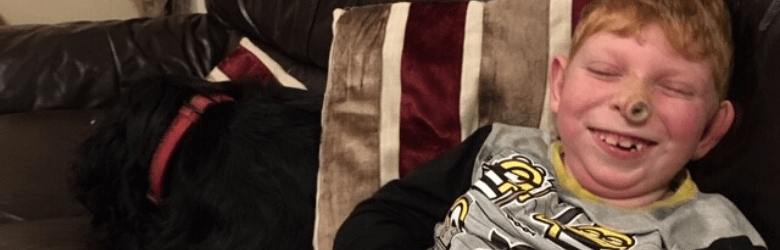
    Admittedly he is still classified as severely disabled as he is unable to walk or talk. He has spastic quadriplegia, a type of cerebral palsy that effects all four limbs. He has minimal head control and abnormal arm movements. His legs are extremely stiff and his feet are misshapen. Jack is fed purely through his PEG as he has a very poor swallow and no gag reflex which makes any attempt to eat or drink extremely dangerous. Jack also has a nasal pharyngeal airway (NPA) in permanent situ. This is because his tongue muscles are weak and his tongue will flop over his airway if it is not held back by the NPA.

    Catherine and Jack

    Jack’s Epilepsy

    So yes he isn’t without problems. However the biggest challenge we have and are facing at this time is Jack’s epilepsy. The epilepsy began just before his third birthday. One night we were all asleep (Jack has always slept next to me as he requires regular suctioning throughout the day and night), I woke to find that Jack was having a full on tonic clonic seizure. Having never had any experience with seizures in the past, we weren’t really sure what was happening so we called an ambulance. The seizure lasted over 40 minutes and was terrifying but the doctors managed to stabilise him eventually and he was allowed home the following day.

    A Learning Curve

    Since then Jack has been in and out of hospital with various types of seizures. I learnt early on to ensure I knew the correct way of pronouncing the names of the cocktail of medications that Jack was taking in order to gain any kind of confidence from the number of doctors we met along our journey. The professionals I have met along the way have taught me so much. We were lucky enough to have a friend who is the best paediatric physio in the world (in my opinion anyway) and she has helped us immensely. Without her, I know we would not be where we are now so a huge thank you to Alison.

    I have often been asked if I have a medical background due to being able to spout out so much information about Jack’s condition and spastic quadriplegia. This couldn’t be further from the truth, I used to faint at the sight of needles or blood and couldn’t even watch casualty on the television! When you’re faced with such a situation you learn so much as you go along.

    I’ve watched Jack go through having 8 large needles of Botox injected into the backs of his legs twice a year in order to help with his spastic quadriplegia. I change Jack’s PEG every three months (although I admit I still feel rather queasy when faced with an unnatural gaping hole leading straight into his tummy but every time I change it I’m getting that bit better), I can change his NPA with my eyes shut and do things that no mother should ever have to do.

    The Most Rewarding Job

    I would have had to return to work if Jack had been born healthy. However, because of the situation, I gave up my job and became Jacks full time carer, the most rewarding and wonderful job ever. I’ve since gone on to have a beautiful daughter and a rather mischievous little boy. When my third child was born we arranged to have his stem cells collected from the placenta in the hope that one day Jack might be stable enough to travel to America to have stem cell treatment. There’s no guarantees but a stem cell treatment may help improve Jacks abilities.

    What I am trying to say is that you can do anything when you really put your mind to it. Whatever life throws at you there are always ways to turn negatives into positives. If ever I feel a bit down, Jack’s beautiful smile turns my frown upside down! I am one extremely lucky mummy!

  • The Rise of Adaptive and Accessible Skiing

    The Rise of Adaptive and Accessible Skiing

    This is a guest blog post written by Staysure Travel Insurance. In this blog, they outline how technological advances are helping skiing to become a more accessible sport and what to consider if you want to go skiing with a disability.

    Skiing alongside snowboarding has been one of the top sport choices for anyone thinking to head to the mountains for a winter retreat. Originally, the fast-paced sport was a means of transportation in the mountainous areas in the Nordics with most of the evidence pointing to both ancient and modern origins stemming from Norway.

    While, it likely turned into a sport a little earlier, alpine skiing was introduced in 1936 (Olympics) and flourished as a leisurely activity after the second world war, when technology and transportation improved, so that the Alps became more accessible to non-locals.

    It would not be a surprise for most people to expect this sport to be somewhat inaccessible. Afterall, YouTube has countless videos of snowboards and skiers performing insane flips or reaching unruly speeds, which may in part, provide an inaccurate and unrealistic picture of an ‘extreme’ sport for anyone new to it. However, this isn’t the case at all. The sport isn’t inaccessible to people who may have, as an example, reduced lower-limb strength.

    How Has Skiing Become More Accessible?

    Winter sports have progressively become more accessible and inclusive to a wide variety of people. Alongside advances in technology, ski resorts have started to realise that people should be able to go to a ski resort with their family and friends and enjoy the mountain experience without anyone feeling left out from the action due to a disability or condition.

    If you are for example, a wheelchair user looking for ski trip, one of the first port of calls is to look for resorts offering adaptive ski equipment. These could come in the form of seated dual skis, which looks rather like an advanced, lever-operated sled or a piloted version. This is helpful if the user has limited strength and stamina. In the piloted version, either a ski guide or a more experienced member of your troupe could ‘drive’ you with the rest of the group.

    This is just one of the examples of the things you could find. For anyone who can use regular skis, you can find support in the guise of stabilisers, which effectively provide balance and stability as well as helping someone turn more effectively. This would be particularly useful for an amputee with a missing lower limb or someone who requires more support. This could be suitable if the skier has had recent surgery or come out of intensive cancer treatment. The type of adaptive ski equipment used will ultimately vary from individual to individual, this will often be dependent on a condition or disability someone may have and the level of ease for the user.

    Accessible Resorts

    Modern resorts, especially many of the French and Swiss resorts have had many pushes to make skiing more accessible and inclusive and will have the facilities (e.g. disabled or accessible toilets), equipment and specialised instruction to match many individual needs. Therefore, a beginner will be able to find an instructor with expertise in a specific type of equipment so that they feel more comfortable when trying it out for the first time. In fact, many ski schools have instructors that teach in sign for those who are deaf/hard of hearing or provide ski guides who can accompany those who have limited or no vision and other instances where someone may need to the extra support.

    Just getting in touch with one of the resorts, will provide you with all the information you need to go for that winter retreat. If you are struggling to know where to start, you could try this accessible resorts guide to whittle down the resort options and find something that looks more appealing. Hopefully, this little summary of adaptive skiing will give you the confidence to take a plunge and go skiing this winter.

    Find out more about Staysure on Disabled Living’s Supplier Directory here: https://supplierdirectory.disabledliving.co.uk/winter-sports-accessible-resort-guide-staysure/

  • Disabled TV Characters Played by Disabled Actors

    Disabled TV Characters Played by Disabled Actors

    Diversity is something that should be celebrated, and we think it’s great to see that characters on TV and in film are becoming more and more inclusive. This includes portraying those with disabilities and minority communities. Although representation of people with disabilities in television is still only estimated at around 2.5%, this is something which we hope will increase in the coming years.

    However, it can still be difficult to find a TV show or film that has accurate representations of disabilities. It is even more difficult to find a TV show or film that has an actor who actually has the disability they are portraying. It is estimated that approximately 95% of disabled characters on our screens don’t have a disability in real life, which could be perceived as an issue. Having said this, we thought it is worth celebrating the actors who have disabilities both on-screen and off-screen. Read on to discover just some of the disabled actors who play disabled characters on TV.

    Walter White Jr. – Breaking Bad

    This character is played by RJ Mitte who has cerebral palsy. In the series, he plays Walter White Jr. who also has CP. Mitte wanted to find acting opportunities where his disability would serve to educate viewers and increase awareness. Now a celebrity ambassador for United cerebral palsy, Mitte is proof that we need more actors with disabilities on the screen to help raise awareness of disabilities.

    https://www.instagram.com/p/urDOoaLzt6/

    Izzy Armstrong – Coronation Street

    Cherylee Houston plays the character of Izzy Armstrong on Coronation Street and both are wheelchair users. Houston has used a wheelchair from the age of 23 when she was diagnosed with a rare connective tissue disorder called Ehlers-Danlos Syndrome. Although her disability was not the focus of her character, her story-lines did tackle two important disability-related issues. Izzy Armstrong showed viewers what it was like to live with chronic pain and the logistical problems of being a disabled prisoner. Since Coronation Street, Cherylee has continued to raise awareness of disabilities. Currently, she is currently involved in a great social media campaign called #TakingtheDis. The campaign involves highlighting places in the UK that are not accessible for wheelchair users.

    https://www.instagram.com/p/9EPbr8gdqV/

    Becky Jackson – Glee

    Becky Jackson, played by Lauren Potter, has Down’s syndrome. In Glee, her character is the school’s head cheerleader. The sassy character is brilliantly played, showing complexities, dating boys and adjusting to college. It is also proof that her disability doesn’t stop her from reaching her goals. Becky’s disability is rarely spoken about during the series, making Glee a great example of including a disabled character that isn’t defined by their disability.

    https://www.instagram.com/p/B00aGC6oavc/

    Mr. Wrench – Fargo

    In the first season of Fargo, Russell Harvard plays the intimidating deaf hitman, Mr. Wrench. In his season, Harvard was able to communicate to his accomplice via sign language. This allowed viewers to gain some insight into using sign language. When asked about it, Harvard stated how being deaf doesn’t define this character. This is definitely a step in the right direction since Fargo portrays another way of communicating, showing how individuals use sign language. The crime-drama series has received ‘universal acclaim’ and has won 51 award nominations.

    https://www.instagram.com/p/BbhY6UznBrQ/

    Sally Harper – Call the Midwife

    Sarah Gorder, who plays Sally Harper in Call the Midwife, is a professional actress, dancer and model with Down’s syndrome. During the series, Sally has an on-screen relationship with Jacob Milligan (played by Colin Young) who has CP. Gorder states that her aim is to play roles where people see her as a woman and performer first rather than focusing on her Down’s syndrome – which ‘Call the Midwife’ does brilliantly.

    https://www.instagram.com/p/B6_TQt_JG2q/

    Although studies show that many of the actors playing disabled characters on our screens do not have disabilities themselves, the portrayal of disabled characters still points in the right direction through increasing diversity. This may give viewers a chance to gain a deeper understanding of what it means to have a particular disability.

    In the future, we hope to see more actors with disabilities portraying characters with disabilities on our screens.

    If you have a disability and would like free impartial information or advice about something, then please contact Disabled Living.

Disabled Living