Author: Daryl

  • Amelia Found Her Perfect Pink Wheelchair with Yorkshire Care Equipment

    Amelia Found Her Perfect Pink Wheelchair with Yorkshire Care Equipment

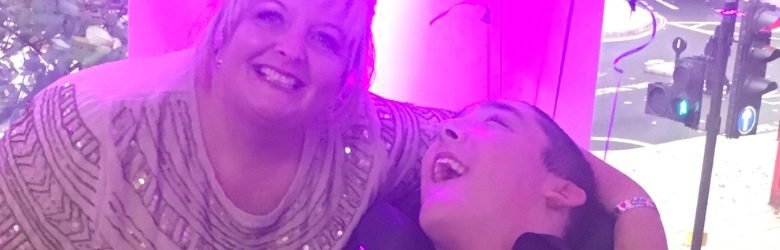
    This post has been written by Yorkshire Care Equipment. Amelia is a nine-year-old girl from Knaresborough, North Yorkshire. She came to our showroom in her old, NHS supplied wheelchair that she’d had since she was five. It was oversized and clunky, and it was too heavy for Amelia to push herself in. Unfortunately, the NHS couldn’t offer her anything better so Amelia took matters into her own hands.

    Amelia and her family took a trip to our Yorkshire Care Equipment  showroom in Harrogate just to see if we were able to offer her any other wheelchairs that might suit her better. Our showroom advisor Gary got to work straight away and began working through a standard wheelchair prescription form with Amelia and her family.

    Gary determined that she needed a wheelchair that would be a better physical fit for her, and it needed to be lightweight enough for her to self-propel. She also wanted the wheelchair to look nicer; Amelia wanted it to be bright pink.

    Gary, our showroom advisor, said:

    When I first met Amelia and her family, it was pretty obvious that her wheelchair just wasn’t right for her anymore. We sat together and did a sort of wish list of things she could have in her new wheelchair, and then we set to work arranging it all.

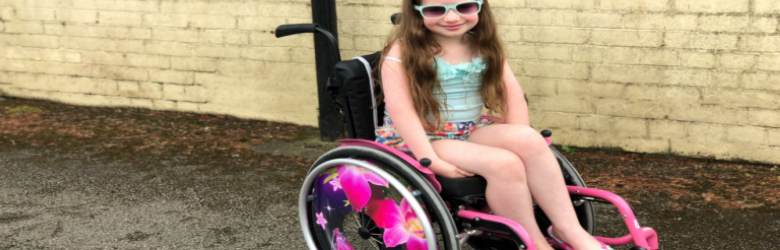
    We chose the Zippie Youngster 3 wheelchair which is a lot lighter for her to push, and we made sure it could be supplied in pink. We also put integrated brake levers in the wheel arches to make it easier for Amelia to stop with little effort.

    Amelia on her new wheelchair

    She chose a flamingo pink glitter finish for the chair and added some light-up flashing castor wheels on the front for extra personalisation – it’s by far one of the most unique wheelchairs we’ve ever supplied!

    We also included a comfy seat cushion and a specifically adapted SmartDrive powered add-on for the chair. Amelia can control the SmartDrive all through her wristband, and it will give her a helping hand pushing her wheelchair along whenever she needs the extra boost.

    Lisa, Amelia’s Mum, said:

    Amelia loves her new wheelchair because it’s so lightweight, she can push it herself. It’s a joy to see her in it!

    We went to Yorkshire Care Equipment because they’re local and it’s important to support the community. They were incredibly helpful and really did pull out all the stops to make sure my daughter’s wheelchair was exactly as she wanted it to be.

    Yorkshire Care Equipment have a charity database that they give to clients whenever they need to raise funding for specialist equipment. However, Amelia’s family had already secured funds from The Lions Club of Knaresborough, the Rotary Club of Knaresborough, the NewLife Charity, and a private donor.

    Between the bright pink frame, light up wheels, and the flowery spoke covers, Amelia will be easy to spot wherever she goes! Check out the video below of her taking her new chair for a spin.

    https://yorkshirecare.vids.io/videos/709ad0bf111decc5f8/20180531-yce-amelia-in-showroom


  • Help 14 Year Old Ben with Cerebral Palsy to Become a YouTube Star

    Help 14 Year Old Ben with Cerebral Palsy to Become a YouTube Star

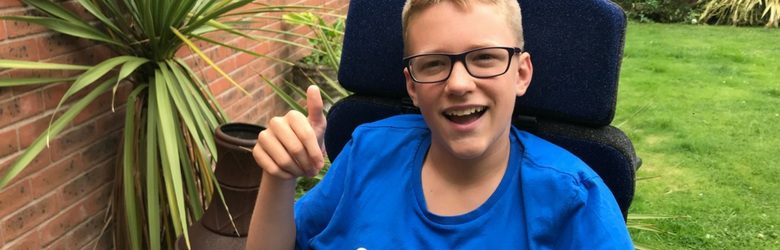
    This Story of the Month has been written by Ben, a 14 year old boy with Quadriplegic Cerebral Palsy from Malvern in Worcestershire. He has recently started his own YouTube channel and would love to be a big YouTube star.

    I enjoy four-a-side wheelchair football, which I play once a month at Villa Park in Birmingham. I really love making content for my YouTube channel, which I have started recently with my tutor Sarah. I like my food – particularly cakes and chocolate – and I love going out with my family, seeing my Nan and generally being sociable.

    I was first diagnosed with Quadriplegic Cerebral Palsy when I was a month old. At first, the doctors thought I wouldn’t ever be able to feed myself or even talk. I surprised everyone when I started to talk! My mum, dad and I have worked really hard to get me to where I am today. I’m semi-independent and can do lots of things that other teenagers do such as going shopping, playing video games, some reading and I am even writing my own book!

    What inspired you to create your own YouTube channel?

    I wanted to get my message out there. Nothing is impossible if you try hard enough. I record quality content for my channel around every two weeks about various subjects that are important to me. I want people to know that if I can do it, so can they. I have overcome so many obstacles in my life: people thought I wouldn’t be able to talk, but now I talk to give a positive message to others. I watched other YouTubers talking about the things that they’re passionate about and I wanted to do the same. I’ve got nearly 100 subscribers now but my goal is to get 10,000 subscribers by the end of 2019. I think I can do it! I’d love readers to check out my channel and subscribe: just search Ben Gannon (not the cyclist!).

    What’s the biggest challenge you’ve faced as someone with Cerebral Palsy?

    Sometimes I can feel quite down. I can get frustrated at school if I have a hard day and everything can feel like a roller coaster. I have felt really good lately as my YouTube channel is going well and I’m enjoying making content. My cerebral palsy affects my arms and legs so I have help to do lots of tasks like getting dressed and going to bed. But I have some really good equipment such as my chair and my lift – which I have just reviewed on my latest YouTube video! – And this means I can do a lot more for myself, which is great.

    What do you love most about Ben? (for Mum)

    Ben always puts 100 % in to everything he does. He doesn’t moan (only when the chocolate supplies are low) but he is genuinely a gorgeous lad. Ben loves his family and he is the most relaxed and happiest when surrounded by familiar people. Ben loves a bit of banter and will take the mick out of me regularly. He is always willing to tell people my embarrassing moments, that’s not what I love about him, but he is very funny. The characters he has used in his book shows his sense of humour, such as the seagull that tweets on twitter all day. He is such a role model for other kids. I love that he his enjoying the YouTube channel, we are keen for him to have an impact of others and have something of meaning to do with his life.

    Do you have any YouTube idols that you look up to?

    I love watching Jacksepticeye videos because he promotes a positive mental attitude and reviews video games – both of which are close to my heart! He also has 20 million subscribers, which is something I aspire to have! I also like PewDiePie, who makes really funny videos and has even more subscribers – he has 65 million! Sumara Redway is another favourite because she makes really cool, genuine gaming videos. I watch a lot of Typical Gamer’s videos too as he is funny and makes good Fortnite videos.

    Can you tell us about 3 things that make you smile? Or the things you’re most grateful for?

    I am grateful for life and because I am happy. Making videos makes me happy. I have fun doing it and love to share my message with other people. I love to read the comments people make on my videos and to engage with viewers. People have left really genuine comments and have said that my videos make them smile, which really makes me smile!

    Is there anything else you’d like to share?

    I decided in December that I wanted to learn to read better mainly because I wanted to text my friends and read my messages from them. I’d been covering up the fact that my reading wasn’t great for quite a number of years and had been guessing words and lip reading instead of reading the actual words. I decided to get a tutor and immediately I made loads of progress. We were looking for books for me but realised quite quickly that there was nothing suitable for people in my age group who are just starting to learn to read. I know I’m not the only teenager who is in this position! I am 14 and not really interested in Biff and Chip… so I decided, if I couldn’t find a suitable book, I would write my own! I worked with my tutor to develop a character called Bob The Fish. He is quite complicated: he’s jealous, funny, and materialistic and has some very interesting relationships with his friends!

    I have written one short book about Bob the Fish and am now on my. I’ve been talking about him in my videos and people have been really interested in hearing more about the book! Who knows: I could be the next Roald Dahl!

    Help Ben chase his dreams by subscribing to his YouTube channel where you can also learn more about him.

    Read more of our story’s of the month on Disabled Living’s blog.

  • From Local Club Swimmer to Paralympic Champion

    From Local Club Swimmer to Paralympic Champion

    This Story of the Month features a 23-year-old European and Paralympic Champion Swimmer, Ollie Hynd MBE. We recently came across Ollie on Twitter and found out more about him on his website. 

    His passion for swimming began when he joined a local swimming club as a young boy. And since then all he’s ever wanted to do is achieve bigger things. Ollie has a condition called Neuro Muscular Myopathy, which weakens his muscles. Activities such as walking can be a huge struggle for people like Ollie with this condition. However, he believes that training in the pool helps to keep his muscles strong.

    Ollie was inspired by his brother, Sam Hynd in 2008 when he performed at the Beijing Paralympic Games and won a gold medal.

    It was in 2011 that Ollie achieved one of his biggest triumphs – breaking the European record in the 200m individual medley. And it doesn’t end there. In the six years that he has represented Great Britain in his Paralympic swimming journey, he has inspired many across the globe. He was awarded an MBE in 2013. In addition he’s won over 10 gold medals and achieved recognition for ‘Disabled Sportsperson of the Year’ in 2015!

    Ollie says: I hope to inspire others particularly young people, to dream because dreams can come true. We all need a dream to inspire and motivate us to push forward. Life will throw us lots of challenges and obstacles, but I believe they are meant to be overcome so we can grow. http://www.oliverhynd.co.uk/

    Ollie has inspired us to believe that no matter what challenges you face, you can always carry on to chase your dreams. Keep up to date with his latest news events Twitter.

    You might like to read another Story of the Month about the importance of an active lifestyle for disabled people.

    If you have a story that you would like to share please get in touch with us. You can send an email to: info@disabledliving.co.uk

  • Playtime for Children with Disabilities

    Playtime for Children with Disabilities

    This post has been written by Special Kids all about the senses that children with disabilities develop during playtime.

    When you think about childhood, you probably think about the nostalgic memories of days spent playing with dolls, building blocks, and jigsaw puzzles. A magical time where your imagination was able to run riot while you developed skills such as problem-solving. For some of us, playtime was likely to be random – no set time, toys, or routine; however, children with disabilities, are likely to prefer structure when playing. Why not set play time aside for your child to fit into their existing routine?

    Playtime allows for the exploration and development of the senses; children with disabilities can quickly become overwhelmed by the senses; the structure can help to ease discomfort.

    Creativity

    Ah, painting, who didn’t enjoy creating mini masterpieces when they were kids? Painting,
    drawing, and creating things with playdough can help children become comfortable with
    different textures as well as developing their knowledge of colours and shapes. Art based
    activities allow your child to express their feelings and imagination which can help to make
    sense of the world around them and communicate their understanding of it.

    Problem solving

    Problem solving is a crucial skill to develop throughout childhood and adult life; activities that encourage this skill make it fun and engaging rather than challenging and confusing. Take the classic jigsaw puzzle; all the pieces have to fit a certain way. Although jigsaws are an excellent way to solve a problem, it is useful to play with things such as building blocks too, as this can show your child that there are more ways than one to solve problems as there isn’t always a strict way to build or not to build something.

    Sound

    Sound doesn’t have to be overwhelming for children with disabilities; it can be soothing.
    Whether this is something familiar such as music from the TV shows your child watches
    or a bedtime nursery rhyme. Why not make music a part of play time? Children’s glockenspiels can be an excellent way for your child to experience sound while
    improving memory by learning a song.

    children's soft butterfly toy

    Comfort

    We all want our child to feel as comfortable as possible. When learning new things and
    developing skill comfy clothing is essential. Think about it, none of us would get into bed wearing uncomfortable clothes such as jeans; we would wear pyjamas, so why should this idea of comfy clothing not be a part of day to day life for your child? Our Wonsie’s and bodysuits are great for playtime – not only are they made with soft, non-irritable material, they are also stretchy so that movement is effortless. We have a range of products for different needs; not only do we stock clothing, we also offer accessories, bibs, and bedding. We believe that quality is paramount. All of our products are designed with care.

    Raising awareness and providing solutions

    Since 2014, we have had the fantastic opportunity to be a part of the Kidz Exhibitions. They have created an environment that is both welcoming and supportive. Through their several yearly events, they provide a platform to raise awareness for children with various disabilities, and we are proud to be a part of it. We’ve met so many new people at their events who keep coming back and are pleased to say that we will be exhibiting at Kidz to Adult North this year on Thursday 8th November. And we can’t wait to showcase our new and existing range.

    We are delighted to have been given the opportunity to guest blog for Kidz to Adultz North. And to say thank you, we invite you to check out our adaptive clothing range and use the code NEWCUST10 for a discount. Why not sign up to our newsletter too for updates and offers.

  • The Vision System and the Helping Handle Gadgets by Remap

    The Vision System and the Helping Handle Gadgets by Remap

    Ian is an avid football supporter but is very visually impaired due to mitochondrial dysfunction. This means his sight is only good for short range and large, high-contrast, images. Although he visits Anfield to watch Liverpool play, he is unable to see the play. He simply listens to the radio commentary and soaks up the atmosphere from the touch line.

    He has always wanted to watch the action but he simply cannot see further than a few inches!

    Rupert Powell, a volunteer with Remap York, was given the challenge. His solution uses a virtual reality headset, a video display screen, a camera with a powerful motorised zoom lens and some clever computer processing to bring the action up close.

    Here’s how it works. The camera is mounted on the headset itself so wherever Ian looks he gets a high-contrast image on the screen right in front of his eyes. He can zoom in if required and the images can be further enhanced by the computer. Ian uses a wireless Play-station game controller to control zoom and focus, as well as contrast/still-frame/negative/Edge detection more.

    So now Ian can watch the football match, rather than simply listen to a radio commentary, and absorb the atmosphere. He said he finds it easy to use and enables him to see the play over 2/3rds of the field. Something he has NEVER been able to do before!

    Ian also uses the device for everyday activities such as shopping. He can locate shops and no longer has to ask other shoppers where certain products are on the shelf – he can now easily scan the shelf from his wheelchair and see the products he is looking for.

    The helping handle

    remap helping handle with man in the car

    Bob Crump is paraplegic following a car accident, but this hasn’t put him off his hobby of off-road driving. He has a hand-controlled Range Rover but was experiencing difficulty getting from his wheelchair up into the car’s driving seat unassisted, due to declining upper body strength.

    Remap volunteer David Tappin came up with a solution for him. This is a simple, lightweight frame which clips onto the vehicle’s door hinges to provide a strong but stable handle. Bob can fit it himself, then lean on it to lift himself into the driving seat. There was nothing strong enough on the market to meet this need.

    Bob took the time to thank Remap afterwards:

    The handle David Tappin made allowed me to not only continue my off road driving but also enabled me to get out much more for general day to day activities, which I had started to avoid, therefore improving my quality of life.

    I can’t put into words how grateful I am to Remap and especially Mr Tappin who generously gave so much of his time and expertise.

    Other recent projects include the adaptation of a rollator for an amputee, some fold down steps for a child with dwarfism and a special wheeled frame that fixes to an ordinary chair which allows it to be used as a wheelchair on board a narrowboat.

    A more unusual request came from the Parochial Church Council of St. Peter’s Church, Wootton Wawen, which is the oldest church in Warwickshire. Here parishioners wanted a handrail as the heavy door to the church opens onto steep steps. But there was a big catch: no part of the church or doors could be modified in any way, and it was forbidden to drill holes into anything! Whatever was supplied had to be quick and easy to install and remove, and, above all, had to be really stable and secure, with no possibility of coming loose and causing an accident.

    Once again Remap supplied a solution in the form of a removable handrail which simply clips tightly onto the door when required but can be removed afterwards without having marked the door.

    What can Remap do for you?

    Do you need a piece of equipment that you just can’t find on the market? Or perhaps you have an item that isn’t quite suitable and needs to be modified just for you? Everything supplied by Remap is free of charge and designed individually for each person. Give them a try!

    Remap has a network of over 70 groups across England and Wales, so there is probably help near you. For more information, visit the Remap website at or phone the national office on 01732 760209.

  • Remap Volunteers Design and Make Bespoke Equipment for Individuals

    Remap Volunteers Design and Make Bespoke Equipment for Individuals

    Remap is a charity that helps disabled people achieve greater independence and quality of life. It has a network of skilled volunteers who design and make bespoke equipment for individuals and provide this free of charge. So in any situation where you can’t find the right gadget, contact Remap! Here are a couple of examples of recent projects.

    Eilian needs to use a three-wheeled rollator to get out and about. Having an amputation however, creates an extra challenge, as he can’t safely use the rollator with one hand.

    Remap volunteer Martin Rees modified the rollator for Eilian. First the brakes were modified so they could be operated from one hand. Then a cup-type receptacle was made to accept his residual limb. This was made from 3D printed plastic parts and a metal bracket that fits onto the rollator. The finished cup was lined with felt to make it comfy.

    Jan Costa, the Occupational Therapist who referred the case says:

    I have had previous experience working with Remap and although I knew what I wanted, it was not commercially available.  The Remap volunteer converted my concept and idea into a fully functional design and produced the item. The provision of the adapted braking system and single handed propulsion enabled the patient to mobilise safely with a three wheeled walker and reduces the risk of falls.

    We occasionally have difficult issues like this, when one off items are the solution. Remap have helped on more than one occasion. My advice is that if you know what you want but cannot source it contact Remap. They can advise you and can also design solutions just for your patient. Give them a ring!

    A very different request came from the Parochial Church Council of St. Peter’s Church, Wootton Wawen – the oldest church in Warwickshire.

    Church steps hand rail being used by elderly lady

    The church has large inward-opening oak doors, which lead directly onto two large descending stone steps. But there is no handrail. The congregation includes many elderly people – could Remap supply some device or other to make it easier to negotiate the steps?

    Some sort of handrail was the only feasible solution. But there was a big catch: no part of the church or doors could be modified in any way, and it was forbidden to drill holes into anything! Whatever was supplied had to be quick and easy to install and remove, and, above all, had to be really stable and secure, with no possibility of coming loose and causing an accident.

    Remap volunteer Gary made a handrail built into a collapsible A-frame. Before the start of each service, the doors are opened and the handrail fitted. The congregation then enters the church with more confidence because of the handrail. After the service the device is removed and stored inside the church.

    For over 50 years, Remap has helped thousands of disabled people to live more independently. It has a network of over 70 groups across England and Wales, so there is probably help near you. For more information, visit the Remap website or phone the national office on 01732 760209.

  • Tools and Tips That Make Life Better for Long-Distance Caregivers and Their Ageing Parents

    Tools and Tips That Make Life Better for Long-Distance Caregivers and Their Ageing Parents

    This post has been written by Martin Block from Able Rise for Disabled Living.

    Assisting your senior loved one from afar as as long-distance caregivers can feel like an uphill battle, but there is help. Employing technology and services makes it easier to meet the needs of an ageing parent.  Here is some great advice to bring you peace of mind.

    First, gather your tribe

    Even with all the technology and services available to help long-distance caregivers, it’s still best to have at least one person you know and trust that you can call on to help your senior loved one when needed.  Work with friends, family members, physicians, or the senior’s neighbours to establish a supportive network. This is an important step to take first so that everyone on your “team” is aware of any outside services that are brought in.

    This is also a good time to help your senior loved one connect with people they may have lost touch with or even become estranged from, whether due to a long-distance move, a prior substance abuse issue that caused emotional trauma, or an argument that got out of hand and was never resolved. Your loved one will need all the support they can get, and re-establishing bonds will help prevent them from becoming isolated, especially if they live alone.  If you encounter someone reluctant to take part in your senior’s care plan — or even their life — try your best to encourage them to try to make amends, or at least hear out your senior loved one.

    Video monitoring

    According to some experts, technological improvements and lowered costs make video monitoring a viable option. This is a great option for long-distance caregivers. Video cameras are typically small, and installation is easy.  Capabilities include options such as wide-angle views, night vision, high definition video, sound and motion sensitivity, and two-way audio.  “Nest Cam” and “Simplicam” are two of the products you can try.

    Sensor monitoring

    Sensor monitoring allows your loved one more privacy.  Wireless sensors are installed in the home to detect unusual activity. You can receive notifications via email, phone or text. “Silver Mother” offers small sensors that monitor items such as pillboxes, television sets, the refrigerator door, and doors to the home.

    Sites matching onsite care

    Another useful tool are websites that match caregivers with patient needs. These sites allow you to request what needs are to be met and can get help on-demand. Cera, a London-based provider, has been likened to Uber but for senior care. Similarly, apps such as “Care” are set up for you to select caregivers, who are vetted before they are available for selection.  You set up a profile, correspond with those who could be a good fit, and choose your caregiver. Once hired, caregivers are paid through a payroll management system.

    Support apps

    Your network of care should remain connected at all times. That’s where apps like Jointly come into play. CarersUK explains that this simple phone-based program can organise notes between carers and ensure everyone has access to task lists and a communal calendar.

    Senior move managers

    Consider looking into a senior move manager if your loved one needs to move and/or downsize. These specialists help navigate every aspect of moving and downsizing, including decluttering, hiring movers, donating items, disposal, and even sending items to you and other family members who live far away. They do the packing and unpacking and can set up utilities and cable television.

    Downsizing can be stressful for seniors, and stressful for those trying to help them through it. Here are some great tips from experts:

    • Discuss details with your parent, such as what will distributed to family members, what will be given away to charity, and what items will be sold.
    • Facilitate sales. If your parent wants to sell items through an online service, offer to help. This is particularly important if your parent isn’t internet savvy. You can research what things are worth and do the listings yourself. There are “valet” services that can sell items on behalf of others as well, which take a percentage of sales.  You ship your item to the valet and then receive payment upon the successful sale. If sales need to close in-person, some police departments now offer parking lot exchanges for your safety.

    Services and apps that help you both

    If you’re feeling overwhelmed by assisting your ageing parent across the miles, there is help. Use technology and services to support your parent from afar. Even if you can’t be there for everything in person, you will have peace of mind knowing your loved one’s needs are met.

  • My Journey with Autism from a Teenager to an Adult

    My Journey with Autism from a Teenager to an Adult

    This blog post is written by a young woman named Aspling who shares her journey of life on the autism spectrum. This is also featured on Redbank House, who are part of Disabled Living.

    Let’s be honest here, when you think of autism or being on the autism spectrum, you generally think about children, with adults being an afterthought. And in terms of support this is the same. There’s so much support for children, but for adults there’s next to nothing. I received my diagnosis early in 2017 at the age of 25. And for me, my diagnosis came as a relief. I’d spent my teenage years feeling lost, like an outcast, always on the edge, never included, like a misfit. In myself I knew I was different. But I couldn’t identify how or why. I knew I acted different and I couldn’t explain my behaviours (which I now identify as my autistic traits).

    The idea of camouflaging

    Like myself, many adults are receiving a late diagnosis, one reason for this is the idea of camouflaging; something that has been brought to light over the past years. Researchers have identified that many people with autism ‘camouflage’. This means masking behaviours to better fit in with culture and society. It is said to be a distinct trait of women and girls on the spectrum. This however, has also been identified in boys and men.

    Moving on… I don’t remember much from my early childhood, it’s a bit of a blur. I was a fussy eater and to this day I still am. I won’t eat salad, fruit, certain types of meat, fish… the list goes on. Next came the obsessions and collections, specifically My Little Pony and nailbrushes in a variety of colours, shapes and sizes. These were kept in baskets under the bathroom sink. I also had sensory difficulties, which resulted in my Barbie dolls having no feet, as I’d spend hours chewing them off. I even chewed the toe of my sister’s dolls.

    As an adult I’ve switched to munching on ice cubes, which may seem strange. But it gives me sensory pleasure. I was a rigid child, in the sense that I needed routine, and any changes sent me through the roof. I’d meltdown over the smallest things. But as a child my parents just thought I was having a tantrum like many toddlers.

    For me growing up was difficult, looking back I would say I masked a lot of the time, mostly because I didn’t quite fit in and I longed to.

    Aspling

    I had friends in high school. And I could hold a conversation. However I was very literal and couldn’t pick up on social cues, and eye contact was a big no no for me. As a teenager I knew I was different, I was the weird girl in my friend group. And I felt lost, like I didn’t know who I was. I had anxiety issues, I was bullied at school and I was behind academically. I struggled in high school on multiple fronts. And because I didn’t have a label or a piece of paper I had no support.

    Over the years, I struggled maintaining friends, managing my work load and handling my anxiety as the pressure mounted. I found myself unable to cope. I had days where my emotions got the better of me and I’d spend the morning crying; refusing to attend school. There was one subject in particular that I dreaded. I was failing, even though trying my best, and I had zero support from anyone.

    My parents’ perspective

    My parents didn’t think anything of my odd behaviour, and at the time I don’t think they had a full understanding of Autism. Around the time of my diagnosis my mum was working for a local special educational needs service so her understanding of autism grew. And aspects of her work she could see reflected in me. I have a close bond with my mum. She’s helped me so much over the years and her professional understanding of autism has really helped me grow as an adult.

    Eventually I pushed for a diagnosis, which as an adult is much harder. Traits aren’t as apparent, and people think ‘well you’ve coped this far’. My diagnosis was a relief as I had a reason for all my difficulties and deficits. Once you have that magical piece of paper the world sees you differently. However, it’s finding support which is the issue. I’m hoping in the future this will change to accommodate adults as well as children.

    To learn more about Aspling please visit her blog: https://thegirlonthespectrum.wordpress.com

    Are you on the autism spectrum and would like to share your story? Get in touch with us via email: info@disabledliving.co.uk

  • Angela’s Accessibility Training at Manchester Airport with TryB4UFly

    Angela’s Accessibility Training at Manchester Airport with TryB4UFly

    This post has been written by Angela Christian, one of our Occupational Therapists at Disabled Living. Angela took part in some training by Graham Race on Wednesday 23rd May 2018 at Manchester Airport with TryB4UFly. Function Specialist, Ashley Horsfall and Customer Experience, Susan Dean were also present from Manchester Airport.

    Manchester airport tour

    Assistance Lane at Manchester Airport

    Manchester Airport contract work to OCS, to support their passengers needs throughout the journey from the car park, during the airport and when accessing onto the Aircraft.

    At all the main entrance points; Passenger can locate an Assistance Point, where they can call for assistance from OCS staff who responds in person within 15 minutes maximum.

    Prior to checking in passengers with physical or hidden disabilities can locate the reception point for assistance, where they can wait in quiet area before check in. Passengers can get help to with check in and board via an Assistance Lane.

    Hidden Disabilities

    green and yellow sunflower landyard
    Landyard

    Reception points can provide a special lanyard (Green with Sunflowers) which informs staff members and airline companies that a passenger has additional support needs. The lanyards can be collected from Reception Point for Assistance. This allows passengers to use assistance lanes when boarding and also priority and family lanes at security.

    Reception Point for Assistance Terminal 2

    airport reception point for assistance

    Manned desks at the reception points are available (Terminal 2 above). These are centrally located near shops and restaurants and if passengers want to shop or eat, there is no need to stay in one place. The OCS staff use Customer Call to locate Passengers when its time to board, staff will buzz to locate Passengers ready to board.

    plane at manchester airport
    Ambulift

    OCS support passengers throughout their journey from the car park, throughout the airport and when accessing the Aircraft, via the use of the ambulift, Eagle Hoist or other transfer aids.

    Disability and Toileting

    Equipment provided in the Manchester Airport Changing Places above.

    • Overhead full room coverage hoist system

    IMPORTANT: Sling not provided

    • Mobile hydraulic height adjustable changing bench
    • Wide tear off paper dispenser
    • Privacy screen
    • Peninsular conventional close coupled WC with grab rails and support arms
    • Electrical height adjustable sink.

    Manchester airport currently have a transformation plan, to improve airport facilities for people with special needs. Passengers will see an increased number of changing places; air side and land side, more central assistance points. Dog assistance areas, sensory/quiet rooms, first aid rooms, new assistance points and more.

    Useful resources

    Manchester Airport – Special Assistance 

    Seat Guru

    TryB4UFly

    Accessible Tourism

    Enable Holidays

    Accomable

    Mobility Equipment Hire Direct

    Travel advice with a mobility aid

    BHTA – Air Transport Advice

    Flexel Mobility

  • SeatPlan Help You To Find Accessible Theatres in the UK

    SeatPlan Help You To Find Accessible Theatres in the UK

    This post has been written by Laura Kressly for Disabled Living.

    Commercial theatres aren’t known for being access friendly, but this is finally starting to change due to a shift in attitudes. Unfortunately, theatre buildings struggle to keep up.

    Many buildings in London’s West End are old, including most of the theatres. They date to Victorian times or, in some instances, are even older than that – the fourth version of the Theatre Royal Drury Lane was built in 1812, seven years before Queen Victoria was born. Historical buildings are notoriously bad for access, and with many of the biggest and best theatres in the country having listed status, it can be difficult for people with access and mobility needs to go to the theatre.

    Fortunately, theatre owners and managers are aware of the need to improve in this area and are doing what they can to install access provisions around budget and planning restrictions. With growing awareness of these building’s power to exclude non-disabled audiences, there have been a lot of recent changes. It’s now normal for theatres to have infrared hearing systems, access performances, removable seating, downloadable visual stories, dog-minding services and staff specifically trained to support theatregoers with access requirements. When building regulations allow, ramps and lifts have been installed, as have low-level service counters.

    But it’s still not perfect…

    Theatre seating is usually spread over several levels, and many venues are unable to install internal lifts. Main entrances often have at least a few steps. Most theatres request that patrons with access requirements notify the venue in advance, and arrive at least half an hour early. Some theatres don’t even have adapted toilets.

    This means that theatregoers have to take on much of the responsibility of arranging the logistics of their theatre trips and ensuring their access requirements are met well in advance of the performance date they want to attend. Every building is different and access provisions vary across theatre land, so prospective audiences need to conduct a lot of research to find the information they need. Whilst most West End and large regional theatres have access information on their websites, if you are considering seeing different shows at different venues this is a time consuming process. Search results tend to cater towards outlets selling tickets rather than providing comprehensive information about the whole theatre-going experience, so locating information for each venue you are considering booking tickets for takes a long time.

    Access pages on SeatPlan

    Because of the lack of comprehensive theatre access information for the West End in one place, theatre website SeatPlan added an access page to each of their venue profiles. The site lists all of the major West End theatres, and many regional ones. They provide detailed descriptions containing entrances, numbers of steps, whether or not there are lifts and so forth. There is also contact information for the access teams at the theatres.

    These knowledgeable staff members will be able to provide you with all necessary information relating to your access requirements and assist you in booking appropriate tickets. They can also advise on the availability of touch tours, audio description, captions and BSL interpreted performances. Some shows also schedule relaxed performances, which are suitable for people who may experience over-stimulation, or have ASD or other learning difficulties.

    So whilst theatres have much to do in order to increase accessibility further, they are taking steps in the right direction. Independent resources like SeatPlan also help by making the process quicker and more streamlined. The theatre industry as a whole is finally waking up to their accessibility shortcomings so change is fortunately afoot.

Disabled Living