Author: Daryl

  • Disability-Friendly Places to Visit in the UK

    Disability-Friendly Places to Visit in the UK

    This is a guest blog post written by Ellie for Disabled Living.

    England boasts many world-famous attractions. For people with limited mobility or accessibility needs, finding access to ramps, lifts, toilets and other concerns are huge considerations. 

    With some planning, people with disabilities can still visit a lot of fantastic attractions in the UK. To help you get started on your vacation planning, here’s our list of great disability-friendly places in the UK. 

    British Museum

    The British Museum is one of the UK’s top attractions. It is also a fantastic disability-friendly place to visit in the UK. Visitors can spend an entire day here to enjoy the various exhibits featuring Greece, Egypt, the Middle East, the Americas, etc. 

    The main entrance in the front (Great Russel St.) has a wheelchair lift that is self-operable. Disabled visitors can avail concessions for paid exhibitions. Companions/carers can also get free entry. The British Museum offers a lot in aiding the visually impaired. They conduct handling exhibits and touch tours as well as large-print guides and magnifying aids. They also offer a British Sign Language (BSL) guide for free. 


    View this post on Instagram


    A post shared by British Museum (@britishmuseum)

    Tower Bridge

    Tower Bridge is one of the UK’s most iconic landmarks and it is also disability-friendly. It is a magnificent sight to behold from the outside. However, people can also see it from the inside to see how the drawbridge works. 

    Formally opened in 1894, Tower Bridge’s walkway offers one of the most beautiful scenic views. All levels of the tower can be reached by taking lifts. There is a lift in the north side tower which will take visitors to the exhibition centre where the main display can be viewed. Induction loops, subtitles and scripts for the video presentation are also made available to visitors.

    For wheelchair users who want to see the engine, there is an accessible route to the below-ground engine room on the south side of the building. There are accessible toilet facilities throughout as well. 


    View this post on Instagram


    A post shared by Tower Bridge (@towerbridge)

    Eden Project

    The Eden Project in Cornwall is known as the world’s largest indoor forest. The Eden Project’s Rainforest Biome offers visitors the experience of visiting rainforest environments in the Tropical Islands, Southeast Asia, West Africa and Tropical South America.

    It houses rare and exotic plant life that can be enjoyed by its many visitors, including people with disabilities. They offer free admission to companions/carers, free use of manual and powered wheelchairs and provide accessible toilet facilities. 

    There are three main routes that all visitors can use to view the displays. They also offer a hearing loop system, audio tours and a Braille guide book. Wheelchair users can also experience a tropical climate in the disability-friendly Rainforest Canopy Walk. 

    Brighton Dome

    The Brighton Dome is home to three separate venues that make up one big space – The Corn Exchange, Concert Hall and Theatre are perfect for bringing the arts to life and ideal for hosting conferences and private events. 

    In terms of accessibility, the Brighton Dome is highly accessible with its lifts and audio devices throughout the venue and an accessible parking lot for the disabled. 

    The Brighton Dome Concert Hall’s auditorium seating can accommodate 300-1700 people with various sightlines and configurations of the auditorium seats. It also offers a designated area for wheelchairs and mobility buggies at the rear of the auditorium with easy access to the toilet facilities and the foyer.  

    Wheelchair users can also opt for standard auditorium chairs. Staff can assist them in transferring to the auditorium seats and will help store their wheelchairs during the show’s duration. 


    View this post on Instagram


    A post shared by Brighton Dome (@brighton_dome)

    London Zoo

    The London Zoo is one of Regent Park’s best attractions for the past 200 years which boasts of various exotic animals and interactive enclosures that educate visitors.  

    Spread over 36 acres of land in Regents Park, wheelchair access is also available through most parts of the zoo. The London Zoo has a wheelchair-friendly entrance next to the main entrance. It also has a disabled bay in front of the entrance to the zoo.

    There are lifts to viewing platforms for some attractions such as Tiger Territory, Land of the Lions and The Aquarium. Wheelchair-accessible toilets can also be found at various locations around the zoo.


    View this post on Instagram


    A post shared by ZSL London Zoo (@zsllondonzoo)

    Royal Botanic Gardens

    The Royal Botanic Gardens in Edinburgh is another beautiful disability-friendly place to visit in the UK. It aims to provide the best possible access to its visitors so that more people can enjoy their visit.

    The Royal Botanic Garden is accessible for those who are disabled. There are places to sit in the shade, water assistance checkpoint for people that have guide dogs. People with mobility issues can even rent scooters and wheelchairs for free. Accessible toilet facilities are also available in the visitor centre, restaurants and throughout the gardens as well. 

    Life Science Centre, Northeast England

    The Life Science Centre in Newcastle is perfect for people who want to have an educational day out. It also offers facilities for people with limited mobility.

    The Science Centre is wheelchair friendly so wheelchair users can easily enjoy various exhibitions. Companions/carers’ entrance fees are also free of charge. The building’s level layout as well as lifts to different floors, make access much easier. Hearing loops and printed guides are also available for people with impaired hearing and visual abilities. 


    View this post on Instagram


    A post shared by Life Science Centre (@scienceatlife)

    Cadbury World

    Want to know more about the history of chocolate? Cadbury World in Birmingham is a must-visit attraction for all chocolate lovers! 

    Another great thing about Cadbury World is that it is a fun place to visit! Lifts, ramps and low-level exhibits are available throughout the site. Some of their rides have also been adapted for wheelchair users. One example is a bean mobile on the Cadabra ride. 

    Throughout the facility, people will find support for people with limited mobility. There are rails and support arms, height-adjustable sink units and height-adjustable changing beds, automatic toilets, ceiling lifts and modesty screens.

    Guide dogs are also allowed in the building, except for chocolate production areas. Don’t worry. Visitors can avail of a dog-sitting service while they are in the chocolate production areas. Scripts of the video presentations and infrared hearing systems are also available for the hearing impaired. 


    View this post on Instagram


    A post shared by Cadbury World (@cadburyworlduk)

    Giant’s Causeway, Portrush

    The Giant’s Causeway in Portrush boasts of 50,000 natural steps leading to the sea. Since it was purchased by the National Trust, it has become wheelchair accessible so that more people can enjoy this natural beauty. 

    Wheelchair users will find accessible toilet facilities on site as well as free shuttle buses and ramps at the visitor centre. The visitor centre also offers a unisex Changing Places facility that includes an adjustable height changing table, sink, shower and overhead hoist.

    Bournemouth beaches, Southern England

    The Bournemouth beaches are popular seaside destinations. It has also become one of the best disability-friendly places to visit in the UK.

    People with disabilities can enjoy adapted beach huts that have space for wheelchairs. There are also accessible charging points for electric scooters. Visitors can even hire multi-terrain wheelchairs with balloon tyres that are ideal for going to the beach. 

    Visitors who want to enjoy the scenic views can go on three cliff lifts that are open throughout the summer. They can also explore the city while on wheelchairs while enjoying fish and chips during their seaside vacation. 

  • An Exciting Year Ahead for Changing Places

    An Exciting Year Ahead for Changing Places

    This is a guest blog by Rise Adaptations for Disabled Living.

    The campaign for an increased number of Changing Places toilets to be installed across the UK looks set to have a great year, following on from several key campaign successes in 2020.

    Changing Places toilets are a much-needed facilities for people whose needs can’t be met by standard accessible toilets. Featuring adult-sized changing benches, these remarkable bathrooms are the difference between someone with severe disabilities being able to enjoy a day out, or never having the chance to participate in activities many take for granted.

    For people with complex disabilities, the lack of suitable bathrooms has long been an issue – there are many accounts of people sacrificing their dignity and privacy having to be changed on the floor of public bathrooms. They enable so many more people to participate in society in a dignified and humane way.

    Founded in 2006 the campaign has so far had great success increasing both awareness of the issue and the number of facilities.

    There are now over 1,500 registered Changing Places across the UK, but 2020 saw two huge announcements regarding funding and legislation which are set to take effect this year, making a difference to the lives of so many.

    New Year, New Regulations

    One of the most exciting developments for Changing Places – and a major win for disability campaigners – are the changes scheduled to be made to Building Regulations.

    The amendments made to Approved Document Part M, Volume 2, non-domestic buildings, effective now, mandate the inclusion of a Changing Places toilet in specific types of new buildings and buildings undertaking major refurbishment.

    After a consultation process with campaigners and users alike, the Government ruled that the previous regulations, which only mentioned a Changing Places toilet as ‘desirable’, were not sufficient to meet the needs of the most vulnerable.

    Although existing spaces can be adapted to include a Changing Places toilet, the mandatory inclusion of these bathrooms in Building Regulations mean new buildings and attractions will be inclusive of those with severe disabilities, right from the start.

    The amendments to Approved Document Part M mean a Changing Places toilet must be installed in newly built assembly, recreation, and entertainment buildings with a capacity for 350 or more people, shopping centres, leisure centres, and hospitals.

    ‘Assembly, recreation, and entertainment buildings’ includes a wide variety of venues including cinemas, museums, and educational facilities such as colleges.

    Options for Existing Buildings

    The new regulations are greatly welcome and will change the way public spaces are designed to include those with greater needs. But what are the options for existing buildings?

    Most Changing Places toilets are either modular buildings or adapted spaces – the modular option being particularly popular in outdoor locations, such as theme parks and zoos.

    Modular Changing Places providing a safe, hygienic space for visitors to attractions that previously had no provisions. Built offsite and craned into position, modular toilets typically come fully equipped with adult-size changing bench, hoist, and enough space for a user, plus two carers.

    For buildings with the required internal space (12m2), internal adaptions can also be carried out as turnkey service, with both the building work and installation of specialist equipment delivered simultaneously.

    Funding

    Historically, the issue most businesses have encountered when it comes to installing a Changing Places toilet is the financial implication. Costs can be prohibitive for many organisations, particularly public bodies, and charitable organisations. Many existing Changing Places toilets have been installed through a mixture of public fundraising and ad-hoc grants.

    The Government did fund some installations last year across NHS properties and motorway service stations but went further on their promise to do more by pledging an additional £30 million for Changing Places in the 2020/21 budget.

    It is yet to be seen how and where this budget will be allocated, but it guarantees a new period of expansion for Changing Places this year thanks to the additional funding businesses will be able to apply for.

    To learn more about the campaign and see how you can help, please visit the Changing Places Consortium. For further information about design and installation, please visit riseadapt.co.uk

  • Change in Mobility? We look at how to raise your spirits and quality of life

    Change in Mobility? We look at how to raise your spirits and quality of life

    This is a sponsored blog for Disabled Living written by Peter Wingrave, Sales Director at AAT GB.

    If you lose a degree of mobility, one of the most likely scenarios is that you can’t get upstairs to bed. Typically, the solution is for you to move the bed downstairs- assuming there’s sufficient space- with disruption to every member of the household. So daily life is immediately impaired, because of the psychological stress such disruption causes, and the worry about the impact on everyone else in the home.

    Even if the situation is not that drastic, you are still finding it difficult if not impossible to get anywhere that involves going up and down steps.

    If reduced mobility is going to be a long-term situation, you may be advised to have installed equipment such as a stairlift or through-floor lift, but that takes time, and can have a big impact on the way everyone in the household can use the home.

    How to minimise disruption to you, your home

    Don’t worry. There IS a solution, which have no physical impact on the fabric of your home, that require no moving of furniture around.

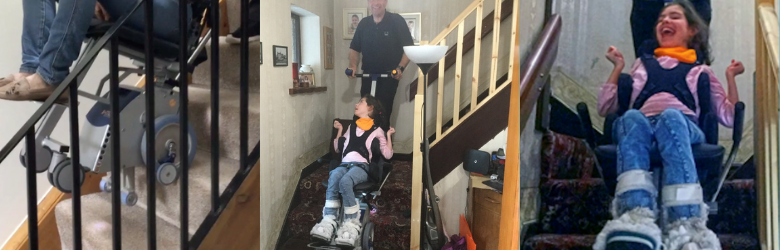
    A powered stairclimber enables your carer to move you safely, securely  up and down stairs. Looking like a compact wheelchair, the device features a battery motor which drives the kinematics for a smooth, continuous motion up and down steps. As with so many things today, numerous versions exist so it is worth ensuring the one you get is right for you as the passenger, and whoever is operating it for you.

    Most Local Authorities/ Community Health Providers even have such equipment in Stores, so can very quickly prescribe and organise one to be delivered to your home. Private providers, such as

    AAT GB, will work alongside the Occupational Therapist to undertake a free of charge detailed assessment. This will ensure that the stairclimber is appropriately adjusted to fit and accessorised for your passenger, and that you are not only comfortable using it, but appropriately trained.

    Once you have it, you can safely go wherever you want within your home, without effort and without optimum safety.

    What should you consider in choosing a stairclimber?

    Most importantly, the device needs to be able to safely and easily accommodate your flight of stairs. In Britain we have so many different shapes and sizes of staircases. They vary in width, straightness. On the level, they may immediately be a turn or doorway to navigate.

    It needs to be easy for you to transfer onto and off. You need to feel safe. Your operator needs to feel confident about using it.

    It needs to be easy to power and keep powered. It needs to be able to move easily over every common type of floor and floor covering, from tiles to carpet. It needs to be designed in such a way that it does not damage the stair risers.

    It needs to be substantial enough to bear the weight of the passenger, regardless of their size, but light enough for you as operator to be able to easily steer and guide it. It needs to be simple to understand and to use: if it’s too complicated, you won’t use it, for fear of getting it wrong, or it just being too much effort.

    See how it works here:

    https://www.facebook.com/171211186281476/videos/727053154686085/

    Supporting you

    The AAT S-Max stairclimber is Class 1 Medical Device certified, and can be accessorised with appropriate harnessing and/or support cushions to perfectly hold the passenger secure as the operator guides the machine. The battery-powered device can execute 300 steps from one charge- more than enough to undertake daily transfers up and down stairs to and from bed for more than a week.

    With a 15degree balance point, it is easy for most people, regardless of size, height, shape, to operate and steer. The speed of climb can be infinitely adjusted to where the operator feels comfortable and in control.

    When not in use, it can be folded compactly and stored away.

    Beyond the physical support the stairclimber provides, AAT is the only national provider of such equipment. It provides short, medium and long term hire and rental, as well as purchase. It provides- free of charge– the most comprehensive assessment of the equipment suitability for each user, with the additional ability to accessorise and adjust the stairclimber to fit precise needs. AAT further delivers comprehensive training for operators, to ensure they are comfortable using it.

    And there is full UK-based support via telephone, email or LiveChat should you have any questions before, during or after receipt of your stairclimber.

    Visit AAT GB on https://www.aatgb.com/mobility-stairclimbers/ and https://www.aatgb.com/hire-rental/ to find out more.

  • How to Combat Stress During Unprecedented Times

    How to Combat Stress During Unprecedented Times

    This is an article written by Jayne Watson, an Occupational Therapist at Disabled Living.

    Due to unprecedented times, is stress causing you to feel lethargic, emotional, motivationless with minimal interest to do anything?

    During our lives, we all experience some form of depression, low mood and fatigue. However how we deal with it may be different for every individual. Let’s look at to some of the facts that cause depression and anxiety:

    • Does your job require you to meet deadlines?
    • Does your family require a lot of your attention?
    • Daily chores of running a home and getting the children off to school on time can be tiring
    • Have you lost a partner or a loved one?
    • Do you spend lots of time on the road and struggle to get to your destination on time due to heavy traffic and road works?
    • Have you been made redundant recently?

    https://www.verywellmind.com/depression-facts-you-should-know-1067617

    How can we help ourselves combat stress? Making some small adjustments to your daily routine can improve your thought and increase energy to carry out every tasks. Have you spoken to your GP about the way you feel or may be a therapist who can help you put a treatment plan together?

    Exercise

    By introducing exercise into your daily routine, you may improve energy levels which can promote better sleep patterns and lower feelings of fatigue. It can also improve brain function and good concentration. You don’t necessarily have to go to a gym to feel good, why not try to find a nice local walk? Find out what’s in your area and plan various routes to add a touch of scenery. Swimming and aerobics are also good forms of exercise. It is all about finding that balance that works for you.

    What are your eating habits like, have they spiralled out of control?

    Plan a stable diet by introducing plenty of fruit and vegetables into meals that fuel you with lots of energy. Carbohydrates can stimulate the mind, making you more alert. Try to balance your diet so that you are getting plenty of nutrients. Vitamin D supplements are great when there is no natural sunlight, which is one of the leading causes of depression (SAD).

    Practice good sleeping patterns

    Having the right amount of sleep can reduce fatigue and feelings of depression. Some tips for practicing good sleeping patterns include:

    • Maintaining a regular routine.
    • Having a black out blind in the bedroom if your bedroom is too light.
    • Do not exercise before bed, as exercise will overstimulate you.
    • Do not have the bedroom too hot or too cold.
    • Avoid eating late at night.
    • Do not drink alcohol.
    • Avoid sleeping during the day.
    • Do not play games or go on your smart phones.

    If you are still struggling once you have tried these helpful tips, it may be that your GP will prescribe you with some medication or recommend natural remedies to help reduce stress.

    To speak to our occupational therapists via our Equipz helpline, please give us a call on 0161 214 4590.

    If you have a teenager who is experiencing mental health problems, advice for parents can be found here: https://www.mytutor.co.uk/blog/teen-mental-health-a-guide-for-parents/ 

  • How to Stay Healthy This Winter

    How to Stay Healthy This Winter

    With the long evenings and cold days looming upon us, it is important to keep yourself as healthy as possible this winter. As we get older, changes to our body mean that cold weather and winter illnesses may affect us more than it used to.

    Read on to discover some helpful tips on how to stay healthy this winter.

    Eat a Balanced Diet

    During winter, it is more important than ever to eat well and boost your immune system. Make sure you are eating a balanced diet with lots of fruit and vegetables. During the colder months, it is recommended to eat at least one hot meal a day.

    Although most people receive all the vitamins and minerals they need through eating a balanced diet, sometimes you may need some extra help through taking supplements. During winter, the reduced daylight hours can make it difficult for our bodies to produce enough vitamin D. Vitamin D can be found in oily fish, eggs, margarine, yoghurt etc. However, it may not be enough to rely on diet alone. Age UK recommend that over 65s take 10 micrograms of vitamin D supplements daily to help maintain healthy vitamin D levels.

    If you are elderly or looking after someone who is, Age UK have a great healthy eating guide. Discover their tips for maintaining a balanced diet here: https://www.ageuk.org.uk/isleofwight/our-services/information-and-advice/staying-healthy-this-winter/healthy-eating-guide/

    Make Sure Your Home is Warm

    Your home should be kept warm during the winter to prevent your home from getting damp. Make sure to wrap up well and try to steadily heat your home throughout the day. The NHS recommend ensuring a minimum of 18 degrees.

    If you are elderly, you may find it more difficult to keep warm. From about 55 we lose around 1% of our muscle mass each year, which is what helps to keep us warm. Try to keep as active as possible by moving your arms and legs and try not to sit still for more than an hour at a time to keep the blood pumping around your body.

    Elderly couple in blanket

    Get Your Flu Jab

    If you are aged 65 or over, you are eligible for the free flu jab from a doctor or pharmacist. This will help boost your immune system’s response to the virus to help protect you and others around you. There is also a vaccine for pneumonia. It is worth checking to see if you are also eligible for this when receiving your flu jab.

    Get Your NHS Health Check (if eligible)

    An NHS Health Check is a free health check up for people in the UK aged 40 to 74. It tests for illnesses that are more likely to occur in this age bracket, such as stroke, cardiovascular problems, heart disease, kidney disease, type 2 diabetes, dementia and more. Through having your NHS Health Check, you are more likely to spot these conditions early and it aims to lower the risk of complications occurring.

    You are eligible for an NHS Health Check if you are aged 40 to 74 and you have not been diagnosed with certain pre-existing health conditions including:

    • Heart disease
    • Chronic kidney disease
    • Inherited high cholesterol
    • High blood pressure (hypertension)
    • Diabetes
    • Transient ischaemic attack
    • Atrial fibrillation
    • Peripheral arterial disease
    • Stroke
    • Being prescribed statins to lower cholesterol
    • A previous check which revealed a high risk (20% or above) of getting cardiovascular disease over the next 10 years.

    To see the full list, please visit: https://www.healthcheck.nhs.uk/

    If you are eligible and are wondering how to get an NHS health check, you should automatically receive a letter from your GP surgery or local council inviting you to an appointment every 5 years. Alternatively, if you have misplaced or haven’t received a letter, you may call your surgery to arrange your Health Check.

    If you are worried that something doesn’t feel right or you have found yourself feeling more tired than usual or losing weight this winter, it is important to seek an appointment with your GP as soon as possible. Getting an early diagnosis can often prevent conditions from worsening, so early treatment is always advised.

    If you already have a health condition or disability and you are seeking some impartial advice on products, equipment or services, our OTs at Disabled Living will be more than happy to help! Please contact us on 0161 214 4590 or email us at info@disabledliving.co.uk

    As part of our charity, we also have Bladder & Bowel UK who provide a free helpline for individuals with bladder or bowel issues. For more information visit: https://www.bbuk.org.uk/

  • 5 Best Audiobooks If You Are Raising A Disabled Child

    5 Best Audiobooks If You Are Raising A Disabled Child

    This is an article written by Annabella at 10 Audioz for Disabled Living.

    Parenting can be a challenging aspect of life. Nevertheless, parenting kids with special needs can sometimes pose extra challenges. At first, they need to learn about their child’s disability. Parents will do a lot of locating, research and access resources and effective treatments. The journey of life is never easy. If you have a child with a disability, you may also face extra physical and emotional demands.

    A useful source of knowledge to help you raise a child with a disability is via audiobooks. Here is a list of the best children audiobooks that will help you and your child.

    Will My Kid Grow Out of It? A Child Psychologist’s Guide to Understanding Worrisome Behaviour (2014)

    The audiobook by Bonny J. Forrest provides practical solutions to parents if their child has:

    • Autism
    • Schizophrenia
    • Eating Disorders
    • Depression
    • ADHD (Attention Deficit Hyperactivity Disorder)

    Dr Forrest in Will My Kid Grow Out of It gives invaluable advice to parents. The advice answers many questions that parents may have about their child’s disability. It includes a list of questions that the author suggests parents should ask professionals.

    The audiobook links to notable scientific articles, websites, and books. Additionally, the author believes in screening children from a tender age. Through screening, a child will have access to resources. It also provides assurance to anxious parents on how to cope in this scenario.

    Being the Other One: Growing Up with a Brother or Sister Who Has Special Needs (2005)

    Written by Kate Strohm, the book provocatively tackles how siblings may feel when their brother or sister has a disability. The author grew up with a sibling who had cerebral palsy. Kate Strohm is a health educator as well as a counsellor. She discusses growing up with her sister and some of the challenges that incurred.

    The author explores the feelings she felt and provides coping methods for if things become difficult. This is a must-listen audiobook to work out through emotions. The author uses her own experiences alongside the experiences of others who live with disabled children.

    Ten Things Every Child with Autism Wishes You Knew: Updated and Expanded Edition (2012)

    The audiobook speaks about the characteristics which shed light about autism in children. The experiences and techniques in the audiobook are very much helpful. However, the most important thing parents should remember is that all children are different.

    Parenting can be tough whether your child has a disability or not. The central idea of the audiobook is to help your child progress. Everyone deserves opportunities as well as resources to grow.

    The Complete Guide to Creating a Special Needs Life Plan: A Comprehensive Approach Integrating Life, Resource, Financial and Legal Planning to Ensure a Brighter Future for a Person with a Disability (2013)

    The name of the audiobook reveals its message to parents. Hal Wright’s holistic guide focuses on everything which is needed to raise a child with a disability. The audiobook will teach you several types of planning. It will also give you an insight into legal and financial plans. The author of the book is a notable financial planner and raises a disabled daughter.

    If you are interested in finding out more about how to plan your finances for you child, then why not give this audiobook a listen.

    The Boy in the Moon: A Father’s Journey to Understand His Extraordinary Son

    This memoir has been penned down by Canadian Journalist Ian Brown. Brown’s son has Cardiofaciocutneous, a genetic syndrome. Cardiofaciocutaneous aka CFC is a rare syndrome due to which Ian devoted his life to understanding the disorder.

    The best feature of the memoir is that it is brutally honest. At the same time, the memoir is relatable to many parents with disabled children. Brown’s son’s condition means that him and his wife devote much of their time to nurture him. Moreover, the author suggests how both he and his wife are the son’s greatest advocates.

    Overall Thoughts

    The audiobooks on this will hopefully make life easier for you and your child. The techniques mentioned in these books are unique in their own ways. However, it is important to consider that children might react differently to professional help from books and audiobooks. Visit 10audioz.com to explore a range of audio books for children.

  • Can Live-in Care Help with a Physical Disability?

    Can Live-in Care Help with a Physical Disability?

    This is a sponsored blog written by Elder for Disabled Living.

    Physical disabilities can affect a person at any stage of their life – whether it be in their younger years, or as they begin to age. However, having a physical disability should not stop you from living a happy and stable life from the comfort of your own home.

    This is where live-in care can be the perfect option for either yourself or your loved one. Here, Elder, discuss how live-in care should be considered for someone with a physical disability.

    What is live-in care?

    Live-in care is an at home, one-to-one service offering twenty-four-hour care and support for those who need it most. A specialised and professional carer will move into the person’s home, assisting with all they need, whether it be daily tasks or personal care.

    More importantly, for many, their home is where they feel most comfortable and happy. As a familiar environment, home can often be easier to navigate for someone with a disability such as sight loss. Therefore, live-in care offers the essential support, as well as the stability and independence they had prior to needing the extra assistance.

    When to consider live-in care

    Live-in care is suitable for those of all ages who are no longer able to care for themselves due to a physical or cognitive disability, but would prefer to remain in the comfort of their own home.

    If your loved one, or yourself, needs support and assistance, a live-in carer could be the perfect option to ensure that both practical and emotional needs are catered for. It’s important to consider additional care options when needs become more complex, or the individual needs more support in completing daily tasks.

    It can also be common for family members who are caring for someone to need support and respite, and a live-in carer can provide just that. It is important that the ongoing mental health of the carer in addition to the wellbeing of those being cared for is looked after.

    How can a live-in carer help?

    A live-in carer can help in many ways, offering all aspects of practical and emotional support, whilst being a reliable point of contact for family members. Depending on the person’s individual needs, whether it’s arthritis care where assistance may be needed with exercises, using mobility aids, or helping with daily tasks, or perhaps MS where the care needs may be more complex and symptoms can change day to day – professional live-in carers will be there 24 hours to support.

    A live-in carer can help with mobility and daily tasks such as showering, getting up and down stairs and in and out of bed. They can also help ensure any treatments and medication are adhered to and arrange trips to the physiotherapist as required.

    Carers can also provide a level of companionship, which can be especially comforting in the current climate, and for those who may not be able to get out and about without assistance.

    For those who have pets, there is no need to part with their companion as a carer allows you to keep your furry friend living with you in the house. Pets can promote general activity, as well as spending time outdoors despite suffering with limited mobility, both of which are essential to a person’s wellbeing.

    How to organise care

    Finding the right carer for each person is extremely important, both for the person in need and the carer themselves. Therefore, each individual will go through a unique journey to find their live-in carer, dependent on their needs, personality, interests, likes and dislikes. Live-in care agencies, such as Elder, carefully select one of their specialist carers who are perfectly matched to all of these preferences to ensure the perfect match.

    Funding for home adaptations

    When living with a disability, adaptations may have to be made to the surrounding environment to make it safe and comfortable. Local authorities can provide funding towards minor adaptations to the home and equipment which can include things such as grab rails, ramps and disability compliant door and window fittings.

    Additionally, major adaptations to the home can be funded by the Disabled Facilities Grant, which is funded by local councils. If eligible, this grant can be up to £30,000 to help make significant changes to the home. Changes can include, fitting a stairlift, widening doors, implementing a wet room or wheelchair accessible shower, and altering the kitchen so it’s accessible and easier to navigate.

    A care needs assessment will identify the available funding for the individual’s situation.

    As live-in care is full time and tailored for each individual, there are many benefits no matter a person’s physical condition. Allowing for the freedom and comfort for your friend, relative or loved one is at the core of live-in care and is the reason why so many consider it for those with physical disabilities, regardless of their age.

    For more information about live-in care, contact a professional who will carefully guide you through your options and offer the most beneficial outcome for you, and most importantly, for the person in need.

  • Eliminating Bacteria and Viruses with Sterilight Robots

    Eliminating Bacteria and Viruses with Sterilight Robots

    This is a guest blog by Grant from Sterilight Robots.

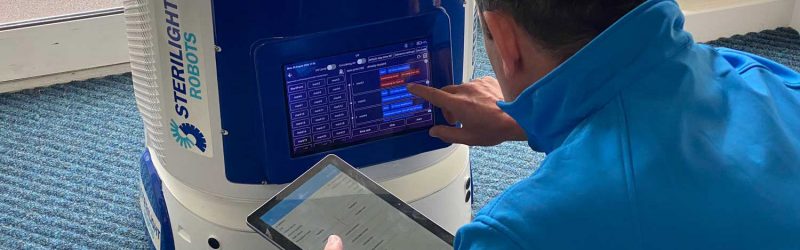
    Sterilight Robots was proud to be able to assist Redbank House and Disabled Living with a specialist disinfection using the Model X autonomous robot.

    It uses high power UV-C bulbs by Phillips and an internal HEPA filter to eliminate bacteria and viruses within the air and on all surfaces. Redbank House wanted to ensure that every area had a deep disinfection to maintain the highest levels of hygiene for their visitors.

    Coronaviruses Reduced 99.9999% in 25 Seconds

    At Redbank House, particular attention was allocated to the sensory rooms to ensure sufficient UV-C exposure was given to all high touch and high traffic areas. The University of Boston in Australia conducted a study on the effectiveness of UV-C exposure against Coronaviruses and they identified that with 25 seconds of exposure, Covid-19 could be reduced by 99.9999%. Sterilight Robots planned the route within Redbank to allow much longer exposure times across all areas and used Dosimeter Labels as a means of measuring the effectiveness of the disinfection. The labels are proven to accurately measure the total UV-C exposure so that a sufficient dose of ultraviolet light could be given to all areas.

    Sensory room sterilight robot

    Sterilight Robots are able to assist businesses and premises with a fully managed disinfection service. We will visit your location, perform an exposure assessment and then program the Model X to autonomously clean the entire location for a fixed, low cost. For locations that require a daily disinfection, we are able to offer a range of Autonomous robots, UV-C Static Towers and other effective UV-C solutions that can be purchased and used by your own team. Full training (face-to-face or virtual) and extended warranties are given for your peace of mind.

    For more information please visit: sterilightrobots.co.uk

  • Baywatch Results Reveal Disabled Parking Abuse

    Baywatch Results Reveal Disabled Parking Abuse

    Disabled Living are pleased to support Disabled Motoring UK’s Baywatch Campaign. Read all about the latest results below.

    In August, DMUK asked the public to help us with our Baywatch Campaign by completing a survey on their parking experiences over the past 12 months. The results have now been calculated.

    DMUK would like to thank everybody who participated in this year’s Baywatch Campaign. This year we had the biggest number of responses that we have ever seen which goes to show how important the problem of disabled parking abuse remains. The total number of responses was 777. We would also like to thank all our sponsors, the British Parking Association and BBFI Public Sector Investigations, and our supporting organisations that promoted the campaign and encouraged their members/supporters to take part. Without them the campaign would not be so successful.

    Traditionally the Baywatch Campaign asks the public to survey supermarket car parks for levels of disabled parking abuse. We were unable to undertake this type of campaign in 2020 because of the Coronavirus pandemic. Instead we asked the public to complete a survey from home which asked them questions on their more general parking experiences. This allowed DMUK to expand the scope of the campaign to other parking settings.

    Findings

    Local Authorities

    One of the most alarming statistics that came from the survey results was that 95.6% of participants did not think that local authorities were doing enough to tackle Blue Badge abuse. This is a very high percentage, but not at all surprising to DMUK. Every year the ‘Blue Badge Statistics’ are released and every year the number of local authorities actually prosecuting Blue Badge fraud is disappointingly low. The Baywatch Campaign also showed that only 20.8% of Blue Badge holders had ever been asked to have their Blue Badge inspected by an official and that 96.4% of participants supported more inspections of Blue Badges.

    The disabled community has spoken, and local authorities must do more to support their parking needs. DMUK wants to see far more Blue Badge inspections and enforcement of the on-street concession.

    Supermarket Parking

    With the data gathered we cannot do our usual supermarket league table with who is performing best and worst. However, the results have shown that 53.4% of participants either find it ‘Difficult’ or ‘Very Difficult’ to find suitable disabled parking in general at supermarkets. Also 86.8% found that disabled parking bays were either ‘Often’ or ‘Very Often’ abused. (Abused is defined as vehicles parking in disabled bays not displaying a Blue Badge.)

    supermarket pie chart

    These statistics show that supermarkets are not doing enough to support their disabled customers. Disabled parking is not managed properly, disabled parking bays are clearly not enforced, and abuse of the bays is rife.

    Looking specifically at enforcement DMUK asked the question: When parking at the supermarket do you ever see signs of enforcement? In response to this 55.1% of respondents said No. The next question asked was: If you have reported disabled parking abuse to a member of staff, do they take action? 86.7% of respondents answered ‘No’ to this question. This is distressing and shows that when a disabled customer asks for help their concerns are ignored by supermarket staff.

    General Findings

    The survey also asked participants about parking on their everyday journeys, not just at the supermarkets. On these types of journeys 74.8% of respondents said that finding suitable disabled parking was either ‘Difficult’ or ‘Very Difficult’.

    baywatch pie chart

    Also, generally when parking 87.7% of respondents said that they ‘Often’ or ‘Very often’ saw disabled bays being abused.

    These statistics are appalling. Being able to drive and park at their desired destination is imperative to the independence of disabled people. The figures show that disabled people are being disadvantaged and prevented from living independent lives because of the state of the nation’s disabled parking provision and enforcement. These statistics should be the wakeup call that the parking industry needs to once and for all provide adequate parking provision to disabled motorists and make sure it is enforced correctly. The level of deterrent needs to reflect the importance of keeping disabled bays free for genuine users and at present the deterrent clearly isn’t enough.

    The Impact of the Coronavirus Pandemic

    Earlier in the summer we started to receive anecdotal evidence that disabled bays were being removed from car parks to make room for socially distanced queuing. As lockdown restrictions eased, this became a more common problem. We posed the question in our survey: Due to the COVID-19 pandemic have you seen disabled bays being removed? Eg, for queuing. 65.8% of respondents answered ‘Yes’ to this question. Once again the needs of disabled people have been pushed to the back of the queue and equality has been forgotten.

    Graham Footer, CEO at DMUK, said: “DMUK is delighted with the level of support it has received for this year’s Baywatch campaign. However, we are very concerned about the levels of disabled parking abuse in all parking settings. The parking industry and local authorities all need to do more to support disabled people. Accessibility starts in the car park and without proper parking provision and enforcement of disabled parking, disabled people find it increasingly difficult to live independent lives. DMUK demands that this issue is taken seriously”

    Baywatch Appeal

    To help DMUK to continue campaigning on the issue of disabled parking abuse we have a fundraising initiative called the ‘Baywatch Appeal’. This is a fundraising appeal which will help the charity raise vital funds to keep advocating the need for proper management of disabled parking bays. The charity encourages all supporters of the Baywatch campaign to donate if they are able. Please visit https://www.disabledmotoring.org/donate

  • Kidz to Adultz and Redbank House Exhibit at Disability Awareness Day (DAD)

    Kidz to Adultz and Redbank House Exhibit at Disability Awareness Day (DAD)

    Kidz to Adultz Exhibitions and Redbank House  (part of Disabled Living) are thrilled to be exhibiting at Disability Awareness Day (DAD). We look forward to promoting our services at this online event and will be located on stand M5.

    Disability Awareness Day (DAD) is recognised as the largest annual event of its kind in the world. Due to COVID-19, the 29th event will be held virtually online via www.dadvirtual.org.uk it is totally free, and goes live at 10am on Sunday 25th October. A week of free, complimentary workshops will also be available the following week between Monday 26th till Friday 30th. The website will remain available online for the year ahead.

    DAD is a ‘pan disability event which promotes a culture that focuses on what disabled people can-do’. Event Co-ordinator Dave Thompson MBE DL co-founded the organising charity Warrington Disability Partnership (WDP) in 1991 and the annual DAD event in 1992. Held in a tented village on the grounds of Walton Hall and Gardens Warrington, DAD provides a wide range of features including information, advice and guidance on products and services, a sports zone, a performing arts marquee, and entertainment for all. It has inspired similar events in over a dozen countries worldwide including Cameroon, Gibraltar, Uganda, Thailand and India, and has attracted special guests including members of the Royal Family and Ministers for Disabled People. The Royal Air Force have also supported past events with flypasts from the Red Arrows and WWII Dakota’s. WDP was presented with the prestigious Queen’s Award for Voluntary Services in 2006 in recognition of DAD’s Army of volunteers who ensure the show runs smoothly.

    In 2019, the event was supported by dozens of businesses, statutory and voluntary service providers including over 100 disability charities, with more than 25,000 visitors attending on the day. Over 600,000 people have attended past events, and charities have not only raised awareness about what they do, they have also raised over £1million for good causes.

    What to Expect

    This year, over 200 virtual exhibitor stands have been booked, as well as an impressive line-up of performers in the Arts Marquee, with 2018 Britain’s Got Talent winner, Lee Ridley, best known as Lost Voice Guy, heading the bill. Plus over a dozen organisations will be promoting a wide variety of inclusive sports and activities such as scuba diving, cycling, wheelchair rugby and basketball, dance, angling and Tai Chi.

    DADV2020 is dedicated to the memories of two members of the DAD team who have sadly died of Coronavirus, Peter Ives and Colin Whitfield, who together contributed nearly 50 years of voluntary work to DAD and WDP.

    Exhibitors from across the region, the UK and as far afield as Israel and Australia will be showcasing their products and services including disability and age related support groups, health and social care, mobility and independent living equipment, education and employment, independent living options, magazines and exhibitions, arts, crafts and activities, sports and leisure, welfare benefits advice, housing and supported accommodation, rail travel, police and hate crime, and performing arts.

    Tony Brown, Managing Director at Expanse Learning Group the event principal sponsors, said “We are all excited about the potential impact of DAD Virtual. Here at Expanse we learn from other organisations who are delivering education and support to young disabled people, and we love to share our achievements across the industry. DAD Virtual provides us with the platform to do both.

    The event has been supported by United Utilities, Warrington & Halton NHS Teaching Hospitals FT Trust, Police & Crime Commissioner for Cheshire, Active Cheshire and the Coronavirus Community Support Fund, distributed by The National Lottery Community Fund, thanks to the Government for making this possible.

    Disability Awareness Day (DAD) is an event organised by the Warrington Disability Partnership (WDP)

    Warrington Disability Partnership is an internationally recognised and award winning user led registered charity founded in 1991. With a team of nearly 50 staff and over 200 volunteers, WDP offers 28 mobility and independent living services in and around Warrington, Liverpool and North Wales, including two Centres for Independent Living and two Shopmobility services.

Disabled Living