Author: Daryl

  • New Micro WashPod Will Help People Stay Safe at Home

    New Micro WashPod Will Help People Stay Safe at Home

    This is a guest blog by WashPod who feature in Disabled Living’s Supplier Directory.

    The new Micro WashPod mobile, disabled wetroom has been launched as the smallest to join the range of WashPod models that offer bathing solutions to hire for those who have mobility issues but wish to stay in their own home, be they elderly or disabled.

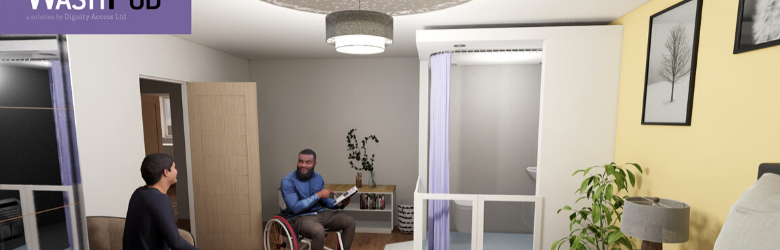
    The Micro WashPod is a unique solution to bathing and has been specially designed for limited spaces, fitting internally into a reception room or bedroom. It’s fabulously quick to install and can be fitted in less than a day. It will be the answer for many people needing at-home, disabled bathing where space is at a premium and where extra room for carers, hoists and trollies may not be needed.

    Benefits include:

    • Absolute minimum space required
    • Versatile and quick to install (less than a day)
    • Plug and play, no need for existing plumbing connections
    • Minimum disruption
    • Hired or bought direct or through our distributors

    The Micro WashPod has great versatility. By adding a platform, the Micro WashPod can gain a wheelchair turning circle. With tight installations, the ramp can also be removed on one side to give extra space. In addition, the panels can be configured to accommodate different orientations.

    parent and child using micro washpod

    Notes

    If access to the bathroom is now impossible, the WashPod range of disabled washrooms is the perfect interim solution saving the option of prolonged hospital care or an early move to an expensive care home. There is nothing like it on the market.

    In addition to the Micro, there is a standard External WashPod that can be installed in the garden or on a patio and two other internal models – the Standard and the Mini – that can be erected in a spare reception room or garage.

    Additional applications are numerous from Housing Associations and Local Authorities who may wish to buy them and lease them out to residents as needed, or hospitals during building works, and commercial enterprises wishing to provide accessible washrooms.

    The WashPods are plug ‘n play and fully fitted to comply with the highest specification of part M of the building regulations. They have been devised by architects who specialise in the designing for disability and endorsed by occupational therapists and case managers.

    Typical facilities include accessible shower facility, basin and WC. External units include underfloor heating. Hoisting for transfer purposes can also be provided where needed.

    Both internal (with a mini version too) and external options give a disabled person dignity until more suitable arrangements can be made, without significant disruption and stress to the family home.

    External Washpods are usually erected within 2 to 3 days and can include a covered link to an external patio or back door. Internal Washpods can take only a day to install. The units are constructed off site and re-assembled in the home by an expert team.

    woman using micro washpod

    Benefits

    • Out of hospital faster (thus releasing a hospital bed)
    • Immediate return to (or ability to remain in) family/familiar surrounding
    • No permanent alteration to the property
    • Pods can be removed easily and the property reinstated very quickly
    • Short period from order to installation
    • Independence and dignity for user
    • No reduction in house value
    • Minimum disruption
    • Fraction of the cost compared to care home provision.

    The WashPod range is being manufactured and marketed by Dignity Access which is a sister company to Cowan Architects, specialists in disability adaptations and inclusive living design.

    More information

    For more information, please contact Joanna Sale in Marketing, on 07717 425694, email: joannasale@cowan-architects.co.uk or visit the Dignity Access website.


    Did you know… Disabled Living are featured in the Top 10 UK Disability Blogs? For the chance to have your news/story published on our blog please send an email to: info@disabledliving.co.uk

  • Maintaining a Positive Mindset When Living With a Disability

    Maintaining a Positive Mindset When Living With a Disability

    This is a guest blog from Elin Williams at My Blurred World, who talks about the ways you can try to keep a positive perspective when you are living with a disability. You may have noticed Elin’s name, as she has contributed on Disabled Living’s blog before and also in our Kidz to Adultz Magazine, pages 40-41.

    “How are you so positive?”

    “You’re really positive, considering.”

    “I admire your positivity.”

    If there’s one thing that people often observe about me and my personality, it’s my positivity. I’m naturally quite the optimist and I try not to let my disability cloud that trait. But it hasn’t always been an easy journey and it continues to present challenges, those of which can be difficult to overcome at times.

    I found myself suspended in a state of numbness and negativity when I was in my first year of sixth form; My eyesight was deteriorating rapidly due to my eye condition, Retinitis Pigmentosa (RP) and I was trying to find my feet after being diagnosed with Chronic Fatigue Syndrome/ME. I wasn’t sure how to graduate from the darkness I found myself slipping into further every day and I was finding it difficult to voice my feelings.

    I resolved to taking one day at a time and I eventually discovered that there was light at the end of the tunnel. There are certain things I do now to combat the negatives and keep my spirits up during the difficult times, and I would like to share a few of these with you today…

    Focusing on What I Can Do

    My fluctuating eyesight and physical capabilities have been a source for many conflicting thoughts over the years; it’s so easy to think about all the things that you can’t do because of your disability and to let those factors dictate how you feel, but I’m learning to be more honest with myself, and focusing on what I can do rather than what I can’t. This affords me the opportunity to be grateful for what I am capable of, something which helps me to maintain a positive mindset.

    Connecting With Others in a Similar Situation

    I was very reluctant to talk to any other vision impaired person when I was younger, I deemed the prospect as something that would make sight loss even more real. This was at a time when I was desperate to fit in, so I refused any opportunity to meet anyone else who was in a similar situation. I didn’t realise that I was isolating myself by incessantly refusing and I was oblivious to how much reassurance I needed at the time.

    When I eventually created my blog, My Blurred World, in 2015 I started connecting with other vision impaired people and my eyes were opened to a world that I never knew existed before. I’ve found so much comfort when talking to others who are in a similar situation and there are a whole host of people, on and offline, who I can now turn to if I need to talk. I’ve been able to draw so much positivity from this in the last few years and being a part of the disability community is definitely something that continues to provide me with positivity and reassurance when I need it the most.

    Focusing on the Small Things

    elin smiling

    It is so easy to lose focus on the positives when you feel consumed by the challenges your disability presents in your life. I can’t begin to tell you how many times I’ve felt swamped by the negatives but something I’ve always tried to do is appreciate the small things.

    I have grown to recognise the value in achieving even the smallest of things and I draw comfort from doing the things I love such as reading, writing, or listening to music. I’ve learned to appreciate the contributions all of the above make to my life no matter how significant they are in their existence.

    I’ve discovered that there’s always something to be appreciated, even in the darkest moments and I try to utilise anything that brings me happiness.

    Embracing What My Disability Brings to My Life

    If you had asked my younger self to list positive attributes to my disability, I would have retracted back into my shell or redirect the route of the conversation completely. But now I can proudly sit here and list all the amazing ways my disability has contributed positively to my life. From enabling me to learn unique skills such as reading/writing braille, touch typing and using the long cane to forming friendships and allowing me to work with charities and giving me the opportunity to utilise my passion of helping others by sharing my experiences with others in a similar situation. I could go on.

    There are so many aspects of my disability that I can now claim to be grateful for and that really does bring a strand of positivity into my life, especially since there was a time when I didn’t believe that anything good could stem from it.

    Reaching Out

    Sometimes it’s not as simple as relying on all of the above to maintain this positivity and it’s at that point that I recognise the value in reaching out to others. There’s no weakness in asking for help and I’ve truly valued this realisation over the past couple of years. Very few people are dealing with everything you experience as a disabled person so there’s immense strength to take away from that fact but it’s ok not to be strong 24/7. Whilst I’ve been reluctant to ask for help in the past, I now gain confidence from the fact that I am more open about it all and that I have people in my life who I know will always offer their unwavering support.

    As I graduated into my late teens and now my early twenties, I’ve been able to adopt a lot of perspective which affords me the opportunity to look at my disability in a different way. I can’t claim that it’s always easy, but these are just a few things that help me to renew my spirits and bring me closer to a positive mindset.

    I am now able to substitute many of my negative thoughts with positive ones and I’m reaping the rewards as they come.

    Learn more about Elin on her blog: My Blurred World.

  • Have Disabled People Been Forgotten in the Era of Social Distancing?

    Have Disabled People Been Forgotten in the Era of Social Distancing?

    This is a guest blog post written by Disabled Motoring UK (DMUK). Disabled Living are proud to support their campaign again this year to help raise awareness of parking bays for disabled people during Covid-19.

    As the UK’s shops and retail outlets begin to open DMUK is being contacted more and more by its members who are frustrated about their needs being forgotten with new measures being introduced resulting from the  Coronavirus pandemic.

    DMUK does support the government in the need to keep people safe and encourages everybody to follow the appropriate guidelines. We have seen socially distanced queues outside retailers of all natures and these are necessary in order to keep people safe. However, these organised queues often need to take over parts of the retailer’s car park in order to accommodate them. Often the disabled parking bays are nearest to the entrance and are therefore the automatic choice to be cordoned off for such queues.

    DMUK understands the predicament many retailers find themselves in and they need to put in place measures that protect everybody. However, we also want to see retailers think about their disabled customer’s needs. We encourage all retailers to think carefully about the position of queuing systems and the removal of disabled parking bays should be a last resort. If there is no other option, DMUK would like to see the suspended bays resited to an appropriate place in the car park, sign posted correctly and managed properly so they are kept free for genuine Blue Badge holders.

    Campaigning

    DMUK has a long campaigning history when it comes to protecting disabled parking and this is the latest situation where we have seen the needs of Blue Badge holders neglected. Disabled parking bays are always the first to be cordoned off for construction work, temporary toilets, storage and the list goes on. Social distancing is just the latest excuse to use these bays for which they are not intended. A disabled bay is a life line to a Blue Badge holder, and without one it could mean a dramatic loss of independence.

    Dave Smith, Head of Public Affairs and Communications at the British Parking Association, said:

    “Parking operators should work with landowners to ensure that disabled motorists are not unfairly penalised by a reduction in designated parking bays due to social distancing requirements. This means continuing to meet their obligations under the Equality Act and making reasonable adjustments where necessary. It’s also important that spaces allocated for Blue Badge holders continue to be effectively monitored to ensure they are not abused”

    We have also been contacted by members who have had difficulties when they are in shops, because the staff refuse to give them the assistance they require – citing health and safety concerns as the reason they cannot help at this time. For example staff refusing to lift things off high shelves or assistance with carrying shopping to the disabled person’s car. This is not acceptable and retailers should put in place the provision to give assistance to disabled customers whilst still keeping their staff safe. We’d also like to see a national policy that would exempt disabled people from queuing at retail outlets. Most retail outlets do not have the capabilities to put adjustments in place which would allow disabled people to queue, for example providing seating. A reasonable adjustment would be to let them go straight to the front.

    Disabled people who are shielding

    There is a common misconception that all disabled people are ‘clinically vulnerable’ and will be ‘shielding’ at home for as long as the Coronavirus is with us. This is certainly not the case and many disabled people are eager to get back to their everyday lives. However, they cannot do this unless the retailers put in place reasonable adjustments so that they can access goods and services just like everybody else.

    Protecting health for everybody also means protecting independence for everybody.

    DMUK’s asks to retailers:

    • Disabled parking bays should not be removed to provide a space for socially distanced queues.
    • If cordoning off disabled parking bays is the only option for a retailer these bays should be re-sited to another place in the car park, signposted and managed properly so they are kept available for genuine Blue Badge holders only
    • Blue Badge holders should be exempt from queuing at retail outlets
    • Disabled people should be able to access the assistance they require when shopping

    Heidi Turner, DMUK Communications and Campaigns Director, said:

    “DMUK has always been a champion for the independence of disabled people and there is a real danger that as we come out of lockdown this will be eroded. We are asking retailers not to forget their disabled customers when putting social distancing measures in place so that everybody can access their services. Not all disabled people are considered ‘clinically vulnerable’ and will desperate to get back to their ordinary life. However, they may be prevented from doing so if the correct reasonable adjustments are not put in place to help them do so.”

    For more information please visit the DMUK website: www.disabledmotoring.org

    To share your news with Disabled Living please email: info@disabledliving.co.uk 

  • Senior Wellness: Preventing Issues From Becoming More Severe

    Senior Wellness: Preventing Issues From Becoming More Severe

    This is a sponsored post by Disabled Living for Scooters n Chairs.

    What are the options to keep your loved one healthier as they age? Aside from doctor’s appointments, dental care, and medication, are there things that will make your loved one feel better and cope with aging?

    Aging is never easy. From feeling a loss of independence to increased pain and health issues, senior wellness is an important part of growing old. Finding beneficial options that make your loved one feel better may provide you, their caregiver, some relief as well!

    What are the best things you can do for your loved ones’ wellbeing as they get older?

    Dentist Appointments

    As we get older, so do our teeth, gums, and the underlying bones in the mouth. Without proper dental care, an array of other issues can cause pain, discomfort, and illness. Infections in the mouth can spread, weakening the immune system and preventing your loved one from getting much-needed nourishment.

    Yearly Physicals

    The best healthcare comes when you catch it early. Preventing issues from becoming more severe can be caught early with visits to your GP or healthcare professional.

    Staying Active

    elderly people and person in wheelchair stretching in gym

    Exercising the muscles and bones allows your loved one to keep their mobility longer. Even stretches from a wheelchair are better than nothing at all.

    Interacting with Others

    As they say, laughter is the best medicine, but so is human interaction. Regardless of age, your loved one will enjoy being around others to talk, laugh, or even play games especially if they are mobile with the use of a folding mobility scooter. Make sure to keep their interests alive by spending time with others!

    The Eye Doctor

    Not only do you want to preserve their sight, but eye doctors can also pinpoint underlying health issues before there are symptoms in some cases. If your loved one needs glasses, it’s best to keep the prescription current to avoid falling and accidents.

    Mental Health

    As stated above, aging is not easy. For many, it is worsened by mental health and neurological issues. From daily crossword puzzles to interacting with others, it’s best to find ways that will exercise their mind.

    Adequate Sleep

    alarm clock

    Sleep affects mental health, mobility, appetite, and mood. Sleep is the best way to combat many ailments and be a happier person. If your loved one is missing sleep; you may notice severe changes in their mood. Try to make the best conditions to support their sleep.

    Medication

    Another unavoidable part of aging is medication. Monitoring and managing the proper use of prescriptions is one of the best things you can do for your aging relative. As doctors prescribe new medication it must be administered properly.

    Preventable Health Problems

    Previously, it was stated that yearly physicals are one of the best things you can do for senior wellness. Preventative medicine means also visiting specialists and having tests done before an issue arises and it’s too late to treat it properly.

    Healthy Eating

    This one will come as no surprise. A proper diet that meets the nutritional needs of your loved one can be invaluable to their health.

    To read more of Disabled Living’s blog posts please visit: www.disabledliving.co.uk/blog

  • The Many Causes of Erbs Palsy and How it Effects Life

    The Many Causes of Erbs Palsy and How it Effects Life

    This is a sponsored post for Disabled Living by Lavelle Partners about how Erbs Palsy is caused, how it can be treated, and how it may affect an individual’s life.

    Erbs Palsy is a disability which affects the nerves and muscles in the neck, shoulder, and arms. This disability isn’t caused by any type of disease or birth defect. In fact, it’s usually caused by a traumatic injury of some kind, either during birth or later in life.

    In some cases, medical negligence can be to blame. For example, compensation for delayed diagnosis of a medical condition, like Erbs Palsy, can be claimed as this might exacerbate the injury, meaning treatment becomes less effective. What’s more, if the doctors or midwives pull the baby too hard during birth, this can also cause Erbs Palsy too.

    As always, education on disabilities is paramount to avoid judgement, and ensure everyone accepts one another for who they are. It’s also a great way for those with disabilities to realise that they truly aren’t alone. So, to discover more about the causes, symptoms, treatments, and effects of Erbs Palsy, don’t go anywhere…

    What is Erbs Palsy?

    Erbs Palsy is a type of paralysis or weakness in the muscles of the arms. In most cases, this will occur to one of the arms due to a stretched or severed nerve in the neck. There are four different types of Erbs Palsy, which we’ll go into a little more detail with here:

    1. Neuropraxia: this is the most common type of nerve injury. In these cases, the nerve is simply pulled or stretched, so is only a temporary problem. Usually, this sort of palsy will heal after around three months.
    2. Neuroma: this is a little more serious than Neuropraxia, and is when the nerve is stretched so much that some of the fibres break. Due to the scar tissue that forms when these types of breaks heal, the nerve can cause discomfort. These sorts of injuries never really fully recover back to normal.
    3. Rupture: this type of Palsy is a little more than a stretch, and occurs when the nerve is torn in half. This will not heal on its own, and requires surgery to splice the nerve back together. Without this, the arm will be paralysed inevitably.
    4. Avulsions: finally, the last type of nerve injury, and the most serious of them all, occurs when the nerve is torn completely away from the spinal cord. In some cases, the nerves within the diaphragm can be affected, which could cause difficulty breathing. What’s more, the face could also be affected, causing Horner’s Syndrome; where the eyelid droops or the pupil of the affected eye is smaller than the other.

    Symptoms of Erbs Palsy

    Depending on the severity of the Palsy, symptoms will vary. However, here are some of the classic symptoms of all types of Erbs Palsy, which indicates when a child is born with it:

    • The arm hangs by the side of the body, and rotates inwards;
    • The arm is weak, and grip strength is limited too;
    • The development of the circulatory system, nervous system, and muscles may be restricted;
    • There is limited motion in the shoulder, down the arm, or in the wrist;
    • The arm is numb;
    • Or, the arm could be partially or completely paralysed.

    close up of baby with hand in the air

    What Causes Erbs Palsy?

    Although Erbs Palsy is most commonly heard of during infant childbirth, there are actually a huge number of reasons why Erbs Palsy could occur…

    Delayed Diagnosis

    Erbs Palsy will not be caused by any medical condition, however, the delayed diagnosis of Erbs Palsy could mean that treatment becomes less effective. For example, if surgery is delayed in the case of Rupture or Avulsion due to a late Erbs palsy diagnosis, it may be too late to fix. This will mean that the victim’s life will completely alter.

    Pregnancy Injury

    Although there is no genetic reason why someone might develop Erbs Palsy in the womb, the position of the baby during pregnancy could cause it. For example, if the baby’s head is positioned in the birth canal, and the baby has wider shoulders, their shoulder can become restricted by the mother’s pelvic bone.

    The closer birth comes, and the more comfortable the baby becomes, the lower the baby’s head will push into the birth canal. Because of this, the nerves between the neck and shoulders will stretch, so the baby may be born with Erbs Palsy. This is called shoulder dystocia.

    Birth Injury

    If shoulder dystocia occurs before the birth, the risk of birthing an Erbs Palsy baby nearly triples! Then, the excessive pulling of the child being born, due to the shoulder being stuck, could exacerbate the problem.

    This can also occur in other cases; not just those where the shoulder becomes stuck. For example, in a feet-first delivery, the baby may leave the womb with its arms raised above their head. This pressure can also cause Erbs Palsy.

    In both these cases, the birthing requires more pulling than usual, which can put a real strain on the nerves. Some of the risk factors which could cause Erbs Palsy in a baby from birth injury could include:

    • A large infant
    • A small mother
    • Small or abnormal pelvis shape in the mother
    • If the mother is obese or diabetic
    • If the delivery requires extraction tools
    • Medical negligence during birth
    • If the second part of labour lasts over one hour

    Traumatic Accident Later in Life

    Finally, Erbs Palsy in adults could also be caused by a traumatic accident later on in life. For example, a car accident might cause the severing or stretching of a nerve on impact, or when emergency services attempt to remove you from the vehicle. In essence, any accident that might cause excessive pulling on the nerves in your neck, shoulder, or arm could lead to Erbs Palsy.

    wheel on a bike

    How Does Erbs Palsy Effect Your Life?

    As we’ve seen, this type of injury can have a lasting impact on someone’s life. Particularly if it becomes a permanent paralysis, it may limit the activities or jobs a person can partake in. Some of these limitations or life issues could include:

    • Can stop you from playing certain sports: because of the paralysis in the arm, Erbs Palsy could stop someone from being able to play games requiring the arms. For example, Netball, Cheerleading, and Golf may be among some of these sports.
    • Could affect your career prospects: if a job requires your arm strength to perform well, for example an art, craft, or sport, Erbs Palsy may limit you. That said, most careers out there are completely doable with this type of paralysis, so most prospects will remain intact.
    • Social implications: growing up with Erbs Palsy may affect your social life. Children can be nasty, and being a little different could affect a child growing up. So, it’s important for parents to teach their children, through articles like this, to accept children with minor differences, like this.

    What’s important the bear in mind is that these limitations can most certainly be challenged. Yes, Erbs Palsy will no doubt make it more difficult for a person to get to grips with any hands-on activity. That said, sporting activities can absolutely be mastered through the use of one hand.

    What’s more, if the social implications of having Erbs Palsy get in the way, this is a great way to find friends who accept you for you. Through this tiny difference, you’ll automatically be able to remove judgemental people from your life instantaneously.

    Can Erb’s Palsy be Cured?

    There are a huge number of potential treatment options for Erbs Palsy, including different types of therapy, and even Neuromuscular Electrical Stimulation. That said, these Erbs palsy treatment options are the three most common forms:

    No Treatment

    As we’ve seen, in cases where the nerve is simply stretched, and not severed, it’s likely that the wound will heal on its own. This requires no treatment at all – simply rest and recuperation. So, after a matter of weeks or months, the individual can resume life as normal.

    Therapy

    In cases where the nerve has scarred, we’ve seen that this can become uncomfortable for the individual. The scar tissue around the nerve can make movement a little harder than it would be for someone without this issue. Therefore, physical therapy can be used to strengthen the nerves and muscles, and help the body get used to these feelings.

    Surgery

    In cases where the nerve has been completely torn, it is possible for it to be spliced back together. What’s more, when the nerve is ripped from the spinal cord, this can also sometimes be saved using surgery too. When an avulsion occurs, the torn nerve cannot be replaced, but healthy nerves can be taken from another part of the body to replace it.

    people playing sport

    Need Some Support?

    As you can see, Erbs Palsy can be caused by a number of injuries, and there are a number of potential cures. What’s more, despite the potential limitations of this injury, it is completely possible to achieve anything. Yes, it may be a little trickier, but it’s all in the mind.

    Have you learnt something new about Erbs Palsy through reading this article? Or, perhaps you have Erbs Palsy yourself, and have a story about how you have overcome any difficulties? Please do share your thoughts, in the comments below, and let’s share our support.

  • Finding Wellness during Illness – Ros’ Story with Bowel Cancer

    Finding Wellness during Illness – Ros’ Story with Bowel Cancer

    This is a guest blog for Disabled Living’s blog by Ros Ben-Moshe, author of “Laughing at Cancer – How to Heal with Love, Laughter and Mindfulness”, part memoir, part healing guide based on her experience with bowel cancer.

    No one chooses to get sick, but we can choose how we will respond. This revelation came to test me when out of the blue, at age 42 a colonoscopy revealed a polyp in my rectum. On first inspection it appeared benign, but pathology begged to differ. Within a couple of weeks, I transformed from health promotion academic lecturing about case studies and statistics, to being one.

    Consultation with a Colorectal Surgeon

    A consultation with a colorectal surgeon outlined three options – do nothing further and hope all is well; have a partial bowel resection which would most likely eliminate cancer but wouldn’t establish if the cancer had spread and option 3; a full bowel-resection to test lymph nodes, construction of a man-made rectum and temporary (all being well) ileostomy. Politely I stormed out of his office. There was absolutely no way I would be choosing option 3.

    However, returning home to my beautiful boys, then 12 and 15, and visualising the life I had always dreamed of, the 2-5% chance of the cancer spreading weighed heavily. To secure my future I knew I needed to do whatever it would take to prevent lingering doubts the cancer may have spread. I chose a full bowel resection. From that moment I made a commitment to myself; to let the specialist and medical practitioners take charge of my illness whilst I took charge of my wellness. This was the time to gain some mastery and empowerment over a giddying change to my life circumstance and put my many professional years as health promotion practitioner and laughter yoga facilitator into practice.

    Bowel Resection

    A week before my bowel resection our family of four gathered around our dining table. Mindful of an active school and community grapevine the last thing I wanted our boys to hear was “Your mum’s got cancer.” We explained I had a malignant polyp in my bowel with a few cancerous cells around it. In order to make sure it hadn’t spread I was choosing to have a bowel resection, as it was the only way the specialist could determine all was OK. I would appear sicker than I really was because it was a very big operation. We steered clear of statistics, allaying chaos and fear, navigating instead towards hope and stability. We sidestepped the “What if’s” deciding that if they asked, we would then respond. The subtext was very clear, “Mum does not have the Big ‘C’, a very small part of her bowel does.” I reassured them that the rest of me was very healthy. I needed them to understand the difference between little ‘c’ and Big ‘C’.

    My commitment to a wellness mindset during illness was multifaceted. Each day I tuned into what I felt I needed most – physically, emotionally, or even spiritually. Journaling was critical to this process, helping create some emotional distance, identifying concerns in need of troubleshooting and providing an opportunity to reframe things that didn’t sit well. I reframed the language of cancer into my own language, the little “c”, helping diminish some of its weighty hold. I was incredibly grateful, as time would establish, only a small part of my body housed a malignancy. Later I chose to refer to the bowel reversal as a bowel reconnection. ‘Reversal’ – infused with negative connotation of going backwards didn’t feel right. A more optimistic turn of phrase enabled me to prepare and enter this next operation with a stronger and calmer mind.

    Days with Less Energy 

    On even the most challenging or energy-sapping days I would incorporate a practice to shift my mood or enhance healing, even if only for a few moments, such as intentional breathing. One of my most powerful “go-to” strategies was intentional gratitude practice. It’s easy getting lost to the associated anxiety and stress a cancer diagnosis necessarily brings, but what we place our attention on grows. A gratitude practice of bringing to mind at least three things that had gone well in my day, no matter how seemingly insignificant, helped train my brain to notice and appreciate the good and distract me from thinking about things that hadn’t gone well, or worrying about what the next day might bring. If I was having a particularly challenging day, I’d interrupt my downward spiral of emotions by asking the question:

    “In this given moment, what can I be grateful for?”

    If something didn’t immediately come to mind, just by opening my eyes or heart a little wider, in no time it would.

    It’s not to say during this time I didn’t have challenging days where my mood or pain got the better of me, but it was incredibly empowering having a range of resources to elevate my own self-care and wellbeing. Whether I chose to draw from this wellness kit was up to me, but I knew I would only feel worse off if I didn’t. Developing this mindset helped remove some of the negativity and weightiness of one of the most negatively laden conditions – cancer. My experience has placed me in good stead to weather many forms of adversity, most noticeably of late, the COVID-19 storm.

    Learn More about Ros and Bowel Cancer

    To find out more about Ros story and more information on her book, visit: http://laughingatcancer.com/

  • Washpod ‘Is a Life Changer’ For Sheffield Mum

    Washpod ‘Is a Life Changer’ For Sheffield Mum

    This is a guest blog from Washpod who feature in our Supplier Directory.

    Jessica, a mother from Sheffield, has called her new WashPod disabled wetroom, ‘a life changer’ for her and her little daughter, Isabella. The internal WashPod was installed into the family’s garage in just a day recently, but it will allow them to stay in their rental home just as long as they want while they build a new home that’s adapted to Isabella’s growing needs.

    Isabella’s Story

    Isabella is now 5 years old but severely brain-damaged, blind and has cerebral palsy. She has been non-mobile from birth, relies on a wheelchair and care for all her needs.

    “It had come to the point when carrying her up and downstairs was beginning to get dangerous so something had to change” says Jessica. “I heard about WashPod from another family and was able to get funding for it which means that we can keep Isabella on the ground floor which is safer and more manageable”.

    “The property is a rental and doesn’t belong to me so having the WashPod is fantastic as it fits in the garage and we don’t need to change the property” continues Jessica. “I would definitely recommend it as a safe way to shower and perfect for disabled people who can’t get upstairs”.

    The plan is to keep WashPod for a couple of years so that they can get their house built in a sensible, comfortable timeframe.

    Get in Touch

    To learn more about contact the team at Washpod visit: https://dignityaccess.co.uk/

    If you would like to share your news on our Disabled Living blog, please email info@disabledliving.co.uk

  • Stratford upon Avon Boat Club (SUABC)

    Stratford upon Avon Boat Club (SUABC)

    Mark Dewdney, Head Coach of Adaptive Rowing at Stratford upon Avon Boat Club (SuABC). Mark has coached adaptive rowing for nearly 15 years and has been at Stratford for 5 years. He chairs the Club Adaptive Group that works directly with the governing body, British Rowing, to develop the sport. Mark discusses the club’s history with Disabled Living and we also hear from a few members at the boat club.

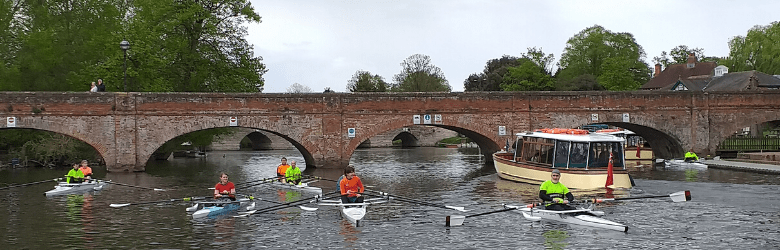
    “The SUABC adaptive squad started in late 2015 with just 2 disabled rowers. In the 5 years since it has grown to 10. Just about the largest such section in the UK. There are several sessions during each week with each rower attending when they can. The team goes to rowing events around the south of England. Whilst this is what the squad is designed to do racing is not compulsory; participation and enjoyment is the order of day.

    Current athletes include individuals suffering from spinal cord injuries, hemiplegia, visual impairment, ABI, autism and other issues. We cater for all ages from 13 upwards; and most disabilities with the proviso that it must be considered safe for the person to be in a rowing boat. Everyone is risk assessed!

    To provide a safe environment there is a large group of coaches and helpers. We have built the support structure up as squad numbers have increased. The club ethos is that everyone helps each other. Athletes, family and friends are encouraged to contribute in any way they can. It is not just about being on the water. It is all the little jobs that make that possible. This evolutionary approach of only taking more rowers on when we have the infrastructure to support them is the basis for our success.

    stratford upon avon boat club

    The club is in a building that is over a hundred years old. This brings the usual problems of access. We are still far from perfect, but we are working slowly through a long list of improvements to make the place as user-friendly as it can be. As soon as covid-19 allows a ramp to the landing stage will be installed and a new safety launch will be delivered. A proper lift to the club gym is a long-term goal. Despite the clear and in certain areas, continuing issues, we have made it work. If we see a problem, we try to address it. This is ultimately why we thrive. Read on to discover some case studies below.

    Kelly

    Once upon a time I was, amongst other things, a keen mid to long distance runner. I trained regularly with my local running club, the Sparkhill Harriers, and completed various half marathons and a full marathon. In 2010 I had an accident, I broke my back and severed my spinal cord, rendered paraplegic; reliant on a wheelchair for transportation, it would be fair to say that, at the time, I was devastated at the prospect of never being able to run again because I loved it so very much.

    I discovered adaptive rowing, at Stratford upon Avon Boat Club (SuABC), last summer after what was a particularly difficult summer in terms of my disability and health issues, though I had been doing ergo rowing (on a machine) prior to that, post injury, never before had I rowed on a river. My life changed from that moment onwards, immediately; I got a sense of freedom that, quite honestly, I hadn’t had since the days I used to take a leisurely 10K burn around my old neighbourhood. Mentally, rowing helped me out of a hole and the physical plus of any exercise is tried and tested. Honestly, I am hooked and feel very lucky to have found the team and am grateful to the coach and volunteers at SuABC for dedicating all the energy and time that they do so that disabled people, like me, can take part in such an amazing sport. I am naturally competitive and feel as though I have found my calling, whether I get good enough to win races, or not, I get satisfaction from improving each day, and really cannot wait for a time when I can get good enough to be entered in to a race. I feel like I have so much to look forward to, this time last year I was feeling lost and was in pretty bad shape really. I thank you from the bottom of my heart.

    David

    “David Rose, a tetraplegic wheelchair user talks about his experience. Growing up in Stratford-upon-Avon I spent a lot of time by the river and myself and friends often hired out one of the rowing boats. This was great fun and enjoyable and gave me a taste for being on the river. After I broke my neck, 33 years ago now, my life certainly took a different direction, but I continued to do as much as a wheelchair user as I would have done if I would have still been walking. I have done many different types of outdoor activities and played a number of sports, my main sporting achievement being part of the Great Britain Wheelchair Rugby Squad.

    I had always known about rowing on the river and have often watched people rowing as I walk my dog along the river but I’d never thought about whether it would be possible for me to be able to go out rowing. Then, one very cold day last November I was crossing the river bridge and looking down I saw the boats out and about and also a couple of people in wheelchairs, so I had to go and say hello.

    empty atmosphere at straford upon avon boat club

    After chatting to people for a while the rowing session ended and everyone was going across to the local pub and I was asked to join them and from that point I have really felt part of the adaptive rowing squad as everyone was so welcoming and easy to get on with.

    As someone who is very new to rowing the things, I’ve picked up on is the camaraderie of the group and how supportive everybody is of each other.  Whether you want to become a club rower or take it to the next level and become a very competitive rower there is certainly a level and depth of understanding about rowing that I have already picked up on from just being able to go up and down the river watching from the bank to seeing people get in and out of boats.

    The level of support that an individual requires is well thought through and given in a very relaxed way that means getting into the boat is done in such a way someone feels safe but not overwhelmed.

    By now I would imagine you have a picture of me really enjoying rowing up and down the river but so far, I’ve yet to get in a boat! Just after I’d first said hello to everybody the whole of the UK was hit with awful weather and floods which stopped rowing for many weeks and then the bad weather progressed further and now with the current lockdown situation I’ve still to try rowing out.

    Even without being able to meet up the adaptive squad have stayed in touch via email but also daily on WhatsApp. From conversations and just touching base to make sure everyone is okay to being incredibly supportive meaning the social isolation isn’t having such a big impact.

    I am really looking forward to the end of the lockdown so that I can go out rowing properly for myself.  To be able to get back into the outside world for all of us will be so appreciated and I have really missed mixing with a really great group of people. It is something I’m looking forward to immensely. If rowing is something that interests you, no matter what your disability is, I would really encourage coming along and giving it ago as well.

    Ian

    Paola writing on behalf of her son (will be at a special needs school until he is 20)

    My son, Ian (18), was diagnosed with Autistic Spectrum Disorder with Learning Disabilities and Challenging Behaviour when he was 4 y/o. He began rowing 5 years ago. This sport has given him the chance to learn new skills outside of an academic environment. It lets him blow off steam whilst also keeping him healthy. With rowing, Ian feels part of a community where he can socialize and learn to work as a team.

    Ian says: “I like rowing because it makes me fit and healthy. I like my coaches because they are kind and caring and they help me to be a better rower. My favourite boat is the double. I love regattas.”

    Learn More About the Stratford upon Avon Rowing Club

    Thank you for Mark and his team members at Stratford upon Avon Boat Club for sharing your stories with Disabled Living. For more information about the club please visit: http://www.stratford-rowing.co.uk/

  • How Writing Poetry Changed Nicholas’ Life

    How Writing Poetry Changed Nicholas’ Life

    This is a guest blog by Lois Letchford for Disabled Living’s blog discussing how writing poetry has changed her son’s life. Lois’ dyslexia came to light at the age of 39, when she faced teaching her seven-year-old non-reading son, Nicholas. Examining her reading failure caused her to adapted and change lessons for her son. The results were dramatic. Lois qualified as a reading specialist to use her non-traditional background, multi-continental experience, and passion to assist other failing students. Her teaching and learning have equipped her with a unique skillset and perspective. As a teacher, she considers herself a “literacy problem-solver.”

    Living in Brisbane, Australia, my six-year-old son, Nicholas, failed first grade. The effects of going to school showed themselves through his quietness, his bitten fingernails, and the daily wetting of his pants. His teacher shouted at him for his slowness, his withdrawal, and his inability to follow the “simplest instructions.” Testing revealed he could read ten words, displayed no strengths, and above all, he had a low IQ. The prognosis was dire.

    An unusual opportunity arose. My husband was offered a study leave in Oxford, UK.

    Taking this opportunity to work with Nicholas in a one-to-one setting, I set myself up with a series of books titled, “Success for All.”

    They were an abject failure, and I was no better than his first-grade teacher.

    Faced with a blank slate, and no excuses, I thought about Nicholas’ strengths. I knew he could rhyme words and see patterns. With only these known skills, I thought about writing simple poems based around the consonant-vowel-consonant word patterns. I chose words which rhyme with bug, such as mug, lug, tug, and rug.

    The transformation in our little classroom was instant- no longer did I expect Nicholas to read anything. I read to him. Together we talked about the meaning of the poem, found the rhyming words, and finally illustrated the poem. Using coloured paper as a ladybug’s wings, and folded paper (with embellishments) for the rug, our enjoyment for learning intensified.

    One success led to another. And another. Every Nicholas was excited to read and play with yet another rhyme. We recited our poems as we walked his brothers to and from school. Each day we worked to retrieve those rhymes. His brain was being lined with language, also making the connection between words and pictures. Using poetry appeared to cocoon the sounds and help him with all aspects of learning to read.

    Every day, a new poem helped Nicholas make tiny steps forward in learning…

    After completing many poems using the short vowel sounds, the oo sounds as in cook, look, and book captured my imagination. My focus turned to Captain Cook, the last of the great explorers with the poem:

    Captain Cook had a notion,

    There was a gap in the map in the great big ocean.

    three sons
    Photo taken in Abingdon. Left to right: Isaac (age 3), Nicholas (middle age 7), Nathanael (age 10)

    He took a look, without the help of any book

    Hoping to find a quiet little nook.

    Captain Cook had a notion,

    There was a gap in the map in the great big ocean.

    He took a look and filled a whole book

    That caused the whole world to look.

    Living in Oxford and visiting museums, we encountered maps from the 1550s.

    “Look, Nicholas,” I said, “there’s a gap in the map. There is no Australia.”

    Our learning took a turn from writing simple poems to writing poetry for an inquiry project.

    I read the books and turned my learning into poems for Nicholas. I found this was the best way for him to access information, and poetry made for easy repetition, for questioning and tapping into his curiosity. Together we began to question – what knowledge did Captain Cook have when he left England?

    “Who came before Captain Cook?” Nicholas asked one day.

    “That’s easy,” I replied. “That was Christopher Columbus.”

    “And who came before Columbus?” he questioned.

    I stopped. I was stunned.

    nicholas and lois
    Nicholas and Lois in 2018

    Such a question had never entered my imagination, and for the first time, I knew my son did not have a “low IQ.” His questions told me he was “thinking.”

    Being in Oxford, with the world of libraries and maps at our fingertips, we searched for answers. Viewing maps in the local map shops aided our search. Discovering that Columbus’s travels were based on the maps of Ptolemy, led us to visit the Bodleian Library, hunting for more answers.

    Our investigation began in the gift shop, where a lady eager awaited our questions.

    “Do you know where we could find a Ptolemy map?” I questioned, with an anxious Nicholas by my side.

    The lady turned away from us, leaned against the counter, and scratched her head. Her eyes scanned the bookshelf. Finally, she bent down and retrieved one, large, blue-covered book.

    “This is a new book in our collection,” she said as she carefully placed it on the counter. “It’s a book of Ptolemy maps and only recently printed. Does this work for you?”

    Nicholas and I gaped.

    “Yes,” I replied as Nicholas grinned and nodded.

    Adding positive, enriching experience to our learning enhanced Nicholas’s curiosity.

    Our time in Oxford was completed with a memorable visit to the British Museum to see Captain Cook’s original maps and concluded our epic inquiry project.

    Returning home, Nicholas once again attended our local school. I was feeling on edge when I again met with the school counsellor.

    “Nicholas learned so much! I wrote poetry and he was so excited by our learning,” I gushed.

    “Well,” she replied, “he’s the worst child I’ve seen in twenty years of teaching!”

    Shocked, I left the room with my tail between my legs.

    This was not the end of the story, just the beginning of a new chapter.

    Advice for parents whose children are like Nicholas:

    Write for your children – write about their everyday experiences – what they see, hear, eat, or watch on YouTube.

    Write where you are with what you have

    Create books about their life

    Place the child as the central character of their story

    Take pictures to complement your writing

    Write in short sentences or poetry format

    Read and re-read to and with your child

    Recite the sentences or poems

    Record their reciting and sent it to relatives – if possible, ask relatives to respond

    If a child has a challenge recalling a particular sound, find words and objects which include it.

    Write about them in short sentences or rhymes.

    Write and read every day

    Remember:

    Learning is emotional, as well as cognitive.

    When learning is painful, sadly, that’s what children learn.

    When children are laughing, learning happens with ease.

    Once the process begins, one never knows where it ends…

    Grab a copy of Reversed: A Memoir to read the full story at https://amzn.to/3d2cNg5

  • Is Sport Really So Important?

    Is Sport Really So Important?

    Deborah Bell, Enablement Manager at Disabled Living talks about the importance of sport and how it can help you to stay active during the Covid-19 lockdown.

    Yes, sport really is so important because it can develop from exercise! Having been in lockdown for the last few weeks, with one of the few reasons we can venture out, being for exercise, Deborah Bell, Disabled Living’s Enablement Team Manager, has reflected on her involvement in sport as a child, and that of her now adult children.

    Sports England’s Active Lives Research

    According to Sports England, Active Lives Children and Young People provides a world-leading approach to gathering data on how children engage with sport and physical activity. The aim is to enable “children and young people to feel more motivated, confident and able to get active”.

    I thought about my attitude towards sport as a child, my bike was my life, every day in the holidays and after school I could be found freewheeling down the steepest hill I could find, with the scars to prove it. I wasn’t very competitive at school although I was on the hockey team as I was a fast runner.

    As an adult running was my choice of sport, I could lose myself for hours running miles around the town I lived in. It all stopped when I developed an injury as a direct result of my running. I now do no sport and am feeling the consequences. But enough about me. How would I have felt as a child if I couldn’t ride my bike because there wasn’t one adapted for my disability?

    There is an abundance of research proving the various benefits of sport on physical, and emotional health, social value and economic benefits. See the Sports England Active Lives survey: https://www.sportengland.org/research/active-lives-survey/active-lives-children-and-young-people/

    What I am interested in is how we can help to motivate children who are disabled to become more active, it needn’t be a classical sport, it could be gardening or playing outside in the garden. Disabled children often have additional challenges when it comes to things the rest of us take for granted and whilst the range of disability sports has improved massively it can still prove difficult if you have a physical or psychological disability to find the right activity for you.

    How Can We Encourage Our Children to Get Involved With Others Playing Sport?

    We can involve them in what we are doing. We did things as a family so they could learn what motivated us, if we were going somewhere, we talked about it, we read about it. We invited friends so the kids were with their peers.

    When my children were young, I tended to lean towards the things I was interested in, I remember the moans as I made them walk up Ben Nevis one summer. It is only now they are grown up that I hear the pride in their voices if they are talking about it.

    I don’t think it matters particularly what your children are interested in doing, it may not be what you are interested in, but we should encourage and support them as much as possible. I wanted both my children to choose what they wanted to do. My son showed an interest in rugby as a young lad so I rang the local club and duly turned up on a cold Sunday morning so he could run about an extremely muddy field with lads just like him. It caused much amusement for the parents that they were all more interested in the ladybirds under a log at one end of the field than they were in the rugby ball, but hey ho.

    My son likes routines, A LOT so we turned up come rain or shine for the next 7 years, we went in convoy to play neighbouring teams and ate enough bacon butties to feed an army. My son hardly ever touched the ball but that didn’t matter, to him or to me. I encouraged him every game.  He kept all his teeth intact and more importantly built a group of friends he still has today. The teamwork and camaraderie did wonders for his self-confidence, having to stand up for himself in a group of peers was immensely influential  to him becoming a rounded confident adult. He developed a habit of wanting to be fit, now he goes to the gym and boxes, (his teeth are yet again in danger).

    My daughter watched a lot of rugby games, kudos to her for putting up with the rain and snow every week, she was more interested in music than sport but the habits of the family and our attitude to being healthy has impacted on her keep fit routines as an adult, she goes walking , sometimes in the hills and sometimes around the shops  but she is very active.

    A number of Disabled Living’s blogs have concentrated in young disabled people who have overcome whatever challenges they have faced to do a sport they love. You may find a tip on how to motivate your child (or yourself). Sports activities and companies who exhibit at our Kidz to Adultz exhibitions have some great ideas and solutions for you to help your child become involved in sport.

    Have a look at the sensory section of our Supplier Directory for companies who provide toys and outside play equipment. The charities on our Supplier Directory can link you up to organisations in your area who can support you and your child with sport.

    Good luck in your endeavours to introducing sport to your family life, no matter how small it will only be a good thing.

    Get in Touch with Disabled Living

    Our helpline is open if you need to contact us on 0161 214 4590 or email: info@disabledliving.co.uk. You can also join our #DisabledLivingAgainstCorona campaign on Facebook and Twitter.

Disabled Living