Tag: training

  • What is Trusted Assessor Training?

    What is Trusted Assessor Training?

    This blog was written by Disabled Living’s Occupational Therapist, Jayne Watson.

    A lot of jobs require you to keep up to date with regular training. However, the type of training may differ depending on the organisation. Is E-learning the only approach that is expected of you to keep up to date with ongoing changes? Do you get great satisfaction from online learning or do you prefer to learn in the classroom? We all have different learning styles; I am a visual learner and learn through doing. Do you want to develop your skills by sharing knowledge with others, do you enjoy group interaction? Sharing experiences and ideas with other learners on a course can be invaluable, especially if the topic is an intricate one. During the Covid-19 outbreak, most organisations have adapted to doing online training. However, this does not suit everyone.

    Disabled Living offer a variety of training courses, one being the very popular Trusted Assessor course. If you work in health and social care, provide equipment to people or want to familiarise yourself with a specific type of equipment, this course may be suitable for you. It allows participants to learn knew skills which will both enhance their knowledge and support their service users.

    A Trusted Assessor is often someone who can keep an individual safe and independent at home, preventing or delaying hospital and care facility admission.

    Prescribing low level equipment can provide an individual, and the people caring for them, with a safe environment. Low level equipment can be prescribed by a knowledgeable Trusted Assessor, whilst Professional Occupational therapists can focus on more complex cases needing their time.

    Disabled Living have been delivering Trusted Assessor Courses for years, enabling professionals to gain insight to equipment and other services available, including funding, housing, education, employment and more.

    When delegates attend the course, the feedback has been very positive. Delegates have remained very focused. They have learned from each other about the different services within their own areas and worked well in their groups to encourage discussions and debates. This includes discussing what works and what does not work when supporting individuals.

    See what delegates have to say when previously attending the course below:

    Aisha

    As part of my role as a support worker for a hospital discharge service, we are always assessing individuals. The minor aids that we provide are beneficial to the individual as it promotes their independence and brings back some sort of control to their lives. Attending the trusted assessor course teaches you the variety of aids available and what aids are more beneficial to certain situations; you also learn how to fix equipment and how to measure aids correctly for each individual need which makes it person centred. The knowledge and experience of the trainers is phenomenal. The course is worthwhile attending not only to be fully trained in prescribing aids, but to also gain knowledge from the course. The course involves active participation and group work which makes it interesting and easy to learn. I personally have learnt a lot from this course.

    Michelle

    I attended the Trusted Assessor training course as I feel that it is relevant to my area of practice. Working within an inpatient mental health setting and specialising in dementia care, I feel that I have become deskilled around physical health interventions. The course has enabled me to revisit the provision and safe use of low-level equipment. I feel my practice as an occupational therapist will be enhanced and I am now greater equipped to consider physical health requirements when conducting home / environmental visits. Through the consideration and provision of equipment, we can ensure our service users capacity to retain independence is maximised and their ability to engage in meaningful occupation is enhanced.

    Who is the course for?

    • Handy People
    • Technicians
    • Retail Staff
    • Housing officers/assistants
    • Surveyors
    • Delivery Drivers
    • Social Workers
    • Managers
    • Product Specialist
    • Building Contractors

    If you are interested in booking onto one of our Trusted Assessor courses, please visit: https://www.disabledliving.co.uk/training/our-courses/trusted-assessor-courses/

    To view the other courses we offer, visit: https://www.disabledliving.co.uk/training/our-courses/

  • In the Dock: Training on How to Avoid Legal Issues in the Workplace   

    In the Dock: Training on How to Avoid Legal Issues in the Workplace  

    At Disabled Living, we often see and help people who have had accidents at work. Hence, we have courses that help not only healthcare professionals, but also people in other industries such as construction and road building who may be exposed to certain hazards. The aim of the course is to keep people safe and prevent people from having injuries at work.

    What does In the Dock training involve?

    The day starts with a session from a solicitor who explains the process of making a claim in court and how to be successful. Delegates will be asked to stand up in the dock and listen to a real-life case. Afterwards, they will be asked to give their opinion on who won the claim. They are then asked to defend their decision as the solicitor cross examines them in the dock.

    What will be covered on the day?

    Real life cases, how the law works, health and safety at work law, negligence, blame.

    Who will benefit?

    The course will help workers stick to policies for their own safety and liability. Ultimately, this will help to increase safety in the workplace. The session will highlight real life cases to show what could happen if laws and policies are not adhered to.

    Why do Disabled Living deliver this training?

    All the training courses are arranged and delivered by Disabled Living. Each session addresses the issues faced by people wanting to remain as independent as possible. We want to deliver training to a diverse range of people in order to help prevention of issues in which people are faced with problems surrounding their independence.

    In the Dock training case study – Road surface workers

    Last week saw 60 men In the Dock facing a grilling by solicitor Phil Edwards, from Clarke Willmott, about their opinions on the legal cases presented before them. It became apparent that in defending their decisions, opinions are very diverse when it comes to apportioning blame in health and safety issues. Most were able to articulate and justify their decision on who should win the claim in court. However, there were a few surprises…

    Why did the road surface workers end up In the Dock?

    I was contacted by Abi the SHEQ coordinator at Phoenix Surfacing who had heard about the established ‘In the Dock’ legal sessions delivered by Disabled Living.

    After discussing some of the health and safety issues faced in the construction and road building industry, we decided that a bespoke and condensed version of the legal session would be a unique and innovative way to highlight the need for adhering to policies to the busy road workers who don’t want to sit in a conventional training session.

    What happened on the day?

    After a great breakfast, the men from Phoenix were introduced to Disabled Living and to Phil Edwards, a highly regarded solicitor from Clarke Willmott who specialises in dealing with life changing and complex injury cases.

    Topics of Discussion

    • Accidents at work: Why do they happen? Who is to blame? What does the civil law say? When can people make a claim?
    • Why should we worry? What are the potential implications, financial and physical? The room was very quiet when the subject of serious injury and death were broached.
    • Legal consequences: liability, negligence.

    Then came the debates!

    This is when the room became a lot noisier.

    From fights at the works Christmas party, to high platform level electrocutions, every man in the room had their own opinion of who was to blame.

    Are the companies to blame or the individual? Phil coaxed each man In the Dock to say why he had reached the decision he had about the incidents.

    A few of the men managed to articulately defend their decision about the outcome of the case. They were able to state correctly who was to blame and whether a claim could be made.

    Others managed to become undone by the questioning and ended up tripping themselves up.

    There were a few surprises when Phil stated what the result of the case was in the end. Sometimes the liability lies in unexpected places!

    What else could we teach these guys?

    Getting people to stand up and be interrogated In the Dock certainly was a great way to engage men who know all about health and safety. It was effective in highlighting what could happen to them and their co-workers if things go wrong, even when simple policies are ignored.

    What surprised the organisers of the event was the enthusiastic engagement within the room. During coffee breaks, the conversation continued as to what should have happened and who had done what during the cases.

    The workers at Phoenix Road Surfacing were asked if they had heard and taken on board anything that would affect the way they work and increase their safety.

    The feedback was a resounding yes. Whether it was something significant or small that needed to change, the important thing was that by attending this interactive session, the changes will be made.

    How will attending In the Dock make a difference?

    If only one small thing changes as a result of attending this session (e.g. through saving someone from a serious injury), we have made a difference.

    Highlighting best practice and the consequences that could occur if health and safety procedures are not followed is an effective way of getting the message across. Our In the Dock training manages to do this in an interesting and interactive way.

    What do you think?

    For more information and to sign up to one of our In the Dock training sessions, visit: https://www.disabledliving.co.uk/training/our-workshops/in-the-dock-with-an-expert-witness/ 

  • So What Was Chris Doing at Coronation Street?

    So What Was Chris Doing at Coronation Street?

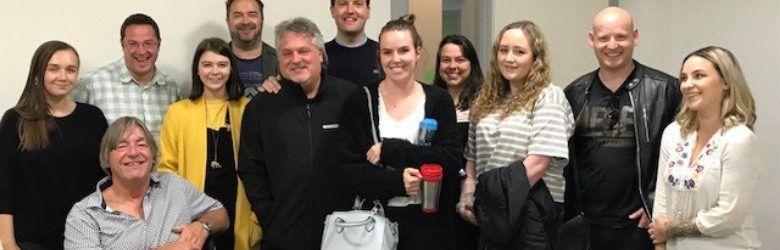
    This post has been written by Chris Cammis, Disabled Living’s Disability Awareness Trainer. He talks about why he had a lovely day out at MediaCityUK.

    I had been invited by Simon Lord of Continuum Entertainment to deliver Disability Awareness Training to a group of their Tour Guides. Simon is the General Manager of their Manchester office with responsibility for recruiting, organising and training staff to deliver the official Coronation Street Tours. I hadn’t realised beforehand what a big deal this was. Continuum organise official tours around many of the major UK tourist venues as well as Coronation Street – The York Chocolate Tour, Emmerdale Village Tour, Spinnaker Tower Portsmouth and Oxford Castle and Prison to name a few. 

    The tours run every Saturday and Sunday (filming takes place all through the week!), setting off every 15 minutes, with up to 50 people per group. That adds up to thousands of people every weekend which inevitably means the tour guides will encounter many people with all sorts of disabilities on a daily basis.

    Unfortunately, we weren’t located anywhere near Coronation Street’s set so I saw no famous faces running through their lines but we did start the session with a private showing of a new publicity DVD that Continuum had just completed, which was well received by all.

    I then organised a session covering ‘Appropriate Language and Appropriate Behaviour’ to use when dealing with disabled visitors, including all the standard issues around wheelchair etiquette, accommodating assistance dogs, working alongside BSL (British Sign Language) interpreters and so on. Delegates were given the opportunity to ask questions relating to their experiences of tour participants who might be on the autistic spectrum, exhibit over-familiarity with the guide, and show no apparent sign of interaction and so on.

    There was a fascinating mix of real-life experiences to add to my own stock of issues and anecdotes. This all led to an absorbing session enjoyed by all. It’s always exciting to deal with a group who can cope with my material and are then prompted to ask questions of their own – sometimes unexpected.

    Hopefully this event will become a regular occurrence as new guides are recruited and will also lead to similar work around the UK at other Continuum tourist venues.

    It is so important for any business or location to have a welcoming environment for those with disabilities or limited mobility. More information on some great initiatives to make your business more accessible. including disability awareness training, can be found here: https://www.cibeslift.com/gb/news/great-initiatives-to-make-your-business-more-accessible/

Disabled Living