Tag: Accessibility

  • Disabled Motoring UK Baywatch 2022 results

    Disabled Motoring UK Baywatch 2022 results

    In this guest blog post, Disabled Motoring UK have released the results of their Baywatch 2022 campaign looking at tackling disabled parking abuse. Disabled Living is proud to support Disabled Motoring UK’s campaign.

    In August we asked the public to help us with our annual Baywatch campaign. We asked disabled motorists to complete a survey about their parking experiences over the past 12 months. The results have now been calculated.

    DMUK would like to thank everybody who participated in our Baywatch 2022 campaign. The level of response completely surpassed all records with 1028 people responding to the survey. It’s the first time in the campaign’s history that we’ve reached over 1000 responses. This level of response shows that disabled parking abuse continues to be a primary concern of disabled motorists. We would also like to thank all our supporting organisations for promoting the campaign and encouraging their supporters to take part.

    FINDINGS

    Local Authorities

    This year’s survey again confirmed that most disabled motorists, 78.12% of respondents, think that local authorities are not doing enough to tackle disabled parking abuse. This figure is significantly lower than last year (95.9%) which does suggest that some local authorities are doing more to tackle this issue.

    The survey also revealed that 67.16% of the respondents had never had their Blue Badge inspected by an official. This was lower than last year’s figure of 85.3% which again suggests more is being done to police the scheme. Respondents were still adamant that they wanted to see more inspections with 94% of respondents answering ‘yes’, they’d like to see more inspections.

    It is clear from these findings that local authorities still need to do more to enforce the Blue Badge scheme to ensure that disabled parking bays are available for genuine Blue Badge holders. However, it does seem that we are starting to see improvements for some. We hope that this positive trend continues.

    Supermarkets

    When it comes to finding suitable disabled parking bays at supermarkets, 39.2% of those surveyed said that it was ‘easy’ and 11.6% said it was ‘very easy’. However, 81.9% of respondents also stated that they ‘very often’ or ‘often’ see disabled parking bays being abused. This would suggest that there is still more work to be done in the correct management and enforcement of those bays.  These figures have remained consistent from last year’s survey so we have not seen much change at the supermarkets.

    We asked participants when they had reported abuse to supermarket staff did they take action and 68.7% said no. Supermarkets are not doing enough to enforce their disabled parking bays and support their disabled customers. The disabled bays still aren’t being managed properly and enforcement is definitely lacking.

    Other Findings

    Similarly, to last year, the survey also asked people to provide details of the parking experiences on everyday journeys (not just to the supermarket). This figure has fallen since last year and in response to these types of questions 56% of the respondents stated that it was either difficult or very difficult to find suitable disabled parking. In 2021 this figure was 79.5%. However, in this section of the survey, we also asked the respondents how often they saw disabled bays being abused on their everyday journeys. In response to this question a concerning 87% of respondents said that they either saw this occurring ‘often’ or ‘very often’. This figure, consistent with last year, is alarming and shows that the wider parking industry is not doing enough to enforce disabled parking provisions.

    Prosecution and Enforcement

    New to this year’s survey we asked, ‘Do you think that abusers of the Blue Badge scheme should face prosecution’ and overwhelmingly 93.2% said yes. We also asked participants if they had any ideas on how to better enforce the scheme. There were several respondents that made similar suggestions of more inspections, higher fines, and putting the picture on the front of the badge. Some people wanted to segregate disabled parking so that wheelchair users had their own bays and asked for more thought to go into disabled bay placement. For example, not to always be right in front of cash points. There were several suggestions that want to utilise technology and involve cameras and scanners in enforcement. Some participants had also clearly read our article on East Sussex County Council and their ‘Blue Badge awareness course’ and wanted to see this in other areas of the country.

    Electric Vehicles

    With the ban on the sale of new diesel and petrol cars in 2030 we are seeing more electric vehicles (EVs) on our roads. We know that much of the current public charging infrastructure is not accessible. We asked participants if they had seen any accessible public charge points in their local area and 58% said no. This is extremely disappointing especially with the EV switchover rapidly approaching

    DMUK finds the overall findings of our Baywatch Campaign very troubling. Being able to park at one’s desired destination is something that is crucial to the independence of disabled people. We are encouraged to see some improvement since the 2021 campaign, but progress is not happening quickly enough. Unfortunately, the survey shows that disabled motorists are still being disadvantaged. The poor state of the nation’s disabled parking provision and enforcement continues to prevent disabled people from living independent lives. It is vital that the parking industry now understands the importance of providing adequate disabled parking and making sure it is properly enforced. It is also important that disabled motorists aren’t left out when it comes to EV.

    DMUK Communications & Campaigns Director, Heidi Turner said: “We are thrilled to have received so much support for this year’s campaign. Getting over 1000 responses is a first for the charity and it also shows how important parking is to disabled people. We are pleased to see some improvements for disabled people when parking on their everyday journeys, but supermarkets continue to disappoint. The charity will continue to seek ways of better enforcing and managing the Blue Badge scheme so it is protected for genuine Blue Badge holders.”

  • Baywatch month 2022: Disabled Motoring UK’s annual survey

    Baywatch month 2022: Disabled Motoring UK’s annual survey

    In this guest blog, Disabled Motoring UK is encouraging people with disabilities to fill in their annual Baywatch survey to help improve parking industry standards and stamp out disabled parking abuse. Disabled Living is proud to support Disabled Motoring UK’s campaign.

    Baywatch is here and this month Disabled Motoring UK will be asking you to fill in the Baywatch survey. Every year DMUK runs its Baywatch Campaign which researches opinions about disabled parking abuse. It’s a simple survey which doesn’t take long to fill in and provides the charity with really useful data to take to the parking industry to encourage them to do more to support disabled customers and manage their disabled parking provisions correctly. Last year DMUK received over 850 responses, breaking all records, which goes to show that many of you are still experiencing massive problems when it comes to finding suitable and properly enforced disabled parking.

    Still the most common problem for many disabled motorists is not being able to park at their desired destination. The major complaint is that the disabled bays are all occupied with cars not displaying a Blue Badge and most of the questions in the survey reflect this. However, as time moves on DMUK has noticed new parking worries around electric vehicles and charging infrastructure. So this year we have included a question on EV charging bays. (DMUK also has its dedicated EV survey still running and if you have not already done so please take the time to fill it in. More info available here.)

    When answering the questions please think about your parking experiences over the last 12 months. Have you been able to park easily at the supermarket and elsewhere? Do you think local authorities are doing enough to tackle Blue Badge misuse? These are important questions and if we have some statistical evidence it makes our case stronger when trying to get the parking industry take the management of disabled parking bays seriously.

    We will be running the Baywatch survey for the month of August which you can complete without leaving your home. The online survey which can be accessed through our website www.disabledmotoring.org/baywatch/baywatch-2022

    When the survey closes the results are calculated and published. The Baywatch campaign also aims to change public attitudes by bringing to the attention of disabled bay abusers the impact that their actions can have. We will publish the results later in the year.

    Heidi Turner, Campaigns and Communications Director at Disabled Motoring UK said: “Disabled bay abuse is still one of the main concerns expressed to us by our members and the public. Our annual Baywatch campaign is an opportunity to focus the parking industry on the problems faced by disabled motorists when parking and sends the message that these bays need to be enforced and managed correctly. We are noticing more opinions coming forward on how disabled motorists think the scheme should be enforced and we are also keen to hear these views.”

    Take action now

    As well as filling in the Baywatch survey you could also help by writing to your MP. We have a new template letter on our website available for members and public to download. This letter can be sent to your MP to ask them what is being done in your area to tackle Blue Badge parking abuse. To download the letter please visit https://www.disabledmotoring.org/campaigns/blue-badge Further information on how to contact your MP can be found by visiting https://www.parliament.uk/get-involved/contact-an-mp-or-lord/contact-your-mp/

    DMUK would like to thank all those who participate in this year’s Baywatch Campaign.

    Supporting organisations

    We are thrilled to have the support of so many supporting organisations.

    supporting charities - AccessAble, Phab, Independent living, Honest John, Disabled Living, heycar, Posability magazine, BPA

    Disabled Motoring UK 

    Disabled Motoring UK is the national charity which supports disabled drivers, passengers and Blue Badge holders. We work with government and businesses to improve parking, refuelling and access provision for disabled people, so that they can access the goods and services that they need. Disabled Motoring UK is not just an organisation for disabled motorists; we also campaign for and support scooter and wheelchair users, families and carers.

    The charity is a membership organisation and the charity relies on membership subscriptions to continue its work. Full members receive a monthly magazine, access to our information service and discounts on variety of goods and services.

    For more information please contact:

    Heidi Turner

    Campaigns and Communications Director

    heidi@disabledmotoring.org

    01508 489449

  • Baywatch 2021 campaign: Tackling disabled parking abuse

    Baywatch 2021 campaign: Tackling disabled parking abuse

    In this guest blog by Disabled Motoring UK, we learn about their excellent campaign to stop the misuse and abuse of disabled parking spaces, Baywatch 2021. Baywatch is supported by Baroness Grey-Thompson. 

    The issue of disabled bay enforcement

    A common problem for many disabled motorists is not being able to park at their desired destination. The major complaint is that the disabled bays are all occupied with cars not displaying a Blue Badge. Last year Disabled Motoring UK (DMUK) changed the format of the parking survey so that participants could fill it in at home. This allowed the charity to also expand the scope of the survey to gauge your opinions of other aspects of parking and the Blue Badge Scheme.

    The results are calculated and published when the survey closes. The charity presents this data to the parking industry and encourages it to take the parking problems of disabled motorists more seriously and manage their parking provision correctly. The Baywatch campaign also aims to change public attitudes by highlighting the impact of disabled bay abuse.

    Baywatch 2021 – improving disabled parking provision and enforcement

    The only way to keep the pressure on the parking industry is to run the DMUK Baywatch Campaign annually and this year it takes place in August and you’ll  be able to participate online by visiting the DMUK website.

    We hope to make this year bigger and better than ever before. We have a number of organisations supporting Baywatch 2021.

    The campaign has support from Baroness Tanni Grey-Thompson. She commented: “It’s so sad that Disabled Motoring UK has to run its Baywatch Campaign. Disabled bay enforcement should be an imperative, especially for the major supermarkets that can afford to invest in policing their car parks. I see disabled parking abuse regularly, There is a real lack of understanding about how essential these bays are to disabled people and I applaud DMUK’s Baywatch Campaign as it plays a vital role in highlighting the issue of disabled parking abuse at supermarkets.”

    Graham Footer, Chief Executive, at DMUK, said: “Baywatch is one of the charity’s longest running campaigns and is really important to draw attention to the parking problems that disabled people face when just trying to go about their daily lives. It is now an annual campaign for the charity. We hope this will allow us to gather momentum and keep the pressure on the supermarkets and other car park owners to do more to support their disabled customers. It’s fantastic that the campaign has support from Baroness Grey-Thompson again this year. This campaign relies on public participation and we hope her support will encourage others to get involved.”

    Supporting organisations

    These organisations support DMUK/s Baywatch campaign:

    We’d like to get as many organisations involved as possible to spread awareness of the campaign. There is still time to get involved and we welcome all support with this vital campaign.

  • Baywatch Campaign Changing Format for 2020

    Baywatch Campaign Changing Format for 2020

    Disabled Living are proud to support Disabled Motoring UK’s (DMUK) latest Baywatch campaign which looks into levels of disabled parking abuse at supermarkets, Baywatch, is changing format for 2020. DMUK tell us all about the campaign coming up in August 2020 and how you can support. 

    A common problem for many disabled motorists is not being able to park at their desired destination, especially at their local supermarket. The major complaint is that the disabled bays are all occupied with cars not displaying a Blue Badge.

    Disabled Motoring UK’s Baywatch campaign seeks to address this. This campaign researches the level of disabled parking abuse at supermarkets, by asking disabled motorists to survey their local supermarket car park. Specifically, they count how many disabled bays are provided and how many cars that are parked in them without displaying a Blue Badge.

    We launched this year’s campaign in March 2020 with a great response from supporting organisations and the campaign’s sponsor, the British Parking Association. DMUK is so pleased with the positive response it gets from its members, the public and organisations. Last year was our best campaign yet with record numbers of participants. However, this was before the world was swamped by the current Coronavirus pandemic. Even though many areas of the UK are seeing a decrease in infections and deaths from Coronavirus, and the government are easing lockdown restrictions, DMUK has decided that it is not appropriate to ask individuals to physically go to a supermarket car park and count cars not displaying a Blue Badge which are parked in disabled bays. This could put participants in a position where they find it harder to social distance and we would never ask people to put themselves at an increased risk of catching the virus.

    Baywatch disabled parking graphic

    Instead we will be running a survey for the month of August which participants can complete without leaving their home. DMUK will ask individuals to think back over the last 12 months to consider their general parking experience and ask them to answer some questions about this experience at supermarkets and on their everyday journeys. We will use this data to tackle the supermarkets and other parking providers over their disabled parking policies. As a thank you for taking part there will also be an opportunity for one participant to win a £25 M&S voucher.

    The survey will be printed in the August issue of Disabled Motoring and there will be an online version going live in August which can be accessed through our website https://www.disabledmotoring.org/baywatch-2020

    We hope that in August 2021 to have this pandemic long behind us and run our usual Baywatch Campaign.

    The campaign has support from Baroness Tanni Grey-Thompson, she commented: “It’s so sad that Disabled Motoring UK has to run its Baywatch Campaign. Disabled bay enforcement should be mandatory, especially for the big supermarkets that can afford to invest in policing their car parks. I see disabled parking abuse every day, it’s never a surprise to me, including at my local supermarket. There is a real lack of understanding about how essential these bays are to disabled people and I applaud DMUK’s Baywatch Campaign as it plays a vital role in highlighting the issue of disabled parking abuse at supermarkets.”

    Heidi Turner, Communications and Campaigns Director at DMUK, said: “Baywatch is one of the charity’s longest running campaigns and is really important to draw attention to the parking problems that disabled people face when just trying to do their everyday grocery shopping. The charity has decided to change the format of Baywatch this year in order to keep our supporters safe. Nevertheless the new survey will provide us with some really useful data to keep the pressure on the supermarkets to do more to manage their disabled parking bays properly. Disabled motorists face parking problems in all aspects of their life and the new survey will also encompass some more general parking questions which will expand the scope of the DMUK Baywatch Campaign.”

    DMUK Baywatch Appeal

    In October 2019 DMUK launched its Baywatch Appeal as a way of raising additional funds to support the charity’s campaigning efforts. Since its launch the charity has raised an extra £5740.58 in added donations. Any extra money the charity can raise to support campaigning is so helpful. We understand that many people are under financial pressures at this time and ideally the best thing that individuals can do is to fill in the Baywatch survey in August, but if you can help with a donation too that is very much appreciated. Donations can be made through our website www.disabledmotoring.org or by calling 01508 489449.

    DMUK Baywatch Sponsor

    DMUK has worked for many years with the British Parking Association (BPA) to improve parking for disabled motorists. The BPA sponsored the campaign in 2019 and is once again sponsoring it for 2020.

    Kelvin Reynolds, British Parking Association, Director of Corporate and Public Affairs, said: “We wholeheartedly support DMUK’s annual Baywatch campaign. With one in every five disabled parking bays being misused at supermarkets, this campaign is a great way to raise awareness of the importance of only using disabled bays if you are a Blue Badge holder. We encourage as many people as possible to participate in the survey.”

    For more information please contact:

    Heidi Turner

    Communications & Campaigns Director

    Heidi@disabledmotoring.org

    01508 489449

  • No Place like an Accessible Home!

    No Place like an Accessible Home!

    Many of us fondly remember the image of a young farm girl, clicking the heels of her sparkling, ruby red slippers and longingly chanting the words, “There’s no place like home, there’s no place like home…” Her tale isn’t a far cry away from most disabled people’s dream of wanting their own forever home.

    I believe, living independently is a huge factor to leading a happy life. I have a rare form of Muscular Dystrophy (a progressive muscle wasting disease) meaning I need my powered wheelchair to be able to move around, so having a home that has enough space is extremely important. I’m lucky enough to have my own accessible home however there are many disabled people that are still living in unsuitable conditions.

    According to the English Housing Survey, only 7% of homes in England have even the most basic access features. Furthermore, new figures published in June by Housing Association, Habinteg, reveal that outside of London, under a quarter of new homes due to be built by 2030 are planned to be accessible to a category 2 standard and only 1% are set to be suitable for wheelchair users. With there being 1.8 million people in the UK with an accessible housing requirement and 300,000 with an unmet need, this highlighted the crisis we’re in. The housing crisis has been described as ‘hidden’. Why? Is it really hidden? Shows like DIY SOS have been clearly illustrating how inaccessible people’s properties are for years. It’s clear today more than ever, that there is an accessible homes crisis.

    Having the appropriate housing can dramatically improve disabled people’s ability to live independently.

    Those whose homes do meet their accessibility needs have reported improved health and wellbeing. However, an accessible home is not only beneficial to the people living in it. Just having the right adaptations to the home can create significant savings to the public purse, reducing social care costs for local authorities and health costs for the NHS as the number of accidents at home will significantly reduce.

    So, why is my accessible home convenient for me?

    Firstly, all the doors are wide enough to ride my wheelchair through with ample space. I don’t have to worry about not being able to go into certain rooms or possibly damaging the door frame with my wheelchair. Secondly, the kitchen counters can be adjusted to the appropriate height for me to reach. In my previous property, the counters were too high so it was impossible for me to cook meals or even make a cup of tea. I also have a wet room which allows me to move around freely and not worry about how much water I spill. Some of these features may not sound like a big deal, but for a wheelchair user, these features are the difference between an independent and restricted life.

    Depressingly, it did take over 3 years for me to be in this position. I was on the social housing waiting list for years before I received the keys to my home. I didn’t meet the criteria for some accessible bungalows (I had to be 65 or over) but thankfully I was accepted by Habinteg and left my previous cramped flat. Living in my accessible bungalow for the last 7 years has drastically improved my wellbeing and mental health. It’s provided me with a new lease on life and I can do tasks I would’ve only dreamed of at my old home.

    Being a disabled person means you’ll constantly face mental and physical challenges. The housing crisis is one that should be taken off the table as soon as possible. It’s not a luxury to live in a suitable home and I believe everyone, old and young, disabled and non-disabled, deserves to have somewhere to live where they can feel at home.

    This post has been written by Kerry Thompson, tenant of Habinteg Housing Association. If you would like to feature on Disabled Living’s blog to write about topics such as accessible housing, please get in touch with us via email: info@disabledliving.co.uk.

  • One in Five Supermarket Disabled Parking Bays Being Abused

    One in Five Supermarket Disabled Parking Bays Being Abused

    Supported by Baroness Grey-Thompson.

    In June Disabled Motoring UK (DMUK) asked the public to help with their Baywatch Campaign by surveying their local supermarket car park for disabled parking abuse. The results have now been calculated.

    DMUK would like to thank everybody who participated in this year’s Baywatch Campaign. This year we had the biggest number of responses that we’ve ever seen which goes to show how important the problem of disabled parking abuse is at supermarkets. Our total number of responses was 723. We’d also like to thank all of our supporting organisations that promoted the campaign and encouraged their members/supporters to take part.

    General Findings

    The overall level of disabled parking abuse across all supermarkets was 16%. In 2017, when we last carried out the Baywatch Campaign it was 18.5% and therefore this year’s result do show some improvement.

    Across all of the supermarkets surveyed the average number of disabled bays provided (to the nearest whole bay) is 15 bays with 3 of them being abused, meaning that roughly 1 in 5 disabled bays at supermarkets are abused by somebody parking in a disabled bay without displaying a Blue Badge.

    Looking generally at enforcement signage, we can see that 60% of the supermarkets surveyed had visible signage or other evidence that enforcement took place. When you isolate these supermarkets levels of abuse remained at 16%. However, the 40% that had no visible indication of enforcement taking place the percentage of abuse increased dramatically to 36%. This shows that using enforcement does decrease the levels of disabled parking abuse.

    Supermarket Specifics

    We had a wide spread of different supermarkets included in this year’s Baywatch survey responses, including; Aldi, ASDA, Co-Op, Lidl, M&S, Morrisons, Sainsbury’s, Tesco and Waitrose. Even though this year we had an increase in responses for Aldi and Lidl which reflects the general market share growth these chains have experienced we felt it was unfair to directly compare these stores with the big four – Tesco, Sainsbury’s, Morrison’s and ASDA because we had many more surveys returned for these chains.

    Morrisons were this year’s winner with just 10% of disabled parking abuse in their car parks. We’d like to congratulate Morrisons for having the least amount of disabled parking abuse.

    League Table

    Supermarket 2019 level of abuse 2017 level of abuse
    Morrisons 10% 11%
    Sainsbury’s 15% 8%
    ASDA 22% 17%
    Tesco 24% 23%

    All of the supermarkets that were surveyed have been contacted with the Baywatch results. We’ve encouraged them to start a dialogue with the charity so that we can help them improve their parking facilities for disabled motorists.

    Enforcement

    Similarly to the statistics from the 2017 campaign we can once again show that enforcement works. Where we see no visible signs of enforcement taking place the levels of abuse dramatically increase.

    The table clearly highlights the effect that enforcement has on levels of abuse. Across all the supermarket chains surveyed there were car parks which had no signs of enforcement. We call on all supermarkets to rectify this and to use enforcement across all of their stores.

    Blue Badge Extension

    On the 30th of August the criteria for the Blue Badge will change in England and more people with hidden disabilities will be eligible for a Blue Badge. DMUK predicts that this change will see a dramatic increase in Blue Badge holders meaning that disabled parking will be more pressured. The Blue Badge scheme is largely adopted by the private parking industry so the effects of this change will be felt across the entire parking sector, including parking at supermarkets.

    Supermarkets can do three things to help their disabled customers, the first is to properly enforce their disabled bays so that only genuine Blue badge holders park there. We can see from the results of the Baywatch campaign that if the supermarkets eradicate this problem they could make available up to 20% more bays for their genuine disabled customers without having to do any structural changes to their car parks.

    The second thing they can do is monitor their disabled parking provision closely to understand whether or not they actually provide enough disabled bays to meet the demand of their customer base. The third is to adopt the Disabled Parking Accreditation in their car parks. This would provide consumer confidence that their car park is accessible and properly enforced, and show a real commitment to the independence of their local disabled community.

    Baywatch Continued

    We have contacted the supermarkets surveyed and will encourage them to do more to enforce their disabled parking bays and take up the Disabled Parking Accreditation if appropriate. Baywatch will return in 2021 and we hope to see a further decrease in the levels of disabled parking abuse in supermarkets.

    In the meantime the most effective way of creating change at the supermarkets is choose wisely where you spend your money. The spending power of the disabled community is huge and according to figures obtained by ‘The Purple Pound’, supermarkets’ lose £501million every month because they aren’t accessible. If you experience problems parking at your local supermarket, you could choose to spend your money elsewhere. If you do decide to make a change because disabled parking is not enforced do write to the Chief Executive of the supermarket chain and explain why you will no longer be shopping at their store. If enough people do this it can create change.

    Heidi Turner, Communications and Campaigns Director at DMUK, said: “DMUK is ecstatic with the level of support it has received for this year’s Baywatch campaign. The statistics show that one in five disabled bays is abused. Disabled parking is under immense pressure to meet the demand for it and if supermarkets enforced their disabled bays properly they can increase the volume of available disabled parking by 20%. It is time that the supermarkets take this issue seriously and support their disabled customers”

    Baywatch Appeal

    To help DMUK to continue campaigning on the issue of disabled parking abuse we have launched the Baywatch Appeal. This is a fundraising appeal which will help the charity raise vital funds to keep advocating the need for proper management of disabled parking bays. The charity encourages all supporters of the Baywatch campaign to donate if they are able. Please visit https://www.disabledmotoring.org/donate

    DMUK Baywatch Sponsor

    DMUK has worked for many years with the British Parking Association (BPA) to improve parking for disabled motorists. This year the BPA has further shown their commitment to the work of DMUK by sponsoring DMUK Baywatch 2019.

    Kelvin Reynolds, BPA Director of Corporate and Public Affairs says, “We are encouraged to see some improvement in this year’s survey but almost 1 in 5 disabled bays at supermarkets continue to be abused. Parking spaces reserved for Blue Badge holders must be managed properly to ensure they are not obstructed and used only by people displaying a valid disabled Blue Badge and we encourage all those who manage parking to properly enforce their disabled bays so that only genuine Blue badge holders can park there.”

    Supporting organisations

    DMUK Baywatch is also supported by:

    • AccessAble
    • Whizz-Kidz
    • Phab
    • Independent Living
    • Honest John
    • Disabled Living

    *Data Source wearepurple.org.uk The Purple Pound

    This post was written by Disabled Motoring UK. For more information please contact: Heidi Turner, Communications & Campaigns Director at: Heidi@disabledmotoring.org or call: 01508 489449.

  • Get Out This Summer – Accessible Parks and Attractions in the UK

    Get Out This Summer – Accessible Parks and Attractions in the UK

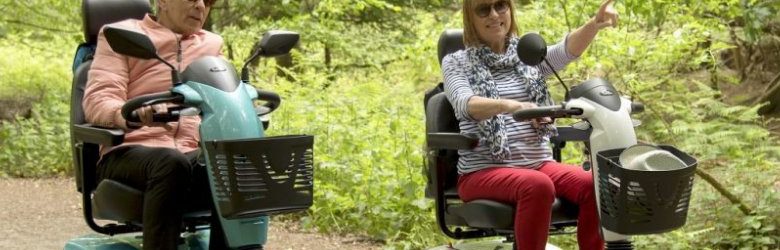
    Image courtesy of CareCo – their newest class 3 scooters, the Corvus Rapide and Vega RS8. CareCo share some accessible parks and attractions to visit in the UK.

    We are lucky to have so many accessible parks and attractions in the UK, and as by law all public places must be accessible, a comprehensive guide is impossible. But here we share our favourite places that you may not have explored yet – some quirky, some off the beaten track, and some simply spectacular.

    So get out for an adventure and explore these tourist attractions without any concern that you’ll be left in the sidelines or miss the main event due to access problems. Here we share some great gardens, stately homes and also where to experience the great outdoors.

    Botanic Gardens, Sheffield

    Robert Marnock designed Sheffield’s Botanic Gardens in the Gardenesque style, and they opened in 1836. The 19 acre site has plants from all over the world, with Mediterranean, Asian, American prairie-style, woodland and rock-and-water plantings in different garden areas.

    The paths through the gardens are well surfaced and mostly easy to navigate, although there are some steep sections and some places with steps. A map of the garden is available to allow you to plan your visit.

    Knebworth House and Gardens

    Knebworth is probably most famous for its annual music festival that has seen the likes of The Rolling Stones, Pink Floyd, Led Zeppelin, Queen, Oasis, and Robbie Williams. But for rest of the year it is a stately home of the Lytton family. Only the ground floor is accessible to wheelchairs (mobility scooters are not allowed though) and wheelchair accessible toilets can be found in the gift shop. By arrangement you may park right in front of the house too.

    Walking through the Gardens at Knebworth is like entering a romantic dream set in bygone times. The walled garden and rose garden are always a popular choice. There is also a maze and a dinosaur trail, which are great fun if you visit with children. The paths are mostly gravel, but also mostly flat, although there are some areas with steps. As well as the annual music festival there are many events throughout the year.

    Queen Elizabeth Olympic Park, London

    The London 2012 Games may now seem like a lifetime ago, but the legacy certainly lives on. East London now has the Queen Elizabeth Olympic Park with beautiful parklands and waterways to explore. It has good quality paths throughout and benches every 50m. You can also hire mobility scooters and manual wheelchairs. This is a great place to head to if you live in London and are new to exploring places in a wheelchair or on a mobility scooter.

    The New Forest

    The New Forest has several accessible attractions to visit. First up is Beaulieu, which is mostly accessible to all visitors, although some parts of listed buildings are not accessible as changes have not been allowed. Beaulieu offers free manual wheelchairs and mobility scooters, on a first come, first served basis. The lower level of Palace House is accessible to wheelchairs, and although there are 2 steps down to the dining area and kitchen shop, staff can take wheelchair users around to a private entrance to gain access. The National Motor Museum, Abbey, and World of Top Gear are accessible.

    If you wish to explore a little of the natural New Forest, head to the Blackwater Arboretum trail, which is a 0.9km circular walk. It runs from the car park and through the arboretum where you can see trees from all over the world.

    The Lake District

    The combination of mountains and lakes may not be an obvious choice, but the Lake District National Park has gone to great efforts to make the area more accessible. It offers “42 Miles Without Stiles” where you’ll find well-kept paths with wide gates for easier wheelchair and mobility scooter access. They have 48 routes planned out with start points and directions provided, plus an interactive map. They also provide advice on gradients on each route so you know what to expect, and what areas to avoid. You can purchase all the routes from information centres too.

    Stonehenge

    This may be an obvious one, but it is amazing how many wheelchair users do not realise that Britain’s most famous ancient monument is now accessible. It has ramped access and a paved path running alongside the ruins, along with many disabled parking bays and accessible toilets. They even have an emergency disabled toilet closer to the stones.

    So, now you have no excuse for not getting out and exploring some of the great outdoors and history that the UK has to offer. If you are heading to a national park on a mobility scooter or powerchair, it is wise to ensure that your battery is fully charged in advance, and to carry a backup battery too, just in case. Climbing hills will burn through the battery faster than usual, so always be prepared.

    This post has been written by Jon Wade on behalf of CareCo. Visit CareCo’s page on the Disabled Living Supplier Directory.

  • Accessibility at Longleat Safari Park and Cheddar Gorge

    Accessibility at Longleat Safari Park and Cheddar Gorge

    This post has been written by Chris Cammiss, Disability Awareness Trainer at Disabled Living. He talks about how accessible Longleat Safari Park and Cheddar Gorge are as a wheelchair user.

    So, who’s up for some extreme tourism? My latest escapade was to spend a couple of days looking at Longleat and sister attraction Cheddar GorgeSome simple cave exploration in the Gorge and dancing with lions at Longleat – no problem at all for a wheelchair user!

    I have to admit I was intrigued. How romantic, how interesting, but how much would I see? How would I manage in the caves and how would I get around the Safari Park?

    Well, I found the whole experience fascinating and much more accessible than you might have thought. With the help of some very well-motivated staff I had a great time. Both sites were an absolute pleasure to visit. Yes, I saw plenty of features that could be improved but the sites are well worth a visit now.

    cheddar-gorge-natural-valley

    First day was Cheddar Gorge – an attraction consisting of several caves developed in Victorian times as a tourist venue. With introductory film shows, a modern museum, caves, walks, viewpoints and shops, there’s a full family day out here.

    After purchasing tickets see the introductory film. This sets the scene beautifully with colourful history, wildlife, flora, what to visit and what can be managed. Then try the caves!

    The main cave – Gough’s Cave – after the man who made a public attraction out of it, is unfortunately inaccessible to many wheelchair users and mobility impaired visitors because of four large, sloping steps, but is very rewarding indeed. If you can be carried or otherwise helped down it is well worth the effort.

    (Personally, as I was on my own at a very quiet time so a staff member bumped me down but this is definitely not company policy!)

    A long winding tunnel then takes you into the rock – Cheddar Man, unique rock formations, dramatic twists and turns, audio description points – very special indeed.

    The ground surface is excellent – the slightly ridged concrete path carries you along with no trips, bumps or slips.

    Try the Museum of Prehistory. It’s small enough not to be daunting but large enough to house a huge array of exhibits all displayed with imagination. This is a very accessible venue. I was lucky enough to be accompanied by an enthusiastic school party who were greatly entertained by the Stone Age re-enactor who dressed them in animal skins, told them about skinning a rabbit and finally showed them how to start a fire with a few sticks – hugely impressive!

    My favourite destination was Cox’s Cave. This is a network of several inter-connected chambers. Complex and challenging for many with mobility or visual impairments, it rewards those who can manage handsomely. A brilliant multi media film show depicting the development of Early Man is displayed on the raw walls of each chamber, carrying you through his history, changing environment and the animals he hunted. Sound and lights enhance this extremely entertaining production. Different episodes lead you through the cave complex. In my wheelchair I was able to see the first parts and the last parts with the help and advice of the brilliant staff. Nothing was too much trouble.

    The next day I visited nearby Longleat

    deer at longleat safari park
    Photo by Mark Woodbury – https://www.flickr.com/photos/markwoodbury/38962211774

    Driving through the grounds for the first time my first impression was how fabulous the actual house appears. After parking I planned my day to include all the major attractions. There’s so much here for everyone to enjoy and again the staff were incredible. It’s also obvious thought has already gone into improving access.

    The House itself was a delight. As often happens, the dedicated disabled entrance takes you through several rooms the public may never see before joining the beginning of the public flow along the official tourist route through the House. Volunteer guides in every room – all dressed as 20’s flappers on my visit – will inform as much as you want or transport you into their world if you prefer!

    Outside there are formal grounds, endless playgrounds, many animal enclosures, all generally accessible. There’s a fully accessible miniature train to carry you around the grounds while you catch your breath, even a fully accessible cruise around the huge lake.

    There are many shops and eating places – all very accessible, and most of the rides are accessible as well.

    The only downside in my opinion was the Adventure Castle play area. This was a stunning looking space, castle, drawbridge, aerial rope walks but all completely inaccessible to anyone with a major mobility issue.

    If you have your own transport it all works brilliantly – you just drive around at your own pace, stopping at the fully accessible African Village as you go. If not, you can catch the fully accessible Safari Bus and sit back in comfort. It’s all there around you – elephants, giraffes, lions, tigers, rhinos and flamingos.

    Throw in the firework display and light show after dark – what’s not to like? It was a challenging trip but well worth the effort.

  • What Are the Best Accessible Christmas Activities in the UK?

    What Are the Best Accessible Christmas Activities in the UK?

    This post has been written by George Finney on behalf of CareCo who feature in our Supplier Directory.

    Here’s our 2018 guide to the best accessible festive activities on offer:

    We know Christmas activities can be challenging if you live with limited mobility or a disability. Busy high streets and Christmas markets can be stressful if they aren’t built with accessibility in mind. That’s why we’ve put together a list of the top three accessible Christmas activities this year.

    If you are limited by disability, illness or an injury, there is definitely something in our list for you. There are so many incredible festive activities this year. Here are three of the best accessible activities for festive fun with family and friends.

    Hyde-Park-Winter-Wonderland

    Image Source

    Accessible Christmas Markets

    Christmas markets are a highlight on the UK Christmas calendar. Full of tasty treats and handmade presents, these cosy markets will really give you that Christmas feeling. Here are three of best accessible Christmas markets in the UK. If you have any extra special requirements, you should always contact the market hosts for advice.

    Winter Wonderland – Hyde Park London

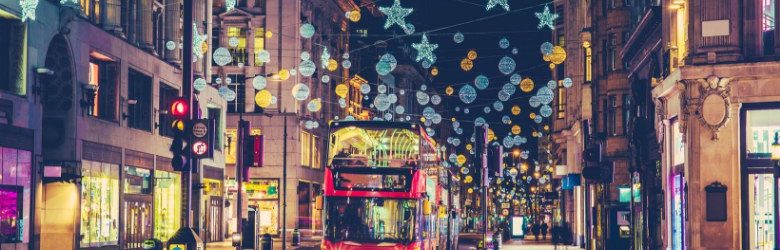
    Hyde Park is home to one of the nation’s favourite Christmas markets. Full of mouth-watering food and festive attractions, including that famous Ice bar, the Winter Wonderland has been built with plenty of accessible features in mind. Disabled access ramps, accessible toilets and allocated disabled car parking are available at Winter Wonderland. There is even a wheelchair accessible pod on the giant wheel!

    Frankfurt Christmas Market – Birmingham

    The food and craft market located in Birmingham is the largest authentic German Christmas market outside of Germany! With plenty of traditional German goods and a live music programme in Victoria Square, the Birmingham Christmas market is one of the best festive events to visit with friends and family. The fully accessible market includes a wheelchair and disability route, which completely avoids stairs and obstacles.

    Edinburgh Christmas Market

    Edinburgh’s Christmas Market is another top Christmas market for accessibility in the UK. With a vibrant festive atmosphere full of beautiful lights, it’s a great place to socialise with friends and family. With accessible parking, toilets and ramps to all entrances, you won’t struggle to manoeuvre around this market! There is even a wheelchair accessible Christmas tree maze.

    Christmas_Market_at_Dusk

    Image source

    Wheelchair Ice Skating

    This Christmas there are lots of ice rinks popping up around the UK, and lots of them are disability friendly! Many ice rinks welcome wheelchairs and cater for disability requirements. It is advised that you ring the venues beforehand to find out whether they can cater for your requirements and if there are specific times and dates. Here are three of the best accessible ice rinks this Christmas.

    Winter Wonderland – Cardiff

    The Winter Wonderland ice rink in Cardiff welcomes everyone on to the ice this Christmas. Wheelchair users must be accompanied by a companion wearing ice grips or ice skates, although skating is free for all companions. The Winter Wonderland is also running specific sessions for wheelchair users, visually impaired and autistic people. For more information, visit Cardiff’s Winter Wonderland.

    Natural History Museum Ice Rink – London

    The Natural History Museum in London is running a number of quiet sessions this Christmas, which are suitable for wheelchair users and people with disabilities. You can have a look around The National History Museum while you’re there!

    Before visiting the Natural History Museum or its famous ice rink, it is recommended to contact the venue. Just so you can be reassured the facilities are for suitable for your needs.

    The Royal Pavilion Ice Rink – Brighton

    With accessible sessions 10.00am -11.00am every day from November 3rd 2018 until January 13th 2019 (expect Christmas Eve and New Year’s Day), wheelchair users can skate in the same session as family and friends. Accessible features at The Royal Pavilion Ice Rink include exit and entrance ramps and plenty of disabled toilets on site.

    ice skating outdoors

    Image Source

    Shopping Centres

    Shopping centres are an accessible way to get your shopping done and have a bit of festive fun! With plenty of accessible features including lifts, ramps and first aid facilities, shopping centres are a safe and warm place to have fun this Christmas.

    There are plenty of indoor shopping centres dotted around the UK, so chances are there is a good one near you!

    Once you’ve finished your Christmas shopping, there’s so many more activities you can get involved in at UK shopping centres this Christmas. Why not visit a Christmas arts and crafts shop? You’ll get the opportunity to new meet people and learn some new skills.

    If you’re in the mood for a movie, why not visit one of the many cinemas and settle down to watch a cosy film? Nothing will get you in the festive spirit like this year’s latest Christmas release.

    And let’s not forget almost every shopping centre in the UK has an accessible Santa’s grotto. Children of all ages are able pop in to pay Santa and his elves a visit and take away a small gift.

    Accessible Christmas events at UK shopping centres to look out for:

    Santa’s Snowflake Grotto: A World of Magical Snow, Westfield London, Shepherd’s Bush

    This magical Santa’s grotto takes you to a snow factory in the north pole, where you’ll make your own snowflake. And you’ll even explore Santa’s toy factory! Photo opportunities are available with Santa, right before you’re magically transported back to London.

    The venue recommends making Santa and his elves aware of any special requirements prior to attending. Pop an email to uk.ticketing@westfield.com and they’ll do their best to make your visit to Santa’s grotto as special as possible.

    Centre:MK’s Christmas Market , Milton Keynes

    Between the 16th of November and the 23rd of December 2018, you’ll discover a Christmas market inside Centre:MK. Festive food, drinks and gifts are all on offer, at this very accessible friendly location. Due to its location, there is lots of fun to be had both at the market and in the rest of the shopping centre.

    Musical Dome at the Trafford Centre, Manchester

    Every Friday from  6.00pm – 10.00pm, December 7th to December 28th, the Trafford centre will be hosting live music each evening, completely free of charge. You will find live acts including Craig Owen and many more performing in the music dome to get you in the festive spirit.

    Need More Accessible Ideas?

    If you didn’t like any of that, or you just don’t like crowded places, there are lots of accessible activities for everyone this Christmas. Why not cosy up and watch a Christmas film, visit friends and family, or even take part in some arts and crafts?

    Creative Christmas arts and crafts ideas:

    10 Sensory Christmas Activities for Children Who are Blind

    From sweet smelling festive ornaments to tasty treats, there are some lovely sensory activities for blind children in this post.

    50 amazing arts and Crafts Ideas for seniors

    Losing finger dexterity as you age can make it difficult to do arts and crafts. This post contains plenty of arts and crafts ideas for elderly and limited people.

    Christmas Water Balloon Ice Balls

    This is a really easy and fun activity for everyone. You can use water balloons to create delightful decorative ice balls.

    Thank you for reading our top three accessible Christmas activities. With so many festive activities and attractions to do and visit this Christmas, we hope this post helped you find the perfect event for you. Have a very merry Christmas from CareCo.

  • Top Tips for Accessible Interior Design

    Top Tips for Accessible Interior Design

    This post has been written by Tabby Farrar for Disabled Living.

    Great accessible interior design isn’t just about making a space look good. While we all want a beautiful home or work environment, we also need them to be functional – and realistically, we also need them to be comfortable, welcoming and inviting. Designers will have different goals for different interiors, but the outcome should always suit the user.

    When it comes to accessible interior design, it can sometimes be a challenge for designers to know which aspects of their ideas could be an issue. If you’ve never had need for accessible rooms and spaces yourself, where do you start in planning them for somebody else?

    If you’re keen to create beautiful places that are tailored to those with mobility needs – whether that means wheelchair-accessible or simply free of certain obstructions, here are a few things to consider from room to room.

    In the bathroom

    While it’s important to get every detail right, the bathroom is an area of the house where there’s no room for error. A poorly placed object or ill-thought-out design is all it takes to create a barrier between the user and everyday tasks like washing, brushing their teeth and using the toilet.

    accessible bathroom

    Starting with the very basics, a non-slip or low-slip floor is a must for accessible interior design. It’s easy to get distracted by beautiful bathroom tiles, and luxury choices like marble or slate in high budget designs, but a stylish take on non-slip flooring is crucial to ensure that the risk of falls is reduced. In the case of designing for wheelchair users, this also makes it easier to control a wheelchair once the flooring is wet.

    Depending on the user’s specific needs, consider whether a walk-in, sit-down shower is the best option, or whether the bathroom design should aim to create a peaceful ‘wet room’ environment.

    Wet rooms have picked up popularity in boutique hotels as well as in accessible design, and they’re an ideal way to maximise space. Creating an open, tranquil finish. When done well, wet rooms remove the need for moving parts, doors to open and close, and raised bath sides to tackle.

    In terms of colour and feel, any bathroom can be future-proofed with neutral tones and white sanitary ware. And as far as furnishings go, think carefully about the height you hang cupboards at to ensure they don’t obstruct movement, but can also be easily reached.

    If in doubt, consult Disabled Living for advice – an experienced OT will know exactly what works and what doesn’t for different individual needs.

    In the kitchen

    One of the main hindrances for wheelchair users in traditional kitchens is inability to comfortably access counter tops which house cupboards underneath. Simply the height of some counters can be an obstacle in itself, along with features like hanging pot and pan racks that are too high to access.

    woman in wheelchair reaching oven knob

    Rather than create a kitchen where a user must reach awkwardly over a cupboard to prepare food on the counter, plan spaces where a wheelchair can get up close with legroom underneath. Particularly with something like a hob, accessibility becomes a major safety issue if someone is forced to struggle while cooking with hot kitchenware.

    Regardless of whether a space needs to accommodate a wheelchair or not, roominess and ease of movement around the kitchen are key. Avoid narrow gaps between counters where possible, and arrange functional elements within easy reach of each other. For example, placing a sink and drying area directly next to an induction hob is a simple way to ensure people don’t need to traverse the room carrying kitchen implements once they’ve finished using them.

    Most importantly, and possibly most obviously, consider what the kitchen will actually be used for. If its user is a keen cook, they’ll need different appliances and a different layout than someone who struggles with cooking and mainly eats pre-prepared meals. It’s also worth bearing in mind how needs might change in the future – to avoid creating something that’s functional now, but which might not be fit for purpose before long.

    Around the home

    In either of these rooms, and in more casual living spaces like bedrooms and lounges, the devil is in the detail.

    artificial plants in plant pots

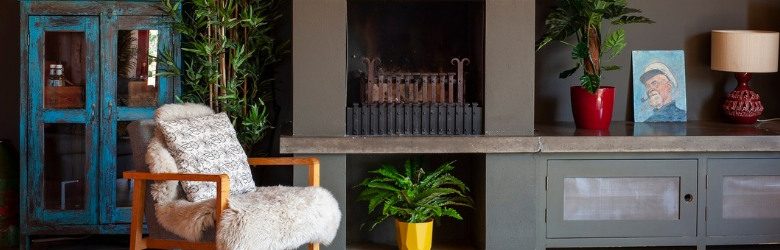
    Houseplants have become all the rage in recent years, and Instagram and Pinterest are bursting at the seams with monstera plants, succulents and other easy-care vegetation. While low-maintenance plants are suitable for many, in some instances your best bet is to add colour and ‘life’ to a room with no-maintenance artificial plants instead.

    Perfect for those who struggle to keep real plants watered, fed and re-potted – as well as those who’d simply rather be doing other things – modern artificial plants are becoming impossible to tell from the real thing. They’re also great for seasonal changes, as different types and colours of plant can be stored away and brought out to suit.

    Whether it’s adding a bright floral centerpiece in summer or rich, wintry greenery when the weather gets cold, faux plants require no maintenance by the user but can have the same mood-boosting properties as real ones.

    Creating accessible interior design can feel daunting if you’re unfamiliar with the territory, but there’s plenty of advice and guidance out there. Whether you’re working on a professional project or simply trying to update a family home or guest room, start by thinking about the user’s needs and work from there, rather than starting with appealing features and trying to fit someone’s needs around them.

Disabled Living