Year: 2018

  • Exploring the British Countryside from a Wheelchair’s Seat

    Exploring the British Countryside from a Wheelchair’s Seat

    This post has been written by Lucy Wyndham for Disabled Living.

    England has a countryside that is both beautiful and accessible. Though many worry about wheelchair accessibility, in recent years numerous innovations have made exploring the British countryside easier than ever. While many have adapted the natural landscape to be easier to navigate, others still have used ponies and other tricks to do the same without damaging the local landscape at all.

    From the north

    Exploring the natural environments of Britain can mean seeing some of the oldest and grandest historical sites, from the two-thousand-year-old Hadrian’s Wall to ancient and Danish architecture along the countryside of Northumberland. The rolling hills and fields of Britain are considered iconic, providing a natural experience that both old and young alike enjoy.

    It is no boast to say the natural environments draw many. Film crews for movies as famous as Harry Potter and Downtown Abbey have rented vast swathes of land to place their viewers in a location with an otherworldly atmosphere. In Northumberland, home to Britain’s most northern park, tourist information centres offer accessibility information, and all local trains have been adapted for wheelchair accessibility.

    Meanwhile, the areas historic value means that many existing buildings offer an excellent look into the area’s past, such as the Roman Army Museum. The museum is right next door to Hadrian’s Wall itself and provides many opportunities to go outside and explore the local landscape on your own behest to see historical ruins and structures in their native environment.

    To the south

    Meanwhile, in the South Downs of England, some people have taken an innovative and different approach. To avoid pouring concrete or other nature destroying materials, they’ve begun offering a service that pulls wheelchair users in chariots designed to take them up even rocky slopes. This gives wheelchair owners access to a nearly one-hundred-mile trail through nature.

    Additionally, many beaches from Bournemouth to Brighton offer wheelchair accessible cabins and rental spaces. With the South Downs nearby and the Surrey Hills Area Of Outstanding Beauty just a little bit further away, there are plenty of options for lodgings close to nature and several wonderful places to see in the British countryside.

    Next time you consider where to take a nature-themed outing, consider the beautiful British countryside. You may prefer the accessibility provided by non-traditional means of transportation, like the proud ponies of the south, or the more casual accessibility offered by the parks and trains of northern Britain. Both of these and more offer unique ways to ensure that you have few reasons to believe disability can separate you from the great outdoors.

    You might also like…

    Have you heard of Mobility Solutions? They offer hundreds of mobility aids online and instore.

  • Learn About How the Turna by Accora Works

    Learn About How the Turna by Accora Works

    This is a guest blog by Angela Sutherland, Training & Development Assistant at Accora. Angela got in touch with us firstly to introduce herself. And secondly, to tell us all about Turna and how it works. As Accora are part of our Supplier Directory, we thought this would be a great opportunity to spread the word.

    What is the Turna?

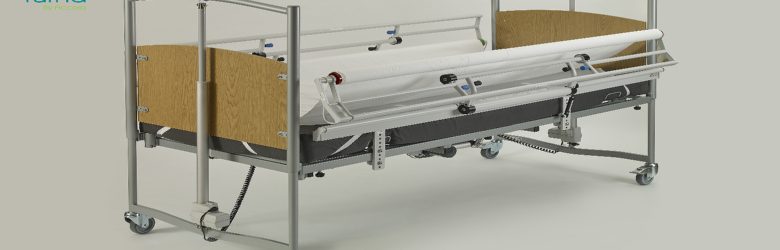
    Turna, as an in-bed patient turner, is a unique combination of a powered turning sheet and two bed rails. The system is controlled using a handset which rotates one roller at a time, causing the sheet to turn the person lying on it. This reduces the strain of turning a person as it is no longer just a manual task but a task that is controlled at the press of a button. Click here to see videos about how Turna works.

    Turna Benefits

    1. Increase service user dignity and comfort when being turned
    2. Enables one carer to turn a service user in bed
    3. Reduce the physical effort and strain for carers

    angela staff photo accora
    Angela Sutherland, Training & Development Assistant at Accora

    With so much pressure on Adult Social Care and the budgets being a main focus, we wanted to make sure we have made you aware of the potential savings that are associated with using our Turna product and if we can help you out with this product in 2018.


    How is incontinence managed?

    For incontinent users, we recommend placing an incontinence sheet under the patient. This will reduce the need to change the turning sheet so regularly. If soiled, the turning sheet will need to be changed just like a normal bed sheet. Make sure the incontinence sheet is not rolled on to the Turna rolls.

    What beds does it fit?

    The Turna fits most community profiling beds. The technical specification of the bed must comply with EN 60601-2-52 and can be only mounted on beds with square side bars on the lying surface. Please get in touch and we will happily come and try the system on your bed.

    Do all the profiling functions still work as normal with the system?

    Yes. As long as you loosen the turning sheet before using the profile functions.

    Can you use air mattresses with the system?

    Yes. When using the alternating air mattress, it is recommended that it is turned to “auto firm” or “static” with max pressure before turning a service user to ensure less friction and greater comfort for the client.

    Is it easy to change the sheet?

    Yes. Just the same process as changing a normal bed sheet – however you must detach a sheet from the turning roller and then attach a new one – meaning you have two sheets to tuck under the service user not one. You have the soiled or old turning sheet and the new turning sheet.

    Is the sheet washable?

    Yes, both the slide sheet and the turning sheet can be washed at 95 degrees and machine dried at a low temperature.

    For more information visit the Turna website or watch these videos.

  • Mum Creates Playgroup to Connect, Support, and Thrive Inspiring Inclusion

    Mum Creates Playgroup to Connect, Support, and Thrive Inspiring Inclusion

    The idea of ‘Jolly Josh’ months ago was ‘pure imagination’. A chain of events would lead me to realise that there was a gap in the system; the solution would become Joshua’s legacy. 

    We have a large, loving, supportive family who were with us every step of Joshua’s Journey. And we also have a wonderful network of friends. Yet I still wanted to meet someone ‘living’ a similar situation. At the time we knew that Joshua had suffered from ‘extensive brain damage’, we knew that his milestones would differ from other children’s. We had 20+ professionals supporting us. We knew that we were submerged in to a world of special needs and that we’d do everything we could to support Joshua to reach his own potential. At this point, we were unaware that Joshua’s condition was ‘life shortening’.

    I met one particular mum at a baby class that I took Sophie and Joshua to. Her daughter also had an NG (Nasogastric Tube), the first child (other than Josh) that I had met with one. I instantly struck up conversation, I had a million questions to ask, and I was excited that Josh would know that he wasn’t the only child with a feeding tube up his nose. Now, this mum comes to Jolly Josh and we have become friends.

    I attended an event for parents and carers of disabled children in 2017. It was a brilliant event with lots of professionals providing information about their services. I had just been granted reduced hours, stepping down from full time work to part time, to be with Joshua and attend appointments, etc.

    I visited each stand in the hope to find services that would help Joshua and our circumstances, sadly they were minimal.

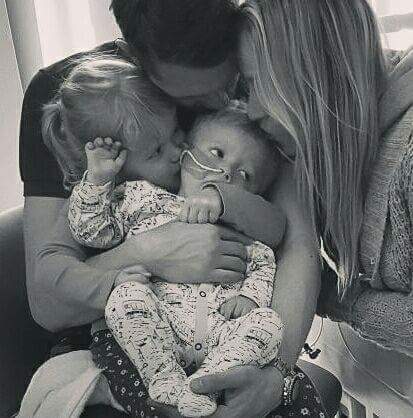
    parents with josh and his sister

    We already had a play worker, other than this nothing applied to Joshua as he was under 4 years of age. Services seemed to come in to place when children started school and I didn’t want to wait until then to meet other parents/carers in the same situation. I wanted to access as much as I could before then to help Joshua to develop and reach his potential and I also wanted to meet other mums. I was left feeling extremely disappointed, that’s most definitely not meant with any disrespect! This is when I knew that Jolly Josh was going to make an impact.

    When I began to vocalise my idea of Jolly Josh ‘Stay and Play sessions’, the notion was very misunderstood. Some thought of it as a ‘respite’ session. I was actually told ‘I never left my child.’ You can imagine my response to that; I had worked full time up until very recently. Did this comment mean that are parents/carers of disabled children are expected to abandon careers or have the finances to stop working? Also, this remark was a huge detriment to the value and importance of respite.

    In addition I was told it was believed that children of preschool age were at home with their parents. Mine hadn’t been as I worked. Yet now that I worked part time did that mean I was to stay indoors, hidden, adding to the isolation of having a child with complex needs?

    I approached Joshua’s care team, his Consultant Paediatrician, his nurses, his Health Visitor etc. And they were all incredibly enthusiastic. I asked if they’d consider being trustees if I was to create a charity. They happily agreed.

    Over Easter Joshua’s health began to rapidly decline and in May 2017 we were given the devastating news that he had ‘weeks if months until he found peace.’

    I gave up work and became Joshua’s full time carer; I was now a ‘stay at home’ mum to both my babies. Though we didn’t stay at home very often. We were out and about making as many memories as possible!

    We went on to spend a lot of time at Manchester Children’s Hospital and stayed at Derian House Children’s Hospice on many occasions. During this time I met another mum. We discussed the many challenges facing our children, their siblings and our family. For example, required yet expensive home improvement changes, the need for public Changing Places, etc. Sophie enjoyed playing with her daughter and I realised that she also would benefit from meeting other ‘young carers.’

    This (for me) verified the need for Jolly Josh

    During this time I also focused on Jolly Josh. I planned a timetable of professionals to attend each week, also planning weekly educational and sensory themed sessions. And I acquired toys, seating aids and resources. I broached Mrs Fierro at Springside School who was fully supportive of the concept of Jolly Josh, so much so that she gained permission for our sessions to be held at Springside School.

    Joshua passed away on 27th August (8 months ago), exactly a month before we were due to open Jolly Josh. I knew that we had to continue. It was perhaps a distraction but it became a positive focus. I planned a very successful open day which I had many volunteers to thank for! The day was incredible but Joshua’s physical presence was very much missed.

    I am incredibly proud of what we have achieved in such a short space of time. Our sessions have been very informative, a wide range of professionals have provided advice to parents/carers. We have worked closely with Springside School to introduce children who will be future pupils. We have set up a lovely peer support group; parents are making good relationships, exchanging ideas, concerns and experiences. In addition, our children are making friendships and thriving, their siblings gaining support too.

    Children play alongside one another, inclusively, some questioning, for example, “Why does that boy have a tube up his nose?” and learning children are all different and that’s what makes them all special. We are creating an awareness of our children’s differences in a safe and secure environment, hoping to educate the community and promote inclusion.

    I have many dreams for the future of Jolly Josh. And I am hopeful that we can ‘Connect, Support, Thrive and Inspire Inclusion.’

    To learn more about Jolly Josh please visit their website. You can also follow them on Facebook and Twitter.

  • Home and Life Modifications for Disabled Parents

    Home and Life Modifications for Disabled Parents

    This is a guest blog written by Ashley Taylor. She offers her advice on the challenges that disabled parents can face. 

    Having a baby is one of the most exciting times in a person’s life. You’re getting to know a new person who depends on you completely. And they will grow up to be an independent human being. How amazing is that? If you have a disability, parenting comes with an extra bit of challenges that you have to learn to overcome. But you can. And you will!

    If you have a disability, you’ve likely already modified your home to accommodate your needs. But with a baby on the way, you’ll probably need a few extra accommodations. You might need to make extra modifications to your home and life so you can get around with a baby in tow.

    Consider consulting an occupational therapist. OTs are especially trained to help people live their lives independently. An OT can take a look at your life, your abilities and needs, and she can work with you to help make modifications or give you special exercises that can help. She can also recommend new ways to handle child care that you might not have thought of, such as ways to put baby in a car seat or adaptive ways to carry the baby.

    Hire a contractor

    Look for a contractor who is experienced in home modifications for people with disabilities. A contractor with experience in disability modifications can discuss your needs with understanding and work with you on what needs to be done. You may need extra ramps to get in and out of your home, expandable hinges for doorways, skid-resistant flooring or more.

    Paying for it

    Many states, cities and organisations offer grants and special loans for people with disabilities to get modifications made in their homes. You can also have fund-raisers and ask friends and family for help in getting ready for baby. If they can’t pitch in money, they might be able to offer their elbow grease and potential babysitting.

    Adaptive furniture

    baby's room with clothes

    You’ll need a crib, stroller, changing table and more. Luckily, there are more options these days than ever before for adaptive parenting. You can find bassinets that attach to the side of your bed, cribs with side-opening doors, adjustable cribs and baby beds and even strollers meant for parents with disabilities. You can even consider hiring someone to adapt a piece of furniture for you, or find a non-profit that can help you for free.

    Ask for help

    Nobody can raise a baby on their own without the help of others in their lives to offer support and encouragement. So, don’t be afraid to ask for help if you need it. You’re responsible for another person’s life. So being a martyr isn’t going to help anyone. Ask your family, friends, other parents or anybody who can help you get what you need. Your baby is worth it.

    Once you have your baby in your home, you’ll be amazed at how she will change your life. Yes, you should be prepared to get little or no sleep and experience the same stress that other parents endure while raising a child. But the love you’ll have for your little one will knock your socks off. You’ll be so amazed at your child’s ability to bring out the best in you, that you won’t remember what it’s like to not be a parent. Watching your little person grow into an independent adult will remind you that life is amazing. And you won’t want to miss a single second of it.

    For more stories like this please visit the Disabled Living blog. Or if you would like to share a story of your own offering advice to disabled parents then please contact us via email: info@disabledliving.co.uk

  • 5 Top Tips for Travelling with a Disability

    5 Top Tips for Travelling with a Disability

    This blog post has been written by Michael Morris from InsuranceWith. He shared his top tips with us on travelling with a disability.

    As summer is quickly approaching, it might start to conjure up images of jetting off abroad on holiday. However, having a disability can mean there are further steps needed before you book your tickets. Travelling the world doesn’t have to be difficult, especially not with these top five tips for making it as simple as possible.

    1. Choosing suitable accommodation

    Although it may sound obvious, it can be easy to overlook the finer details when it comes to finding the right place to stay. One of the major aspects to consider before booking a room or villa is checking the building is accessible for your disability. This could be having handrails or a ramp installed. However, there are also several other building requirements that need to be considered, such as their bathroom facilities and emergency exits. Some sites offer the chance to filter hotels by their disabled facilities. Other times, it may be a case of contacting the hotel or checking the reviews.

    2. Think about healthcare

    Your doctor, local embassy, or insurance provider may be able to offer numbers of local healthcare centres before you head away. Getting to know where you can get emergency treatment will be a weight off the mind before heading away as you will know precisely where to go should anything happen. Plus, it may be a good idea to carry medical documents with you while out and about, such as your medication list or treatment you have been receiving back home. That way, the medical team will know as much of your history as possible.

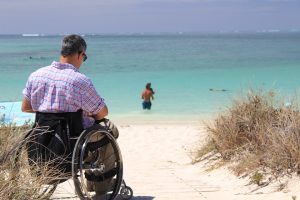
    man in wheelchair on the beach

    3. Get the right insurance

    Travel insurance can be an aspect of travelling that is easily forgotten about. Many times we are lucky enough not to claim, but sometimes things are out of our control. Did you know it could cost up to £45,000 to be medically evacuated from the US? With travel insurance, you won’t have the worry of covering the costs. Although it may be tempting to leave any pre-diagnosed conditions off the form to keep the costs down, it’s essential to be as honest as possible. Now it’s time to sit back and enjoy your trip without the worry of extra expenses.

    4. Disabled-specific travel agents

    It could be time to think about a travel agent that specialises in disabled travel. For example, Limitless Travel offers several tours of Europe that are all designed with your needs in mind. From staying in the UK to heading abroad, there are a whole host of opportunities to be explored without the worry of finding suitable locations yourself. These aren’t the only agents either. Several others offer up flight or adventure packages that can all be tailored to your needs. These can take away the stress of planning and leave more time for you to enjoy your travels.

    5. Travelling with medication

    If you need to take regular medication, have you checked what medicines you can and can’t take with you into another country? Plus, you may need to follow instructions such as keeping all medication in its original packaging or only being allowed to carry a certain amount with you. Plus, if your medicine needs to be kept at a specific temperature, you may need to invest in a cool bag or insulated pouch. Just make sure to check with the airline before you travel to ensure you won’t encounter any difficulties when you arrive for your flight.

    Having a disability doesn’t have to mean travelling around the UK or even abroad is out of the question. Perhaps you have some top tips of your own that you have learnt from your travels? Be sure to leave them down in the comments below!

  • From Donkeys to Innovators: 120 Years of Disabled Living

    From Donkeys to Innovators: 120 Years of Disabled Living

    We are delighted to announce that our ‘From Donkeys to Innovators: 120 Years of Disabled Living’ exhibition is officially open at Redbank House. We would like to invite you to come along to our public open days for From Donkeys to Innovators on Friday 13th April, Monday 16th April and Tuesday 17th April, 10.00am until 3.00pm. 

    A project discovering independence and innovation

    With the support of a Heritage Lottery Fund grant, we embarked on a number of projects to capture the charity’s heritage, ensure our archive material will be safe for future years and raise the profile of the organisation. The Lord Mayor of Manchester and the Ceremonial Mayor of the City of Salford raised a toast to Disabled Living in officially opening the launch of our exhibition.

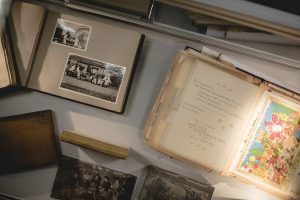
    exhibition cabinet at disabled living

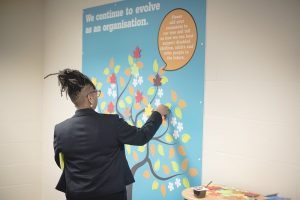
    akilah placing leaf on innovation tree

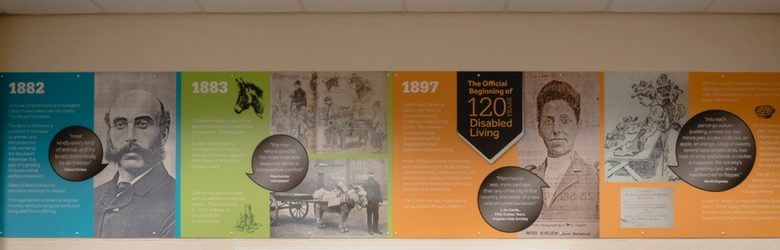
    The exhibition comprises a timeline highlighting our heritage, together with the opportunity to view some of our archived materials. It celebrates 120 years of independence and innovation by our charity. Ana Osborne from the Heritage Lottery Fund and Kui Man Gerry Yeung OBE DL, President of Disabled Living, also gave a speech.

    We encouraged people to write their ideas for the future on our Innovation Tree. It was great to see many guests adding their ideas on the colourful leaves.

    From Donkeys to Innovators film

    Throughout the year, we’ve made a series of short films primarily about the services we have provided. Another film was produced by young people with disabilities and additional needs. They interviewed older people and discussed their aspirations for the future.

    Chief Executive, Debra Evans: There are incredible stories from individuals both past and present, which up until now have remained untold or largely unheard.

    Cherylee Houston from Coronation Street worked with the young people during their filming adventure.

    See links below for our From Donkeys to Innovators films

    Building on early ideas

    Expanding and innovating

    How it all began

    Young people’s film

    Oral history interviews

    We also interviewed a number of people who shared their memories of our charity. These oral history interviews are available to listen to and share via our SoundCloud. The interviewees include Selma Fielding, Karen Mercer, June Stanbridge, Dr Peter Mohr FRCP, Barbara St John and our Chief Executive Debra Evans.

    Thank you to everyone who has played a part in our heritage project, it wouldn’t have been possible without you! For further information and open days please contact Redbank House on 0161 214 5959. 

    More information about our history can be found here.

  • How an Occupational Therapist Helped in a Kenyan Sanctuary

    How an Occupational Therapist Helped in a Kenyan Sanctuary

    This Story of the Month has been written by Gareth Brown, Development Manager at AAT GB Ltd for Disabled Living.

    In October 2017, we received a video clip from an OT from Northern Ireland. She was making an enquiry about buying a Chillibean. This is one of our Stabilo vacuum posture cushions. Nothing unusual in that, it is a very popular and versatile piece of equipment after all. However, that’s where normal ended and an adventure began!

    Jolene Allen is a missionary Occupational Therapist working out in Kenya. She runs a centre called the Metropolitan Sanctuary for Children with Disability in Nyeri. In her video, she described a country where approximately 70% of the population of children with a disability live below the poverty line. Free healthcare is extremely limited to children under 5-years-old for rehab. Physio and government hospitals are overwhelmed with huge queues and limited resources. Assistive devices such as Orthotics, prosthetics and wheelchairs sadly aren’t free. Also, there aren’t affordable to most people or are impractical.

    Having a child with a disability can be stigmatised and is believed to be a curse to many families.
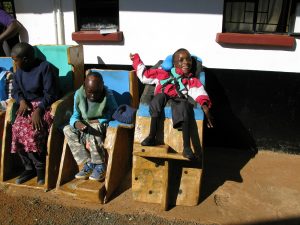
    The sad results of this are that, many mums are left to cope with children with disabilities on their own with little or no social support. Often, mothers themselves buckle under the pressure of stigma and self blame. They run away, deserting the child. Many get raised by grandmothers. Many get abandoned. Tragically, in some tribes, they are not allowed to live. The reality of this is that many children spend their lives lying on a bed looking at the ceiling, and are often left all day. Sometimes, they’re tied to the bed, while the mum has to go out and work just to be able to support the family and survive.

    Sadly, there aren’t support systems for feeding or supportive seating. So, deformities go unchecked and many of these children don’t survive into adulthood.

    It’s a pretty gloomy picture for such a fast developing African country. Though the government and charitable organisations are endeavouring to develop health services, progress is slow. Particularly in the area of custom made adaptive seating, which still remains out of reach for the vast majority who would benefit from it. Should a child be fortunate enough to have rehabilitation services, it’s common that staff who ought be prescribing equipment, are largely accustomed to disregarding positioning altogether.

    So what’s Jolene up to?
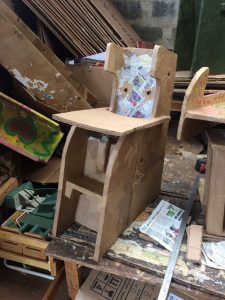
    She’s been at the Sanctuary for over seven years now, overseeing the rehab services including therapy services, medical reviews, medicine, day care, counselling, support and even residential services for the most disadvantaged children. She established a social enterprise hub, which involves employing mothers of children with disability to make paper with recycled materials and create beautiful hand crafted art.

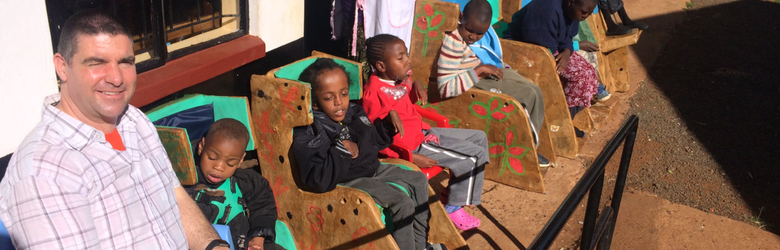
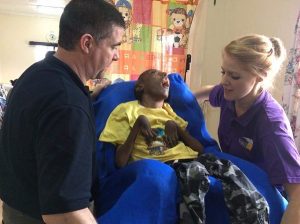
    The really amazing part is what they’re making for the children. Jolene has mastered the art of using recycled cardboard and paper to make custom postural seating and equipment. Each child is assessed and measured and has a perfectly matched cardboard chair (or standing frame, or combination of the two) made for them. This allows them to be able to sit up and be part of family life. It helps their posture, breathing, swallowing and digestion and raises their quality of life to unprecedented levels. Families are also gently educated in the importance of this when they are given the equipment as well.
    sanctuary helping child

    Not resting on her laurels, Jolene has been tackling ever more challenging seating for the children. She uses extremely complex shapes, vacuum bags, vacuum cleaner and polystyrene beads to create moulded patterns. And then making papier-maché seating systems mounted into cardboard bases. This has proven quite a difficult undertaking with such basic but ingenious equipment, which triggered her call for help to us.

    We were so inspired by her amazing creativity and achievements. AAT donated a Stabilo Grande mattress to the Sanctuary to use for creating the moulded seats. This proved to be a very useful tool for making more accurate moulds and is now used to form plaster of Paris body templates of each child so a custom seat can be made. I also offered to help with advice. And after many, quite technical conversations, it was clear that talking about it just wasn’t good enough.

    An inspirational adventure

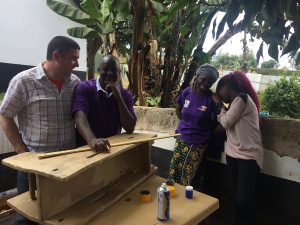
    An adventure was long overdue for me. So, mid February found me on a plane heading out to Nairobi on my first ever trip to Kenya. What a week it was! I had a very busy time. First, coaching everyone on how to get the best out of the Stabilo cushion. Then we experimented with the various techniques used in the UK for creating custom moulded seating but adapted them to using only the resources available locally. It was such a rewarding experience and a privilege to work with Jolene and her team of dedicated staff. We had great fun problem solving on such a practical level where every tiny improvement would make such a huge difference. I could easily have stayed for a month and still had so much more to do.

    So, what next?
    team at work

    A return trip is certainly on my to-do list! They are currently raising the funds to build the next part of the Sanctuary, a three storey building to house children during extended intensive therapy visits, accommodation and training facilities for OTs, physios and families. There’s still a long way to go but the ground has already been excavated and the giant retaining wall has been built by hand over the last 9 months.

    The Cardboard seating is moving on to a next generation of more adjustable, longer lasting seats with improved shaping, cushioning and harnessing. Moulded seating is still in development while materials are being sourced locally, hopefully including liquid Polyurethane foams from BASF chemicals for foam in place seating.

    My next project has already started, building a foam carving duplicator machine so a copy can be cut straight from the Stabilo cast of the child’s shape, saving a lot of time and cost. This would mean the plaster of Paris body print would not be needed and a child can be test fitted while still at the clinic, potentially saving the family many hours of uncomfortable additional travelling.

    Grateful for any assistance

    Jolene and her team would be grateful for any assistance from professionals in all areas of rehabilitation services. This includes: PTs, OTs, SLTs, Orthopaedic Technicians, or people with experience in wheelchair or seating services. They’re always keen for people to buy and sell their paper products. And they have a £100 box challenge every Christmas where you retail £100 of their products to family and friends. For further information visit Sanctuary Artists website.

    To find out more about the wonderful work going on at the sanctuary please click here.

  • 4 Amazing Years in the Kidz to Adultz Team at Disabled Living

    4 Amazing Years in the Kidz to Adultz Team at Disabled Living

    This post has been written by Billy Coleman. Well, where to begin about telling you all about my 4 amazing years at Disabled Living and being a member of the Kidz to Adultz Team? It all began when I certainly couldn’t grow the beard I can today!

    Below are a few reasons why I love working at Disabled Living.

      • Organising the Kidz to Adultz Events
      • The hype you get when travelling down on the train, setting up the events and waiting for the doors to open for the children, general public and health care professionals.
      • Seeing the Children smiling and taking part in the activity areas, craft area and expressing their ideas in the innovation hub
      • The work memories you take from travelling to the events e.g. Jo picking up the wrong case on the train, myself nearly ending up in Newcastle instead of coming back to Manchester.
      • Finally getting a pitch view room after the 4th year of visiting the Ricoh Arena.
        That little rewarding nap I enjoy on the train home after knowing you and your team have organised another successful event!
      • The progression and skills I have been taught and progressed within the years of working here.
        • Working hard to get the best possible prizes for each event. The excitement I get when receiving the prizes for the events and ringing the successful winners.
        • Working with all the members of staff here at Disabled Living and exhibitors at the events.
        • Entertaining everyone in work with my hilarious jokes and lovely singing.
        • Dressing up as John Travolta in Grease at the 1950’s Disabled Living Tea Dance.
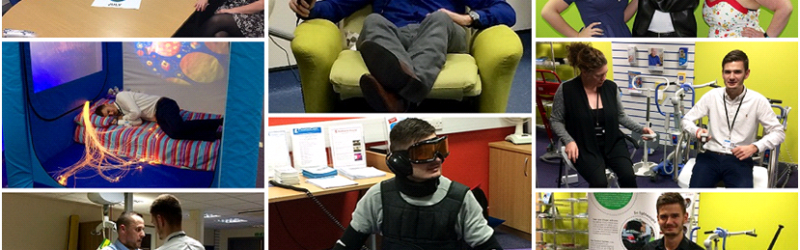
        • Being the Product Demo model every Wednesday. My favourite being wearing an aged suit and looking like RoboCop.

    Here’s to the future

    I am now off on new adventures! I’ll be coaching/goalkeeping coaching in New England, America for 8 months which was too much of a great opportunity to possibly turn down.

    Finally, I just want to thank everyone at Disabled Living for giving me this fantastic opportunity. I wish everyone all the very best and I’ll be sure to stay in touch! My work here is complete… (drop the mic).

    Thank you to Billy for being part of our Kidz to Adultz team over the last 4 years. We wish you the best of luck in your future.

  • Would Your Staff Really Embrace Single Handed Care?

    Would Your Staff Really Embrace Single Handed Care?

    Could you answer all their objections by the time you have finished reading this article? How do you get your staff to embrace a new way of working? Bringing about changes at work isn’t an easy thing to do. Some staff will embrace any changes you introduce; they trust you and know that you will support them. Others will be more difficult to persuade. It’s just a fact of life. We can’t dictate how and what we want. We need to have reason and honesty in order to get colleagues on board.

    Good leadership and management will help to bring in changes effectively but you will still be asked many questions about what is happening before people will start to think differently.

    Let’s not run away from the questions, by answering them honestly we can help to dispel myths and reassure our staff about the safety and introduce reasonable means to make the changes as in obtrusive as possible. By being honest and open with our colleagues we can hopefully work together to introduce changes like bringing in Single Handed Care.

    At Disabled Living we have introduced a general moving and handling day which has a slant towards single handed care , it’ s not suitable for everyone but I hope we can help you to feel confident about facing the questions people have. Single Handed Care is being bandied about like a new hot topic. Everybody is looking to save money and thinking this may be the best way to go, are you? Bringing about change is never easy and introducing single handed care is no exception.

    What is Single Handed Care?

    Quite simply it’s the practice of one person delivering care to the client as opposed to double handed care which is two people. It’s not rocket science and it’s not new. I am sure there are more than a few people reading this who will agree we have been looking after people on our own forever. So, what’s new?

    More pressure at work, less staff available, an ageing population so more clients to look after to name but a few.

    Why do we need Single Handed Care?

    turn no into yes

    The answer to this can be found in just a few of the features and benefits of Single Handed Care.

    Families and clients can build trust with one person, bonding improves, everyone more relaxed, and client feels less invaded. All leads to fewer complaints.

    It may be that you are facing the prospect of more carers because you are growing or becoming more dependent, Single handed care may still be an option with the right risk assessment and attitude.

    Less people in your home have got to be the best option, more privacy, more dignity, ore control over your life.

    Confident, well trained employees, who feel valued, are less likely to leave the job. Your good reputation improves even more which leads to more work. Staff  would be able to develop great bonds with the client, leads to better risk assessments, better compliance, preventative measures more likely to have an effect.

    How we can help you

    At Disabled Living we can help you to understand and articulate your responses to common objections. We can help to train you and your staff how to be safe and innovative at the same time.

    Come to our seminar at Kidz to Adultz Middle at the Ricoh Arena on Thursday 15th March and listen to the answers to some common objections to Single Handed Care. Have a go at some techniques with just one person. By having the correct equipment you could save yourself some time, energy and money. It’s a win win for the right person. Have a chat with us about how we could help you  reduce carers in your home.

    If you have any questions email Deborah.bell@disabledliving.co.uk or give me a call on: 0161 607 8211.  I hope to see you at Kidz to Adultz Middle.

    Other useful links for home safety

    Locksmith London
    Blocked Drain Bristol
    Locksmith Bristol
    Plumber Bristol

  • Disabled Living Host 1950’s Tea Dance and Jive The Afternoon Away

    Disabled Living Host 1950’s Tea Dance and Jive The Afternoon Away

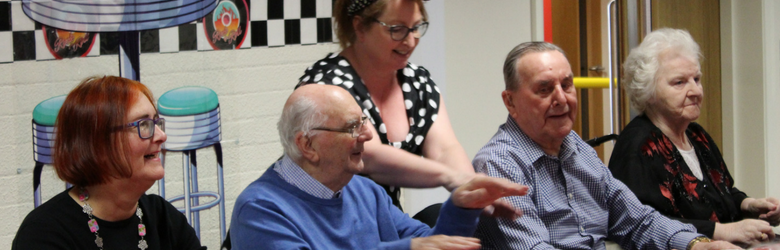
    This Story of the Month ties in with our 1950’s tea dance that we held for people with dementia and their carers. This was the second tea dance that we have hosted since July and we are pleased to say it was another enjoyable day for all.  On Tuesday 27th February, we were joined by our wonderful volunteers from the League of Jewish Women, guests from Future Directions (service users at Redbank House’s multi-sensory rooms), tenants from Bourke Gardens, and other people with dementia and their carers. 

    The room was full of 1950’s decor including neon food and drink signs, a diner girl and chequered pattern wall, small plastic vinyl discs hanging from the ceiling and much more. Once again, we provided our guests with lots of sandwiches, cake, tea, coffee, and juice. This must be where they got their energy from to sing and dance away! Thanks again to Le Mange Tout for your lovely catering service.

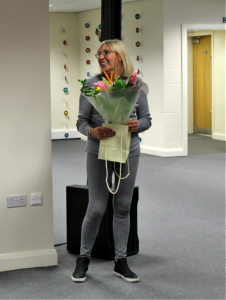
    Marylin Snyder recently resigned as a Trustee at Disabled Living after 25 years. She attended our tea dance to support with hospitality, along with her colleagues from the League of Jewish Women.

    marilyn smiling disabled living
    Marylin with her flowers from Disabled Living

    On behalf of the League of Jewish Women I would like to thank you for an amazing Tuesday afternoon. Walking back to our cars some of  the comments made were:-

    • I feel guilty, I went to help and ended up having a brilliant time.
    • I had more fun this afternoon than I had over the weekend!
    • All the staff made you feel so welcome.
    • Anytime Disabled Living would like a volunteer, let me know because I would love to help out again.
    • What gorgeous food and fabulous entertainment.

    All I can add to that is if the guests enjoyed themselves only half as much as the volunteers it would have still been a roaring success. Talking to the guests and seeing the looks on their faces how much they were enjoying themselves, you could see that, all your efforts were worthwhile and very much appreciated by them all.

    We’re absolutely delighted to have received further positive feedback on our tea dance.

    Diane Knowles

    Thank you so much for yesterday we had a wonderful time. You all go to so much trouble to make it lovely for us all.  The pictures are great and I will show dad them to help him remember. Many thanks, to you all.

    Jacqui Woodall

    I wanted to thank you and staff/volunteers for a fabulous afternoon and for making us feel so welcome! Myself and our customers really enjoyed ourselves. Your hospitality was second to none and  the entertainment girls were brilliant too.

    Seeing everybody smile made our day. We look forward to seeing you all again at our 1960’s themed tea dance.

Disabled Living