Tag: sensory

  • Sensory Wellness Inspired by People with Profound Disabilities

    Sensory Wellness Inspired by People with Profound Disabilities

    This is a guest blog for Disabled Living written by Joanna Grace from The Sensory Projects. It has been written in Joanna’s perspective around the pandemic and her thoughts on sensory wellness, inspired by people with profound disabilities. 

    As lockdown began, many people with profound and multiple learning disabilities who had been used to leading rich and varied lives, attending schools or care settings, suddenly found themselves at home, isolating with their families or their care teams.

    Whilst some people around them struggled, many of the people with profound and multiple learning disabilities that I know thrived. And as they did so, they reminded those closest to them of the resources available to use all to boost our wellbeing.

    Here are three top tips that I have learned from them.

    Take joy in simple things

    Overthinking stuff can really clog up the capacity for fun in our lives. One family sent me a video clip of their son laughing hysterically at a sneeze, and another shared the bubbling joy of their son’s experience of an ice lolly: the surprise on his face at the coldness, the grasping of his hands against the slippery ice, and the chase of this strange object around his lap tray. What started out as bemusement quickly slipped for him into a joyful exploration.

    Sometimes we do not allow ourselves these pleasures, would we look silly if we let ice slip out of our hands, do we politely supress our giggles at how funny that sneeze sounded?

    In your own life watch out for the simple things that bring you joy and welcome them, one of the perks of lockdown is that you are not in a public space, you are in the privacy of your own home and you make the rules here. If you want to play with your food: play with your food!

    Spend time in a sensory moment

    Anxiety is born out of a fear for a future that maybe. In a pandemic, when any of our futures and any of the futures of our loved ones, could include a horrible illness we have a lot of reason to feel anxious. Justified as it is, it is no way to live. Taking time to spend in the here and now, in the present, without fear, is immensely valuable.

    I am in contact with lots of teachers, all struggling to provide a meaningful education online, in our chats many of them talk about how much they are missing the steadying presence of their students in their lives. If you are in the company of someone with profound and multiple learning disabilities you are in the company of someone who is a master at connecting with the present moment. One teacher who contacted me spoke of her students being a “daily reminder” to her to connect with the present.
    I have begun a class in sensory-being online. Sensory-being is a form of shared mindfulness based around a wonderful sensory object. A parent who took the class told me it had given her a way in to the peace in a moment that her daughter (who has profound and multiple learning disabilities) knows instinctually. She described how with two other children at home and her husband working from home everything can be very fraught. But by spending time with her daughter, sharing a moment of sensory engagement, it is as if she can take a little step out of the busy chaotic world around her and enter a little pool of quiet and calm.

    Enjoy the nearness of people you love without need for words

    Several families I know made the decision at the start of lockdown to bring their loved ones home from their care settings. One in particular agonised over the decision. Their son’s care placement was so good, he had friends there, access to all sorts of equipment and activities that he didn’t have at home, and although many of them would have to cease no matter where he was because of the restrictions they knew that the care team he was with would go above and beyond to provide him with interesting and exciting days. In comparison, they worried, what could they offer him at home in their terraced house? Ultimately they went with their gut instinct, which was in dangerous times to gather their family close and they bought him home. I have the privilege of watching their lives through the window of Facebook, and aware that they were worried I kept an eye out in my newsfeed for their posts. Initially they seemed to be going above and beyond creating activities for him. Their posts were fun, but something about them was a little too loud, a little too bright. They were trying a little too hard.

    The parents are well into their late sixties and their son is in his late thirties. I had a few brief messenger conversations with the father, asking me questions about colour changing lights and where they could get particular gadgets they’d seen. I do not have a lot of tech knowledge but I suggested they could get a similar effect with a torch, some coloured cellophane and a big umbrella.

    I kept watch, the umbrella was purchased, there was the son’s smile of amusement at the light show cast by the torch upon it and the proud smile of his father beside him. In time there were less posts. Now I see the odd one or two, they take him to a place they love to walk that has path that is easy for his wheelchair at times of day when they know no one else will be there. He sits in the garden alongside his father as he does the gardening, plant cuttings are placed on his lap tray for him to explore.

    I sent a message. “How are you getting on?” I asked. His Mum wrote back. She said they had been so worried about being enough for him, but through wearing themselves out trying they had had to stop, and when they stopped they realised he was happy to just be with them. She said now he is a part of their lives rather than a job they are doing. And she described how he will vocalise along with his Dad singing as he gardens, and that she loves to stand in the kitchen window and listen. She said previously her husband would have sung from time to time whilst gardening but their son’s vocalisations encourage him to do it more and that brings her joy.

    Being close to people you love and trust is incredibly precious. You do not need to be anymore than you are. And you do not need to talk or have words for things. Sharing time is precious.

    The pandemic has been and continues to be incredibly hard, but through its darkness much light has shone. I’ve been impressed by the embodied wisdom of people with profound and multiple learning disabilities, as I’ve shared above. At the start of the pandemic I grumped about possibly delivering my training, that has always been done in person in the past, online. But when I did finally get myself in gear and do it I was touched that people joined it from around the world, in person I can touch lives as far away as the trains in the UK can get me, but online I can touch lives around the world.
    The staggering kindness of people has been one of the brightest lights, we’ve all watched the heroism of the NHS staff and the keyworkers that have kept everything going. Through my little Facebook window I’ve seen glimpses into just how bright that light can be. Recently a man I know who has profound and multiple learning disabilities caught COVID19. He lives in a care setting and it was so frightening for his family to be unable to be with him. But his care team closed around him and supported him as if he were their own son. When some of them got sick too and had to be replaced his family were amazed by the care workers who volunteered to leave their own families at home and move in with him 24-7 so they could be the support he needed. In times of greatest need, strangers to them stepped forward and offered to help.

    I see kindness everywhere, in big ways and in small. Since the start of lockdown I have been curating a list online of free resources people and organisations have been giving away. It is as if, when faced with this awfulness, everyone looked around for what they could do and offered it up. The news will report those not following the rules, but the great majority are, it is one big team effort to keep each other safe, one enormous act of care. People are awesome!

  • Are You Sitting Comfortably?

    Are You Sitting Comfortably?

    This is a guest blog for Disabled Living written by Peter Wingrave, Sales Director at AAT GB

    Postural support: it’s one of the biggest headaches for carers and healthcare professionals, how to balance appropriate cushioning with health and wellbeing.

    Treating pressure sores costs the NHS £1.3m/day(1). Before that stage is reached, how much time do carers- paid and unpaid- spend re-adjusting and turning their charge to prevent pressure, adjusting their position to ensure they are comfortable, stabilised and supported, plumping up cushions etc?

    In many cases, just a change in thought process and choice of postural support would reduce or even eliminate the risk of a sore even beginning.

    Health & Wellbeing

    Health & wellbeing is not just pressure sores. It’s about sensory wellbeing, giving someone that feeling of safety and security without feeling restricted. It’s about physical wellbeing, supporting the body during a spasm, protecting during involuntary movement.

    Health & wellbeing affects everyone involved: the person needing that postural support, and the person or people who look after them. Anyone involved in care is aware of the issues of moving and handling, so any system that helps reduces loading on them has got to be good too.

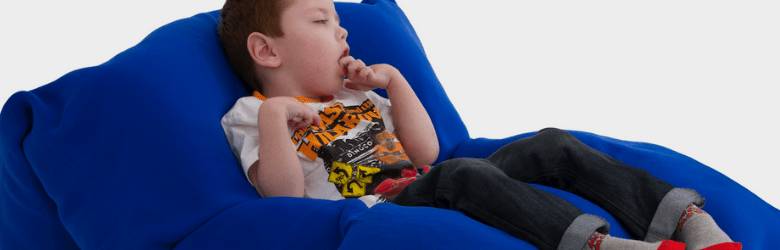
    The benefits of the bean bag concept are widely accepted, as are the disadvantages: that the slightest movement changes the shape of the cushion leading to at best inadequate support or at worst the user ending up on the floor! A more solid stabilisation is needed.

    Vacuum Posture Technology

    Traditionally, Occupational Therapists are used to a rigid version, a fixed mould type system. However, the one inevitable in life is that our needs change with time- we grow, our condition deteriorates, or we develop other issues. These all impact on the size and shape of the mould. Changing that mould takes time and costs money.

    What about an option developed in conjunction with Occupational Therapists, that enables you to perfectly, finitely adjust the shape of the cushion- whether a small arm support through to a bed? An option that can be used for sitting, lying, sleeping, bathing, swimming, travelling? An option that then holds that shape, firmly, but that you can easily adjust as needs change? An option that you can change at no cost, on the spot, instantly, and without having to organise specialists to attend?

    Vaccuum technology addresses all those limitations. It works by simply positioning the user on the cushion and attaching a pump which sucks the air out from between the ‘beans’ so it forms firmly and evenly around the body area to be supported and stabilised. It forms without pressure points and holds that shape for weeks. It exactly mirrors the shape required and can be infinitely and minutely adjusted for optimum user comfort and support.

    To create/maintain the shape, simply attach the pump and provide suction for a few moments. To create a new form, allow some air to re-enter via the valve, attach the pump, and turn on for the few minutes necessary until the required degree of firmness is achieved.

    See how it works here: https://youtu.be/Apng8U5cYK0 and https://www.aatgb.com/posture-cushion-user-guide/

    Any appropriately-trained carer can create the support as needed. In these COVID-different times, there is no need to arrange for a specialist appointment, and wait days, weeks, months for a new mould.

    AAT GB posture cushion

    Not Just a Posture Cushion

    The structure also means the bag can be used as a sensory aid: pop an appropriate music player underneath, and the sound, beat and rhythm will transfer through the cushion.

    The outer fabric is waterproof yet breathable. Thus the cushion can be quickly and easily wiped clean, disinfected and sterilised. It can be used in the bath or swimming pool.

    Small, velcro-fixed versions mean a single limb can be stabilised during a period of therapy. Large versions replace bed mattresses and can be exactly formed to shape and support the trunk and limbs as needed, even allowing creation of abduction wedges. Cushions can be taken wherever the user needs them: one Stabilo user has taken part in a disabled sports challenge, using his cushion to stabilise him in a canoe! More typical usage is stabilisation in a car seat, a swing or a wheelchair.

    To find out more about how AAT Stabilo vacuum posture cushions can support you and your charge in daily life, click here: https://www.aatgb.com/posture-cushions/, call 01978821875 or email sales@aatgb.com.

    Reference(s):

    (1)https://nhs.stopthepressure.co.uk

  • Sensory-Friendly Halloween Costume Ideas

    Sensory-Friendly Halloween Costume Ideas

    For some individuals, Halloween can pose extra challenges. Although dressing up can often be something to look forward to, itchy seams, tight collars, restrictive masks, or strong-smelling face paint may be unbearable for those with sensory issues. Costumes bought from shops may be particularly uncomfortable. However, making simple sensory-friendly costumes is a great solution for this! Why not get creative this Halloween and check out some of our adaptable, sensory-friendly costume ideas below.

    Sweatshirt

    Transform a soft sweatshirt, hoodie or jumper into something spectacularly spooky. To create some bat wings, sew some black fabric (an old sheet would be ideal) onto the arms of the sweatshirt and join it to the sides. Additionally, you could take a plain orange jumper and draw a face on it to create a simple yet effective pumpkin costume. Another option is to stuff some old tights or knee-high socks and attach them onto the sleeves of the jumper and stick some googly eyes onto the front to create a scary spider costume.

    Pyjamas

    Another simple idea that will provide maximum softness for your child is to transform some plain black pyjamas into a spooky skeleton. Simply cut a skeleton template out of a plain white sheet and sew it onto the pyjamas for some custom-made comfort.

    Cardboard boxes

    If your child would rather have a costume that barely touches them, why not create something that they can hop in and out of as they choose? Cardboard boxes are a versatile option which can provide hours of fun for both you and your child to get creative. Whether you are looking to make a car, plane or horse, the possibilities are endless. If your child is a wheelchair user, this is also a great option for an adaptable costume. For more ideas to inspire your creativity for making an adaptable costume, visit: https://costumes.lovetoknow.com/types-costumes/costumes-that-work-wheelchairs

    Alternatively, if there is a specific store-bought Halloween costume that your child has in mind, but you are concerned that it could be uncomfortable, you can always purchase a larger size and layer the costume over comfy, sensory-friendly clothing.

    Before your child wears their Halloween costume, suggest that they try it on a couple of weeks beforehand to ensure they are accustomed to the textures and identify any issues they might have. This will give you time to make any amendments prior to their Halloween event.

    Visit our Supplier Directory, under the Sensory Toys and Play Equipment category to see what the companies are up to this Halloween! You can also tweet Disabled Living with your own ideas at @disabledliving.

  • How Dance Group AwA (Atypical with Attitude) Break Down Barriers

    How Dance Group AwA (Atypical with Attitude) Break Down Barriers

    AwA are ambassadors of the SEND community. Through the power of dance, AwA aims to break down barriers to inclusivity and integration, changing perceptions and stereotypes with the goal to change the way the world looks at disability. Through hard work, discipline, perseverance and dedication, the AwA dance team has improved the lives and opportunities for many living with challenges. The core ethos of our dance team is having the right attitude toward life. Stereotypes and perceptions will only be broken and changed through hard work and diligence. As pioneers within the dance community, AwA has proven time and time again that those who live with disabilities and challenges are more than capable of achieving the same as their mainstream counterparts.

    When the dance team was first made we made a core decision that would affect and influence everything that we do. Without working just as hard as our mainstream counterparts, we would never change the way people view disabilities and truly see what we are capable of. Every time we perform on the stage, no matter the size or arena, hours and hours of endless hard work and dedication has taken place.

    Through this ethos and methodology, AwA created a unique and inspiring team that went on to achieve many milestones for the SEND community. AwA appeared on the BBC’s The Greatest Dancer which reached the views of millions of people around the world, pushing the agenda that we are capable of much more than the world tells us. AwA were the first special needs team to ever qualify and compete at the UDO European Championships in 2018, representing the UK. Not only did we break down barriers to integration and inclusivity, we also ranked 2nd overall in our category making huge history as the first ever SEN team to do so.

    AwA dance group performance

    A year later we were the first special needs team to ever qualify and compete at the UDO World Championships in 2019, representing the UK and ranking 3rd overall in our category. As a result of our achievements we were blessed and privileged enough to appear on many different news platforms to continue spreading our message. Platforms such as BBC, London Live, Sky and Channel 5.

    A member of AwA states how being a part of the dance group has changed their life:

    I used to be ashamed of my autism. I used to think it was a detriment to myself and those around me. The world taught me that there was something wrong with me, that I was broken and needed to be fixed. I couldn’t understand why I was being told that “who I was” was wrong. When I joined AwA, everything changed. My autism turned into my superpower!

    Everywhere we went, every performance we attended and arena we participated in, people were inspired and amazed to see us do the same things as everyone else. I could see it in their eyes, their perceptions of the ability of those with “disabilities”, was shattered and rearranged within 4 minutes of watching us dance. That feeling empowered me so much. It gave me the fire and strength to continue on the path we were on and work even harder. If I didn’t have autism, I wouldn’t be in this amazing family of friends that I call my team. I used to be ashamed of my autism, now I am proud of it.

    Within the mainstream dance community in the UK, AwA is now widely recognised. We are regularly invited to perform and participate in many mainstream dominated environments as ambassadors of the SEND community. Also, we have hosted our own inclusive fundraisers to give platforms and opportunities to other members of the SEND community. Our other achievements include performing at the national school games summit, winning the first ever Para Dance in 2019. For two years in a row we have been granted mainstage performances at Move It exhibition, the UK’s largest dance exhibition as well as opened the Dance Awards UK show on behalf of DejaVu entertainment. We have also been invited to perform overseas such as the Best Buddies Conference in Indiana USA in 2019.

    AwA has and will continue to maintain a professional approach towards the art of dance and challenging perceptions. We are open to all, include all and accommodate anyone and everyone. Our doors will always be open to others who wish to join our mission and spread the message of inclusivity and integration. We pride ourselves on equality and humility in everything that we do.

    For more information on AwA, visit their Facebook page to keep up to date with their latest dance routines and achievements: https://www.facebook.com/atypicalwithattitude/


    If you or someone you know has autism and would benefit from using a sensory room, then please contact Redbank House. Alternatively, if you have a disability and are looking to receive some advice about services or equipment, contact Disabled Living today!

  • Visual Supports: How they can help improve lives

    Visual Supports: How they can help improve lives

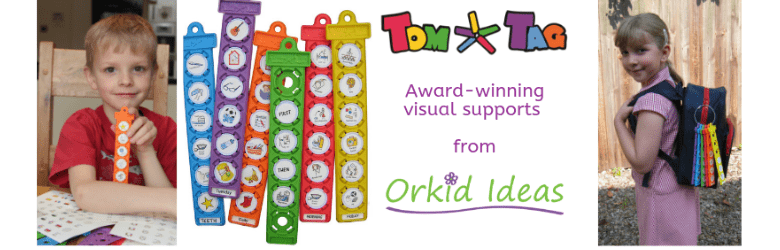
    Clare and Deborah of Orkid Ideas are two mums passionate about visual supports and how they can be used to improve the lives of children, and adults with disabilities. They designed and developed TomTag – an award-winning visual support tool, inspired and named after Clare’s son Tomas who has autism.

    Whilst we all rely on some sort of visual support in our everyday lives -a watch, a food-shopping list or diary for example, visual supports are particularly important for those with disabilities as they can assist with communication, help develop organisation skills and promote independence.

    Clare and Deborah give some real-life examples to explain how people with disabilities can use visual supports to help make a meaningful difference to their daily lives.

    Daily living

    A simple visual checklist breaking down personal hygiene routines into small steps can be an effective way to teach and remind children how to take care of their bodies and help them develop good personal hygiene practices for life.

    Checklists for learning personal hygiene routines such as toileting, hand washing, showering, bathing, hair care or general daily hygiene tasks can be created and kept handy in the bathroom or bedroom.

    For older children and adults, visual checklists can be used to develop independent living skills such as doing the laundry, shopping and cooking.

    child cleaning their teeth with tom tagchild washing their hands with tom tag

    Schedules and routines

    A visual schedule can help people with disabilities organise and manage their day and can be in a variety of formats, for example a written list, pictures, symbols or actual objects.

    For individuals with few language skills or who are mostly non-verbal a visual schedule can be created using actual objects to represent activities; for example, a cup for snack time, a spoon for meals or a shopping bag for trips to the supermarket. Hand the object to the individual to indicate the activity they are moving or transitioning to next. Don’t forget to make a list of which objects you are going to use to represent each activity.

    Picture, symbol or photograph schedules are good for individuals who can consistently match pictures in the same way you would in a simple lotto game whilst written schedules work best for individuals who can read.  You can move from picture to written schedules by adding words alongside the pictures and then gradually work towards replacing them completely

    A visual schedule helps reduce anxiety by taking away the element of surprise and makes transitions between activities easier. They are also transferable between environments and people keeping everyone involved organised!  Depending on the age and ability of the individual the more you can involve them in helping to make their own schedules, the more likely they are to take ownership and be committed and motivated towards using them.

    cooking with tom tagscollection of tom tags

    Communication

    Being able to make choices gives people with disabilities greater control over their environment and increases their independence. Visual supports can assist with communicating needs and wants. For example, when getting dressed, offer a choice of two different shirts by holding the two shirts up and asking them to choose either by pointing at the shirt, looking at it or saying which they prefer. Likewise, when offering a drink, use a choice board with pictures to allow them to choose from two or three options.

    Sensory overload, changes to routine, difficulties processing information, being tired or hungry are all common triggers for anger and challenging behaviour. A visual feelings scale can be used to help individuals tell you how they are feeling. Whilst a visual reminder giving guidance and strategies about what they can do about the situation will help them handle things better in the future.

    Visual supports sometimes take time to establish but used consistently can help people with disabilities live their lives more independently and with confidence.

    TomTag is an award-winning visual support resource. Create personalised visual schedules, timetables, checklists, choice boards, reward charts or reminders for a wide range of needs and experiences all with one unique and versatile system. For advice and support about TomTag visual resources you can contact Clare and Deborah at www.orkidideas.com

    child zipping up his jacket with tom tagstom tags and playing

    Find Orkid Ideas on Disabled Living‘s Supplier Directory here: https://supplierdirectory.disabledliving.co.uk/orkid-ideas-2/

  • Why Standardising Objects of Reference Can Render Them Meaningless

    Why Standardising Objects of Reference Can Render Them Meaningless

    The phrase “Objects of Reference” refers to a communication support system whereby particular objects associated with particular activities are used to communicate to a person with complex disabilities that certain activities are about to take place. For example someone might be handed a continence pad before being taken to the toilet, or be given their swimming costume to hold before going swimming.

    To use Objects of Reference with someone you need to first identify objects that are meaningful to them and then use those objects consistently as markers for the associated events. It is no use showing them a plastic toy bus to tell them that they are going on the bus, this is neither what a bus looks like to them or what it feels like, it might be more relevant to get them a section of seat belt, or wouldn’t it be marvellous to have the ‘ding’ of the bell that is rung to disembark!

    I have seen Facebook posts from people asking for ideas for what to use for Objects of Reference

    Asking what someone else, somewhere else uses to represent something else for someone else is meaningless, by their very nature Objects of Reference are personal to the individual. If you are stuck, ask them. Ask them by observing closely, with all your senses, what their experience of that event is. Which part of their experience could you capture in an object to share with them? Consider which experience is the biggest marker of that event to them, for example with the swimming pool it is true that they are likely to change their clothes, and feel a towel upon their skin, but this also happens to them at other times as well. It is likely that the scent of the water is the most distinctive factor for them – could you have a sample of pool water in a container for them to smell?

    I have been to settings who proudly tell me they have a standardised set of Objects of Reference that everyone in their setting uses. Standardised systems are not individualised systems. Objects of Reference are intended to be highly personal not standard.

    If you are standardising your use of Objects of Reference you are presuming the people who are using them will become symbolic communicators

    Some people do use Objects of Reference as a stepping stone to other symbolic forms of communication, such as symbol communication, and some people do not. For the people who do not, Objects of Reference may be the only system of communication available to them so it is all the more important that we protect its individualised nature.

    Consider the experience of the world for someone who has limited cognitive and sensory abilities. Most of life is a confusing soup of experience, things happen to them, their brain does not have the chance to fully process what is going on as it is going on, so by the time they have heard a sound they may already be far from the object that emitted that sound. Light might be processed swifter than touch, so you see a hand on your skin but do not feel the touch until several moments later, and do not associate that sight with that sensation. From time to time something in this confusion makes sense.

    These times are the times that repeat often, times when the same thing happens in the same place and means the same thing

    girl riding her bike with a helmet on

    Times they have had so many chances to explore that they begin to hold a sensory memory. It is not that they have stored them in their memory as we would understand it, they cannot go back and “remember” being here before, it is more of an embodied memory, like the muscle memory formed riding a bike, their bodies recognise where they are.

    If you collect one aspect of that known place and can share it with them when they are not there, you reach into that blur of experience and say “something is going to happen, something you know” it is like a rope thrown into the confused soup that connects them to a place of solid ground. Throwing a rope that someone else, somewhere else, uses with someone else, won’t have that connective communicative effect.

    Ah but in time they will learn that the plastic bus means the real bus.

    …well they might, especially if the plastic bus goes on the real bus with them and is not taken away, but why are we insisting they do more work to access communication, when if we did a little more work and found a relevant object they could access it already?

    But it is such a faff to have different objects for different people, having a standardised set means we all know what to use.

    …it is true that to meaningfully use Objects of Reference you will require a different set for each person, and this is inconvenient. But this was never about our convenience was it, it was about communication. We are able to organise a storage system and label it carefully so everyone knows whose objects are whose. We would go to the ends of the earth to reach into their confusion and share communication, so it really is not so much bother to ensure Objects of Reference are meaningful to each individual using them.

    This post was written by Joanna Grace, a new contributor to Disabled Living’s blog. Sensory Engagement Specialist, trainer, author, TEDx speaker and founder of The Sensory Projects.

Disabled Living