Tag: Autism

  • Screen time and autism: When are screens necessary?

    Screen time and autism: When are screens necessary?

    In this guest blog by Autability, learn about why preconceptions about screen time can be harmful, and the uses and benefits of screens for children with autism, and their families.

    The question of screen time and people with autism

    Screen time. A topic we hear about a LOT in parenting. Some people see it as a treat, some people see it as dangerous. But what if someone has a genuine need for it?

    Many autistic children and adults get lost in their electronics. It’s helpful for so many reasons yet people will often judge parents who let their children use iPads, phones and laptops frequently because they don’t understand what is happening and why.

    So what does screen time actually do for an autistic and/or ADHD child? 

    1. It helps them regulate. Watching familiar videos or listening to favourite songs over and over can actually be a form of stimming. It helps the child regulate their emotions, calm their brain and rest mentally from an arousing and stressful world.
    2. Many autistic children will learn in their own way, in their own space, in their own time. Educational videos can often teach autistic children more than a teacher due to their surroundings at home being more comforting, familiar and quite than a classroom. My child learnt to read fluently by the age of 4 via his iPad.
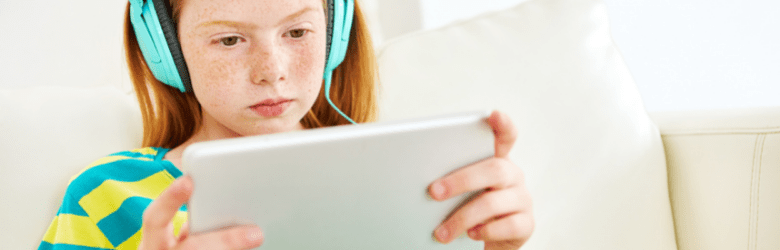
    3. It allows the child to block out stressful external stimuli such as hospital waiting rooms, supermarkets or restaurants. They absorb themselves in their game, maybe with headphones on, and means they can cope in an environment which would otherwise cause sensory overload.
    4. Autistic children can find relationships in the outside world difficult. Many form friendships online or are able to communicate far easier with their friends online than in person. It can actually be their least stressful way of socialising. Of course, it is important to put online safely measures in place.
    5. It can allow children to take part in family time. ADHD children can really struggle to watch a film without becoming bored. But if they have a tablet or phone to play on, they can happily take part in family movie nights as they can occupy that part of their brain that causes boredom or under stimulation. The same goes for board games and meals out.
    6. Just like everyone else, autistic and ADHD children need time to rest even if they are regulated. Their version of rest often means occupying their brain with games. It’s simply their version of chilling out.

    Screen time and autism.

    About Autability

    Autability exists to educate, train and support people who parent or work with neurodivergent individuals. So much of the advice and training available today comes from neurotypical sources. Autability believes that the best qualification a person can have in order to advise and train others is lived experience.

    Autability has two directors, Charlotte and Danielle.

    Charlotte is diagnosed autistic, ADHD, dyspraxic and dyslexic. As well as her diagnoses she has the following qualifications and experience:

    • Post graduate certificate in autism
    • Working towards a masters in autism
    • Mum to a complex son diagnosed with autism, ADHD and epilepsy
    • Degree in music
    • Degree in history and religion
    • Qualified teacher
    • Director of Supporting Paws CIC
    • Author of upcoming book on parenting autistic children (published by JKP)
    • Fellowship of the royal school of music in piano, singing and flute

    Danielle is diagnosed ADHD. She has the following qualifications and experience:

    • Psychology degree
    • Mum to a complex son diagnosed with autism and ADHD
    • Creator of The Autism & ADHD Diaries blog
    • Experienced trainer in the corporate and not for profit sectors
    • Author of upcoming book on parenting autistic children (published by JKP)

    You can visit Autability’s website by clicking here. Learn more about Disabled Living’s Kidz to Adultz exhibitions by clicking here.

  • Surviving or Thriving? Neuro Difference Pre and Post Lockdown

    Surviving or Thriving? Neuro Difference Pre and Post Lockdown

    For Autism Awareness Month, Disabled Living’s contributing writer, Joanna Grace, shares her experience of lockdown, including some of her personal silver-linings in the last year. 

    My father’s nickname for my mother is Pollyanna. He has named her after the child in the book of the same name written by E.H. Porter who always sought out reasons to be glad. Having brought up by ‘Pollyanna’ I am prone to look for the positives in life. When I see a dark cloud, I ask, “where is the silver lining?”

    The pandemic has been the biggest of dark clouds. The loss of life, the suffering and the fear, has been enormous. I’ve looked for silver linings and found a few, and my hope in writing this article is that we might be able to keep one of them, after the cloud has gone.

    Before I tell you what it is, let me give you a bit of background. I run a thing called The Sensory Projects, pre lockdown my life was spent rocketing around the UK on trains (very occasionally hopping on a few planes to work internationally) providing training on sensory engagement. Whilst on the trains I delved into the research archives, and when at home I wrote.

    Then Came the Pandemic

    When lockdown hit, my life on the trains stopped. In common with many people, I suddenly faced a blank canvas of life, a gift of time, the opportunity to do with it what I pleased. Like many people I thought “Now is the time I will write that book I’ve always meant to write, I’ll take up that new hobby, learn to cook, etc.” Most people quickly realised that just getting dressed and getting off the sofa was an achievement.

    But not me. I wrote the book (it’s being published by Routledge in June), I had a baby, I home schooled my elder child, I created a resource bank for my neighbourhood and an online resource bank of inclusive teaching materials supporting everyone with home schooling, I reinvented my working life, I did and did and did. I was SO productive! Joanna Grace book cover

    At the start of lockdown people posted me messages on Facebook and Twitter saying “You’re so busy, I don’t know how you do it” that type of thing. By the time we got to the third lockdown the tone of those messages had changed. One conversation in particular brought it home to me:

    A friend of mine who is a university lecturer asked me how lockdown had been. I buoyantly replied that it had been good, (aside that is from the obvious pandemic). She said, “You’ve done so much” and I smiled and nodded. Then she went on to explain how hard she had found it, how she had found herself less able to do her work, that she felt she had let her students down, that she was struggling with her mental health. She ended it with “I watch you and I just feel so inadequate, you’ve coped so well, and I have not coped at all.”

    I stopped her there. I never want me living my life to make anyone else feel inadequate. I told her quite truthfully:  “I have not coped.”

    The social change required by lockdown has not been something I coped with. The social set up prior to lockdown was what I coped with. Lockdown, for me, gifted me the energy I used to use keeping up with the world. My children and my husband were the biggest beneficiaries, my health and my work the next.

    Lockdown Silver Linings

    Joanna Grace headshot

    I am autistic. Prior to lockdown I don’t think even I realised what it cost me to survive in a neurotypical world. Whereas in lockdown I’ve thrived. To give you a benchmark: in the year before lockdown, I was admitted to emergency medical centres 8 times, and left them dosed up with powerful antibiotics. In the month before lockdown the doctors had decided that I should be given my own supply of emergency antibiotics to travel with. Since the start of lockdown, I’ve not troubled the health services for anything other than the birth of my son. I loved my pre-lockdown life, but I paid a hidden price for the stress of that life with my health.

    Here is my silver lining: Coming out of lockdown, the population as a whole will have a better understanding of what it is like to be asked to conform to a social model that doesn’t suit your neurology, they will have an insight into how disabling it can be, and how it can damage your mental health.

    I do not want the world to return to normal, I want a new-neuro-inclusive-normal whatever that might be! We get to make that. The choices we make as we come out of lockdown decide that new world.

    Here is another silver lining: many companies have realised that if you let people work from home, they do actually work! Many are even more productive at home than they are in the office.

    If we moved forwards into a world where we recognised that different social set ups are okay, and we are not offended by someone’s nonconformity to the set-up we personally prefer, then we would all be free to find a place in society, and in socialising, where we can thrive (rather than survive). In a neuro-inclusive world we would all (not just the neurodivergent among us) be happier, healthier (mentally and physically) and more productive.

    There is an economic argument here, a society that allowed for different social set ups would be more productive and its members would pose less of a drain on services.

    Years ago I had the privilege of delivering a TED talk, and in it I spoke of why we should argue for inclusion from a position of what people personal stand to gain, not from a position of pity or charity for people who are different to ourselves. Here I am again making a version of that same argument. We all gain from a deeper understanding of neurodivergence and neurodiversity.

    If you are interested in learning more about the Sensory Projects, watch Joanna’s latest video series here: https://www.youtube.com/playlist?list=PLi1RQR58BHnVYNE4tF1EOcPVTPNb8DwmM

  • 5 Best Audiobooks If You Are Raising A Disabled Child

    5 Best Audiobooks If You Are Raising A Disabled Child

    This is an article written by Annabella at 10 Audioz for Disabled Living.

    Parenting can be a challenging aspect of life. Nevertheless, parenting kids with special needs can sometimes pose extra challenges. At first, they need to learn about their child’s disability. Parents will do a lot of locating, research and access resources and effective treatments. The journey of life is never easy. If you have a child with a disability, you may also face extra physical and emotional demands.

    A useful source of knowledge to help you raise a child with a disability is via audiobooks. Here is a list of the best children audiobooks that will help you and your child.

    Will My Kid Grow Out of It? A Child Psychologist’s Guide to Understanding Worrisome Behaviour (2014)

    The audiobook by Bonny J. Forrest provides practical solutions to parents if their child has:

    • Autism
    • Schizophrenia
    • Eating Disorders
    • Depression
    • ADHD (Attention Deficit Hyperactivity Disorder)

    Dr Forrest in Will My Kid Grow Out of It gives invaluable advice to parents. The advice answers many questions that parents may have about their child’s disability. It includes a list of questions that the author suggests parents should ask professionals.

    The audiobook links to notable scientific articles, websites, and books. Additionally, the author believes in screening children from a tender age. Through screening, a child will have access to resources. It also provides assurance to anxious parents on how to cope in this scenario.

    Being the Other One: Growing Up with a Brother or Sister Who Has Special Needs (2005)

    Written by Kate Strohm, the book provocatively tackles how siblings may feel when their brother or sister has a disability. The author grew up with a sibling who had cerebral palsy. Kate Strohm is a health educator as well as a counsellor. She discusses growing up with her sister and some of the challenges that incurred.

    The author explores the feelings she felt and provides coping methods for if things become difficult. This is a must-listen audiobook to work out through emotions. The author uses her own experiences alongside the experiences of others who live with disabled children.

    Ten Things Every Child with Autism Wishes You Knew: Updated and Expanded Edition (2012)

    The audiobook speaks about the characteristics which shed light about autism in children. The experiences and techniques in the audiobook are very much helpful. However, the most important thing parents should remember is that all children are different.

    Parenting can be tough whether your child has a disability or not. The central idea of the audiobook is to help your child progress. Everyone deserves opportunities as well as resources to grow.

    The Complete Guide to Creating a Special Needs Life Plan: A Comprehensive Approach Integrating Life, Resource, Financial and Legal Planning to Ensure a Brighter Future for a Person with a Disability (2013)

    The name of the audiobook reveals its message to parents. Hal Wright’s holistic guide focuses on everything which is needed to raise a child with a disability. The audiobook will teach you several types of planning. It will also give you an insight into legal and financial plans. The author of the book is a notable financial planner and raises a disabled daughter.

    If you are interested in finding out more about how to plan your finances for you child, then why not give this audiobook a listen.

    The Boy in the Moon: A Father’s Journey to Understand His Extraordinary Son

    This memoir has been penned down by Canadian Journalist Ian Brown. Brown’s son has Cardiofaciocutneous, a genetic syndrome. Cardiofaciocutaneous aka CFC is a rare syndrome due to which Ian devoted his life to understanding the disorder.

    The best feature of the memoir is that it is brutally honest. At the same time, the memoir is relatable to many parents with disabled children. Brown’s son’s condition means that him and his wife devote much of their time to nurture him. Moreover, the author suggests how both he and his wife are the son’s greatest advocates.

    Overall Thoughts

    The audiobooks on this will hopefully make life easier for you and your child. The techniques mentioned in these books are unique in their own ways. However, it is important to consider that children might react differently to professional help from books and audiobooks. Visit 10audioz.com to explore a range of audio books for children.

  • Sensory-Friendly Halloween Costume Ideas

    Sensory-Friendly Halloween Costume Ideas

    For some individuals, Halloween can pose extra challenges. Although dressing up can often be something to look forward to, itchy seams, tight collars, restrictive masks, or strong-smelling face paint may be unbearable for those with sensory issues. Costumes bought from shops may be particularly uncomfortable. However, making simple sensory-friendly costumes is a great solution for this! Why not get creative this Halloween and check out some of our adaptable, sensory-friendly costume ideas below.

    Sweatshirt

    Transform a soft sweatshirt, hoodie or jumper into something spectacularly spooky. To create some bat wings, sew some black fabric (an old sheet would be ideal) onto the arms of the sweatshirt and join it to the sides. Additionally, you could take a plain orange jumper and draw a face on it to create a simple yet effective pumpkin costume. Another option is to stuff some old tights or knee-high socks and attach them onto the sleeves of the jumper and stick some googly eyes onto the front to create a scary spider costume.

    Pyjamas

    Another simple idea that will provide maximum softness for your child is to transform some plain black pyjamas into a spooky skeleton. Simply cut a skeleton template out of a plain white sheet and sew it onto the pyjamas for some custom-made comfort.

    Cardboard boxes

    If your child would rather have a costume that barely touches them, why not create something that they can hop in and out of as they choose? Cardboard boxes are a versatile option which can provide hours of fun for both you and your child to get creative. Whether you are looking to make a car, plane or horse, the possibilities are endless. If your child is a wheelchair user, this is also a great option for an adaptable costume. For more ideas to inspire your creativity for making an adaptable costume, visit: https://costumes.lovetoknow.com/types-costumes/costumes-that-work-wheelchairs

    Alternatively, if there is a specific store-bought Halloween costume that your child has in mind, but you are concerned that it could be uncomfortable, you can always purchase a larger size and layer the costume over comfy, sensory-friendly clothing.

    Before your child wears their Halloween costume, suggest that they try it on a couple of weeks beforehand to ensure they are accustomed to the textures and identify any issues they might have. This will give you time to make any amendments prior to their Halloween event.

    Visit our Supplier Directory, under the Sensory Toys and Play Equipment category to see what the companies are up to this Halloween! You can also tweet Disabled Living with your own ideas at @disabledliving.

  • How Dance Group AwA (Atypical with Attitude) Break Down Barriers

    How Dance Group AwA (Atypical with Attitude) Break Down Barriers

    AwA are ambassadors of the SEND community. Through the power of dance, AwA aims to break down barriers to inclusivity and integration, changing perceptions and stereotypes with the goal to change the way the world looks at disability. Through hard work, discipline, perseverance and dedication, the AwA dance team has improved the lives and opportunities for many living with challenges. The core ethos of our dance team is having the right attitude toward life. Stereotypes and perceptions will only be broken and changed through hard work and diligence. As pioneers within the dance community, AwA has proven time and time again that those who live with disabilities and challenges are more than capable of achieving the same as their mainstream counterparts.

    When the dance team was first made we made a core decision that would affect and influence everything that we do. Without working just as hard as our mainstream counterparts, we would never change the way people view disabilities and truly see what we are capable of. Every time we perform on the stage, no matter the size or arena, hours and hours of endless hard work and dedication has taken place.

    Through this ethos and methodology, AwA created a unique and inspiring team that went on to achieve many milestones for the SEND community. AwA appeared on the BBC’s The Greatest Dancer which reached the views of millions of people around the world, pushing the agenda that we are capable of much more than the world tells us. AwA were the first special needs team to ever qualify and compete at the UDO European Championships in 2018, representing the UK. Not only did we break down barriers to integration and inclusivity, we also ranked 2nd overall in our category making huge history as the first ever SEN team to do so.

    AwA dance group performance

    A year later we were the first special needs team to ever qualify and compete at the UDO World Championships in 2019, representing the UK and ranking 3rd overall in our category. As a result of our achievements we were blessed and privileged enough to appear on many different news platforms to continue spreading our message. Platforms such as BBC, London Live, Sky and Channel 5.

    A member of AwA states how being a part of the dance group has changed their life:

    I used to be ashamed of my autism. I used to think it was a detriment to myself and those around me. The world taught me that there was something wrong with me, that I was broken and needed to be fixed. I couldn’t understand why I was being told that “who I was” was wrong. When I joined AwA, everything changed. My autism turned into my superpower!

    Everywhere we went, every performance we attended and arena we participated in, people were inspired and amazed to see us do the same things as everyone else. I could see it in their eyes, their perceptions of the ability of those with “disabilities”, was shattered and rearranged within 4 minutes of watching us dance. That feeling empowered me so much. It gave me the fire and strength to continue on the path we were on and work even harder. If I didn’t have autism, I wouldn’t be in this amazing family of friends that I call my team. I used to be ashamed of my autism, now I am proud of it.

    Within the mainstream dance community in the UK, AwA is now widely recognised. We are regularly invited to perform and participate in many mainstream dominated environments as ambassadors of the SEND community. Also, we have hosted our own inclusive fundraisers to give platforms and opportunities to other members of the SEND community. Our other achievements include performing at the national school games summit, winning the first ever Para Dance in 2019. For two years in a row we have been granted mainstage performances at Move It exhibition, the UK’s largest dance exhibition as well as opened the Dance Awards UK show on behalf of DejaVu entertainment. We have also been invited to perform overseas such as the Best Buddies Conference in Indiana USA in 2019.

    AwA has and will continue to maintain a professional approach towards the art of dance and challenging perceptions. We are open to all, include all and accommodate anyone and everyone. Our doors will always be open to others who wish to join our mission and spread the message of inclusivity and integration. We pride ourselves on equality and humility in everything that we do.

    For more information on AwA, visit their Facebook page to keep up to date with their latest dance routines and achievements: https://www.facebook.com/atypicalwithattitude/


    If you or someone you know has autism and would benefit from using a sensory room, then please contact Redbank House. Alternatively, if you have a disability and are looking to receive some advice about services or equipment, contact Disabled Living today!

  • Colours vs. Special Needs Individuals: What You Need to Know

    Colours vs. Special Needs Individuals: What You Need to Know

    One of our contributors, Brenda Kimble, talks about the link between colours and people with special needs.

    The language of colour

    Tiny babies see best in black and white. But once they reach their first birthday, they will already begin to recognise and name colours. Colour is one of the first concepts we learn, and we use colour to convey emotion, messages and meaning. Red means passion, danger and stop! We feel sad when we listen to the blues.

    Colours also seem to have a deeper effect than the common meanings we give them. To see a colour, you must have light. The colour of an object is determined by how much light bounces off it. Light is made of electromagnetic waves, and each colour has its own wavelength and magnetic frequency that interacts with the neuropathways in the brain.

    Modern colour psychology is still in its infancy. There is little scientific evidence yet as to whether Chromotherapy, the ancient practice of healing using colour, has any basis in fact. What is clear is that the colours we choose to use around us, their intensity level and their interaction with lighting, can affect our moods, behaviour and performance.

    Colours and special needs individuals

    While everyone may benefit from optimising their choice of colour, some individuals may be more sensitive to colour. This is because some people have increased sensory responses, stronger visual processing abilities and differentiated cognition pathways. Typically, these might include individuals with Attention Deficit/Hyperactivity Disorder and Autism Spectrum Disorders.

    Decoding the colour chart

    Responses to colour are both physiological and psychological. Studies decoding the physiological effects of colours have shown changes in sensory sensitivity, blood pressure, heart rate and brain development. Psychological impacts include changes in levels of aggression, length and quality of attention span and ability to communicate effectively.

    little boy with hand on his head looking down

    Warm colours

    Colours like red, orange and yellow provide a high level of stimulus and increase energy and encourage creativity. This may make them a good choice for individuals with reduced sensitivity to external stimuli, such as the hyposensitive variant of autism, but a poor choice for individuals with ADHD and similar disorders.

    Orange is a popular choice for fast food environments as orange increases noise perception and stimulates hunger and activity. Red raises respiration, heart rate and blood pressure. It also heightens the sense of smell.

    Yellows, particularly strong yellows, can cause feelings of aggression, anger and frustration. Babies cry more in yellow rooms, and people argue and fight more in yellow environments.

    Pink is neither warm nor cool and has a sedative effect. It has been shown to reduce aggression in prisoners.

    Cool colours

    Green, blue, grey and violet promote calm and a feeling of well-being. Blue reduces appetite and lowers body temperature. Blue is also the preferred colour for those with a visual impairment. Green helps to relax the nervous system and lessens feelings of stress. It seems to help with communication and developing speech skills. Cool colours may be a good choice for individuals where reducing stimulation is a high priority, such as those with ADHD or the hypersensitive variation of autism.

    Colour preferences

    Each individual will have their own colour preferences, and in some cases, these choices will be very strongly felt and expressed. This can lead to distress if colour preferences are not acknowledged and respected. To identify colour preferences in individuals who are pre-verbal or struggle with communication, you can try laying out some clothes in different colours and see which ones they choose to wear. Or assemble a bowl of beautiful and tactile coloured beads or bright and cheerful crayons and let them pick out the ones that they like.

    colouring in at home

    Colour at home

    When decorating at home, you have the freedom to choose from a vast variety of possible colour schemes. Alongside aesthetic and colour preference considerations, consider making design choices that will enhance the mood and behaviour of the individuals in your family, including those with special needs. Consider basing your scheme around pink if reducing aggression is a priority for you.

    Muted greens and blues are an excellent choice if you are trying to create a calming environment, if you are catering to the visually impaired or to enhance communication abilities. Use bright reds, yellows and oranges sparingly as small pops of colour to accent your decorating scheme unless you are deliberately setting out to create a highly stimulating environment.

    Colours in the learning environment

    The use of colour in a learning environment can profoundly affect student attention, behaviour and achievement. Many students with special needs are particularly sensitive to colour within the classroom. The trend for inclusive education in public schools and the increase in the number of students with special needs, including the wide range of learning disabilities, means the colour choices you make in your classroom are more important than ever.

    As classrooms are communal spaces serving learners with a range of needs and responses to colour, deciding upon a suitable colour scheme presents some special challenges. Research into this subject shows that balance is the key. Classrooms which are too stimulating can have a strongly adverse effect upon learners with disabilities leading to behaviours such as hand flapping, repeated blinking, fixed gazing at lights and moving fingers back and forth in front of the face. These sorts of responses show links with reduced communication, weak concentration and less social interaction.

    Young boy colouring in

    Classrooms which are too neutral and unstimulating are, in many ways, as bad as classrooms that overstimulate.

    Colour schemes for classrooms

    You might not have much say in the primary colour scheme for your classroom but, if you do have a choice, warm neutrals such as tan or sand would be an ideal choice. A slightly deeper hue in a similar colour would be a good choice for the main wall that students look at for learning purposes. Large blocks of bright primary colours are unhelpful, but you can try using soft shades of blue or green in moderation. Small amounts of brighter colours are used to define boundaries or as a background to charts and small displays.

    Colour is one of the simpler ways parents and teachers can ensure they optimise the living and learning environment for individuals with special needs. Even in a communal space such as a classroom, there are plenty of ways to satisfy the colour preferences of individual learners. Coloured items such as paper and lenses and craft items such as beads all work well. For parents of children with special needs, using preferred colours as accents in clothing and decor is a great solution where individual colour preferences would not represent the best choice regarding the impact on mood and behaviour.

    More blog posts by Brenda can be found by searching our main blog page: www.disabledliving.co.uk/blog 

  • Art Therapy for People on the Autism Spectrum

    Art Therapy for People on the Autism Spectrum

    This post has been written by one of our contributors, Brenda Kimble. Autism is a neurological disorder that is evident at birth and the causes for this condition are presently unknown. Symptoms include social dysfunction, compulsive and repetitive behaviour, sensory sensitivity and lack of verbal communication. Conventional treatment typically involves behaviour modification, which alters negative actions through a reward and consequence system.

    For people on the autism spectrum, art is the perfect medium to encourage individuals to express themselves. Since children and adults with autism spectrum disorder (ASD) are visual thinkers, art is a natural way to communicate how they feel and how they view the world.

    Those with ASD can share their understanding of the environment pictorially through drawing, painting, sculpting clay or other hands-on avenues. This allows individuals a chance to process the world in an accommodating, sensory and unrestricted way.

    Why is art therapy a valid way to work with people on the autism spectrum?

    Most individuals on the autism spectrum have difficulty with social and verbal communication. Some are nonverbal, while others find it challenging to hold a conversation and are unable to read the body language and faces of others successfully.

    Art therapy allows people with ASD to use their already visually-minded brains to communicate through artistic media. They can record images and visual data, express ideas and process memories that they are unable to do verbally.

    It is often assumed that because someone is nonverbal or has limited verbal abilities that they are not intelligent, but this is untrue and unfair. However, because of this stigma, these individuals may not be exposed to art or other avenues for expression. Art therapy allows people with autism the chance to build communication skills in another way in a comfortable setting where they can find happiness and success.

    How can art therapy help children on the autism spectrum?

    little boy painting easter eggs

    Regular sessions of art therapy aid students at school and at home in peer and family interaction, building self-assurance and controlling their emotions. Becoming familiar with various art materials also helps a child develop stronger fine and gross motor skills and allows them more flexibility in unfamiliar situations. This therapy is not the same as an art class but is more of an exploration of an art medium as a form of self-expression.

    This unique therapy also allows children with ASD to convey their feelings in a way that they have probably been unable to do before. Holding a brush or pencil, making a necklace by stringing beads or moulding clay provides a sense of control and helps to achieve mastery. Many children who have participated in art therapy proudly show off their creations to friends and family.

    While most art therapy sessions are one-on-one, they can occur in a group setting, too. Having limited art supplies allows children to practice sharing and taking turns and improving social skills among their peers.

    Working collaboratively on a single piece of art also fosters peer relationships. In this type of setting, one child draws something and the picture is passed to the next person, who adds to the work until everyone has contributed their part. This activity allows the children to acknowledge those around them and be more aware of others and their involvement in the project.

    Art is emotional, whether you are creating it or viewing it. Art therapy allows children with ASD to recognise and control their emotions in a structured situation. Many individuals on the autism spectrum have a lack of impulse control and can be easily overstimulated. Art therapy helps participants to identify trigger situations and develop coping mechanisms.

    How old should a child be to start art therapy?

    arts and crafts

    A child with ASD can begin art therapy at two or three years old. It is an effective mechanism for solving problems that match their thinking style in a world that is often overwhelming and perplexing to them.

    How do you start art therapy with a child with ASD?

    All children are different, whether they are on the autism spectrum or not. An individualised approach designed to meet the needs of each student works best. Painting may be appropriate for one child, while weaving may be best for another.

    Are art therapy sessions structured?

    Having some structure during art sessions is essential. For some children, a warm-up activity or exercise may help them acclimate to the setting. Also, announcing toward the end of the session how much time is left can let a child know what to expect, rather than ending the session abruptly which can sometimes cause anxiety.

    Art therapists have found that limiting the number of art supplies is helpful, too. Having many choices can be overwhelming and overstimulating. Some materials may not work for some children so a trial and error period may be required. Individuals with sensory issues will likely not do well with finger painting, as they do not want to touch the paint. However, they could utilise a long-handled brush or blow paint through a straw or work with coloured pencils instead.

    How do art therapists help people with ASD?

    Young boy colouring in

    Art therapists help individuals on the autism spectrum with:

    • Bonding with the art therapist, peers, family members.
    • Developing innate artistic talent.
    • Improving motor skills.
    • Recognising and responding appropriately to facial expressions.
    • Imagining and thinking figuratively.
    • Managing sensory issues.

    How do I select an art therapist?

    Once you’ve found an art therapist nearby, contact them to learn about their experience in the field. Extensive experience is helpful but not required, although some involvement is necessary to handle the unique challenges that people on the autism spectrum present. Whether you child takes to painting, making jewellery, or a number of other beneficial options, there is a project out there for them that can best suit their individual capabilities. Art therapy is appropriate for all ages–not just children–and families as a whole can benefit from the experience.

  • Tips for Preparing for Your Child with Autism’s First Dental Appointment

    Tips for Preparing for Your Child with Autism’s First Dental Appointment

    This post has been written by Dr Greg Grillo, director of dentistry and dental expert at Dentably. He talks about the ways you can prepare your child with autism when going to their first dental appointment.

    Going to the dentist for the first time can be overwhelming for any child. There are many sensory elements at the dentist’s office. These include loud noises, bright lights, new tastes and smells. While nerves usually go away the more a child visits the dentist, these sensory issues can be much harder for children with autism in the United Kingdom. Despite these difficulties, there are many ways to help your child with autism prepare for the dentist and have a positive experience. I have been practising family dentistry for 17 years and have worked with many families to help prepare their children for dental visits. I’ve compiled a list of the best tips that you and your child can try before their first dental appointment.

    Ask plenty of questions

    As you and your child prepare for their first dental appointment, be sure to talk with your dentist and ask a lot of questions. Questions are the best way to get detailed information about what dental appointments are like and what you and your child can expect. Here are a few questions to guide your conversations with your dentist:

    • What kind of experience have you had working with children with autism?
    • What can I expect at my child’s first dental visit?
    • Can you make any accommodations at my child’s appointment?

    These are just a few questions to get you started as you and your child prepare for the dentist. Anything that comes to your mind should be asked so you can feel comfortable at your child’s visit and so can they.

    Familiarise your child

    There are a lot of things you can do to help familiarise your child with what happens at the dentist.

    One great way that many families have benefited from in the UK is by scheduling a familiarisation appointment. These appointments involve you and your child visiting the dental office before any work is done on your child’s teeth. It gives you both the opportunity to meet the office and staff members and get a sense of what the office is like.

    Another way to prepare your child for their visit is practising at home. Visual tools are a great way for your child to get a sense of what the dental visit will be like. You can read story books or watch videos about dental checkups to put a picture in your child’s head of what their visit might be like. You can also play pretend and turn a dental appointment into a game. Also, you can play the dentist and your child will be the patient and you can have them practice laying with their feet out flat and their mouth opens wide. This will give them an idea of how they will be sitting during their actual checkup.

    Be supportive

    Being supportive is the most effective, yet simple way to help your child prepare for their first visit. While the both of you may be nervous, as a parent, your child will look up to you for comfort. Be reassuring to them that their dental appointment will go well and take the time to teach them the importance of dental care. Listen to their concerns and fears and work through ways to make some of those overwhelming feelings less strong. With enough preparation, love, and support your child will be able to have a positive dental appointment.

    While a child’s first dental appointment can be overwhelming, there are many ways to prepare them for a positive first visit. A child with autism may have difficulty processing the sensory elements that come with visiting the dentist. But by asking questions, familiarising them, and being supportive, they can work to be comfortable at future visits. Dentists in the UK are experienced and more than willing to work with your child and their unique needs. Dental care is extremely important to your overall health. So, never give up on helping your child with autism to be confident at the dentist.

    You might also like to read Social Stories for Autistic Children.

  • 6 Fun Activities to Help You Bond with Your Autistic Child

    6 Fun Activities to Help You Bond with Your Autistic Child

    Brenda Kimble is a writer and stay-at-home mother of two daughters and a son, plus their beagle named Duke! She loves blogging, crafting, and spending time with her family. She is also a strong advocate for those with special needs and writes to give a voice to the often unheard. She shares some fun activities to help you bond with your autistic child.

    One of the common challenges parents with an autistic child experience is finding an activity or hobby that can help them form a stronger bond while providing their child with a sense of accomplishment.

    But the fact that autistic children do not interact with the world in the same way that neurotypical children do does not mean they are unable to form bonds. It simply means they find a different way to do so.

    mother and son with building blocks

    These six fun activities and hobbies are great, offbeat ways to spend time building a sense of trust and connection that both you and your child can enjoy.

    Video Games

    Today, it’s hard to find a child who doesn’t enjoy video games, and for children affected by autism, video games are especially appealing. This is due in part to the fact that video games are highly visual and structured and provide immediate feedback.

    Video games can also help children on the spectrum practice social and communication skills in a safe and comfortable setting.

    Minecraft, Pokémon and Mario Bros are classic games that can be played in two-player mode, so you can join in on the fun and help children connect social skills and sustained perception with the activity.

    If you or your child don’t know how to play, it’s the perfect opportunity to bond over learning something together. It also gives your child something to talk about with you and others, which allows them to practice their social skills.

    Art Therapy

    range of arts and crafts on the floor

    Art therapy is a form of occupational therapy that helps individuals communicate, understand and cope with the world they live in.

    The art or craft you choose can be as simple or as complex as you and your child would like. It’s entirely up to you! Some autistic children enjoy working with paints and taking a child outside to paint what they see is a great way to expose them to new environments.

    Beading is another excellent choice, as threading beads helps children practice their fine motor, concentration and planning skills. As your child’s interest progresses, incorporate gemstones, pearls or other standout beads to create statement pieces that your child can be proud of.

    Some autistic children have an affinity for understanding how things work. If this describes your child, you may want to try making devices, such as clocks or small engines. There’s a growing community for device makers and inventors, and starting with small, uncomplicated devices can help your child develop their cognitive skills and engage in a community of individuals with similar interests.

    Lego

    boy in grey playing with LEGO blocks

    For many children and nostalgic parents, Legos aren’t just a toy. They open up a whole new world of imaginative play, creativity and possibilities. For children with autism, Legos are a form of play therapy that allows them to develop various skills at their own pace.

    Legos can help your child apply their current interests, such as science fiction or a certain movie franchise, to a new medium and expose them to new challenges or changes that are outside of their calming repetitive play.

    For children who become upset with change, begin slowly. Work with sets that have instructions the child can follow before beginning to show them how designs can be altered to make new creations. In this way, instead of forbidding your child to engage in their repetitive and calming activities, you are using Legos to enhance and complicate those activities while encouraging them to engage with you and not just play parallel to you.

    Science Fiction/Fantasy

    assorted comic books on brown wooden shelf

    Sci-fi comics and novels are popular and, for people with autism, these universes can be engrossing. Autistic children engage with the stories of their favourite characters by reading graphic novels and comics and watching the movies to learn every detail–and they can even socialise with fellow fans in clubs or try out cosplay.

    If these worlds appeal to your child, spend some quality time bonding with him or her by joining in. Try making costumes together, learning the details by reading the books or watching the movies together and ask your child to share their knowledge with you.

    Trains

    Train spotting is a popular hobby that can be very appealing for autistic children, as train schedules, numbers and specs are complicated but logical and easy for children with autism to engage with.

    If you do not live near trains, try watching Thomas The Tank Engine with younger kids and playing with the associated toys and railroad track sets. The franchise is very popular with children on the spectrum, and some speculate this is because the characters are easy to associate with. The trains crash, fall and bump, and the toys can be lined up logically.

    If trains do capture your child’s interest, try expanding on that interest together. Watch videos, read books or consider collecting model trains, as many model train collectors have regular meet-ups, clubs and events your child may like to participate in eventually.

    Animal and Pet Care

    boy holding pet

    Autistic individuals often enjoy the company of animals and pets because they are less invasive and decoding their social cues requires less “work” than interacting with people. In fact, studies have even shown that, after interacting with animals, autistic children become more responsive to people and they are often more able to communicate with people in the presence of animals.

    If your child has an interest in animals, use this interest as an opportunity to bond. Consider fostering animals if you have the means.

    How to choose the right activity

    Bonding with your child is one of the most rewarding experiences you can have, but you need to approach it in the right way. If your child is nonverbal, watch how they play and pay attention to how they try to share this with you. If your child is verbal, you can ask what they like and what they think they might like. Always try to join in where possible. Follow their lead and try to match their structure and pace of play.

    You may also want to consider an activity that expands on your child’s interests. For example, if they enjoy reading, try a trip to the library. If they like baseball cards, they might like to watch a game or try out the batting cages.

    However, remember to take small steps. Going from an interest in baseball cards to watching a full game may be too much for your child. Try a comfortable in-between instead, like watching an inning on TV or at a local school game.

    Finally, stay relaxed and have fun. If you or your child find the activity too stressful to enjoy, take a step back and consider a new approach.

    The Takeaway

    In finding new activities to enjoy with your child, always remember that children with autism don’t interact with the world in the way you might expect.

    Build up to new, more complicated activities slowly, and don’t give up too quickly if your child does not react how you expect them to. Give your child time to get used to these new activities.

    Most of all, be proud of all the new achievements that you and your child accomplish together–no matter how small.

    Do you have an autistic child and would like to share their story on Disabled Living’s blog? Please get in touch with us via email: info@disabledliving.co.uk. We look forward to hearing from you.

  • My Journey with Autism from a Teenager to an Adult

    My Journey with Autism from a Teenager to an Adult

    This blog post is written by a young woman named Aspling who shares her journey of life on the autism spectrum. This is also featured on Redbank House, who are part of Disabled Living.

    Let’s be honest here, when you think of autism or being on the autism spectrum, you generally think about children, with adults being an afterthought. And in terms of support this is the same. There’s so much support for children, but for adults there’s next to nothing. I received my diagnosis early in 2017 at the age of 25. And for me, my diagnosis came as a relief. I’d spent my teenage years feeling lost, like an outcast, always on the edge, never included, like a misfit. In myself I knew I was different. But I couldn’t identify how or why. I knew I acted different and I couldn’t explain my behaviours (which I now identify as my autistic traits).

    The idea of camouflaging

    Like myself, many adults are receiving a late diagnosis, one reason for this is the idea of camouflaging; something that has been brought to light over the past years. Researchers have identified that many people with autism ‘camouflage’. This means masking behaviours to better fit in with culture and society. It is said to be a distinct trait of women and girls on the spectrum. This however, has also been identified in boys and men.

    Moving on… I don’t remember much from my early childhood, it’s a bit of a blur. I was a fussy eater and to this day I still am. I won’t eat salad, fruit, certain types of meat, fish… the list goes on. Next came the obsessions and collections, specifically My Little Pony and nailbrushes in a variety of colours, shapes and sizes. These were kept in baskets under the bathroom sink. I also had sensory difficulties, which resulted in my Barbie dolls having no feet, as I’d spend hours chewing them off. I even chewed the toe of my sister’s dolls.

    As an adult I’ve switched to munching on ice cubes, which may seem strange. But it gives me sensory pleasure. I was a rigid child, in the sense that I needed routine, and any changes sent me through the roof. I’d meltdown over the smallest things. But as a child my parents just thought I was having a tantrum like many toddlers.

    For me growing up was difficult, looking back I would say I masked a lot of the time, mostly because I didn’t quite fit in and I longed to.

    Aspling

    I had friends in high school. And I could hold a conversation. However I was very literal and couldn’t pick up on social cues, and eye contact was a big no no for me. As a teenager I knew I was different, I was the weird girl in my friend group. And I felt lost, like I didn’t know who I was. I had anxiety issues, I was bullied at school and I was behind academically. I struggled in high school on multiple fronts. And because I didn’t have a label or a piece of paper I had no support.

    Over the years, I struggled maintaining friends, managing my work load and handling my anxiety as the pressure mounted. I found myself unable to cope. I had days where my emotions got the better of me and I’d spend the morning crying; refusing to attend school. There was one subject in particular that I dreaded. I was failing, even though trying my best, and I had zero support from anyone.

    My parents’ perspective

    My parents didn’t think anything of my odd behaviour, and at the time I don’t think they had a full understanding of Autism. Around the time of my diagnosis my mum was working for a local special educational needs service so her understanding of autism grew. And aspects of her work she could see reflected in me. I have a close bond with my mum. She’s helped me so much over the years and her professional understanding of autism has really helped me grow as an adult.

    Eventually I pushed for a diagnosis, which as an adult is much harder. Traits aren’t as apparent, and people think ‘well you’ve coped this far’. My diagnosis was a relief as I had a reason for all my difficulties and deficits. Once you have that magical piece of paper the world sees you differently. However, it’s finding support which is the issue. I’m hoping in the future this will change to accommodate adults as well as children.

    To learn more about Aspling please visit her blog: https://thegirlonthespectrum.wordpress.com

    Are you on the autism spectrum and would like to share your story? Get in touch with us via email: info@disabledliving.co.uk

Disabled Living