Year: 2018

  • Accessibility at Longleat Safari Park and Cheddar Gorge

    Accessibility at Longleat Safari Park and Cheddar Gorge

    This post has been written by Chris Cammiss, Disability Awareness Trainer at Disabled Living. He talks about how accessible Longleat Safari Park and Cheddar Gorge are as a wheelchair user.

    So, who’s up for some extreme tourism? My latest escapade was to spend a couple of days looking at Longleat and sister attraction Cheddar Gorge. Some simple cave exploration in the Gorge and dancing with lions at Longleat – no problem at all for a wheelchair user!

    I have to admit I was intrigued. How romantic, how interesting, but how much would I see? How would I manage in the caves and how would I get around the Safari Park?

    Well, I found the whole experience fascinating and much more accessible than you might have thought. With the help of some very well-motivated staff I had a great time. Both sites were an absolute pleasure to visit. Yes, I saw plenty of features that could be improved but the sites are well worth a visit now.

    cheddar-gorge-natural-valley

    First day was Cheddar Gorge – an attraction consisting of several caves developed in Victorian times as a tourist venue. With introductory film shows, a modern museum, caves, walks, viewpoints and shops, there’s a full family day out here.

    After purchasing tickets see the introductory film. This sets the scene beautifully with colourful history, wildlife, flora, what to visit and what can be managed. Then try the caves!

    The main cave – Gough’s Cave – after the man who made a public attraction out of it, is unfortunately inaccessible to many wheelchair users and mobility impaired visitors because of four large, sloping steps, but is very rewarding indeed. If you can be carried or otherwise helped down it is well worth the effort.

    (Personally, as I was on my own at a very quiet time so a staff member bumped me down but this is definitely not company policy!)

    A long winding tunnel then takes you into the rock – Cheddar Man, unique rock formations, dramatic twists and turns, audio description points – very special indeed.

    The ground surface is excellent – the slightly ridged concrete path carries you along with no trips, bumps or slips.

    Try the Museum of Prehistory. It’s small enough not to be daunting but large enough to house a huge array of exhibits all displayed with imagination. This is a very accessible venue. I was lucky enough to be accompanied by an enthusiastic school party who were greatly entertained by the Stone Age re-enactor who dressed them in animal skins, told them about skinning a rabbit and finally showed them how to start a fire with a few sticks – hugely impressive!

    My favourite destination was Cox’s Cave. This is a network of several inter-connected chambers. Complex and challenging for many with mobility or visual impairments, it rewards those who can manage handsomely. A brilliant multi media film show depicting the development of Early Man is displayed on the raw walls of each chamber, carrying you through his history, changing environment and the animals he hunted. Sound and lights enhance this extremely entertaining production. Different episodes lead you through the cave complex. In my wheelchair I was able to see the first parts and the last parts with the help and advice of the brilliant staff. Nothing was too much trouble.

    The next day I visited nearby Longleat

    deer at longleat safari park
    Photo by Mark Woodbury – https://www.flickr.com/photos/markwoodbury/38962211774

    Driving through the grounds for the first time my first impression was how fabulous the actual house appears. After parking I planned my day to include all the major attractions. There’s so much here for everyone to enjoy and again the staff were incredible. It’s also obvious thought has already gone into improving access.

    The House itself was a delight. As often happens, the dedicated disabled entrance takes you through several rooms the public may never see before joining the beginning of the public flow along the official tourist route through the House. Volunteer guides in every room – all dressed as 20’s flappers on my visit – will inform as much as you want or transport you into their world if you prefer!

    Outside there are formal grounds, endless playgrounds, many animal enclosures, all generally accessible. There’s a fully accessible miniature train to carry you around the grounds while you catch your breath, even a fully accessible cruise around the huge lake.

    There are many shops and eating places – all very accessible, and most of the rides are accessible as well.

    The only downside in my opinion was the Adventure Castle play area. This was a stunning looking space, castle, drawbridge, aerial rope walks but all completely inaccessible to anyone with a major mobility issue.

    If you have your own transport it all works brilliantly – you just drive around at your own pace, stopping at the fully accessible African Village as you go. If not, you can catch the fully accessible Safari Bus and sit back in comfort. It’s all there around you – elephants, giraffes, lions, tigers, rhinos and flamingos.

    Throw in the firework display and light show after dark – what’s not to like? It was a challenging trip but well worth the effort.


  • What Are the Best Accessible Christmas Activities in the UK?

    What Are the Best Accessible Christmas Activities in the UK?

    This post has been written by George Finney on behalf of CareCo who feature in our Supplier Directory.

    Here’s our 2018 guide to the best accessible festive activities on offer:

    We know Christmas activities can be challenging if you live with limited mobility or a disability. Busy high streets and Christmas markets can be stressful if they aren’t built with accessibility in mind. That’s why we’ve put together a list of the top three accessible Christmas activities this year.

    If you are limited by disability, illness or an injury, there is definitely something in our list for you. There are so many incredible festive activities this year. Here are three of the best accessible activities for festive fun with family and friends.

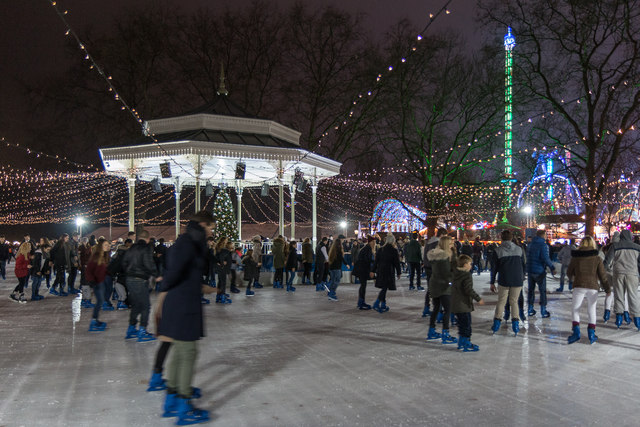
    Hyde-Park-Winter-Wonderland

    Image Source

    Accessible Christmas Markets

    Christmas markets are a highlight on the UK Christmas calendar. Full of tasty treats and handmade presents, these cosy markets will really give you that Christmas feeling. Here are three of best accessible Christmas markets in the UK. If you have any extra special requirements, you should always contact the market hosts for advice.

    Winter Wonderland – Hyde Park London

    Hyde Park is home to one of the nation’s favourite Christmas markets. Full of mouth-watering food and festive attractions, including that famous Ice bar, the Winter Wonderland has been built with plenty of accessible features in mind. Disabled access ramps, accessible toilets and allocated disabled car parking are available at Winter Wonderland. There is even a wheelchair accessible pod on the giant wheel!

    Frankfurt Christmas Market – Birmingham

    The food and craft market located in Birmingham is the largest authentic German Christmas market outside of Germany! With plenty of traditional German goods and a live music programme in Victoria Square, the Birmingham Christmas market is one of the best festive events to visit with friends and family. The fully accessible market includes a wheelchair and disability route, which completely avoids stairs and obstacles.

    Edinburgh Christmas Market

    Edinburgh’s Christmas Market is another top Christmas market for accessibility in the UK. With a vibrant festive atmosphere full of beautiful lights, it’s a great place to socialise with friends and family. With accessible parking, toilets and ramps to all entrances, you won’t struggle to manoeuvre around this market! There is even a wheelchair accessible Christmas tree maze.

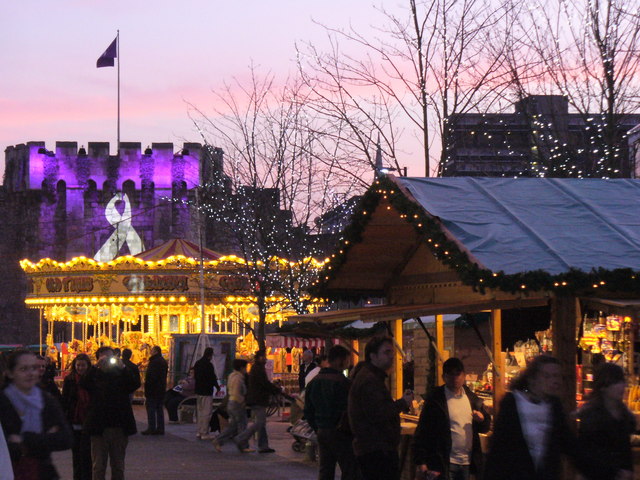
    Christmas_Market_at_Dusk

    Image source

    Wheelchair Ice Skating

    This Christmas there are lots of ice rinks popping up around the UK, and lots of them are disability friendly! Many ice rinks welcome wheelchairs and cater for disability requirements. It is advised that you ring the venues beforehand to find out whether they can cater for your requirements and if there are specific times and dates. Here are three of the best accessible ice rinks this Christmas.

    Winter Wonderland – Cardiff

    The Winter Wonderland ice rink in Cardiff welcomes everyone on to the ice this Christmas. Wheelchair users must be accompanied by a companion wearing ice grips or ice skates, although skating is free for all companions. The Winter Wonderland is also running specific sessions for wheelchair users, visually impaired and autistic people. For more information, visit Cardiff’s Winter Wonderland.

    Natural History Museum Ice Rink – London

    The Natural History Museum in London is running a number of quiet sessions this Christmas, which are suitable for wheelchair users and people with disabilities. You can have a look around The National History Museum while you’re there!

    Before visiting the Natural History Museum or its famous ice rink, it is recommended to contact the venue. Just so you can be reassured the facilities are for suitable for your needs.

    The Royal Pavilion Ice Rink – Brighton

    With accessible sessions 10.00am -11.00am every day from November 3rd 2018 until January 13th 2019 (expect Christmas Eve and New Year’s Day), wheelchair users can skate in the same session as family and friends. Accessible features at The Royal Pavilion Ice Rink include exit and entrance ramps and plenty of disabled toilets on site.

    ice skating outdoors

    Image Source

    Shopping Centres

    Shopping centres are an accessible way to get your shopping done and have a bit of festive fun! With plenty of accessible features including lifts, ramps and first aid facilities, shopping centres are a safe and warm place to have fun this Christmas.

    There are plenty of indoor shopping centres dotted around the UK, so chances are there is a good one near you!

    Once you’ve finished your Christmas shopping, there’s so many more activities you can get involved in at UK shopping centres this Christmas. Why not visit a Christmas arts and crafts shop? You’ll get the opportunity to new meet people and learn some new skills.

    If you’re in the mood for a movie, why not visit one of the many cinemas and settle down to watch a cosy film? Nothing will get you in the festive spirit like this year’s latest Christmas release.

    And let’s not forget almost every shopping centre in the UK has an accessible Santa’s grotto. Children of all ages are able pop in to pay Santa and his elves a visit and take away a small gift.

    Accessible Christmas events at UK shopping centres to look out for:

    Santa’s Snowflake Grotto: A World of Magical Snow, Westfield London, Shepherd’s Bush

    This magical Santa’s grotto takes you to a snow factory in the north pole, where you’ll make your own snowflake. And you’ll even explore Santa’s toy factory! Photo opportunities are available with Santa, right before you’re magically transported back to London.

    The venue recommends making Santa and his elves aware of any special requirements prior to attending. Pop an email to uk.ticketing@westfield.com and they’ll do their best to make your visit to Santa’s grotto as special as possible.

    Centre:MK’s Christmas Market , Milton Keynes

    Between the 16th of November and the 23rd of December 2018, you’ll discover a Christmas market inside Centre:MK. Festive food, drinks and gifts are all on offer, at this very accessible friendly location. Due to its location, there is lots of fun to be had both at the market and in the rest of the shopping centre.

    Musical Dome at the Trafford Centre, Manchester

    Every Friday from  6.00pm – 10.00pm, December 7th to December 28th, the Trafford centre will be hosting live music each evening, completely free of charge. You will find live acts including Craig Owen and many more performing in the music dome to get you in the festive spirit.

    Need More Accessible Ideas?

    If you didn’t like any of that, or you just don’t like crowded places, there are lots of accessible activities for everyone this Christmas. Why not cosy up and watch a Christmas film, visit friends and family, or even take part in some arts and crafts?

    Creative Christmas arts and crafts ideas:

    10 Sensory Christmas Activities for Children Who are Blind

    From sweet smelling festive ornaments to tasty treats, there are some lovely sensory activities for blind children in this post.

    50 amazing arts and Crafts Ideas for seniors

    Losing finger dexterity as you age can make it difficult to do arts and crafts. This post contains plenty of arts and crafts ideas for elderly and limited people.

    Christmas Water Balloon Ice Balls

    This is a really easy and fun activity for everyone. You can use water balloons to create delightful decorative ice balls.

    Thank you for reading our top three accessible Christmas activities. With so many festive activities and attractions to do and visit this Christmas, we hope this post helped you find the perfect event for you. Have a very merry Christmas from CareCo.

  • Top Tips for Accessible Interior Design

    Top Tips for Accessible Interior Design

    This post has been written by Tabby Farrar for Disabled Living.

    Great accessible interior design isn’t just about making a space look good. While we all want a beautiful home or work environment, we also need them to be functional – and realistically, we also need them to be comfortable, welcoming and inviting. Designers will have different goals for different interiors, but the outcome should always suit the user.

    When it comes to accessible interior design, it can sometimes be a challenge for designers to know which aspects of their ideas could be an issue. If you’ve never had need for accessible rooms and spaces yourself, where do you start in planning them for somebody else?

    If you’re keen to create beautiful places that are tailored to those with mobility needs – whether that means wheelchair-accessible or simply free of certain obstructions, here are a few things to consider from room to room.

    In the bathroom

    While it’s important to get every detail right, the bathroom is an area of the house where there’s no room for error. A poorly placed object or ill-thought-out design is all it takes to create a barrier between the user and everyday tasks like washing, brushing their teeth and using the toilet.

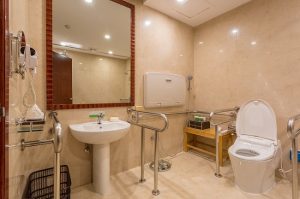
    accessible bathroom

    Starting with the very basics, a non-slip or low-slip floor is a must for accessible interior design. It’s easy to get distracted by beautiful bathroom tiles, and luxury choices like marble or slate in high budget designs, but a stylish take on non-slip flooring is crucial to ensure that the risk of falls is reduced. In the case of designing for wheelchair users, this also makes it easier to control a wheelchair once the flooring is wet.

    Depending on the user’s specific needs, consider whether a walk-in, sit-down shower is the best option, or whether the bathroom design should aim to create a peaceful ‘wet room’ environment.

    Wet rooms have picked up popularity in boutique hotels as well as in accessible design, and they’re an ideal way to maximise space. Creating an open, tranquil finish. When done well, wet rooms remove the need for moving parts, doors to open and close, and raised bath sides to tackle.

    In terms of colour and feel, any bathroom can be future-proofed with neutral tones and white sanitary ware. And as far as furnishings go, think carefully about the height you hang cupboards at to ensure they don’t obstruct movement, but can also be easily reached.

    If in doubt, consult Disabled Living for advice – an experienced OT will know exactly what works and what doesn’t for different individual needs.

    In the kitchen

    One of the main hindrances for wheelchair users in traditional kitchens is inability to comfortably access counter tops which house cupboards underneath. Simply the height of some counters can be an obstacle in itself, along with features like hanging pot and pan racks that are too high to access.

    woman in wheelchair reaching oven knob

    Rather than create a kitchen where a user must reach awkwardly over a cupboard to prepare food on the counter, plan spaces where a wheelchair can get up close with legroom underneath. Particularly with something like a hob, accessibility becomes a major safety issue if someone is forced to struggle while cooking with hot kitchenware.

    Regardless of whether a space needs to accommodate a wheelchair or not, roominess and ease of movement around the kitchen are key. Avoid narrow gaps between counters where possible, and arrange functional elements within easy reach of each other. For example, placing a sink and drying area directly next to an induction hob is a simple way to ensure people don’t need to traverse the room carrying kitchen implements once they’ve finished using them.

    Most importantly, and possibly most obviously, consider what the kitchen will actually be used for. If its user is a keen cook, they’ll need different appliances and a different layout than someone who struggles with cooking and mainly eats pre-prepared meals. It’s also worth bearing in mind how needs might change in the future – to avoid creating something that’s functional now, but which might not be fit for purpose before long.

    Around the home

    In either of these rooms, and in more casual living spaces like bedrooms and lounges, the devil is in the detail.

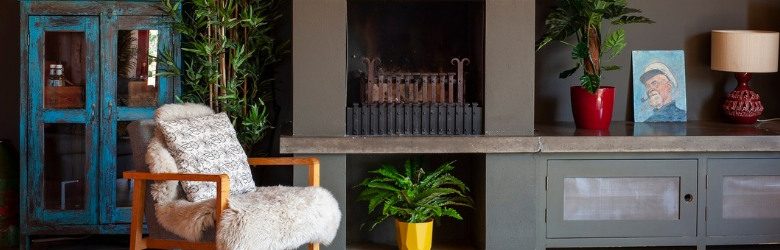
    artificial plants in plant pots

    Houseplants have become all the rage in recent years, and Instagram and Pinterest are bursting at the seams with monstera plants, succulents and other easy-care vegetation. While low-maintenance plants are suitable for many, in some instances your best bet is to add colour and ‘life’ to a room with no-maintenance artificial plants instead.

    Perfect for those who struggle to keep real plants watered, fed and re-potted – as well as those who’d simply rather be doing other things – modern artificial plants are becoming impossible to tell from the real thing. They’re also great for seasonal changes, as different types and colours of plant can be stored away and brought out to suit.

    Whether it’s adding a bright floral centerpiece in summer or rich, wintry greenery when the weather gets cold, faux plants require no maintenance by the user but can have the same mood-boosting properties as real ones.

    Creating accessible interior design can feel daunting if you’re unfamiliar with the territory, but there’s plenty of advice and guidance out there. Whether you’re working on a professional project or simply trying to update a family home or guest room, start by thinking about the user’s needs and work from there, rather than starting with appealing features and trying to fit someone’s needs around them.

  • Why Barcelona Is One of the Best Accessible Travel Destinations

    Why Barcelona Is One of the Best Accessible Travel Destinations

    Our latest Story of the Month feature is by Chris Cammiss, Disability Trainer and Advisor at Disabled Living. He tells us about his recent travels to Barcelona.

    It’s that time of year again – the weather is changing and the clocks have gone back. So we decided to have a city break away to enjoy the last of the autumn heat. We chose Barcelona because Spain has a decent reputation for disabled access. It could still be warm and there are plenty of indoor destinations if the skies were to open!

    We were not disappointed in any way

    Three days out of four were sunny and hot and only one was partly rainy. Spain lived up to its reputation with great accessibility everywhere. We had each visited Barcelona briefly, but a long time ago so had no useful memories of the city layout. Together we chose a small, quirky hotel which was located close to the old centre. And we loved our fabulous room with all the appropriate facilities.

    people walking through barcelona

    We were only a ten minute walk away from Catalunya Square and the start of Las Ramblas. Both of these are very popular destinations for locals and visitors alike.

    “As a wheelchair user, what made a great immediate impression were the excellent surfaces everywhere. All the pavements were level, no evidence of trip hazards from lifting or cracked flagstones, dropped kerbs at every crossing, smooth surfaces everywhere and tactiles where required for those with a visual impairment.”

    It’s no surprise either that bike riding is strongly encouraged here – easy to do and keeps motor traffic down.

    Thoughts on the Gothic Quarter

    When entering the old area – the Gothic Quarter which forms the ancient centre of the city – the same applies. Roads may be narrow and winding here but still all is step-free. Sometimes there will be a gradient, even steep sometimes. But I never saw a single flight of steps I had to avoid. I did see the occasional cobbled surface here in an old square but there were always flagged paths set into the surface. I thought this was very impressive.

    taxis and tour bus in the street of barcelona

    Every bus and taxi was accessible including the shuttle bus to the airport, and every building I wanted to see had level access and/or discreet ramps throughout. Having realised this in the first few hours then we proceeded to relax and planned the course of each day knowing access was not going to be an issue.

    So, what to do in just a few days? Presumably we all like to eat and drink, spend some cash on local specialities and visit the historical sites? This is the place to do just that!

    The Gothic Quarter particularly had a wealth of ancient buildings – including the medieval Cathedral (with its ramped access), its geese and its candles – fascinating markets and winding streets full of bars and restaurants.

    The best highlights from the trip

    • A wonderful walk along the beach on a perfectly level path alongside the sand
    • A wander down a tiny street where every other shop seemed to be an artisan chocolate maker
    • Plates of tapas washed down with rather more local Cava and Rioja than is strictly recommended
    • A meal in a simple enough looking bistro which was actually set inside an old cinema
    • Sitting in a bar drinking beer with the locals watching Barcelona thrashing Real Madrid 5 – 1!

    serving of paella

    With paella in the restaurant/bar along the street, more patatas bravas than you can shake a stick at, the discovery of an excellent local brandy and churros with hot chocolate in a street cafe; I can safely say we didn’t miss much. But don’t think it was all excessive consumption, we also found a brilliant, extensive Picasso exhibition just a block away and we made the customary visit to the Gaudi buildings dotted around this beautiful city, including the almost-completed Gaudi Cathedral which is like no other building I have ever seen. There were huge queues here but a quick indication from someone in the information kiosk sent us to a back entrance where we both gained free, instant access! Brilliant!

    If you want an exciting weekend away with lots to see and do, knowing the terrain will be really accessible, then you couldn’t do much better than a trip to Barcelona.

  • Joanne Hoyle’s First Experience at Disabled Living’s Annual Meeting

    Joanne Hoyle’s First Experience at Disabled Living’s Annual Meeting

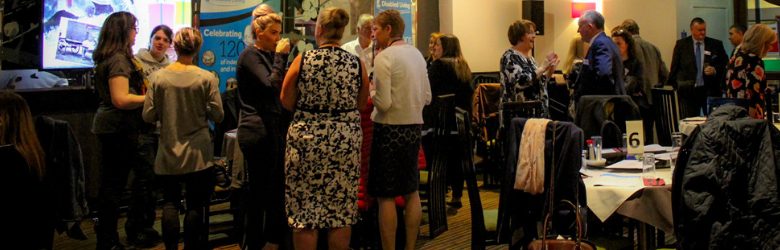
    This blog post has been written by Joanne Hoyle, Specialist Nurse at Bladder and Bowel UK (BBUK). Joanne and her colleague Andrea had the pleasure of attending Disabled Living’s Annual Meeting on Friday 12th October.

    BBUK is an active part of Disabled Living. We were happy to attend this year’s Annual Meeting at the Yang Sing Cathay, Trafford Centre. This event gave an overview of the last 12 months work and recognition of the charity’s achievements. 

    It was great to meet a few of the trustees who support the charity and understand their roles. It was also interesting to see their reasons behind making the decision to support the charity.

    joanne networking at disabled living annual meeting

    A couple of films and a photo presentation discovering the charity’s archive were displayed on the screen

    The films were linked to the charity’s heritage project ‘From Donkeys to Innovators: 120 Years of Disabled Living’ showcasing the history of the charity including experiences of people who were children who remembered the charity many years ago when they were inpatients at the Children’s Orthopaedic Hospital in Marple. The films show the progress made in the opportunities and treatment over the years of individuals with disabilities and how society has changed its approach to individuals. Visit Disabled Living’s YouTube channel to view the different films that have been created.

    The benefits of attending the Annual Meeting

    The meeting gave me the opportunity to discuss BBUK’s work on a day to day basis. It was great to explain how individuals benefit from our helpline, training and our representation on national groups. Also, it was beneficial to help those not directly involved in healthcare to understand the work of specialist continence services and how we link with others for the good of excellence in patient care.

    Always flying the flag for the speciality!

    Learn more about Disabled Living’s heritage and plans for the future here.

  • Why Harry Beattie is ‘One Amazing Kid’

    Why Harry Beattie is ‘One Amazing Kid’

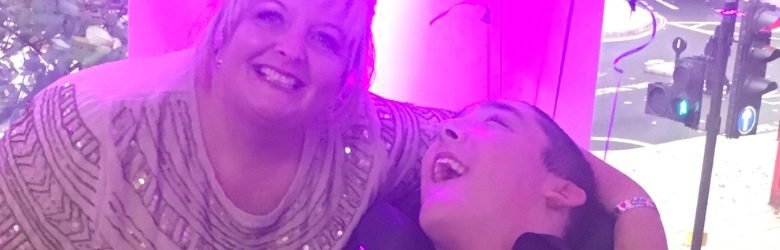
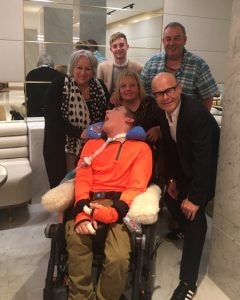
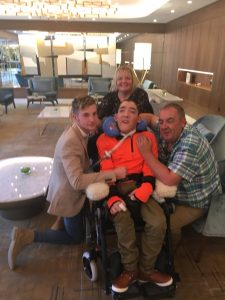
    Harry Beattie was born at 27 weeks in Raigmore Hospital Inverness after an spontaneous rupture in the membrane at 22 weeks. He was ventilated for 3 months and had a Patent Ductus Arteriosus closed in Glasgow prior to this. Due to an ongoing chest infection Harry had many stays in hospital. On one occasion he was so ill, he was transferred to Royal Hospital for Sick Children. Harry ended up being there for 3 months with a tracheotomy at the end of this. Having two other children at home who were adopted (Harry was an IVF baby), was really difficult.

    Natasha Bolger from Disabled Living interviewed Harry Beattie’s mum, Beverley.

    Please can you tell us about Harry’s background?

    At 11-years-old the next big admission was to try ventilation as he had hypoventilation. Now, Harry ventilates via a tracheotomy 24/7. He has had very little admissions for his chest since this, until recently. I think he finds life tougher as he gets older and feels tired more easily. Harry has always been the happiest wee boy and although he is in a chair and can’t speak, boy can he get his point across… he is definitely the ‘boss’! Others will ask if I’m his personal assistant (or I’ll ask if I’m his slave) and Harry shakes his head and sticks out his tongue. This is Harry’s way of responding with ‘yes’. So I know my place! He understands every word and can answer a yes or no question by actions I’ve just
    mentioned.

    Harry has severe cerebral palsy affecting all four limbs and has severe dystonia which causes him so much pain. We are waiting for results from St Thomas’ Hospital in London about having Deep Brain Stimulation to help manage his dystonia and hopefully managing his pain better as he is on a ton of medication to try and help this. He absorbs medication really quickly and what he is on should knock out a horse, but not our Hars!

    Harry group photo with Harry Hill

    What are Harry’s favourite things/hobbies?

    Harry loves books including audio books. TV is also a big hit with CBeebies being his favourite. I tell him he is too old for it but he doesn’t care!

    What was it like meeting Harry Hill?

    Harry Hill has been so kind to him. He invited Harry to London to watch the recordings of his show ‘Alien Fun Capsules’. Harry giggled all the way through! We are still in touch with Harry Hill who is an absolute gentleman. .

    ..And Prince Harry too! Can you describe what that was like?

    Harry was awarded a ‘Well Child Award’ in 2017 – nominated by the Well Child nurses in Edinburgh. He won the Inspirational Young Person Award. We are so proud of Harry getting this award. He has had such a tough life and never complains, unless I’m not doing what he wants!

    Harry family picture

    Prince Harry is the patron for this charity and he is such a genuine, down-to-earth and funny man who understood Harry’s sense of humour. They enjoyed a bit of banter throughout the evening. They both said I “forced Harry to wear the kilt”. So before the end of the evening, Prince Harry took a few steps back and leaned in to my Harry to say, “Remember, do not let your mum make you wear that kilt again if you don’t want to!” Of course, Harry giggled. The evening was a star studded affair and the children were
    the stars that night – just as they deserved to be.

    Is there anything else you would like to add?

    This is not the journey we would have chosen for our child, but hand on heart I wouldn’t change a thing (apart from him being in pain) he is an inspiration to us all and makes us laugh every day! We have met amazing people through Harry he has definitely made us better people by having him in our lives. One amazing kid!

    Do you have a story you would like to share? For details on how to submit your piece please email: info@disabledliving.co.uk

  • Amelia Found Her Perfect Pink Wheelchair with Yorkshire Care Equipment

    Amelia Found Her Perfect Pink Wheelchair with Yorkshire Care Equipment

    This post has been written by Yorkshire Care Equipment. Amelia is a nine-year-old girl from Knaresborough, North Yorkshire. She came to our showroom in her old, NHS supplied wheelchair that she’d had since she was five. It was oversized and clunky, and it was too heavy for Amelia to push herself in. Unfortunately, the NHS couldn’t offer her anything better so Amelia took matters into her own hands.

    Amelia and her family took a trip to our Yorkshire Care Equipment  showroom in Harrogate just to see if we were able to offer her any other wheelchairs that might suit her better. Our showroom advisor Gary got to work straight away and began working through a standard wheelchair prescription form with Amelia and her family.

    Gary determined that she needed a wheelchair that would be a better physical fit for her, and it needed to be lightweight enough for her to self-propel. She also wanted the wheelchair to look nicer; Amelia wanted it to be bright pink.

    Gary, our showroom advisor, said:

    When I first met Amelia and her family, it was pretty obvious that her wheelchair just wasn’t right for her anymore. We sat together and did a sort of wish list of things she could have in her new wheelchair, and then we set to work arranging it all.

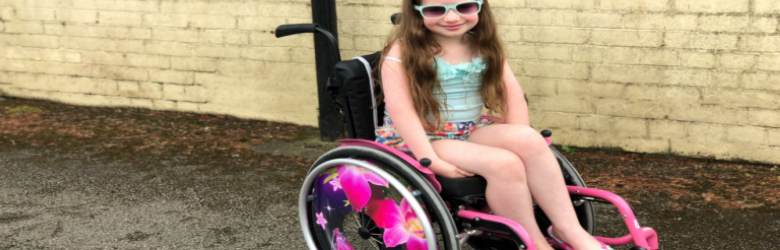
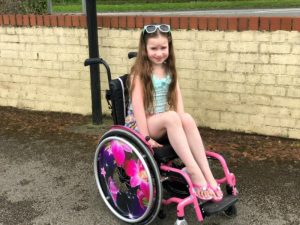
    We chose the Zippie Youngster 3 wheelchair which is a lot lighter for her to push, and we made sure it could be supplied in pink. We also put integrated brake levers in the wheel arches to make it easier for Amelia to stop with little effort.

    Amelia on her new wheelchair

    She chose a flamingo pink glitter finish for the chair and added some light-up flashing castor wheels on the front for extra personalisation – it’s by far one of the most unique wheelchairs we’ve ever supplied!

    We also included a comfy seat cushion and a specifically adapted SmartDrive powered add-on for the chair. Amelia can control the SmartDrive all through her wristband, and it will give her a helping hand pushing her wheelchair along whenever she needs the extra boost.

    Lisa, Amelia’s Mum, said:

    Amelia loves her new wheelchair because it’s so lightweight, she can push it herself. It’s a joy to see her in it!

    We went to Yorkshire Care Equipment because they’re local and it’s important to support the community. They were incredibly helpful and really did pull out all the stops to make sure my daughter’s wheelchair was exactly as she wanted it to be.

    Yorkshire Care Equipment have a charity database that they give to clients whenever they need to raise funding for specialist equipment. However, Amelia’s family had already secured funds from The Lions Club of Knaresborough, the Rotary Club of Knaresborough, the NewLife Charity, and a private donor.

    Between the bright pink frame, light up wheels, and the flowery spoke covers, Amelia will be easy to spot wherever she goes! Check out the video below of her taking her new chair for a spin.

    https://yorkshirecare.vids.io/videos/709ad0bf111decc5f8/20180531-yce-amelia-in-showroom


  • Help 14 Year Old Ben with Cerebral Palsy to Become a YouTube Star

    Help 14 Year Old Ben with Cerebral Palsy to Become a YouTube Star

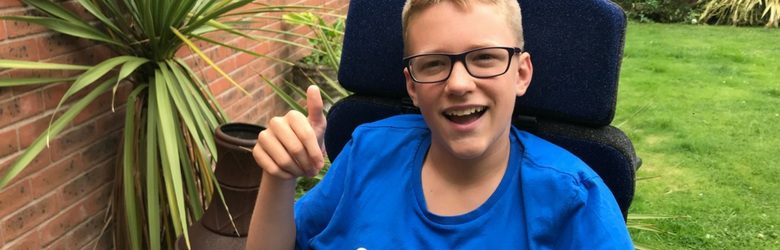
    This Story of the Month has been written by Ben, a 14 year old boy with Quadriplegic Cerebral Palsy from Malvern in Worcestershire. He has recently started his own YouTube channel and would love to be a big YouTube star.

    I enjoy four-a-side wheelchair football, which I play once a month at Villa Park in Birmingham. I really love making content for my YouTube channel, which I have started recently with my tutor Sarah. I like my food – particularly cakes and chocolate – and I love going out with my family, seeing my Nan and generally being sociable.

    I was first diagnosed with Quadriplegic Cerebral Palsy when I was a month old. At first, the doctors thought I wouldn’t ever be able to feed myself or even talk. I surprised everyone when I started to talk! My mum, dad and I have worked really hard to get me to where I am today. I’m semi-independent and can do lots of things that other teenagers do such as going shopping, playing video games, some reading and I am even writing my own book!

    What inspired you to create your own YouTube channel?

    I wanted to get my message out there. Nothing is impossible if you try hard enough. I record quality content for my channel around every two weeks about various subjects that are important to me. I want people to know that if I can do it, so can they. I have overcome so many obstacles in my life: people thought I wouldn’t be able to talk, but now I talk to give a positive message to others. I watched other YouTubers talking about the things that they’re passionate about and I wanted to do the same. I’ve got nearly 100 subscribers now but my goal is to get 10,000 subscribers by the end of 2019. I think I can do it! I’d love readers to check out my channel and subscribe: just search Ben Gannon (not the cyclist!).

    What’s the biggest challenge you’ve faced as someone with Cerebral Palsy?

    Sometimes I can feel quite down. I can get frustrated at school if I have a hard day and everything can feel like a roller coaster. I have felt really good lately as my YouTube channel is going well and I’m enjoying making content. My cerebral palsy affects my arms and legs so I have help to do lots of tasks like getting dressed and going to bed. But I have some really good equipment such as my chair and my lift – which I have just reviewed on my latest YouTube video! – And this means I can do a lot more for myself, which is great.

    What do you love most about Ben? (for Mum)

    Ben always puts 100 % in to everything he does. He doesn’t moan (only when the chocolate supplies are low) but he is genuinely a gorgeous lad. Ben loves his family and he is the most relaxed and happiest when surrounded by familiar people. Ben loves a bit of banter and will take the mick out of me regularly. He is always willing to tell people my embarrassing moments, that’s not what I love about him, but he is very funny. The characters he has used in his book shows his sense of humour, such as the seagull that tweets on twitter all day. He is such a role model for other kids. I love that he his enjoying the YouTube channel, we are keen for him to have an impact of others and have something of meaning to do with his life.

    Do you have any YouTube idols that you look up to?

    I love watching Jacksepticeye videos because he promotes a positive mental attitude and reviews video games – both of which are close to my heart! He also has 20 million subscribers, which is something I aspire to have! I also like PewDiePie, who makes really funny videos and has even more subscribers – he has 65 million! Sumara Redway is another favourite because she makes really cool, genuine gaming videos. I watch a lot of Typical Gamer’s videos too as he is funny and makes good Fortnite videos.

    Can you tell us about 3 things that make you smile? Or the things you’re most grateful for?

    I am grateful for life and because I am happy. Making videos makes me happy. I have fun doing it and love to share my message with other people. I love to read the comments people make on my videos and to engage with viewers. People have left really genuine comments and have said that my videos make them smile, which really makes me smile!

    Is there anything else you’d like to share?

    I decided in December that I wanted to learn to read better mainly because I wanted to text my friends and read my messages from them. I’d been covering up the fact that my reading wasn’t great for quite a number of years and had been guessing words and lip reading instead of reading the actual words. I decided to get a tutor and immediately I made loads of progress. We were looking for books for me but realised quite quickly that there was nothing suitable for people in my age group who are just starting to learn to read. I know I’m not the only teenager who is in this position! I am 14 and not really interested in Biff and Chip… so I decided, if I couldn’t find a suitable book, I would write my own! I worked with my tutor to develop a character called Bob The Fish. He is quite complicated: he’s jealous, funny, and materialistic and has some very interesting relationships with his friends!

    I have written one short book about Bob the Fish and am now on my. I’ve been talking about him in my videos and people have been really interested in hearing more about the book! Who knows: I could be the next Roald Dahl!

    Help Ben chase his dreams by subscribing to his YouTube channel where you can also learn more about him.

    Read more of our story’s of the month on Disabled Living’s blog.

  • From Local Club Swimmer to Paralympic Champion

    From Local Club Swimmer to Paralympic Champion

    This Story of the Month features a 23-year-old European and Paralympic Champion Swimmer, Ollie Hynd MBE. We recently came across Ollie on Twitter and found out more about him on his website. 

    His passion for swimming began when he joined a local swimming club as a young boy. And since then all he’s ever wanted to do is achieve bigger things. Ollie has a condition called Neuro Muscular Myopathy, which weakens his muscles. Activities such as walking can be a huge struggle for people like Ollie with this condition. However, he believes that training in the pool helps to keep his muscles strong.

    Ollie was inspired by his brother, Sam Hynd in 2008 when he performed at the Beijing Paralympic Games and won a gold medal.

    It was in 2011 that Ollie achieved one of his biggest triumphs – breaking the European record in the 200m individual medley. And it doesn’t end there. In the six years that he has represented Great Britain in his Paralympic swimming journey, he has inspired many across the globe. He was awarded an MBE in 2013. In addition he’s won over 10 gold medals and achieved recognition for ‘Disabled Sportsperson of the Year’ in 2015!

    Ollie says: I hope to inspire others particularly young people, to dream because dreams can come true. We all need a dream to inspire and motivate us to push forward. Life will throw us lots of challenges and obstacles, but I believe they are meant to be overcome so we can grow. http://www.oliverhynd.co.uk/

    Ollie has inspired us to believe that no matter what challenges you face, you can always carry on to chase your dreams. Keep up to date with his latest news events Twitter.

    You might like to read another Story of the Month about the importance of an active lifestyle for disabled people.

    If you have a story that you would like to share please get in touch with us. You can send an email to: info@disabledliving.co.uk

  • Playtime for Children with Disabilities

    Playtime for Children with Disabilities

    This post has been written by Special Kids all about the senses that children with disabilities develop during playtime.

    When you think about childhood, you probably think about the nostalgic memories of days spent playing with dolls, building blocks, and jigsaw puzzles. A magical time where your imagination was able to run riot while you developed skills such as problem-solving. For some of us, playtime was likely to be random – no set time, toys, or routine; however, children with disabilities, are likely to prefer structure when playing. Why not set play time aside for your child to fit into their existing routine?

    Playtime allows for the exploration and development of the senses; children with disabilities can quickly become overwhelmed by the senses; the structure can help to ease discomfort.

    Creativity

    Ah, painting, who didn’t enjoy creating mini masterpieces when they were kids? Painting,
    drawing, and creating things with playdough can help children become comfortable with
    different textures as well as developing their knowledge of colours and shapes. Art based
    activities allow your child to express their feelings and imagination which can help to make
    sense of the world around them and communicate their understanding of it.

    Problem solving

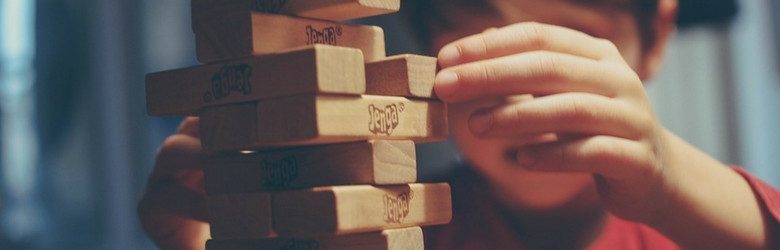
    Problem solving is a crucial skill to develop throughout childhood and adult life; activities that encourage this skill make it fun and engaging rather than challenging and confusing. Take the classic jigsaw puzzle; all the pieces have to fit a certain way. Although jigsaws are an excellent way to solve a problem, it is useful to play with things such as building blocks too, as this can show your child that there are more ways than one to solve problems as there isn’t always a strict way to build or not to build something.

    Sound

    Sound doesn’t have to be overwhelming for children with disabilities; it can be soothing.
    Whether this is something familiar such as music from the TV shows your child watches
    or a bedtime nursery rhyme. Why not make music a part of play time? Children’s glockenspiels can be an excellent way for your child to experience sound while
    improving memory by learning a song.

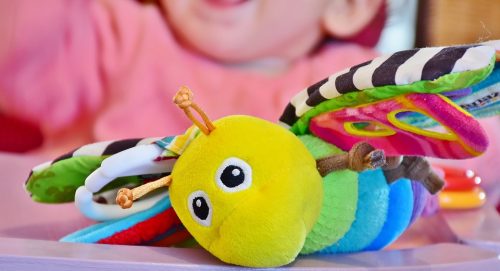
    children's soft butterfly toy

    Comfort

    We all want our child to feel as comfortable as possible. When learning new things and
    developing skill comfy clothing is essential. Think about it, none of us would get into bed wearing uncomfortable clothes such as jeans; we would wear pyjamas, so why should this idea of comfy clothing not be a part of day to day life for your child? Our Wonsie’s and bodysuits are great for playtime – not only are they made with soft, non-irritable material, they are also stretchy so that movement is effortless. We have a range of products for different needs; not only do we stock clothing, we also offer accessories, bibs, and bedding. We believe that quality is paramount. All of our products are designed with care.

    Raising awareness and providing solutions

    Since 2014, we have had the fantastic opportunity to be a part of the Kidz Exhibitions. They have created an environment that is both welcoming and supportive. Through their several yearly events, they provide a platform to raise awareness for children with various disabilities, and we are proud to be a part of it. We’ve met so many new people at their events who keep coming back and are pleased to say that we will be exhibiting at Kidz to Adult North this year on Thursday 8th November. And we can’t wait to showcase our new and existing range.

    We are delighted to have been given the opportunity to guest blog for Kidz to Adultz North. And to say thank you, we invite you to check out our adaptive clothing range and use the code NEWCUST10 for a discount. Why not sign up to our newsletter too for updates and offers.

Disabled Living